To save content items to your account,
please confirm that you agree to abide by our usage policies.
If this is the first time you use this feature, you will be asked to authorise Cambridge Core to connect with your account.
Find out more about saving content to .
To save content items to your Kindle, first ensure no-reply@cambridge.org
is added to your Approved Personal Document E-mail List under your Personal Document Settings
on the Manage Your Content and Devices page of your Amazon account. Then enter the ‘name’ part
of your Kindle email address below.
Find out more about saving to your Kindle.
Note you can select to save to either the @free.kindle.com or @kindle.com variations.
‘@free.kindle.com’ emails are free but can only be saved to your device when it is connected to wi-fi.
‘@kindle.com’ emails can be delivered even when you are not connected to wi-fi, but note that service fees apply.
The chapter begins with discussion of intelligence in simple unicellular organisms followed by that of animals with complex nervous systems. Surprisingly, even organisms that do not have a central brain can navigate their complex environments, forage, and learn. In organisms with central nervous system, neurons and synapses in the brain provide elementary basis of intelligence and memory. Neurons generate action potentials that represent information. Synapses hold memory and control the signal transmission between neurons. A key feature of biological neural circuits is plasticity, that is, their ability to modify the circuit properties based both on stimuli and time intervals between them. This represents one form of learning. The biological brain is not static but continuously evolves based on the experience. The field of AI seeks to learn from biological neural circuitry, emulate aspects of intelligence and learning and attempts to build physical devices and algorithms that can demonstrate features of animal intelligence. Neuromorphic computing therefore requires a paradigm shift in design of semiconductors as well as algorithm foundations that are not necessarily built for perfection, rather for learning.
The CPC presides over a large state-owned economy, which is a key pillar of China’s state capitalist model and a critical source of Party power. The party has adapted its governing strategies of the state-owned sector to maintain its economic dominance without stifling growth and innovation – largely by learning from outside. We highlight the importance of the international system as a source of both policy inputs and pressures to change. We find that in the early phases of China’s marketization process during the 1980s, Chinese policymakers looked to Japan and the World Bank as they restructured state-owned enterprises. In the 1990s, American, European, and Japanese policymakers’ pressure on China to downsize its state sector as a condition of WTO accession was a key consideration in Chinese policymakers’ efforts to build “national champions” capable of competing with foreign multinationals in domestic and international markets. We analyze Chinese leaders’ responses to successive challenges in the state-owned economy, and the resilience of state capitalism which buttresses party rule.
This chapter provides a selection of problems relevant to the field of neuromorphic computing that intersects materials science, electrical engineering, computer science, neural networks, and device design for realizing AI in hardware and algorithms. The emphasis on interdisciplinary nature of neuromorphic computing is apparent.
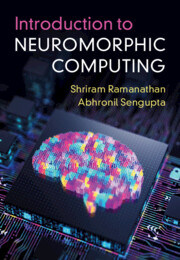
Artificial intelligence is transforming industries and society, but its high energy demands challenge global sustainability goals. Biological intelligence, in contrast, offers both good performance and exceptional energy efficiency. Neuromorphic computing, a growing field inspired by the structure and function of the brain, aims to create energy-efficient algorithms and hardware by integrating insights from biology, physics, computer science, and electrical engineering. This concise and accessible book delves into the principles, mechanisms, and properties of neuromorphic systems. It opens with a primer on biological intelligence, describing learning mechanisms in both simple and complex organisms, then turns to the application of these principles and mechanisms in the development of artificial synapses and neurons, circuits, and architectures. The text also delves into neuromorphic algorithm design, and the unique challenges faced by algorithmic researchers working in this area. The book concludes with a selection of practice problems, with solutions available to instructors online.
Teaching and learning in college and university classrooms has received increased attention in recent years, including in political science. While historically, political science college education was dominated by the model of lectures and perhaps discussions in brick-and-mortar classrooms, the last two decades have witnessed changes in instructional techniques and considerable variation in pedagogical approaches across instructors and classes. At the same time, we sometimes lack the empirical evidence that these innovative approaches are effective and result in improved learning outcomes. We suggest that sharing our innovative pedagogical approaches becomes even more valuable to the academic community when we add an empirical evaluation of their effectiveness on students’ success and learning.
Since 2003, the European Commission has produced analytical documents (called Impact Assessments, IAs) to appraise its policy proposals. This appraisal process is the cornerstone of the regulatory reform policy of the European Union. Previous research has been concerned with the quality of the IAs in terms of evidence-based policy, usages of economic analysis and other standards of smart regulation. Instead, we move to a different perspective. We draw on the narrative policy framework to explore IAs as a text and discursive instrument. Conceptually, insights from discursive institutionalism are used to explore narratives as tools of coordination within complex organizations such as the European Commission, and as communicative tools through which policy-makers seek to enhance the plausibility, acceptability and, ultimately, legitimacy for their policy proposals. Empirically, we consider a sample of IAs that differ by originating DGs, legal instrument, and level of saliency. The findings show that both in coordinating and communicating policy, the European bureaucracy projects a certain definition of its identity via the narratives it deploys. The Commission may use IAs to produce evidence-based policy, but it also an active narrator. It engages with IAs to provide a presentation of self, to establish EU norms and values, and to create consensus around policy proposals by using causal plots, doomsday scenarios, and narrative dramatization.
As children learn their mother tongues, they make systematic errors. For example, English-speaking children regularly say mouses rather than mice. Because children's errors are not explicitly corrected, it has been argued that children could never learn to make the transition to adult language based on the evidence available to them, and thus that learning even simple aspects of grammar is logically impossible without recourse to innate, language-specific constraints. Here, we examine the role children's expectations play in language learning and present a model of plural noun learning that generates a surprising prediction: at a given point in learning, exposure to regular plurals (e.g. rats) can decrease children's tendency to overregularize irregular plurals (e.g. mouses). Intriguingly, the model predicts that the same exposure should have the opposite effect earlier in learning. Consistent with this, we show that testing memory for items with regular plural labels contributes to a decrease in irregular plural overregularization in six-year-olds, but to an increase in four-year-olds. Our model and results suggest that children's overregularization errors both arise and resolve themselves as a consequence of the distribution of error in the linguistic environment, and that far from presenting a logical puzzle for learning, they are inevitable consequences of it.
In this article, the probability of opening to trade is related to a country's propensity to learn from other countries in its region. It is argued that countries have different motivations to learn, depending upon the responsiveness and accountability of their political regimes. Whereas democracies cannot afford to be dogmatic, authoritarian regimes are less motivated to learn from the experience of others, even if they embrace policies that fail. Using data on trade liberalisation for 57 developing countries in the period 1970–1999, it is found that democracies confronting economic crises are more likely to liberalise trade as a result of learning; among democracies, presidential systems seem to learn more, whereas personalist dictatorial regimes are the most resistant to learning from the experience of others.
The aim of this article is questioning the commonly held assumption that Problem-Based Learning (PBL) is necessarily good for students. Drawing on the experience of teaching a postgraduate module about terrorism and the media as a case study, it shows that PBL can definitely benefit the Political Communication curriculum. However, this is only part of the story. PBL, in fact, appears to have an ‘amplifier’ effect on the learning outcomes of a module: the achievement of outstanding results for those who are committed to the coursework; lower achievement than would have been gained through more ‘traditional’ learning methods for those who do not fully engage with it. As the case study suggests, students’ individual expectations and previous experiences of coursework, although currently overlooked, appear to make all the difference within the learning process.
There is a strong tradition in Britain of volunteering involving a wide range of activities and organisations. Increasingly volunteering is seen as a way of benefiting health and building sustainable communities. In a study in 2007 we aimed to address the research questions: what are the motivations for, barriers to, and benefits of formal practical environmental volunteering for those individuals involved? Qualitative and quantitative data collection was undertaken while spending a day each with ten volunteer groups as they undertook their practical conservation activities. In this paper we focus primarily on the physical, mental and social well-being benefits that volunteers derived from their activities. Our research involved 88 people volunteering regularly in a range of places from scenic natural landscapes to urban green spaces in northern England and southern Scotland. Respondents described a range of benefits they gained from their involvement including improved fitness, keeping alert, meeting others and reducing stress levels. We suggest that practical environmental volunteering has flexibility in the types of activity available and the time scale in which activities are undertaken and therefore can provide a range of physical, social and mental well-being benefits to people with very differing abilities and from different socio-economic backgrounds.
A comparison of speakers’ treatment of two categorically unattested phonotactic structures in Cochabamba Quechua reveals a stronger grammatical prohibition on roots with pairs of ejectives, *[k'ap'u], than on roots with a plain stop followed by an ejective, *[kap'u]. While the distribution of ejectives can be stated as a single restriction on ejectives preceded by stops (ejective or plain), *[-cont, -son][cg], speakers show evidence of having learned an additional constraint that penalizes cooccurring ejectives more harshly, *[cg][cg]. An inductive learning bias in favor of constraints with the algebraic structure of*[cg][cg] is hypothesized (Marcus 2001, Berent et al. 2002, Berent et al. 2012), allowing such constraints to be preferred by learners over constraints like *[-cont, -son][+cg], which penalize sequences of unrelated feature matrices.
Employability is one of these concepts that polarises opinion. There are those who see it as an integral part of student education and learning, and those who see it as undermining conventional academic study. In this paper, we argue it is a key part of student learning experiences and use a case study of a particular module—'Politics in Action'—to highlight the potential benefits to students. This should be seen in conjunction with the rest of a degree programme, where employability maybe embedded but not prioritised. Student feedback reinforces the potential benefits of prioritising employability in one part of a degree programme, while acknowledging the beneficial spillover into other areas of study. There is, however, potential resource cost in adopting this type of approach to delivering such a bespoke module. It is far from being a conventional module, but the impact and benefits to student learning and understanding are clear.
Political theorists and scientists have published extensive scholarship on the political representation of the marginalised. Some notable and widely cited scholars include Jane Mansbridge, Anne Phillips, Iris M. Young, Suzanne Dovi, and Melissa Williams. They have mostly focused on the importance of representation of women and argue that such representation enhances the functioning of representative democracies. This strand of literature has made significant contributions to contemporary research, especially on studies showing how and why political representation matters. Underdiscussed, nonetheless, is how such classic studies should be taught in a classroom in the context of global movements, namely #BlackLivesMatter, #StopAsianHate, and #MeToo, where various marginalised identities intersect when subjected to oppression. We contest and strengthen some of these ideas in extant scholarship promoting diversity politics by taking intersectional and decolonial approaches. We advocate for prioritising intersectionality over diversity and for decolonising teaching political representation by centring the feminist works of BIPOC and Global South scholars. By challenging both the absence of minoritised women as political actors as well as scholars—as a matter of the production of knowledge and as political activism—we create an inclusive learning environment. We enable both the educators and students to reflect on their positionalities and furthermore achieve the long-term goal of equality in the classrooms, political institutions, and beyond.
In a global landscape increasingly shaped by technology, artificial intelligence (AI) is emerging as a disruptive force, redefining not only our daily lives but also the very essence of governance. This Element delves deeply into the intricate relationship between AI and the policy process, unraveling how this technology is reshaping the formulation, implementation, and advice of public policies, as well as influencing the structures and actors involved. Policy science was based on practice knowledge that guided the actions of policymakers. However, the rise of AI introduces an unprecedented sociotechnical reengineering, changing the way knowledge is produced and used in government. Artificial intelligence in public policy is not about transferring policy to machines but about a fundamental change in the construction of knowledge, driven by a hybrid intelligence that arises from the interaction between humans and machines.
At the beginning of this book, we examined your own play memories and those of other people. We concluded that play really matters to children. But what do we really learn about children’s learning and development when we observe and analyse play? We begin this chapter by looking at a play memory of a 16-year-old boy whose parents used play to support their son in dealing with the arrival of his new baby sister.
In this chapter, we will look at how children play in families, and the diversity of roles that parents may take in children’s play. We begin this chapter with details of the play practices of two families living in the same community. We argue that play is learned in families, and in early childhood centres and classrooms, rather than being something that arises naturally within the child. Through reading this chapter on families at play, you will gain insights into how some families play and how play is learned in families, and an understanding that play practices learned at home lay the foundation of children’s play and learning, and that as teachers we should consider how to build upon these early experiences in our early childhood centres and classrooms.
This chapter has been designed to help you learn about: how others plan for play-based learning and intentionality in the The Early Years Learning Framework for Australia (V2.0); what a Conceptual PlayWorld looks like for three groups – infants and toddlers, preschoolers, and children transitioning to school; how to design a Conceptual PlayWorld to support cultural competence; and how to plan a Conceptual PlayWorld for a range of educational settings.
In this chapter, we look at how play can support children’s learning in schools. We begin by examining how teachers can support children’s learning in play by exploring a range of playful approaches to learning curriculum content. A case study of a play-based approach from the Netherlands is also presented, followed by a range of practical suggestions and resource ideas to support the setting up of a play-based inquiry approach using the Australian Curriculum.
Play is a key dimension of early childhood education. How play is conceptualised and how a teacher uses play to support curriculum activities have a bearing on what a child experiences. We know from research that play is discussed in different ways in different countries, and also that play is presented in different ways in education curricula around the world.
Language AI has become a popular tool across the humanities and social sciences, but it has yet to gain traction in socio-cultural anthropology. Fieldnotes, the core data for anthropologists, present a unique opportunity and challenge for applying language AI to understand diverse human behavior and experience. Anthropological fieldnotes are communicative products in cultural contexts through immersive, extensive and idiosyncratic fieldwork. To read fieldnotes, anthropologists typically engage in qualitative, reflexive interpretations, attuned to local meaning systems and intersubjective encounters. This paper demonstrates a novel synergy, combining anthropological expertise and various AI technologies to analyze natural observation texts about children’s peer-interactions, especially their moral dramas, in the historical context of rural Taiwan during the Cold War. These fieldnotes were collected by the late anthropologists Arthur Wolf and Margery Wolf in the world’s first anthropological study focused on Han Chinese children. Engagement with AI in this project began as methodological cross-fertilization, transforming raw fieldnotes into a text-as-data pipeline and discovering how ethnographic close-reading, machine-learning techniques (e.g., unsupervised topic modeling), transformer models (e.g., S-BERT) and generative models (e.g., GPT) can complement and augment each other’s value. Capitalizing on the systematic nature of Arthur Wolf’s fieldnotes, as well as the special protagonists of these fieldnotes – playful children, the most voracious learners – this paper compares how children, the anthropologist and AI make sense of pretend-fight moral dramas. Such a human–AI hybrid experiment embodies layered-interdisciplinarity at methodological, epistemological and, to some extent, ontological levels, anchored at children’s social cognition. Situated at the intersection of anthropology, digital humanities, developmental science and data science, this work sheds light on the similarities and differences in how machines and humans learn and make sense of morality, and by doing so, critically reflect on the nature of socio-moral intelligence.