To save content items to your account,
please confirm that you agree to abide by our usage policies.
If this is the first time you use this feature, you will be asked to authorise Cambridge Core to connect with your account.
Find out more about saving content to .
To save content items to your Kindle, first ensure no-reply@cambridge.org
is added to your Approved Personal Document E-mail List under your Personal Document Settings
on the Manage Your Content and Devices page of your Amazon account. Then enter the ‘name’ part
of your Kindle email address below.
Find out more about saving to your Kindle.
Note you can select to save to either the @free.kindle.com or @kindle.com variations.
‘@free.kindle.com’ emails are free but can only be saved to your device when it is connected to wi-fi.
‘@kindle.com’ emails can be delivered even when you are not connected to wi-fi, but note that service fees apply.
This essay approaches Palestine not as a laboratory or a problem to be solved, but as a paradigm that elucidates the persistent and cumulative violence of settler colonialism, genocide, and dispossession. The author explores the collapse and distortion of time under siege, the fragmentation and resilience of bodies amid relentless violence, and the radical power of storytelling in the face of attempted erasure. Weaving together images from Gaza’s hospitals, refugee camps, schools, prisons, and graveyards, this essay documents both the horror and tenacity of everyday Palestinian life. It situates the ongoing Nakba within global trends of authoritarianism and repression, including the assault on academic freedom and criminalization of solidarity. Ultimately, this essay argues that Palestinian defiance, memory, and narrative offer vital lessons in apocalyptic times.
The chapter on the consequences of the Rwandan genocide against the Tutsi brings many constructive contributions that have been made to improve the situation of those affected. Nevertheless, the consequences of this very short-lived genocide were immense. PTSD and trauma-related cultural syndromes were described as direct consequences, although the latter faced an impediment in prevailing against the dominance of the international (and Global North) vocabulary. Research attributed long-lasting societal problems, which were partially addressed by home-grown governmental programs. A very important topic discussed in the chapter is that of international aid organizations, which were also the producers of scientific contributions in most cases. These include contributions on interethnic trust and reconciliation. Some, especially local authors, refer to African values such as Ubuntu, which they argue should play a role in healing or reconciliation.
This chapter argues that Soviet crimes at times of war were both widespread and complex in their origin, goals, logic, and trajectory. It distinguishes and explains several forms of Soviet criminality during its defensive war against Germany in 1941–1945: crimes against humanity and war crimes, both perpetrated by agents of the state and often in accordance with explicitly formulated state policy; troop crimes, not guided by state policy but often understood to be in its fulfilment by the perpetrators; and a variety of violent and criminal behaviour emanating from small group bonding, both within the military and outside of it. The chapter explains their origins and charts the reasons why there was so much silence about the criminality of the Soviet war effort after victory.
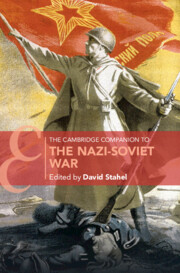
The Nazi-Soviet War was the largest and most brutal theatre of the Second World War, fought between two of the most ruthless states ever to exist. Bringing together twenty-four of the most accomplished authors in both German and Soviet history, this Cambridge Companion provides the most authoritative, and yet highly accessible, guide to the conflict. Each chapter examines a key aspect of the war from war planning, the opposing forces and the campaigns to criminality and occupation, alliances, the home fronts and postwar legacies and myth-making. The authors demonstrate that the Nazi-Soviet war was both a conventional clash of arms in which millions of soldiers fought in titanic battles, but also a non-conventional war in which soldiers and security forces murdered countless non-combatants. It was a war of resources, industry, mobilisation, administration, and popular support, with implications that still drive European security debates today.
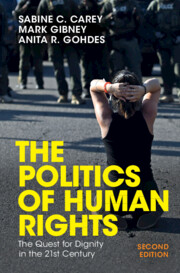
Accessible and engaging, The Politics of Human Rights offers a fresh, empirical approach to understanding human dignity and the global responsibility to protect it. Unlike traditional texts, this textbook moves beyond theory, using data-driven insights to explore why human rights violations occur and how they can be prevented. It emphasizes shared responsibility across borders to uphold human rights. Designed for students and educators, this fully updated edition enhances learning with discussion questions, recommended readings, and a unique collection of films, podcasts, and websites that bring human rights issues to life. It provides a well-rounded perspective, grounded in latest social scientific research, for anyone interested in human rights. Whether used for introductory courses or interdisciplinary studies, this book equips readers with the knowledge and tools to critically engage with human rights issues, making it an essential resource for understanding and advocating for human dignity in the twenty-first century.
In this chapter we apply the theoretical model we introduced earlier to the behaviour of leaders to find out what alarms them, and under what conditions they are able and willing to order repression. We do not argue that we can accurately predict and explain every act of violence and repression. But we show how it helps us understand empirical patterns of repression. This model can inform our assessment of when we are most likely to observe human rights violations. To explain how context shapes human rights violations, we concentrate on why political regimes influence leaders’ threat perceptions and why democracies have the best human rights records, and why they do not always guarantee the protection of everyone’s basic rights. We outline the influence of mass dissent and of socio-economic factors. The chapter concludes with a brief discussion of how context shaped respect for human rights in six countries.
This brief paper aims to consider the impact of Israel’s settler-colonial measures on workers in the West Bank of the occupied Palestinian territories (oPt) after October 2023. Although the ongoing war has been waged on the Gaza Strip, with devastating repercussions for lives and livelihoods in the Strip, Israeli colonial measures in the West Bank have had a grave impact on all segments of Palestinian society, including workers. These measures include: First; closure of the Israeli labor market in the face of tens of thousands of Palestinian workers. Second, broadening the system of movement restrictions within the West Bank which led to disruptions in local production and trade thus damaging private sector operations. Third; Israel’s continued withholding of Palestinian custom duty revenues with adverse impacts on workers in general but particularly public sector workers. To assess the impact of these measures, the paper utilizes a number of indices to assess the situation of these workers; including labor supply, unemployment, wage levels, distribution across sectors, informality, and workers’ rights. The paper finds a grave deterioration in the situation of workers in the labor market at all levels, with dire repercussions for workers and their families.
The goal of this chapter is to introduce the crisis of missing and murdered Indigenous women and girls, settler colonialism, and patriarchy. It begins with the story of Abigail Echo-Hawk, the director of the Urban Indian Health Institute, and an enrolled citizen of the Pawnee Nation of Oklahoma. Abigail has advocated for decolonizing data to stop the crisis of missing and murdered Indigenous women and girls in the US. Informed by tribal critical race theory (TribalCrit), this chapter defines and examines popular myths of settler colonialism and patriarchy, two intersecting systems at the root of this crisis and the genocide of Indigenous peoples in the US. Settler colonialism by White Europeans involves seizing land, eradicating Indigenous peoples and culture, and creating a permanent settler society on that territory. Patriarchy is a system of gendered domination that invests men with exclusive rights, authority, and privilege over women. The chapter includes a Food for Thought section on the climate crisis and the Land Back movement. It ends with a discussion of Abigail Echo-Hawk and the importance of stories.
What is happening in Gaza now is a total displacement of any form of normality. This displacement of the normal has been effected by a population-wide project of social reproduction. Every Gazan, including children, is solicited to reproduce life, to survive. At the same time, social reproduction in Palestine has always also entailed insurgent possibilities, where this form of labour has indeed sustained and reproduced Palestinian revolutionary action. From collective kitchens to local initiatives of care for children, to using drones as musical instruments to distract children from the deafening violence of its soundscape, social reproduction is iterated as both survival and insurgency. This short intervention tries to think through the question of how to make sense of social reproduction as capitalist oppression through the unwaged housework, and as colonial violence through the mass extermination of a population, without leaving behind its potential for insurgency?
This chapter traces the rise of a market-critical vision of human rights in the solidarity movement with Central America. From 1977 onward, solidarity activists (including New Leftists, liberationist Christians, advocates connected to Social Democracy, and radical humanitarians) supported the revolutionary struggles in Nicaragua and El Salvador. Before 1979, solidarity activists and emissaries from the Sandinista guerrilla employed the politics of emergency to vilify the regimes of Anastasio Somoza in Nicaragua and Carlos Humberto Romero in El Salvador. After their overthrow in 1979, solidarity activists traded the politics of emergency for a politics of revolution. Activists came to believe that building social justice in Central America necessitated revolutionary state building. Market-critical human rights served solidarity activists to defend the Salvadoran guerrilla and the Sandinistas, even as they were accused of violating the rights of ethnic and political minorities. Market-critical activists refused to see the politics of revolution as a choice between morality and social justice; rather, they saw revolutionary social justice as the precondition for a moral society.
Global capitalism is facing a systemic crisis that will involve ongoing disintegration rather than a sudden collapse. The study has outlined a theory of global capitalism's exhaustion. The most likely scenario is a new round of capitalist expansion through digitalization that momentarily restores growth and profit rates yet aggravates the underlying contradictions that drive the crisis. Radical redistributive and regulatory reform advocated by sectors of the transnational elite may attenuate social polarization, expand markets, and mediate intra-capitalist competition and interstate conflict, but only for a time being. China will not become a new global economic anchor to world capitalism. As the crisis deepens, capitalism's extermination impulse is rising to the surface, as seen in the Israeli genocide in Gaza, the spread of mega-imprisonment around the world, and the hardening of a global police state. A global revolt is underway but where it is headed is not clear. The future may involve a worldwide fascist dictatorship, a global reformism, a revolutionary rupture with capitalism, or the collapse of global civilization, depending on how collective agency and contingency play out.
This article examines recent developments relating to the use of third-party findings of fact at the International Court of Justice (ICJ). A proliferation of fact-finding mechanisms creates more opportunities for litigants to ask the ICJ to rely on third-party facts. This demands renewed attention to how the ICJ responds to this type of evidence, especially given the rise of public interest litigation that may depend especially heavily on such materials. The analysis focuses on the ICJ’s approach in recent requests for the indication of provisional measures and asks whether the Court’s approach to third-party evidence differs depending on the phase of litigation, using the 2024 judgment in Ukraine v. Russia as a case study. Ultimately, recent decisions suggest that the ICJ’s efforts to distinguish evidence generated through an adversarial, court-like process from findings of fact based on investigation and fieldwork are often blurred in practice. Moreover, while the Court’s liberal approach to third-party evidence at the provisional measures phase may be justifiable, the quest for coherence in how the Court approaches third-party evidence, especially on the merits, remains a work in progress. To that end, the article suggests ways in which the Court could engage more closely with third-party fact-finding reports in the fulfillment of its adjudicatory function.
The article demonstrates that the orders of the International Court of Justice (ICJ) on the Convention on the Prevention and Punishment of the Crime of Genocide in the Gaza Strip are highly problematic from a legal perspective. There are strong indications that the ICJ acted outside the scope of its authority by adopting a very vague but progressive interpretation of the Genocide Convention combined with a novel application of Article 41 of the ICJ Statute, which allowed the ICJ to adopt specific interim measures in the first, second and third orders. Finally, an overall analysis indicates that the ICJ has begun to act as the ultimate genocide prevention body in attempting to enforce a general duty to minimise human suffering in Gaza. While this might be seen as a laudable exercise to protect civilians, it seems to be beyond the scope of the Genocide Convention and the judicial authority of the ICJ.
Chapter 6 discusses the representation of memory in trauma narratives. Accounts of victims of childhood trauma are contrasted with the testimony of Holocaust survivors. I argue that that the distinctive qualities of trauma narratives can also be understood as differences in the culturally constructed landscapes of memory that shapes the distance and effort to remember affectively charged and socially defined events. Landscapes of memory draw from implicit models of memory that influence what can be recalled and warranted as accurate. Trauma narratives involve cultural models and metaphors of personal and historical memory. For them to function as personal and collective history, there must be public places for them to be told, acknowledged, and retold. The political recognition of collective identity and history can help create such a place. Individuals’ stories, in turn, can serve as testimony to ground collective history and call for further moral and political response. Understanding the personal, social, and political meanings of trauma in theory and practice requires tracing the systemic loops that link memory, symptom, and response with a landscape of cultural affordances.
The last chapter of the book critically examines the production of history within multilayered matrices of power – influenced by “precolonial,” colonial as well as contemporary contexts. Two key concepts are the main focus of this chapter: the “greater Rwanda” thesis for Rwanda, and “balkanization” discourses for Congo. The chapter traces how both concepts instrumentalize the past to explain the present, and at times are used to justify violence or interference within the context of tense relationships between Rwanda and Congo as well as the protracted conflict in the region since the 1990s. The chapter shows that while both discourses are crucial to understand meta-narratives of the nation in both countries, they also need to be considered in their cross-border context, as they are in constant dialogue and function as cross-border foils.
The chapter also addresses how in Congo historical narratives are mobilized in debates over citizenship, a pivot of conflict in the region, emphasizing that these discourses were often constructed with the imperial débris left by the Belgians. The chapter further considers how memories about Rwandan aggression in the nineteenth century are used to “naturalize” conflicted relations between Rwanda and Congo, turning “suffering together” – at the hands of Rwanda – into an important part of defining Congolese nationality. However, as the chapter also emphasizes, while such victimhood discourses are often instrumentalized politically, they do not mean the suffering is less real. Moreover, in Rwanda as well, suffering has at times been turned into a political tool.
This chapter considers examples of State enforcement of international law, including in cases of war crimes and genocide. It then assesses collective enforcement under mechanisms provided for in the UN Charter, giving particular consideration to UN sanctions, including Australian law and policy approaches giving effect to sanctions, and peacekeeping.
The issue of international rightful conduct, as an expression of international legitimacy advanced by international law, concerns not only the state and the individual but also international organizations. However, this chapter focuses on the state and the individual because they are particularly significant international rights holders. Due to the hierarchy among international rights holders, with the state at the top, the determination of the rightful conduct of states is a crucial aspect of rightful conduct. This introduces the question: What are the right or legitimate ways for states to behave? The answer to this question is based on the actors with which states interact and toward which they project their power—that is, other states and individuals. Thus, this chapter analyzes the issue of rightful conduct (1) in the setting of interstate relations and (2) in the setting of the attitude of the state toward individuals.
The Lake Kivu region, which borders Rwanda and the Democratic Republic of the Congo, has often been defined by scholars in terms of conflict, violence, and separation. In contrast, this innovative study explores histories of continuities and connections across the borderland. Gillian Mathys utilises an integrated historical perspective to trace long-term processes in the region, starting from the second half of the nineteenth century and reaching to the present day. Fractured Pasts in Lake Kivu's Borderlands powerfully reshapes historical understandings of mobility, conflict, identity formation and historical narration in and across state and ecological borders. In doing so, Mathys deconstructs reductive historical myths that have continued to underpin justifications for violence in the region. Drawing on cross-border oral history research and a wealth of archival material, Fractured Pasts embraces a new and powerful perspective of the region's history.
Despite being outlawed, attacks on cultural heritage remain a pervasive feature in atrocity contexts, the effects of which are compounded by a relative deficit of accountability at the international level. To remedy this gap, the Office of the Prosecutor (OTP) of the International Criminal Court (ICC) issued Policy on Cultural Heritage. However, crimes against cultural heritage are not fully articulated in the Court’s governing instruments. To leverage the protective scope of the Court, the Policy adopts a human rights understanding of cultural heritage which I frame in terms of distinctive relationships between heritage and atrocity crimes. The Policy fertilises a second argument shorthanded as world-building. Against world-destruction, the Policy erects an accountability architecture. Conceptually, it foregrounds an understanding of the world as a cultural construct around which social relations are organised. Crimes against heritage undercut the very notion of what it means to be human; disrupt cultural identification, transmission, and development processes; and deny present and future generations the ability to be specific kinds of cultural human beings. In those regards, this article adds to the world society research agenda of English School theory by examining how the Policy more fully develops the Court’s role as an agent for humanity.
Whereas the previous chapter explored the great unsettling of human security effected by the postmodern war-machine, we now turn to a critical examination of the violent consequences of the globalisation of modern codifying process – in particular, through colonisation and imperialism. The chapter turns to what on first glance appears to be relatively unmediated embodied violence. In descriptive terms, we move from drones to machetes. However, what we find in this violence is the clash of ontological formations as prior forms of identity and meaning are existentially unsettled by modern impositions. The broader argument here is that the global spread of unreflexively modern ways of organising meaning and identity, particularly in situations of unequal power, has had horrifying consequences in the Global South. Imperialism and colonialism have a lasting impact. Abstracting from prior dominant forms of customary and traditional life, it has ushered in forms of violence that were previously constrained: genocide, civil war, and never-ending localised transnational conflict. The chapter uses the Rwandan genocide and Sri Lankan ‘civil’ war as its key points of reference.