To save content items to your account,
please confirm that you agree to abide by our usage policies.
If this is the first time you use this feature, you will be asked to authorise Cambridge Core to connect with your account.
Find out more about saving content to .
To save content items to your Kindle, first ensure no-reply@cambridge.org
is added to your Approved Personal Document E-mail List under your Personal Document Settings
on the Manage Your Content and Devices page of your Amazon account. Then enter the ‘name’ part
of your Kindle email address below.
Find out more about saving to your Kindle.
Note you can select to save to either the @free.kindle.com or @kindle.com variations.
‘@free.kindle.com’ emails are free but can only be saved to your device when it is connected to wi-fi.
‘@kindle.com’ emails can be delivered even when you are not connected to wi-fi, but note that service fees apply.
This chapter examines the narrative of cybersecurity in China’s mass media, with a focus on the domestication of cybersecurity and its subsequent challenge to democracy. While much ink has been spilled over cybersecurity in (Western) democracies, less is known about the narrative and discourse of cybersecurity in an authoritarian context and its implications for global Internet governance and security. This chapter fills this gap by exploring news narratives on cybersecurity in China’s domestic mass media after the enactment of the Cybersecurity Law of the People’s Republic of China in 2017. Drawing on computer-assisted semantic network analysis of 9,094 news articles and commentaries, this chapter uncovers how the Chinese regime is adopting a discourse of cybersecurity to legitimize and consolidate its control over the Internet and to counter the challenges of global Internet connection. This domestication discourse is further utilized to place blame on the West for cyber threats. This chapter concludes with thoughts on the domestication of cybersecurity by authoritarian regimes like China and the challenge of defending cybersecurity.
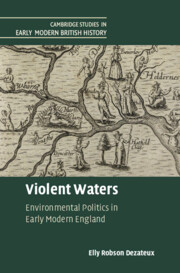
How did ambitious projects of wetland improvement give rise to a new kind of environmental politics in early modern England? This chapter first asks how such projects reconfigure understandings of when, where, and how environmental change took place in this period. Environmental acts were political, it argues, because they relied on and engendered relationships of power: decision-making institutions, laws, legitimacy, and – above all – negotiation and conflict. It next explores what kind of politics were at work in imagining, implementing, and contesting wetland improvement. In emphasising material and institutional progress, studies of ‘improvement’ and ‘the state’ have often overlooked the contingent processes through which productivity and power were made and disputed on the ground. Mobilising custom as a practice and right, wetland communities played a vital role in the trajectory of improvement. Conflict over improvement exposed the contested nature of political authority in seventeenth-century England and generated material landscapes of flux. Finally, this chapter examines how speech acted and actions spoke to remake wetlands via print, maps, institutions, and environments.
Wetlands have deep geological histories, stories of bedrock, sediment, and sea rise. But the direction and speed of flow has been shaped just as surely by human interests and intervention. This chapter asks how wetland commons were used, managed, and disputed in the centuries and decades prior to improvement projects. Moving from the action of ice sheets and mosses to national legislation and daily work, it examines how environmental and political scales intersected. By the late sixteenth century, communities in the northern fens faced amplified flood risks and conflict over shared commons. But these challenges did not necessarily strengthen intervention by state-sanctioned institutions capable of coordinating at a larger scale. A less linear and more fragmented picture emerges in the northern fens, where environmental politics pivoted on rights and responsibilities defined by local custom. Fen custom was reproduced by communal decision-making and participatory acts of walking, remembering, and working. It formed a flexible fabric, adapted in response to dynamic waterways and porous boundaries and negotiated through confrontations on riverbanks as well as courtrooms.
At the time and since, early modern wetlands have been subject to double vision: told as a tale of degradation and disaster or celebrated as a site of biodiversity and collective access. Violent Waters is a book about the politics of rapid, anthropogenic, environmental change in early modern England: a politics in which narratives about scarcity and abundance, the past and the future, justice and value became vital to struggles over wetlands. During projects of wetland improvement, environments were forged at the intersection between material conflicts over the distribution of resources and risk and political conflicts about flows of power.
If drainage aimed to free land from the vagaries of floodwater, then enclosure was necessary exclude commoners and transfer management of land to improving landlords and tenants. The development of ‘absolute’ private property in early modern England has often been analysed via legal categories or socio-economic outcomes. Resituating property-making as an environmental act, this chapter argues that the contested exercise of land rights in Hatfield Level relied on the ability to determine how water moved, where cattle could graze, and what kind of plants grew. It traces the words and practices through which commoners and improvers defined their rights, often hinging on disputes about the just distribution of resources. This chapter explores a spectrum of local responses to improvement, including complaints of scarcity, socially fraught adaptation, and action to reinforce customary rights. As disputes over enclosure escalated, physical acts of cultivation and grazing became means by rival groups asserted ‘right’ as jurisdiction and legitimacy. In doing so, they created contrasting environments, generative of different social, economic, and political relations.
The industrial revolution in Britain was labor-intensive, not capital-intensive, especially in agriculture, but to some extent also in industry. The industrious revolution and the revisionist view of the industrial revolution help explain this dynamic. The importance of labor was reinforced through the use of coercive institutions. However, because of this, the rate of growth tended to slow down after the Napoleonic wars. The solution was found in ghost acres, not only in America, but also in Russia (main imports of Russian wheat to Great Britain).
How were environments and politics remade by sovereigns, floods, mapmakers, migrants, rioters, and writers during wetland improvement projects in early modern England? Violent Waters examines flagship ventures which promised to transform unruly fenland fringes into orderly terrain at the heart of national power and productivity. In practice, these projects sparked constitutional controversy, new floods, and huge riots. The first state-led project in Hatfield Level brought local, national, and transnational interests into contact and conflict for almost a century. Elly Robson Dezateux traces the environmental politics that emerged as water and land were constructed and contested, both mentally and materially. These disputes pivoted on urgent questions about risk and justice, which became entangled in civil war conflict and exposed the limits of central authority and technology. Ultimately, improvement was destabilised by a lack of legitimacy and the dynamism of local custom as a method of environmental management and collective action. Wetland communities, as much as improvers and sovereigns, remade the terrain of politics and the future of the fens.
The English weavers who organized what would become a flourishing cooperative business in 1844 remain famous worldwide. In the second half of the nineteenth century, their story traveled through a newly international labor press, inspiring workers to build cooperatives in the template set forth by the so-called “Rochdale Pioneers.” While scholars have detailed the Rochdale model’s impact on the cooperative movement itself, historians have missed its significance as a vector for wider changes in working-class politics. Drawing on cooperative movement literature and organizational records, this essay traces the transnational circulation of the Rochdale story from Britain to the United States from the mid-nineteenth to the early twentieth century. I explore how the Rochdale method’s influence simultaneously standardized cooperative practices, and reflected a protracted shift in anti-capitalist struggles. Against the backdrop of land dispossession and anti-labor violence, the Rochdale experiment captured hopes for a cooperative economic strategy fit to survive in the modern era. Focusing on the rise of consumers’ cooperation in the United States, I show how organizers mobilized a cooperative vision for a post-enclosure world—one consistent with the structure, if not the spirit, of private property and commodity markets. This article explores how the cooperative movement became a vital site for reimagining economic autonomy as industrial capitalism conscripted ever more people into wage labor.
The relationship between the crown and the gentry was multifaceted. It encompassed both military needs and civilian offices. It could be both direct and indirect, involving personal service – in the royal household for example – on the one hand or indirect in helping to maintain royal rule across the realm. It involved central organs of government – attendance at parliament most particularly – and, crucially, power and influence in the provinces. The relationship was by no means a static one. It evolved and shifted focus over time.
Chapter 6 focuses on agriculture and food processing. Analysis demonstrates that women undertook a little more than a third of agricultural work tasks, doing more work in animal husbandry than arable agriculture but participating widely in both. The work-task approach also allows less well-documented activities such as work on common land to be analysed for the first time. The gender division of labour in agriculture is shown to have been flexible.
Cumulative environmental problems are complex, insidious, slow-motion tragedies that are all too common, from biodiversity loss, to urban air pollution, to environmental injustice. Taking an interdisciplinary, comparative and applied approach, this book offers a new framework for designing solutions using four integrated regulatory functions: Conceptualization, Information, Regulatory intervention and Coordination (the CIRCle Framework). Rules that deliver these functions can help us to clarify what we care about, reveal the cumulative threats to it and do something about those threats – together. Examples from around the world illustrate diverse legal approaches to each function and three major case studies from California, Australia and Italy provide deeper insights. Regulating a Thousand Cuts offers an optimistic, solution-oriented resource and a step-by-step guide to analysis for researchers, policymakers, regulators, law reformers and advocates. This title is also available as open access on Cambridge Core.
This paper examines what Kant says about the economy in Feyerabend’s notes of Kant’s lectures on natural right. While Feyerabend does not report Kant having a systematic discussion of the economy as a topic in its own right the text is interesting in what it shows about the context and the development of Kant’s thought on issues to do with political economy. I look at the Feyerabend lecture notes in relation to things said about the economy in Achenwall’s Natural Law, Kant’s text book, as well as in Kant’s Doctrine of Right. Looking at the three texts in relation to each other illuminates the development of Kant’s thinking and the paper focuses on tracing the relations between ideas to do with the economy in the three texts. I look at Kant’s developing thoughts on the economy in relation to the following ideas: an account of money; an account of value and price; the theorization of labor; taxation; property and the commons.
The article looks at the question of how property is constitutive of identity. Dominance over material resources and formation of markers of identity are often conjoint processes aided by constitutional processes. We frame the discursive construction of property and public space in India through the judicial discourse on the hijab ban in colleges in the state of Karnataka. Courts often look at space as an autonomously existing physical object rather than a socially constructed arena to which access is granted or denied depending on one’s socio-cultural location. We suggest that this is a natural consequence of over-emphasizing the ‘thingness’ of property as opposed to understanding the discursive and historically contingent nature of property rights. This has a direct relation with how certain identities are allowed the freedom to make public spaces their own while others, though occupying these ostensibly neutral spaces, are not allowed to ‘perform’ their identities.
Commons are tangible and intangible goods (e.g., knowledge, health) that should be accessible to all members of a certain community (e.g., global, supranational, national, local). Private law and the commons in scientific research have traditionally been regarded as two mutually exclusive concepts. While the idea of the commons in scientific research is based on the concepts of open access to information, knowledge, data, and materials, the traditional understanding of private law evokes the opposing notions of ownership, patents, and privatization. However, scientific practice has shown how different models based on private law rules can be used to enhance and protect the commons, while at the same time encouraging innovation. This chapter explores, from a theoretical and practical perspective, how private law (property rights, intellectual property, licenses, and other contracts) can be used to develop models to lay down the legal foundation for the construction and further protection of the commons arising from the use and exchange of health data and human biological materials in scientific research for the improvement of human health.
In particular, this chapter’s general objective is to determine how, and to what extent, the interplay between private law and the commons is instrumental in protecting and promoting individual and collective human rights, with particular emphasis on the right to health and health care and the right to enjoy the benefits of science and scientific progress.
This chapter situates George Eliot’s ground-breaking realist novel, Middlemarch, in the context of a longer tradition of provincial fiction. By the time Eliot published Middlemarch, fiction that put small-town life at its centre had developed from the early nineteenth-century ‘sketch’ or ‘tale’ to the chronicle novels of Trollope and Oliphant in the 1850s and 1860s. This chapter argues that Middlemarch is a deliberate provocation regarding the cultural and aesthetic value attributed to the common, the middling, and the local in the 1870s as London exerted ever-clearer centralizing force on culture and education. Middlemarch expands the small forms of provincial fiction through expansive patterning and repetition of everyday plots and locales. This establishes a type of ethical realism in which the fact of frequency does not mean the common is dismissed, but rather is revalued in the narrative as commonality: a ground for collective identity.
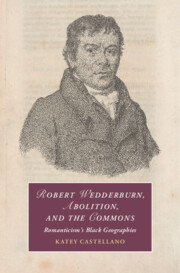
As he rose to leadership of the Spencean Philanthropists in 1817, Robert Wedderburn wrote and published six issues of Axe Laid to the Root, an inexpensive weekly periodical for working-class readers. Axe Laid to the Root instructed its white audience about the radical potential of African-Jamaican land and food-based liberation. The provision grounds, plots set apart from the plantation for enslaved people to grow their own food, were a source of resistance to plantation capitalism, providing food sovereignty and communal identity. The ecological knowledge of the Jamaican Maroons was another source of resistance to plantation economies. Finally, Wedderburn’s writing in “cheap” periodicals aspired to cultivate a transatlantic alliance between the English lower classes, the colonized Irish, and free and enslaved people in Jamaica. The chapter concludes by discussing George Cruikshank’s The New Union Club, which features Wedderburn as a central figure within abolitionist circles.
Robert Wedderburn was deeply influenced by his enslaved mother and grandmother, who raised him in Jamaica. After migrating to London, he became a key figure in ultraradical circles and was prosecuted by the British government for blasphemous libel. Wedderburn’s vision for abolition from below sought to forge a transatlantic alliance between English agrarian radicals and enslaved people in the Caribbean. Wedderburn’s influence was documented in Robert Cruikshank’s caricature, A Peep in the London Tavern, which depicted him challenging the proto-socialist Robert Owen. After a review of existing scholarship that places Wedderburn within ultraradical circles or focuses on his mixed-race identity, the Introduction argues that understanding Wedderburn’s advocacy for land-based insurrection requires dialogue with scholarship in Black geographies. Wedderburn’s insights about place-based resistance to slavery are then illustrated in a reading of James Hakewill’s Picturesque Tour of the Island of Jamaica.
Building on scholarship in Romanticism, Black studies, and environmental humanities, this book follows the political thought of Robert Wedderburn, a Black Romantic-era writer. Wedderburn was deeply influenced by his enslaved mother and grandmother, who raised him in Jamaica. After migrating to London, he became a key figure in ultraradical circles and was prosecuted by the British government for blasphemous libel. Wedderburn's vision for abolition from below sought to forge a transatlantic alliance between English agrarian radicals and enslaved people in the Caribbean. Instead of emancipation administered by British colonial and commercial interests, Wedderburn championed the ecological projects of enslaved and Maroon communities in the Caribbean as models for liberation. His stories of Black, place-based opposition to slavery provide an innovative lens for rereading significant aspects of the Romantic period, including the abolition of slavery, landscape aesthetics, and nineteenth-century radical politics.
This essay presents the first comprehensive analysis of a series of land deeds prepared by the Laraos of Yauyos, Peru, during the First General Land Inspection to secure title to farm- and pasturelands. Scholars have shown the centrality of this first general inspection for the country’s agrarian history, but almost invariably reducing it to the appropriation of native lands and the formation of colonial rural estates. Many works have explored the mechanisms by which Spanish actors secured title to formerly indigenous lands during the Inspection, the start of a process that has been recently termed “the great dispossession.” Much less attention has been placed, however, on the strategies of native Andean commoner groups that not only used the Land Inspection to protect their holdings but also relied on it to break away from their original villages, acquire new lands, establish new settlements, and accrue recognition as independent communities. Through the analysis of the Laraos primordial titles, I show that, key in this process was the collection of narratives and the performance of walkabouts that, when committed to writing in the form of title-maps and witness testimonies, gave communities-in-the-making the necessary tools to succeed in these self-directed projects of commoner colonization.
This paper presents an analytical mapping of institutional design possibilities for alternative ways for digital platforms to institutionalise property and corporate form. It builds on the institutional imagination catalysed by three vignettes of experimental sharing economy initiatives presented towards the start of the paper, each of which highlights the imbrication and interdependence between economic and social dimensions of the sharing economy. The paper then interrogates the vignettes through three analytical entry points to the institutional design of commons-based sharing economies: platform, care and place. By remapping the vignettes’ practices around these three entry points, the paper shows how they help constitute the incipient formalisation of commons-based approaches to the sharing economy. The prospects for carrying out a redesign of property and corporate forms more generally thereby become more visible, providing a sound foundation for more in-depth empirical and historical work on alternative trajectories of the sharing economy in the future.