To save content items to your account,
please confirm that you agree to abide by our usage policies.
If this is the first time you use this feature, you will be asked to authorise Cambridge Core to connect with your account.
Find out more about saving content to .
To save content items to your Kindle, first ensure no-reply@cambridge.org
is added to your Approved Personal Document E-mail List under your Personal Document Settings
on the Manage Your Content and Devices page of your Amazon account. Then enter the ‘name’ part
of your Kindle email address below.
Find out more about saving to your Kindle.
Note you can select to save to either the @free.kindle.com or @kindle.com variations.
‘@free.kindle.com’ emails are free but can only be saved to your device when it is connected to wi-fi.
‘@kindle.com’ emails can be delivered even when you are not connected to wi-fi, but note that service fees apply.
This article examines Paul’s view of the law with attention to the figure of the pedagogue. It suggests that the law stands in a redemptive-historical role to the coming of Christ. It accomplishes this through a comparison between Seneca’s Moral Epistles and Paul. Seneca’s discussion is a helpful heuristic to elucidate Paul’s teaching on Jewish law. Paul highly values the Jewish law and explains that it leads humans to Christ as a pedagogue, although the law itself does not have the power to make righteous. Scholars offer arguments in support of positive or negative attitudes toward the pedagogue, but the pedagogue’s basic role was to bring a child to the age of maturity and rationality. Paul’s thesis is to argue that the Jewish law functions, historically and ethically, to lead one to Christ. This interpretation suggests that the law plays a positive redemptive-historical role in Galatians 3:19–4:11.
Chapter 1 introduces the instrument doctrine in Aquinas’s thought and explores its foundations in Scripture, focusing on Aquinas’s biblical commentaries. In his commentaries on Romans and 1 Corinthians, among others, Aquinas argues that the logic of scriptural teaching suggests that Christs’ humanity causes divine effects as instrument of the divinity, including our resurrection. The chapter shows how Aquinas interpreted the Scriptures as coherent with the Catholic tradition, especially the conciliar teaching on Christ in the early ecumenical councils. Aquinas thinks that the doctrine should be understood within the conceptual matrix of these early councils’ teaching on Christ.
The introduction states the biblical premise of the book’s argument. In Scripture, God saves human beings through the actions and sufferings of Christ in the flesh. St. Thomas Aquinas developed a theological account of the Incarnation that attempts to account for the way Scripture speaks, namely, that Christ’s humanity is the instrumental cause of salvation, or as the book calls it, "the instrument doctrine." The introduction then gives an overview of the book’s argument: this doctrine best accounts for how Jesus Christ saves Christians in virtue of his humanity. It outlines the argument of the seven following chapters.
Leviticus has shaped both Jewish and Christian theology and practice over the centuries. The final chapter examines its influence in the rest of the Old Testament and into the Second Temple period and the New Testament. Levitical theology also influenced a Christian understanding of sacred space in church architecture as well as helping shape the Christian liturgical year.
Augustine’s doctrine of the totus Christus, the whole Christ with Christ as Head and the Church as Body, developed within his preaching ministry. The doctrine emerges from Augustine’s prosopological exegesis of the Psalms and grows into a theological reflection on the enduring union of Christ and the Church that leads Augustine to say that Christ and the Church share a voice, an identity, and a life. This transforming union gives Christians a new identity as members of the Body of Christ through the sacraments of baptism and the Eucharist. The life of the Church reflects the love and unity of Christ in its life and action in the world. Because of its deep roots in his preaching, Augustine’s doctrine of the totus Christus can be called a preached theology. That is, it is a theology developed within the context of preaching, both in the preparation for preaching and in the preaching itself.
Over the time of his ministry, Augustine came more strongly to see that only in heaven will we find the fullness of peace. This chapter reviews Augustine’s preaching on heaven and its peace first in its ecclesial and liturgical settings. It then takes into consideration objections faced by his people to Christian faith in the resurrection of the dead. Then it reviews the face-to-face vision of God and the communal dimensions of the heavenly Jerusalem where angels and saints experience peace together. The chapter focuses on Augustine’s preaching on the words “amen” and “alleluia” that express our whole activity in heaven’s peace.
In his sermons, Augustine applies his more theoretical considerations of God’s impact on human willing to the concrete, day-to-day challenges of his flock. As he seeks to spur his congregation on in its mundane struggles of will, Augustine develops an account of God’s grace and our willing that is at once starkly realistic about human limitations and hopeful about what God can do in and for the faithful, even in this life. While Augustine frankly forecasts that ongoing wrongful desires, painful curative procedures, and inner turmoil will be the norm, he also emphasizes that love eases these burdens, enabling genuine progress and human contributions. The resulting vision carries, rather than dissipates, the energy generated by the biblical friction between such realistic and optimistic assessments of God’s mercy at work in human life. In this sense, Augustine’s preaching on God’s grace and our willing is charged, never neutral.
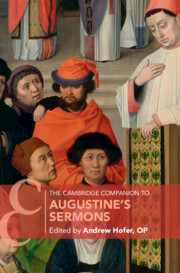
Augustine of Hippo is known for some of the greatest theological masterpieces in Christian history, notably, his Confessions, The Trinity, and The City of God. Over 900 of his sermons, a treasure trove of his insights into God, Scripture, and humanity, have also survived. Given the wide dissemination of many of these texts over the past 1600 years, Augustine is arguably the most influential preacher since the time of the apostles. In recent decades, scholars have paid more attention to his sermons, including those newly discovered, with the result that Augustine's preaching has become increasingly accessible to a broad audience. The Cambridge Companion to Augustine's Sermons furthers this work by offering essays from an international team of experts. It provides a reliable guide for scholars and students of early Christian biblical exegesis, liturgy, doctrine, social practices, and homiletics, as well as for those dedicated to the retrieval of early preaching for the Church today.
Ancient wilderness mythologies have been criticised for their role in forming anthropocentric outlooks on the natural world, and idealising human separateness from the rest of the living world. Laura Feldt here challenges these ideas and presents a new approach to the question of the formative role of ancient wilderness mythologies. Analysing seminal ancient myths from Mesopotamia and ancient Jewish and Christian texts, she argues that these narratives do not idealise the destruction of and dominion over wildlands. Instead, they kindle emotions like awe and wonder at the wild powers of nature. They also provide a critical perspective on human societies and power and help form identities and experiences that resonate with the more-than-human world. Feldt also demonstrates how ancient wilderness mythologies played a decisive role in shaping the history of religions. As a sphere of intense emotion and total devotion, wilderness generates tendencies towards the individualisation and interiorisation of religion.
This chapter examines early Christian (Patristic) literature to see the confluence of Graeco-Roman literature with its topoi and evocations of landscapes or plants as habitats and attributes of the gods, with scriptural allusions to the fruitfulness of the earth as a sign of divine bounty and pleasure. Central to early Christian allusions to plants is Eden, site of the Fall, the defining trauma of human exile from it, and the displacement of paradise to an afterlife. The first part of the chapter charts the development of accounts of creation and Eden, starting with Philo of Alexandria, with whom hexaemeral literature (referring to the six days of creation) originates, in synthesis with Plato’s Timaeus. If plants are elements in the universal ordering of species at creation, they are also topoi in rhetorical-inventive analogies for literary genres or organisation. The relations between scriptural-exegetical and classical-literary are therefore not merely a question of iconography or attribute, but of inventive figures. Related to the meadow is the figure of the garland, which will be so central to Christian symbolism, with its diverse significance as wreath, crown, or varied garland. If the rosary provides one case of the Christian development of classical poetic type, albeit beyond the timeframe of early Christianity, another case, little explored in its literary antecedents, is the crown of thorns, central instrument of Christ’s passion, which is in the Greek of the Gospels a wreath of acanthus.
Jesus Christ names the Trinity’s defining purpose. The Holy Spirit names the Trinity’s unfolding purpose. We recognise as the work of the Holy Spirit the occasions when it anticipates or echoes the action of God in Christ. More vividly, Christ, along with the Father, sends the Spirit, to point to Christ, to make Christ present in creation, to foster the ways human beings are with Christ, to prepare the way for Christ’s first and second comings. Hence this chapter explores Israel, church and God’s realm as particular lenses through which we see that Christ-prefiguring, Christ-imitating and Christ-replicating action of the Holy Spirit. The purpose of this chapter is to articulate the continuous activity of the Holy Spirit in actions of bringing people into relationship with God – in their being with God, one another and the wider creation.
Covenant, community and communion are ways in which God’s means and God’s ends are identical. Covenant is not the ‘Plan B’ after the failure of creation in the fall; it is the fulfilment of the reason for creation, and the anticipation of the true covenant, the incarnation itself. God’s love for Israel goes far beyond any instrumental goodwill: Israel is God’s child, God’s spouse, God’s companion forever. Communion is the centre of the Christian faith: being with but also being together. Communion and community name the two aspirations of church. The one is about being in, and bringing others into, relationship with God; the other is about relating civilly, cordially and sacrificially with one another, and attending to the things that need doing to function humanly. When Jesus talks of the realm of God, he is talking about this communion and community becoming a reality for all people.
Chapter 1, ‘My Lord and My God’ in John 20:30–31’, asserts that the cause, content, and consequences of belief all suggest that Jesus is God. In John 20:27–29, Thomas sees Jesus and calls him ‘my Lord and my God’. After Jesus blesses those who believe without seeing him, John claims that he has written down signs in this book so that his readers can come to believe that ‘Jesus is the Christ, the Son of God’ and ‘receive life in his name’ (John 20:30–31). The proximity of both statements is not coincidental but reveals that 20:30–31 describes the same fullness of belief as Thomas’s exclamation. What emerges is that John’s portrayals of the ‘signs’, the titles ‘Christ’ and ‘Son of God’, and the resulting ‘life in his name’ are fundamentally theological. True belief will always make Thomas’s declaration.
I address three questions. First, how do Eastern theologians configure the way the incarnation is rendered as God’s original intention, and how significant is that insight? The answer is that this is central to their portrayal of God’s purpose. Second, what precisely is God’s purpose in the incarnation? The answer lies in the notion of deification, our being made divine, a concept pivotal to Eastern theology – and yet one that seems in significant respects problematic. Third, are there ways in which Eastern theologians portray God’s purpose that are less problematic, yet equally integral to their notion of God’s original and constant purpose? The answer is, yes there are. I conclude with three key motifs that I find more transferable yet nonetheless wholly authentic to the Orthodox theological imagination: communion, participation and transfiguration.
The debate about Christ’s incarnation, and the intention behind the incarnation, is wide-ranging and far-reaching. It concerns God’s purpose and the exercise of God’s will; the identity of Christ; the reason for creation; the nature of salvation; and the destiny of humankind. The thirteenth-century Franciscans had a particular perspective on these questions, characterised by their twin emphasis on creation and incarnation. Rupert of Deutz pointed out that if the incarnation was subject to the fall, God must have intended the fall. He countered that God had always intended the Word to have an earthly role in the divine plan for the chosen people. Figures such as Bonaventure, Grosseteste and Duns Scotus amplify and qualify these issues, and Scotus concludes that Christ would have come in the maximal glory of creation – even if there had been no fall.
An article reviewing the work of Eric Mascall and suggesting that he is developing an Anglican nouvelle théologie. The importance of Mascall’s work on Christ and the Church is also explored.
This Element will provide an essential tracing of selected Greek views of the afterlife which engage in dynamic tension with the Christian understanding of Paradise as fulfilled in the Resurrected state. The main three sections in this Element are Ideas of the Afterlife in the Greek Tragedians; Plato: The Difficulty of Paradise; and Holiness and Violence: A Christian View of the Resurrected State. The imposition of justice and the expiation of guilt through suffering are necessary prerequisites to our approach to the relationship between Monotheism and Paradise. Additional discussions will focus on weak theology and of a God not transcendent enough to ensure the desire for Heaven. As such, the sections are organized to isolate and trace this thread.
This chapter examines the figure of Jesus in the letters of Paul, where Jesus is most often called Christ or messiah. The analysis briefly considers the linguistic puzzles around Paul’s use of the word “Christ,” then trace the contours of Paul’s particular account of Jesus as the Christ: his being sent by God, dying for others, effecting the resurrection of the dead, subduing all rival powers, and handing over kingship to God.
As proclaimed by the churches, Jesus of Nazareth is the key to unlocking the depth and breadth of the Christian faith. Jesus’s relations to God and to the Holy Spirit ground his potential relation to every human being. As a consequence of his identity, to be unveiled in theology, Christ illuminates a whole set of questions at the frontier of the Creed: among others the openness of human nature to God, the relationship between the human and the divine, the paradox of the singular and the universal, the unity of matter and life, the challenge of hope among historical ordeals. Christ offers a new understanding, not only of the core issues of the Christian faith but also of the present moment of each believer and of what is truly definitive facing God.
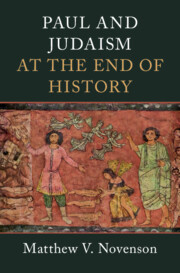
The apostle Paul was a Jew. He was born, lived, undertook his apostolic work, and died within the milieu of ancient Judaism. And yet, many readers have found, and continue to find, Paul's thought so radical, so Christian, even so anti-Jewish – despite the fact that it, too, is Jewish through and through. This paradox, and the question how we are to explain it, are the foci of Matthew Novenson's groundbreaking book. The solution, says the author, lies in Paul's particular understanding of time. This too is altogether Jewish, with the twist that Paul sees the end of history as present, not future. In the wake of Christ's resurrection, Jews are perfected in righteousness and – like the angels – enabled to live forever, in fulfilment of God's ancient promises to the patriarchs. What is more, gentiles are included in the same pneumatic existence promised to the Jews. This peculiar combination of ethnicity and eschatology yields something that looks not quite like Judaism or Christianity as we are used to thinking of them.