To save content items to your account,
please confirm that you agree to abide by our usage policies.
If this is the first time you use this feature, you will be asked to authorise Cambridge Core to connect with your account.
Find out more about saving content to .
To save content items to your Kindle, first ensure no-reply@cambridge.org
is added to your Approved Personal Document E-mail List under your Personal Document Settings
on the Manage Your Content and Devices page of your Amazon account. Then enter the ‘name’ part
of your Kindle email address below.
Find out more about saving to your Kindle.
Note you can select to save to either the @free.kindle.com or @kindle.com variations.
‘@free.kindle.com’ emails are free but can only be saved to your device when it is connected to wi-fi.
‘@kindle.com’ emails can be delivered even when you are not connected to wi-fi, but note that service fees apply.
This conversation draws on an online discussion ‘Casa Adentro (Inside the House): Anti-Racist Art Practices’ (21 May 2021) held with the Afro-Colombian dance company Sankofa Danzafro and the Afro-Colombian art collective Colectivo Aguaturbia. The participants explore the concerns and creative processes that reflect on the durability of racialised social orders and the way racism is manifest in various areas of the lives of Afro-descendant men and women in Colombia. The artists reflect on these issues on the basis of their anti-racist artistic practices.
This chapter explores the theoretical themes of the book: art, politics and anti-racism; emotion and affect in art and politics; Latin American racial formations. It outlines the research project on which the book is based: Cultures of Anti-Racism in Latin America (CARLA).
The chapter analyses how racialised differences have been represented in artistic practice in Colombia, and the relationship between negatively racialised artists and the art world. The first two sections cover from the colonial period to the first half of the twentieth century and address the representation and participation of Black and Indigenous people, using examples from visual arts, literature, music and dance. White and mixed-race artists tended to represent racialised subalterns in primitivist and paternalist ways, although some displayed socialist sympathies in depictions of social inequality, without racism coming into clear view. By the 1930s and 40s, Black artists were critiquing social inequalities and explicitly identifying racism. We then analyse the increasing politicisation of Black art practice, which was linked to international currents such as Négritude and Black Power. Also important was the Black social movement in the country, which began in the 1960s and gathered strength with Colombia’s 1991 constitutional multiculturalist reform. The fourth section explores the work of the Colombian artists – mostly but not exclusively Black – who collaborated with us in CARLA to show how their diverse art practices have addressed racism in increasingly direct ways.
This chapter reflects on possibilities for anti-racism in artistic practice. Drawing on the work of the diverse artists we have collaborated with in the project Cultures of Anti-Racism in Latin America (CARLA), I focus on two types of intervention that I believe help us to think about various ways of doing anti-racism through art. The two types are challenging stereotypes and working with communities, and I explore how various artworks engage with these modes of artistic action and how they create emotional traction and affective intensity. The aim of the exercise is to be productive and helpful in the struggle against racism by providing some tools that artists and organisations can use to think strategically about anti-racism as a practice and reflect on the opportunities and risks that attach to different interventions.
Argentina has a tradition of disavowed racism, with dominant narratives of the nation as racially homogenous due to mass European migration and the supposed disappearance of Indigenous, Black and mixed-race peoples. We argue that the arts have enabled critiques of the subtle ways that race is written into national identity. We analyse race and cultural production in Argentina from the late nineteenth century to the twenty-first, when critiques emerged of discourses of nationality articulated mainly around Europeanness. There are explicitly anti-racist expressions by Afro-descendant and Indigenous creators, but, because of Argentina’s specific racial formation, we focus on cultural products by working-class artists (mostly mixed-race people subject to an elusive yet systematic racism) and their white middle-class allies, who together have fostered strategies that, despite not being explicitly anti-racist, have contributed to addressing structural racism. These multiple forms of artistic expression illustrate the shifting valences of race in Argentina in which racial diversity at times goes from invisibility to a hypervisibility that mobilises, among the white middle and upper classes, paranoid fears about the Other that justify repression, but which also allow affective alliances in the face of racism.
This section present some final reflections from three artists and groups of artists who offer some thoughts on art and anti-racism and on their experiences with the CARLA project. There are contributions from Arissana Pataxó, an Indigenous Brazilian artist; Miriam Álvarez, Lorena Cañuqueo and Alejandra Egido, Mapuche and Afro-Cuban actors and directors behind the Argentine theatre companies Grupo de Teatro ‘El Katango’ and Teatro en Sepia; and Wilson Borja, an Afro-Colombian graphic artist.
The conversation is curated from an online event, Anti-Racist Art in the UK and Latin America: A Conversation (11 November 2020), with Daiara Tukano, Liliana Angulo, SuAndi, and Ekua Bayunu. The line-up was designed in order to explore differences and similarities between experiences of and ideas about racism in Latin America and the UK from the perspectives of Black and Indigenous artists.
Based on conversations between the authors, two of them directors of theatre companies, one Afro and the other Mapuche, in Argentina, we examine the construction of theatrical poetics, which question colonial criteria of creativity and build alternative spaces for drama production in Argentina. We discuss the development of anti-racist staging practices, which go beyond recognition politics, centring the stage as a point of reconnection of subalternised social trajectories and presenting the lives of Mapuches and Afro-descendants in all their complexity. We focus on four axes: a) theatrical poetics as a way to move and generate community via affective interventions; b) theatre as a method of research into Afro and Mapuche histories and lives in their multiplicity and which can generate dramaturgies that challenge ideologies of a European nation; c) procedures that seek to decolonise the bodies of actresses and audiences, using gestures and embodied memories, and to challenge stereotypes about racialised women; and d) a reconceptualisation of the notion of body-territory to analyse how, using the stage, forms of life are reconstructed in all their heterogeneity. Both companies challenge the project of a white-colonial Argentina and bring politics to art.
In this collection, artists and researchers collaborate to explore the anti-racist effects of diverse artistic practices, specifically theatre, dance, visual art and music. By integrating the experiences of Black, Indigenous and mestizo ('mixed-race') artists from Argentina, Brazil, and Colombia, the text interrogates how art with anti-racist intent works in the world and brings special attention to its affective dimensions. Latin America's particular racial formations encourage us to move beyond the pigeon-holes of identity politics and embrace inclusive models of anti-racism, spurred by the creative potential of artistic innovation. The collection features overview chapters on art and anti-racism, co-authored chapters focusing on specific art practices, and five 'curated conversations' giving voice to additional artists who participated in the project. This title is also available as Open Access on Cambridge Core.
The long-lasting impact of Pheidias, antiquity’s master of religious art, especially his Zeus at Olympia, is considered in the context of the theme of personal religion. The chapter adopts a broad chronological perspective and explores how the great master was perceived during the centuries following his lifetime, with a focus on his chryselephantine masterpiece, which he completed in the later decades of the fifth century BCE. It considers how later generations have conceived of his personal religious life, its relation to his famed artwork, and the position his figure has come to occupy within broader cult practices and devotional experiences. Close analysis of Pausanias’ Description of Greece alongside other evidentiary materials shows that by the second century CE, Pheidias was a figure of religious significance in his own right. Greco-Roman authors ascribed to him the qualities of a visionary endowed with unparallel access to Zeus. He left his detectable trademarks in his masterpiece, and his presence was felt in communal cult practices. Centuries after his departure from Olympia, his artmaking has come to be understood as a form of devotional practice.
This article draws upon Walter Benjamin’s concept of “aura” to examine how the reproductions of religious images in domestic settings are (re)infused with spiritual power. Based on an ethnographic study of Coptic Christians in Upper Egypt, I argue that the “aura” of these paintings emerges through semiotic management that tightens a preexisting link, stemming from the minority status of Copts, between house and church. To this end, I discuss how patrons and artists reshape, modify, and enhance both the subject-matter of these reproductions as well as certain formal properties like surfaces and frames. This semiotic labor clarifies a privileged zone of interaction I refer to as “the near-sacred,” which can be compared to Benjamin’s understanding of the conceptual proximity of art to ritual. I conclude by proposing the near-sacred as a site for studying how circulating religious signs (re)acquire a spiritual valence at the periphery of institutional religious practice.
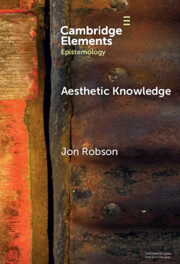
How do we arrive at aesthetic knowledge? This might seem an odd question for philosophers to ask. Some will take its answer to be obvious: we learn about the aesthetic qualities of paintings by looking at them, of musical works by listening to them, and so on. Others will take the question to be misguided, how can there be aesthetic knowledge when aesthetics is merely 'a matter of taste'? Finally, aesthetic knowledge itself might seem singularly unimportant. We don't engage with beautiful artworks to learn that they're beautiful but, rather, to appreciate that beauty. This Element argues that each of these objections is misplaced. Aesthetic knowledge is both valuable and attainable, but canonical philosophical (and folk) views of how we attain it are mistaken. The Element surveys some recent arguments against the reliability of aesthetic perception and in favour of other, more social, sources of aesthetic knowledge.
While nations, societies, and individuals have always been engaged with both the tangible and intangible aspects of cultural objects, such as archaeological artifacts, artworks, and historical documents, the twenty-first century is seeing a significant shift in the law, ethics, and public policy that have long characterized this field. This book offers a comprehensive analysis of recent developments concerning cultural property. It identifies the underlying forces that drive these changes, focusing on the new political balance between source countries and market countries, the strengthening of cross-border lawmaking and law enforcement, the growing impact of provenance research and due diligence as legal, professional, and ethical norms, and the transformative role of digital databases. The book sets out normative principles for designing a better synergy of the hard law and soft law mechanisms that govern cultural property policy and markets. It proposes a property theory of ownership and custody of cultural objects and outlines a model of 'new cultural internationalism' to promote cross-border collaboration on cultural heritage, including new restitution frameworks.
The chapter probes the relationship between law and performance in the context of transitional justice. By analyzing cultural productions and public performances such as films and theater plays, the chapter examines the ways in which lustration has become dramatized through the themes of secrecy, deception, betrayal, and the desire to know and not to know. While these cultural practices offer insight into the public intimate life of lustration, they also show how they become a site and form of social opposition and critical engagement with the terms of lustration and moral autopsy. In particular, the chapter offers a detailed ethnographic study of the experimental theater play by Wojtek Ziemilski, Small Narration (Mala Narracja), which highlights the layered relationship between theater and law and shows the extent to which the judicial and moralized forms of examination and judgment might travel and be contested by alternative forms of knowing, not-knowing, and relating to life, history, and politics.
This chapter invites consideration of Bloomsbury as the Biography group. It details Bloomsbury’s founding and defining contributions to the “New Biography,” particularly in theoretical and creative works by Harold Nicolson, Virginia Woolf, and the most influential British biographer of the past century, Lytton Strachey. Focusing its attention most carefully on the latter two, it explores how both Woolf and Strachey, as “spiritual” writers of the modernist age (Woolf, “Modern Fiction”), understood biography as a means of revealing personality, while diverging on some essential matters. Woolf, whose initial understanding of biography as an art evolved into a more subdued description of it as (mere) craft, anticipated that this aim might be accomplished through archival assiduity over time by a succession of fact-bound biographers, each bringing a different perspective to facts, old and new. Strachey, for his part, who always considered biography an art form, thought such an aim might be accomplished in the present, using fictional means to reveal both the personality of the nominal biographical subject and the personality of the biographer. This chapter finally reads Strachey as the most important progenitor of biographical fiction.
This chapter explores Bloomsbury’s engagements with the United States of America between 1900 and 1960. It analyzes the personal and published writings of various members of the group about American art, politics, and culture. While there is no cohesive “Bloomsbury” position on the USA, it at once fascinated and appalled them, from their university days until late in their lives. From Roger Fry’s tenure at the Metropolitan Museum of Art, until his falling out with J. P. Morgan, through the widespread outrage in Britain at the execution of Sacco and Vanzetti in 1927, and on to J. M. Keynes’ role at the Bretton Woods Conference in 1944 and Clive Bell’s 1950s lecture tours, the USA is a constant presence in their lives. Some welcomed the income that writing for American periodicals provided, while privately disdaining their readers. Others engaged with American politicians on the world stage in the wake of two World Wars. None of those who are associated with “Bloomsbury” held static views about the USA. This chapter explores how they refined and revised their opinions about it throughout the course of their lives.
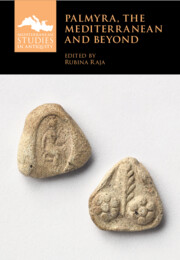
Palmyra is one of the most famous sites of the ancient world and played a major role in the overland trade between the Mediterranean and the East. This volume explores fascinating aspects of Palmyrene archaeology and history that underline the site's dynamic relations with the Roman world, whilst simultaneously acknowledging its extremely local nature. The chapters explore Palmyra as a site, but also Palmyrene society both at home and abroad – as travellers in the then known world and contractors and businesspeople as well as innovative political and military leaders of their time. They illuminate Palmyra's and Palmyrene society's negotiations, struggles, benefits and disadvantages from being part of the Roman Empire, situated on the fringes between the East and the West, and their use of this location to recreate themselves as a central power player – at least for a time – within a rapidly changing world.
Memory, shared realities, and political possibility through the remnant traces of an art installation. The unstable documentation of several related 1990s collective arts installations, all intentionally ephemeral within the abandoned spaces of condemned buildings on the eve of their destruction, opens up questions of plural achievement, the singularity of truth, and the possible contradictions among versions of evidence. These interconnecting collective arts projects were all intended to break free of the commodified gallery space, while calling attention to the vulnerability of both culture and city to rampant financial speculation. Despite the author’s and the archive’s confusion, different versions of the Khaneh Kolangi (the “To-Be-Demolished House”) together provided a key intervention in Iranian postrevolutionary arts culture and practice. They also offer a ghostly metaphor for the ongoing potential power of collective action, individual and shared memory, and political inspiration. Luce Irigaray’s conceptualizations of a plural self and its potentials offers insight into posibilities for differently understanding power, politics, and history.
This chapter distinguishes the work of thought experiments in exemplifying concepts from their role in aiding cognition of regulative ideas. Contemporary interest in thought experiments as a “method of cases” treats thought experiments as providing instances or exemplars. For regulative ideas as Kant understands them, however, no observable instances or exemplars are possible. Nevertheless, thought experiments can direct attention toward regulative ideas negatively (by distinguishing them from what is observable) or positively by indicating a direction for extrapolation or ongoing inquiry. These positive uses are forms of cognition. The distinction between regulative and constitutive concepts matters for thought experiments that deal with regulative ideas such as the self – for example, for thought experiments about personal identity, where a number of objections to the use of thought experiments have been raised. I argue in this chapter that some of these objections can be answered by distinguishing regulative from constitutive concepts.
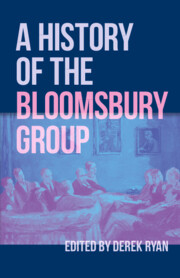
A History of the Bloomsbury Group ranges more widely across the Bloomsbury group's interdisciplinary activities and international networks than any previous volume. From innovations in the literary and visual arts to interventions in politics and economic policy, core members including Virginia Woolf, Leonard Woolf, E. M. Forster, Lytton Strachey, Vanessa Bell, Clive Bell, Duncan Grant, Roger Fry, and John Maynard Keynes are explored in relation to a diverse cast of lesser-studied figures to offer an expansive and multifaceted account of the group's achievements and influence. Leading international scholars provide authoritative and accessible commentaries on a variety of topics under the broad headings of 'Aesthetic Bloomsbury,' 'Global Bloomsbury,' 'Intimate Bloomsbury,' and 'Public Bloomsbury.' Whether addressing established narratives or pushing into new critical terrain, the book demonstrates that, more than a century on from its formation, the Bloomsbury group remains an active and dynamic force in the key critical debates of today.