Refine search
Actions for selected content:
43 results
Dual p-adic Diophantine approximation on manifolds
- Part of
-
- Journal:
- Proceedings of the Edinburgh Mathematical Society , First View
- Published online by Cambridge University Press:
- 10 December 2025, pp. 1-26
-
- Article
-
- You have access
- Open access
- HTML
- Export citation
-
The Generalised Baker–Schmidt Problem (1970) concerns the Hausdorff measure of the set of $\psi$-approximable points on a non-degenerate manifold. Beresnevich-Dickinson-Velani (in 2006, for the homogeneous setting) and Badziahin-Beresnevich-Velani (in 2013, for the inhomogeneous setting) proved the divergence part of this problem for dual approximation on arbitrary non-degenerate manifolds. The divergence part has also been resolved for the $p$-adic setting by Datta-Ghosh in 2022, for the inhomogeneous setting. The corresponding convergence counterpart represents a challenging open question. In this paper, we prove the homogeneous $p$-adic convergence result for hypersurfaces of dimension at least three with some mild regularity condition, as well as for some other classes of manifolds satisfying certain conditions. We provide similar, slightly weaker results for the inhomogeneous setting. We do not restrict to monotonic approximation functions.


Diophantine approximations with restrained denominators. Balance condition on decay and growth rates
- Part of
-
- Journal:
- Proceedings of the Royal Society of Edinburgh. Section A: Mathematics , First View
- Published online by Cambridge University Press:
- 29 August 2025, pp. 1-36
-
- Article
- Export citation
Dynamical Diophantine approximation and shrinking targets for $C^{1}$ weakly conformal IFSs with overlaps
- Part of
-
- Journal:
- Ergodic Theory and Dynamical Systems / Volume 45 / Issue 6 / June 2025
- Published online by Cambridge University Press:
- 10 February 2025, pp. 1777-1826
- Print publication:
- June 2025
-
- Article
- Export citation
-
In this article, we extend, with a great deal of generality, many results regarding the Hausdorff dimension of certain dynamical Diophantine coverings and shrinking target sets associated with a conformal iterated function system (IFS) previously established under the so-called open set condition. The novelty of the result we present is that it holds regardless of any separation assumption on the underlying IFS and thus extends to a large class of IFSs the previous results obtained by Beresnevitch and Velani [A mass transference principle and the Duffin–Schaeffer conjecture for Hausdorff measures. Ann. of Math. (2) 164(3) (2006), 971–992] and by Barral and Seuret [The multifractal nature of heterogeneous sums of Dirac masses. Math. Proc. Cambridge Philos. Soc. 144(3) (2008), 707–727]. Moreover, it will be established that if S is conformal and satisfies mild separation assumptions (which are, for instance, satisfied for any self-similar IFS on $\mathbb {R}$ with algebraic parameters, no exact overlaps and similarity dimension smaller than $1$), then the classical result of Hill–Velani regarding the shrinking target problem associated with a conformal IFS satisfying the open set condition (and for which the Hausdorff measure was later computed by Allen and Barany [On the Hausdorff measure of shrinking target sets on self-conformal sets. Mathematika 67 (2021), 807–839]) can be extended.


Zero-full law for well approximable sets in missing digit sets
- Part of
-
- Journal:
- Mathematical Proceedings of the Cambridge Philosophical Society / Volume 178 / Issue 1 / January 2025
- Published online by Cambridge University Press:
- 20 February 2025, pp. 81-102
- Print publication:
- January 2025
-
- Article
- Export citation
-
Let $b \geqslant 3$ be an integer and C(b, D) be the set of real numbers in [0,1] whose base b expansion only consists of digits in a set $D {\subseteq} \{0,...,b-1\}$. We study how close can numbers in C(b, D) be approximated by rational numbers with denominators being powers of some integer t and obtain a zero-full law for its Hausdorff measure in several circumstances. When b and t are multiplicatively dependent, our results correct an error of Levesley, Salp and Velani (Math. Ann. 338 (2007), 97–118) and generalise their theorem. When b and t are multiplicatively independent but have the same prime divisors, we obtain a partial result on the Hausdorff measure and bounds for the Hausdorff dimension, which are close to the multiplicatively dependent case. Based on these results, several conjectures are proposed.


Uniform Diophantine approximation and run-length function in continued fractions
- Part of
-
- Journal:
- Ergodic Theory and Dynamical Systems / Volume 45 / Issue 4 / April 2025
- Published online by Cambridge University Press:
- 30 September 2024, pp. 1246-1280
- Print publication:
- April 2025
-
- Article
- Export citation
-
We study the multifractal properties of the uniform approximation exponent and asymptotic approximation exponent in continued fractions. As a corollary, we calculate the Hausdorff dimension of the uniform Diophantine set
for a class of quadratic irrational numbers $$ \begin{align*} {\mathcal{U}(\hat{\nu})}= &\ \{x\in[0,1)\colon \text{for all }N\gg1,\text{ there exists }n\in[1,N],\\&\ \ \text{ such that }|T^{n}(x)-y| < |I_{N}(y)|^{\hat{\nu}}\} \end{align*} $$ $y\in [0,1)$. These results contribute to the study of the uniform Diophantine approximation, and apply to investigating the multifractal properties of run-length function in continued fractions.


Schmidt games and Cantor winning sets
- Part of
-
- Journal:
- Ergodic Theory and Dynamical Systems / Volume 45 / Issue 1 / January 2025
- Published online by Cambridge University Press:
- 19 April 2024, pp. 71-110
- Print publication:
- January 2025
-
- Article
- Export citation
-
Schmidt games and the Cantor winning property give alternative notions of largeness, similar to the more standard notions of measure and category. Being intuitive, flexible, and applicable to recent research made them an active object of study. We survey the definitions of the most common variants and connections between them. A new game called the Cantor game is invented and helps with presenting a unifying framework. We prove surprising new results such as the coincidence of absolute winning and $1$ Cantor winning in metric spaces, and the fact that $1/2$ winning implies absolute winning for subsets of $\mathbb {R}$. We also suggest a prototypical example of a Cantor winning set to show the ubiquity of such sets in metric number theory and ergodic theory.


Discrepancy of rational points in simple algebraic groups
- Part of
-
- Journal:
- Compositio Mathematica / Volume 160 / Issue 4 / April 2024
- Published online by Cambridge University Press:
- 13 March 2024, pp. 836-877
- Print publication:
- April 2024
-
- Article
- Export citation
DIOPHANTINE TRANSFERENCE PRINCIPLE OVER FUNCTION FIELDS
- Part of
-
- Journal:
- Bulletin of the Australian Mathematical Society / Volume 110 / Issue 2 / October 2024
- Published online by Cambridge University Press:
- 28 February 2024, pp. 216-233
- Print publication:
- October 2024
-
- Article
- Export citation
JARNÍK TYPE THEOREMS ON MANIFOLDS
- Part of
-
- Journal:
- Bulletin of the Australian Mathematical Society / Volume 108 / Issue 3 / December 2023
- Published online by Cambridge University Press:
- 25 April 2023, pp. 391-405
- Print publication:
- December 2023
-
- Article
-
- You have access
- Open access
- HTML
- Export citation
-
Let $\psi $ be a decreasing function. We prove zero-infinity Hausdorff measure criteria for the set of dual $\psi $-approximable points and for the set of inhomogeneous multiplicative $\psi $-approximable points on nondegenerate planar curves. Our results extend theorems of Huang [‘Hausdorff theory of dual approximation on planar curves’, J. reine angew. Math. 740 (2018), 63–76] and Beresnevich and Velani [‘A note on three problems in metric Diophantine approximation’, in: Recent Trends in Ergodic Theory and Dynamical Systems, Contemporary Mathematics, 631 (American Mathematical Society, Providence, RI, 2015), 211–229] from s-Hausdorff measure, where $s\in \mathbb R$, to the more general g-Hausdorff measure, where g is a suitable class of dimension functions.


On the metric theory of approximations by reduced fractions: a quantitative Koukoulopoulos–Maynard theorem
- Part of
-
- Journal:
- Compositio Mathematica / Volume 159 / Issue 2 / February 2023
- Published online by Cambridge University Press:
- 03 February 2023, pp. 207-231
- Print publication:
- February 2023
-
- Article
- Export citation
-
Let $\psi : \mathbb {N} \to [0,1/2]$ be given. The Duffin–Schaeffer conjecture, recently resolved by Koukoulopoulos and Maynard, asserts that for almost all reals $\alpha$ there are infinitely many coprime solutions $(p,q)$ to the inequality $|\alpha - p/q| < \psi (q)/q$, provided that the series $\sum _{q=1}^\infty \varphi (q) \psi (q) / q$ is divergent. In the present paper, we establish a quantitative version of this result, by showing that for almost all $\alpha$ the number of coprime solutions $(p,q)$, subject to $q \leq Q$, is of asymptotic order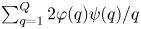 $\sum _{q=1}^Q 2 \varphi (q) \psi (q) / q$. The proof relies on the method of GCD graphs as invented by Koukoulopoulos and Maynard, together with a refined overlap estimate from sieve theory, and number-theoretic input on the ‘anatomy of integers’. The key phenomenon is that the system of approximation sets exhibits ‘asymptotic independence on average’ as the total mass of the set system increases.


Simultaneous p-adic Diophantine approximation
- Part of
-
- Journal:
- Mathematical Proceedings of the Cambridge Philosophical Society / Volume 175 / Issue 1 / July 2023
- Published online by Cambridge University Press:
- 31 January 2023, pp. 13-50
- Print publication:
- July 2023
-
- Article
- Export citation
APPROXIMATING NUMBERS OF THE CANTOR SET BY ALGEBRAIC NUMBERS
- Part of
-
- Journal:
- Bulletin of the Australian Mathematical Society / Volume 107 / Issue 2 / April 2023
- Published online by Cambridge University Press:
- 03 October 2022, pp. 196-203
- Print publication:
- April 2023
-
- Article
- Export citation
Hausdorff dimension of Dirichlet non-improvable set versus well-approximable set
- Part of
-
- Journal:
- Ergodic Theory and Dynamical Systems / Volume 43 / Issue 8 / August 2023
- Published online by Cambridge University Press:
- 04 August 2022, pp. 2707-2731
- Print publication:
- August 2023
-
- Article
- Export citation
-
Dirichlet’s theorem, including the uniform setting and asymptotic setting, is one of the most fundamental results in Diophantine approximation. The improvement of the asymptotic setting leads to the well-approximable set (in words of continued fractions)
the improvement of the uniform setting leads to the Dirichlet non-improvable set $$ \begin{align*} \mathcal{K}(\Phi):=\{x:a_{n+1}(x)\ge\Phi(q_{n}(x))\ \textrm{for infinitely many }n\in \mathbb{N}\}; \end{align*} $$Surprisingly, as a proper subset of Dirichlet non-improvable set, the well-approximable set has the same s-Hausdorff measure as the Dirichlet non-improvable set. Nevertheless, one can imagine that these two sets should be very different from each other. Therefore, this paper is aimed at a detailed analysis on how the growth speed of the product of two-termed partial quotients affects the Hausdorff dimension compared with that of single-termed partial quotients. More precisely, let
 $$ \begin{align*} \mathcal{G}(\Phi):=\{x:a_{n}(x)a_{n+1}(x)\ge\Phi(q_{n}(x))\ \textrm{for infinitely many }n\in \mathbb{N}\}. \end{align*} $$ $\Phi _{1},\Phi _{2}:[1,+\infty )\rightarrow \mathbb {R}^{+}$ be two non-decreasing positive functions. We focus on the Hausdorff dimension of the set $\mathcal {G}(\Phi _{1})\!\setminus\! \mathcal {K}(\Phi _{2})$. It is known that the dimensions of $\mathcal {G}(\Phi )$ and $\mathcal {K}(\Phi )$ depend only on the growth exponent of $\Phi $. However, rather different from the current knowledge, it will be seen in some cases that the dimension of $\mathcal {G}(\Phi _{1})\!\setminus\! \mathcal {K}(\Phi _{2})$ will change greatly even slightly modifying $\Phi _1$ by a constant.


HIGHER-DIMENSIONAL SHRINKING TARGET PROBLEM FOR BETA DYNAMICAL SYSTEMS
- Part of
-
- Journal:
- Journal of the Australian Mathematical Society / Volume 114 / Issue 3 / June 2023
- Published online by Cambridge University Press:
- 22 March 2022, pp. 289-311
- Print publication:
- June 2023
-
- Article
-
- You have access
- Open access
- HTML
- Export citation
-
We consider the two-dimensional shrinking target problem in beta dynamical systems (for general $\beta>1$) with general errors of approximation. Let $f, g$ be two positive continuous functions. For any $x_0,y_0\in [0,1]$, define the shrinking target set
  $$ \begin{align*}E(T_\beta, f,g):=\left\{(x,y)\in [0,1]^2: \begin{array}{@{}ll@{}} \lvert T_{\beta}^{n}x-x_{0}\rvert <e^{-S_nf(x)}\\[1ex] \lvert T_{\beta}^{n}y-y_{0}\rvert < e^{-S_ng(y)} \end{array} \ {\text{for infinitely many}} \ n\in \mathbb N \right\}, \end{align*} $$
where $S_nf(x)=\sum _{j=0}^{n-1}f(T_\beta ^jx)$ is the Birkhoff sum. We calculate the Hausdorff dimension of this set and prove that it is the solution to some pressure function. This represents the first result of this kind for the higher-dimensional beta dynamical systems.


Remarks about inhomogeneous pair correlations
- Part of
-
- Journal:
- Mathematical Proceedings of the Cambridge Philosophical Society / Volume 173 / Issue 2 / September 2022
- Published online by Cambridge University Press:
- 06 September 2021, pp. 369-386
- Print publication:
- September 2022
-
- Article
- Export citation
-
Given an infinite subset $\mathcal{A} \subseteq\mathbb{N}$, let A denote its smallest N elements. There is a rich and growing literature on the question of whether for typical $\alpha\in[0,1]$, the pair correlations of the set $\alpha A (\textrm{mod}\ 1)\subset [0,1]$ are asymptotically Poissonian as N increases. We define an inhomogeneous generalisation of the concept of pair correlation, and we consider the corresponding doubly metric question. Many of the results from the usual setting carry over to this new setting. Moreover, the double metricity allows us to establish some new results whose singly metric analogues are missing from the literature.


QUANTITATIVE ESTIMATE FOR THE MEASURE OF A SET OF REAL NUMBERS
- Part of
-
- Journal:
- Glasgow Mathematical Journal / Volume 64 / Issue 2 / May 2022
- Published online by Cambridge University Press:
- 06 July 2021, pp. 411-433
- Print publication:
- May 2022
-
- Article
- Export citation
-
An effective estimate for the measure of the set of real numbers for which the inequality |P(x)|<Q-w for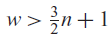 $w > {3 \over 2}n + 1$ has a solution in integral polynomials P of degree n and of height H(P) at most $Q \in {\rm{\mathbb N}}$ is obtained.

Multiplicatively badly approximable matrices up to logarithmic factors
- Part of
-
- Journal:
- Mathematical Proceedings of the Cambridge Philosophical Society / Volume 172 / Issue 3 / May 2022
- Published online by Cambridge University Press:
- 17 May 2021, pp. 685-703
- Print publication:
- May 2022
-
- Article
- Export citation
-
Let
 \[||x||\] denote the distance from
  \[x \in \mathbb{R}\] to the nearest integer. In this paper, we prove a new existence and density result for matrices
  \[A \in {\mathbb{R}^{m \times n}}\] satisfying the inequality
 \[\mathop {\lim \inf }\limits_{|q{|_\infty } \to+ \infty } \prod\limits_{j = 1}^n {\max } \{ 1,|{q_j}|\} \log {\left( {\prod\limits_{j = 1}^n {\max } \{ 1,|{q_j}|\} } \right)^{m + n - 1}}\prod\limits_{i = 1}^m {{A_i}q}> 0,\]
where q ranges in
 \[{\mathbb{Z}^n}\] and Ai denote the rows of the matrix A. This result extends previous work of Moshchevitin both to arbitrary dimension and to the inhomogeneous setting. The estimates needed to apply Moshchevitin’s method to the case m > 2 are not currently available. We therefore develop a substantially different method, based on Cantor-like set constructions of Badziahin and Velani. Matrices with the above property also appear to have very small sums of reciprocals of fractional parts. This fact helps us to shed light on a question raised by Lê and Vaaler on such sums, thereby proving some new estimates in higher dimension.


HAUSDORFF DIMENSION FOR THE SET OF POINTS CONNECTED WITH THE GENERALIZED JARNÍK–BESICOVITCH SET
- Part of
-
- Journal:
- Journal of the Australian Mathematical Society / Volume 112 / Issue 1 / February 2022
- Published online by Cambridge University Press:
- 07 December 2020, pp. 1-29
- Print publication:
- February 2022
-
- Article
- Export citation
-
In this article we aim to investigate the Hausdorff dimension of the set of points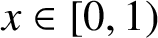 $x \in [0,1)$ such that for any $r\in \mathbb {N}$, $$ \begin{align*} a_{n+1}(x)a_{n+2}(x)\cdots a_{n+r}(x)\geq e^{\tau(x)(h(x)+\cdots+h(T^{n-1}(x)))} \end{align*} $$holds for infinitely many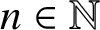 $n\in \mathbb {N}$, where h and $\tau $ are positive continuous functions, T is the Gauss map and $a_{n}(x)$ denotes the nth partial quotient of x in its continued fraction expansion. By appropriate choices of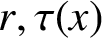 $r,\tau (x)$ and $h(x)$ we obtain various classical results including the famous Jarník–Besicovitch theorem.


Extremality and dynamically defined measures, part II: Measures from conformal dynamical systems
- Part of
-
- Journal:
- Ergodic Theory and Dynamical Systems / Volume 41 / Issue 8 / August 2021
- Published online by Cambridge University Press:
- 30 June 2020, pp. 2311-2348
- Print publication:
- August 2021
-
- Article
- Export citation
ON THE LONGEST BLOCK FUNCTION IN CONTINUED FRACTIONS
- Part of
-
- Journal:
- Bulletin of the Australian Mathematical Society / Volume 102 / Issue 2 / October 2020
- Published online by Cambridge University Press:
- 13 February 2020, pp. 196-206
- Print publication:
- October 2020
-
- Article
-
- You have access
- Export citation
-
For an irrational number $x\in [0,1)$, let $x=[a_{1}(x),a_{2}(x),\ldots ]$ be its continued fraction expansion with partial quotients $\{a_{n}(x):n\geq 1\}$. Given $\unicode[STIX]{x1D6E9}\in \mathbb{N}$, for $n\geq 1$, the $n$th longest block function of $x$ with respect to $\unicode[STIX]{x1D6E9}$ is defined by $L_{n}(x,\unicode[STIX]{x1D6E9})=\max \{k\geq 1:a_{j+1}(x)=\cdots =a_{j+k}(x)=\unicode[STIX]{x1D6E9}~\text{for some}~j~\text{with}~0\leq j\leq n-k\}$, which represents the length of the longest consecutive sequence whose elements are all $\unicode[STIX]{x1D6E9}$ from the first $n$ partial quotients of $x$. We consider the growth rate of $L_{n}(x,\unicode[STIX]{x1D6E9})$ as $n\rightarrow \infty$ and calculate the Hausdorff dimensions of the level sets and exceptional sets arising from the longest block function.


