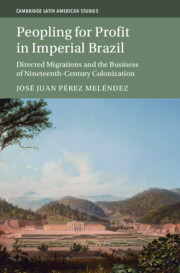


On arrival, the weary traveler approaching Brazil after 1808 encountered the radiant verdure of rugged coasts. Following an uneventful 35-day trip from Liverpool to Pernambuco in 1809, Henry Koster, who stayed in Brazil for several years, gushed at the sight of Olinda: “Its appearance from the sea is most delightful … its gardens and trees … hold out expectations of great beauty.” Further south, voluptuous hills framed the entrance to Guanabara Bay and cradled Rio de Janeiro, the capital of colonial Brazil since 1763 and the home of the Portuguese royal family after 1808. In that year, the Bragança household arrived in Rio fleeing Napoléon’s storming of Lisbon. As an obligatory token of appreciation for British aid in the transfer of the entire Lisbon Court to Rio, the Portuguese prince regent João de Bragança opened Brazilian ports to foreign commerce for the first time. A new era seemed to dawn. “In a few years,” exclaimed a well-traveled British observer, Brazil would become “the Granary of the Universe!”Footnote 1
Yet wartime needs, not splendid vistas or dreams of prosperity, defined the political economy of the besieged Luso-Brazilian state once it landed in Rio. During João de Bragança’s thirteen years in Brazil (1808–1821), strategic imperatives for the survival of the Portuguese Empire initially overtook long-term aspirations for economic growth. In this context, peopling rose as a chief expedient to bridge governmental concerns over defense and development. Luso-Brazilians and foreigners alike understood that a dearth of population both represented a military vulnerability and economically curtailed Brazil’s potential. If Benjamin Franklin came to Brazil, quipped counselor José da Silva Lisboa to João in 1816, he would cast a glance “over its tenuous and facticious [sic] population of slaves, blacks and mixed-colored peoples and would exclaim–everything is so empty.” Peopling these domains thus became a safeguard against external threats and a prescription for ideal futures.Footnote 2
Upon arrival, the Luso-Brazilian government, defined here as the entire Portuguese imperial apparatus, continuously redeployed peopling practices modeled after eighteenth-century reformist precedents to keep itself afloat. But as statesmen applied new colonization models, they incorporated piecemeal innovations that gradually shifted peopling away from the arsenal of defensive measures concocted during the Napoleonic crisis. Their peopling measures began to inch toward developmental ends such as populating agricultural frontiers and reinvigorating mining. After 1815, the Crown leveraged migration to confront the conflicting pressures of British liberalism and Holy Alliance absolutism. Experimenting with Crown-directed peopling drives and with more indirect forms of royal sponsorship, Luso-Brazilians primed themselves for the more entrepreneurial kind of private colonization attempted by German empresarios trained in the cameral sciences. Establishing their own colonies, these foreign travelers and scientists played a central role in transforming ancien régime peopling into the business of colonization. By 1821, when João returned to Portugal, by then crowned as João VI, peopling had undergone a dramatic transformation. From a centennial old-regime tradition of either punitive banishment or periodic and languid directed migrations from the Azores, peopling came into its own as an invaluable tool of modern royal statecraft and one that opened windows of collaboration with private actors. This combination solidified the uses of peopling toward urgent geostrategic ends but also traced the contours of a new kind of peopling for profit.
Population, Prosperity, and the Political Economy of the Luso-Brazilian Court
“In Multitudine populi dignitas Regis” – “from the multitude of people [comes] the dignity of the King.” So exclaimed a chief chronicler of João’s time in Brazil, celebrating the prince regent’s authorization of foreigners and their industries after 1808. Citing only the first half of the Book of Proverbs 14:28, the chronicler cleverly omitted the rest: “et in paucitate plebis ignominia principis” – “and a dearth of people ruins the prince.” Prince João was well aware. Arriving with shiploads of courtiers, bureaucrats, and servants, the royal family had performed a daring demographic feat that justified the chronicler’s enthusiasm. In the early 1800s, Brazil had an approximate population of 3.33 million, with the city of Rio holding over 54,000 inhabitants. The sudden influx of at least 10,000 Portuguese to Rio, and the many foreigners in their wake, represetented a significant demographic injection that heightened the contrast between a populated Brazilian littoral and vast but sparsely inhabited hinterlands.Footnote 3
Low population density turned Brazil into an ostensibly blank canvas for European visions of prosperity partly fueled by an ongoing “agricultural renaissance.” Throughout Brazil’s captaincies, new commodities accompanied the recovery of the more traditional sugar industry as old colonial products such as gold, pau-brasil, and whale oil declined. In Maranhão, cotton and rice had a promising start. In the south, the sub-captaincy of Rio Grande de São Pedro began to produce wheat as it conquered internal markets in beef and hides. And coffee began to be cultivated on a small scale in the mountains around Rio de Janeiro. By 1806, Brazilian products constituted 62.4 percent of Portugal’s combined exports and re-exports.Footnote 4
Eighteenth-century statesmen latched expectations for such economic prosperity to population. Royal officials routinely shipped cohorts of young casais (couples) from the Azores and Madeira to start povoações (population nuclei) across Brazil, setting precedents that nineteenth-century observers would look back upon. In 1809 and closer to Rio, an English traveler described the plantation of an Azorean-born landowner who had managed to plant 5,000 coffee bushes with the help of six slaves and two sons, and whose example would “stimulate the emulation of his neighbors.” Still in 1830, and farther north, one geographer attributed the populous nature of the Amazonian town of Bragança to a considerable “white population” of “Azorite” descent.Footnote 5
Grafting populations onto an ostensible Arcadia had been a slowly developing royal project. In 1747, a royal provision minutely defined the conditions for transport and settlement of Azorean colonos in Santa Catarina, systematizing what had previously been a largely unstructured practice. Then, with the accession of José I to the Portuguese throne in 1750, the king’s notoriously sanguine minister, Sebastião José de Carvalho e Mello, future marquês de Pombal, incorporated a more diverse roster of colonization modalities into his imperial reform program. He redirected convict exiles to Mato Grosso and the Amazon basin and established the Directorate of Indians (1757) to “protect” and “civilize” indigenous peoples in aldéas (villages) meant to acculturate them, exploit them for labor, and marry their women to incoming colonos.Footnote 6
Most importantly, Pombal created two pathbreaking monopoly companies in the Brazilian north and northeast that would function as the earliest points of reference for nineteenth-century colonization companies. The Companhia Geral de Grão-Pará e Maranhão of 1755 and the Companhia Geral de Pernambuco e Paraíba of 1759 propelled Pombal’s imperial vision as “company-states.” Similar to, but less powerful than, the British East India Company, the Companhias Gerais sought to structure entire Brazilian regions thanks to the significant governance power outsourced to them by Pombal.Footnote 7 Significantly, these Companhias Gerais pursued very diverse peopling policies toward two guiding objectives: increasing labor pools and establishing revenue-generating population nodes. In doing so, they indistinguishably folded very different kinds of populations – colonos, convicts, Indians, newly imported enslaved Africans – into an integrated vision guided in the main by a drive for fiscal gains, on the one hand, and private dividends, on the other.
While Luso-Brazilian statesmen reflected back on these corporate precedents for decades, in the immediate aftermath of Pombal’s 1777 downfall, they continued their search for reformist models focused on transporting and managing populations, particularly in orphanages and poorhouses established across Europe. By 1794, Luso-Brazilian administrators had familiarized themselves with prospective bureaux de charité upon the Loire, subscription-funded hôtels in Lyon, the ozpedali, albergui, and retiri of Sardinia, and even Thomas Jefferson’s own iterations of these for Virginia. Such initiatives featured prominently in the outlay of the Arco do Cego, a royal publishing initiative established in Lisbon in 1799 focusing on the dissemination of practical improvements and scientific knowledge.Footnote 8
Punitive forms of population transport endured, as when João ordered vagrants from Pernambuco to be transferred to the African Portuguese outposts of Angola and Benguela.Footnote 9 Yet reformists like Rodrigo de Souza Coutinho soon began to spell out nonpunitive alternatives. In 1803, for instance, Souza Coutinho counseled populating the wastelands of Trás-os-Montes with poor peasants and decommissioned soldiers to alleviate poverty, one of a number of measures he proposed expressly “to see population grow.”Footnote 10 By the hand of Souza Coutinho and others, peopling gradually shed old-regime practices and began adopting novel trends in poor relief and Malthusian-inspired drives to promote population growth.
This change unexpectedly accelerated in 1807, when the royal household itself partook in an improvised and unintended transfer that Souza Coutinho had proposed as early as 1799. As Napoleonic troops marched toward Lisbon, the Braganças, their courtiers, and the entire imperial government hurriedly set sail to Rio in an escape that marked a profound political shift: the transformation of Brazil’s old colonial capital into the seat of the Portuguese Empire.Footnote 11 The change had an immediate peopling effect because at least some 10,000 Portuguese arrived with the royal family, forcing the city into a sudden expansion beyond colonial-era confines. The prince regent saw this as an opportunity not only to adopt measures to regulate property but also to capitalize from its rising value. After requisitioning properties to house nobles and officers, João imposed the urban dízima, a 10 percent levy on property, and quickly extended it to inland towns in 1809. As historians have shown, the Bragança ruler would remain beholden to merchants and slave traders representing the wealthiest 10 percent of Rio’s population and the Crown’s leading creditors. But, from the moment of arrival, he also began implementing measures meant to leverage population growth while promoting it in a careful balance that buttressed Rio’s transformation from a city of about 50,000 to one of 100,000 inhabitants by 1820.Footnote 12
Defense and Development
Notwithstanding revenue-generating visions, military imperatives took precedence over long-term economic goals upon the Court’s arrival in Rio. The threat of a French invasion was compounded by the rising unrest across Spanish America following the crisis of 1808, when the Spanish king abdicated his crown under Napoléon’s orders. In the years ahead, the political situation in the Río de la Plata remained in flux, and the Portuguese Crown contemplated a host of possible scenarios, from carlotistas who called for João’s wife, the Spanish princess María Carlota, to claim the Spanish throne, to heterogeneous republican-inclined armies of indigenous peoples who could tip the balance of revolution one way or another.Footnote 13
Preempting these perils, Souza Coutinho submitted a master plan to the prince regent to protect Brazilian lands from French invasion and safeguard frontiers with Spanish America. Beginning with the construction of the first gunpowder factory in Brazil, Souza Coutinho’s plan strategically integrated imperial resources. Military expeditions from Mozambique would, in theory, seize the Île de France and Île Bourbon (Mauritius and Réunion), while Brazilian forces invaded French Cayenne. Meanwhile, a good supply of tropical hardwoods allowed Bahia’s shipyard to build eleven war vessels of varying tonnage within a year.Footnote 14 Souza Coutinho sought to multiply that level of production across Brazil by importing drought-resistant trees from Macao and Goa to the Amazon and the Brazilian northeast and seeding diverse pine plantations in southern Brazil to compensate for the loss of the Baltic timber trade. Hemp cultivation, a constant but elusive pursuit since Pombaline times, would in turn provide cordage to replace shipments from Riga.Footnote 15 In addition, new foundries would produce anchors and copper laminates to galvanize a new Luso-Brazilian naval force.
Notably, Souza Coutinho’s plan also incorporated strategic peopling measures, recommending “the emigration of any loyal, industrious vassals that wish to come to add to the force and population of the Empire.” In 1808, the prince regent followed suit by ordering the transport of 1,500 Azorean families to Rio Grande do Sul in response to Souza Coutinho’s recurrent concerns with both “the need to people that … frontier captaincy” and the perceived overpopulation of the Azores. Interestingly, in order to carry out these directed migrations, Souza Coutinho proposed a partnership with “foreign capitalists” who could provide the necessary naval infrastructure in the Azores, signaling an early opening to the profit-oriented facets of peopling projects.Footnote 16
Souza Coutinho’s vision also guided the prince regent toward assertive military action. In 1809, a Luso-Brazlian land-and-sea operation took the French outpost of Cayenne. Portuguese forces then mobilized in the Banda Oriental (present-day Uruguay) in 1811, eventually taking control of Montevideo, which became the seat of the Brazilian Kingdom’s new Cisplatina province. As these plans played out, a cash-strapped Crown tried to tether new revenues to land occupancy by issuing ordinances in 1809 and 1810 that favored long-term cultivation and population growth. These ordinances increased taxes on forais (ecclesiastical and Crown lands receiving special privileges), distributed baldios (wastelands), and revived emphytheusis, a life-long lease on the use of government property.Footnote 17 In doing so, however, they incited ecclesiastical and mainland Portuguese objectors who stymied their application until Souza Coutinho passed away in 1812.Footnote 18 Nevertheless, Souza Coutinho had reared Brazilian acolytes who would uphold his legacy by bringing the lessons of their training to the service of the state with important ripple effects on peopling. José Feliciano Fernandes Pinheiro, for instance, translated works on agricultural improvement in British colonies and poorhouses in Munich at the Arco do Cego from 1799 to 1801 before turning to government service for years to come in Rio Grande do Sul, a newly opening and strategically important peopling frontier.Footnote 19
José Bonifácio de Andrada e Silva was perhaps the most outstanding of the students endorsed by Souza Coutinho as he moved the needle of peopling from defensive to developmental applications. After studying at Coimbra under Italian Physiocrat Domingos Vandelli, José Bonifácio obtained a government bursary to train in numerous European universities, which allowed him to refine and actualize a practical vision of peopling as part and parcel of a broader strategy for state development. During his decade-long travels for study, no residency proved more consequential than his long stay at the school of mines at Freiberg, where he worked closely with faculty trained in the cameralist sciences developed at the University of Göttingen and other German centers of learning. Cameral sciences, or the “sciences of the state” as they were also referred to, encompassed a broad constellation of academic disciplines geared toward practical administrative knowledge.Footnote 20 Cameralists prized population as both a means for and an end to their interest in perfecting administrative and economic practices to maximize government revenues. When José Bonifácio began applying the lessons learned at Freiberg, his ideas very much aligned with the populationism adopted not only in German kingdoms but also in empires like Russia.Footnote 21
José Bonifácio returned to Portugal in 1801 to teach at the Casa da Moeda and then at Coimbra as chair of mineralogy before being appointed intendant general of mines and forests. In this latter role, as he went about reorganizing mining endeavors and pine plantations in Portugal, he crucially recast peopling as the necessary flipside of mining, which in his view “populate[d] barren mountains … and fill[ed] them in time with villages, towns and cities” while producing state revenues through taxes on consumption.Footnote 22 When he returned to Brazil after decades studying and working overseas, he also championed private companies as those used “in Germany, Hungary and the Northern Kingdoms” to lead mining endeavors, bringing peopling and companies into the same developmental paradigm centered around mining.Footnote 23
José Bonifácio’s administrative, company-friendly, and peopling-oriented meliorism helped him organize a network of collaborators familiar with or trained in German mining sciences. This network led the first company effort involving the importation of foreign specialized labor. Thanks to his friend Silvestre Pinheiro Ferreira, who was then the Portuguese chargé d’affaires in Berlin, José Bonifácio contracted Wilhelm von Eschwege, a mining specialist trained in Göttingen, and Friedrich Varnhagen, a military engineer from Hesse, to serve as foundry directors in Portugal and later brought them to Brazil when his brother, Martim Francisco Ribeiro de Andrada, another Arco do Cego alumnus, revived plans for the São João do Ipanema foundry near the iron deposits of Sorocaba, São Paulo.Footnote 24 Seeing the possibility of domestic weapons manufacturing, Souza Coutinho approved the incorporation of the foundry into a joint-stock company strongly backed by the prince regent. However, this opportunity soon soured when the racketeering of the personnel recruiter in Stockholm led to losses equivalent to 19 percent of total production costs in 1813. Varnhagen then assumed command and by 1820 steered Ipanema to full operations with a roster of several German molders and 89 enslaved workers under their orders.Footnote 25 The experience laid bare the fact that, despite cameralist ideals, economic plans involving new companies and imported foreign workers remained vulnerable to self-enriching opportunists due to their nature as profit-oriented enterprises.
The troubled but ultimately successful effort at Ipanema foundry accompanied other efforts that combined peopling with ambitious economic pursuits on both sides of the Portuguese Atlantic. In Brazil, the Impressão Régia threw its weight behind a bourgeoning populationism by publishing Herrenschwand’s cameralist-infused ideas on population growth. In 1815, a local judge in Lisbon ordered vagrant youth sent to the Alentejo to populate and revive a moribund Portuguese hinterland.Footnote 26 In Brazilian sertões like Guarapuava and the Rio Doce valley, the war against itinerant Indians decreed by the prince regent in 1808 to free up land for settlement raged on as he ordered the transport of Azoreans to the region. Still in 1813, the Crown authorized importing Chinese workers at the behest of Miguel de Arriaga Brum da Silveira, ouvidor-geral of Macau. These workers were originally intended as field hands and naval carpenters but ended up in the new Botanical Gardens and in the royal fazenda of Santa Cruz, where they worked alongside a diverse labor pool and received relatively better treatment than their indigenous or African counterparts. In 1819, a planned contingent of a hundred Portuguese arrived at Desterro (present-day Florianópolis), settling Nova Ericeira, an avatar of their eponymous seaside hometown and a royal-funded homestead that flourished into multiple towns.Footnote 27 These diverse peopling pursuits added up in time to turn the initially defensive, military applications of peopling initiatives into more regionally targeted strategies for economic improvement.
However, the most dramatic shift in peopling from defensive toward development-oriented goals occurred at the Congress of Vienna of 1814–1815, where the Portuguese Crown fell squarely between two contending camps negotiating the borders and balance of a new international order.Footnote 28 On one side, Russia, Austria, and Prussia defined an absolutist bloc intent on restoring monarchies and later officialized as the Holy Alliance. On the other side, Great Britain championed a liberal world order freed from the slave trade. The Portuguese plenipotentiaries participated in negotiations only partially and were forced to deliver hard concessions like extinguishing the trade north of the equator while aggressively pursuing indemnification for British-apprehended vessels. From the sidelines, the Portuguese envoys also reciprocated the overtures of conservative powers.Footnote 29 Russia, which had amicably appointed a consul, Georg von Langsdorff, to Rio in 1813, offered to return Portuguese territories lost to Spain after the Treaty of Badajoz (1801). Prussia in turn considered softening slave trade sanctions and guaranteeing mutual protection for religious liberties in Prussian and Portuguese domains.
Meanwhile, the prince regent took bold steps to insulate his empire from the pressures arising in Vienna. He elevated Brazil to the status of kingdom on a par with Portugal and the Algarves in a nod to the marquis de Talleyrand, the French ambassador to Vienna who allegedly suggested it, but kept the French in thrall by withholding Cayenne as collateral for later negotiations.Footnote 30 After Queen Maria I’s death in 1816, a newly crowned João VI occupied Montevideo, which would soon become Brazil’s new Cisplatina province. His strategic maneuvers concluded in 1817 with his son Pedro de Bragança’s marriage to princess Leopoldina, daughter to the Austrian Hapsburg king and head of the old Holy Roman Empire Francis II.
The Congress of Vienna spelled multiple binds for the Luso-Brazilian government, but the overtures of conservative allies and João VI’s strategic offensives generated fresh opportunities. This dynamic unintendedly repurposed peopling paradigms by providing an overture into Brazil for private actors from Holy Alliance countries. As part of the new state of affairs, German-speaking travelers, diplomats, and artists began streaming in, including Langsdorff and the Austrian scientific expedition that accompanied princess Leopoldina across the Atlantic. These men would soon establish “colonies” in Brazil that expanded peopling beyond government uses and redefined it as a lucrative sphere of business, or more concretely, as the business of colonization.Footnote 31
The German Connection
German visitors to the Kingdom of Brazil benefited from the groundwork laid out by Georg Heinrich von Langsdorff, the consul general appointed by Russia in 1813 who went on to anchor an expansive network of German-speaking colonization entrepreneurs. Born in the Rhineland-Palatinate, Langsdorff hailed from a region with high levels of emigration after the Napoleonic wars, so he was no stranger to the forces behind migratory dynamics. In 1797, he obtained a medical degree from the University of Göttingen, an epicenter of German cameral sciences and the common alma mater for many of the German travelers to Brazil.Footnote 32 At Göttingen, Langsdorff studied natural history under Johann Blumenbach and witnessed the consolidation of administrative disciplines related to statistics and the “sciences of the state” more generally. In 1798, he went to Portugal accompanying one of the many nobles of smaller German states attending Göttingen. Although his patron suffered a fatal edema, Langsdorff stayed in Lisbon as a private physician at the insistence of the Portuguese War minister. However, five years later, he rushed to Copenhagen to join captain Adam J. von Kruzenshtern, a Baltic German about to set out on the first Russian circumnavigation of the world.Footnote 33 With stops at Rio and Desterro, this voyage launched Russo-Brazilian relations and offered Langsdorff his first brush with Brazil.
Notably, the voyage was funded by the Russian-American Company, a state-chartered private enterprise established in 1799 for fur-trading and settlement activities in Alaska and northern California. In this regard, the trip proved instructive for Langsdorff, as it introduced him to the power of companies in relation to settlement activities. The voyage also exposed him to the most varied geographies, rounding Cape Horn to stop at Nuku Hiva (Marquesas Islands), Hawai’i, the Kamchatka peninsula, Japan, and the Kuril Archipelago before reaching the Company’s headquarters in Sitka. In 1805, Langsdorff accompanied Nicolai Rezanov, one of the Russian-American Company’s founders, on another expedition to northern California. Leaving famine-stricken Sitka behind, he visited the Franciscan missions of San Francisco, San José de Guadalupe, and Santa Clara before returning north and eventually traveling by land across Siberia to St. Petersburg.Footnote 34
Setting sail to Rio in 1813, Langsdorff brought along not only firsthand knowledge about long-distance trade and management of settlements but also an equally enterprising colleague in the person of Georg Wilhelm Freyreiss, a naturalist from Frankfurt. Freyreiss soon fashioned himself into a colonization empresario together with a number of other German speakers seeking to establish their own plantations, or colonies, in southern Bahia, a task that he undertook with the help of key contacts and the reconnaissance travels they facilitated. Botanist friends from Stockholm and Uppsala referred him to Lorenz Westin, the Swedish-Norwegian consul in Brazil. Upon Freyreiss’s arrival, Westin funded his first scientific voyage from Juiz de Fora to Vila Rica in the company of Eschwege, then working as director of mines. In 1815, he undertook a second voyage along the southern Bahian districts, this time funded by João VI himself and, thanks to Langsdorff’s connections, accompanied by a team of scientists under the command of prince Maximilian zu Wied-Neuwied, another Göttingen alumnus. Freyreiss learned about Brazilian plant specimens as well as semi-itinerant peoples like the Aymorés, Coroados, and Patachós. Then, he set his mind to settlement efforts similarly to other travelers and expatriates.
Visiting the plantation of Dutch engineer Peter Weyll, in the Almada region, Freyreiss fantasized about a colonial establishment and identified a potential site near the source of River Peruípe. The location fell squarely within Botocudo territory, but Freyreiss espoused notions of coercive indigenous tutelage and apprenticeship even though he bemoaned African slavery. In fact, within three years of arriving, Freyreiss took up an “indigenous attendant” and bartered a Puri boy away from his family during his expedition with prince Maximilian. By the time he requested royal lands for a colony in southern Bahia, he probably envisioned an agrarian establishment run on the backs of indigenous laborers.Footnote 35 He obtained a sesmaria in the district of Porto Seguro, near Vila Viçosa, as did a varied group of Germans and northern Europeans including Weyll and his associates; W. F. baron von dem Bussche, a noble and one-time Mason who served in Jérôme Bonaparte’s short-lived Kingdom of Westphalia; and Peter Peycke, a Hamburg merchant eventually named consul to Salvador in 1821. Later, too, came the family of Charles-Louis Borrell, a merchant from Prussian-controlled Neuchâtel.Footnote 36 Though not organized as a company, these Swiss and German colonos concertedly lobbied state authorities for favors and found a receptive patron in princess Leopoldina, in whose honor they named their colony.Footnote 37
These private colonization efforts incited others to try their hand, including a Bavarian doctor also trained at Göttingen who had served in the Russian army, received an honorary barony from tsar Alexander I, and worked for the Russian-American Company. Anton von Schäffer had a lot in common with Langsdorff, who he sought when he called port in Rio on his way to Hawai’i and China aboard a Russian-American Company ship. Langsdorff introduced his countryman to the royal household before his departure to the South Seas. On his return from Macau in 1818, Schäffer spent a month in Rio and befriended Leopoldina. Profiting from her protection, by 1820 Schäffer arrived in the vicinities of the Leopoldina colony with forty-odd fellow compatriots from Franconia to begin settling his own sesmaria, which he aptly called Frankental.Footnote 38 Schäffer and his neighbors in Leopoldina quickly turned to indigenous labor and, increasingly, to slavery in order to attain unprecedented production levels for the region (Figure 1.1).Footnote 39 In 1832, as the municipal chamber of Vila Viçosa attempted unsuccessfully to expropriate its lands, Leopoldina numbered 86 whites who altogether owned 489 slaves and produced more tax revenue than the city of Vila Viçosa itself. By 1858, about 200 whites held 40 plantations on the backs of 2,000 Black slaves.Footnote 40

Figure 1.1 Slaveholding colonos: Fazenda Pombal in Colônia Leopoldina, c. 1820s–early 1830s
Jean-Frédéric Bosset de Luze (1754–1838), “Fazenda Pombal, Colonia Leopoldina, Bahia,” (undated).
Even though its colonos’ slaveholding contradicted João VI’s expectations, Leopoldina promised to harness peopling toward productive industries and efficient commodity chains. As the press celebrated in 1818, German newcomers in southern Bahia had produced enough cotton and maize to bring to port at Canavieiras via the Jequitinhonha and Salsa rivers that these could soon resemble the Elbe, “the busiest river in the world …!” Southern Bahia’s concessions in fact joined the concurrent flurry of directed migrations authorized by João VI. The king welcomed Chinese horticulturists, Portuguese fishermen, German smiths, and even Spanish royalists emigrating from the River Plate. He chartered an agriculture and navigation company to open up the Rio Doce basin – the first of a series of enterprises over the next half century. And he sanctioned myriad migrant settlements that in a few years went from ramshackle establishments to towns or parishes contributing government revenues.Footnote 41 Yet the German connection facilitated by Langsdorff and soon responsible for a region-wide entrepreneurial push anticipated a different approach to colonization, one that required less government input but would produce, in theory, equal or greater gains for all involved. The problem was that with great promise came great perils, and the Luso-Brazilian government had yet to develop the tools to manage them.
The Start of a Learning Curve
A fresh cohort of capable royal counselors led by Pombal’s pupil Tomás Antônio de Vilanova Portugal shepherded new colonization endeavors. At the command of numerous ministries from 1808 to 1821, Vilanova Portugal promoted peopling initiatives and resolved the frequent complications dredged up by directed migrations.Footnote 42 In 1817, authorities in Lisbon uncovered a Masonic conspiracy aiming to sever ties between Portugal and Brazil and executed the ringleader, Vienna-educated general Gomes Freire de Andrade, together with 11 others, while banishing four of the accused. Among those who avoided the galleys was Friedrich Christian von Eben, baron d’Eben, a Hanover-born officer who fought with the Portuguese against Napoleon’s forces in the Upper Douro. When d’Eben relocated to Oldenburg, he began recruiting conscripts for revolutionary armies in South America and soon confounded local authorities who found it hard to differentiate his activities from João VI’s emigrant drives. As a result, in 1819 Vilanova Portugal determined that it would be ill-advised for the Royal Treasury to directly engage in colono recruitment at the time.Footnote 43
Such complications laid bare the hazards of government-directed migrations and predisposed Luso-Brazilians toward other modalities of official involvement. Empires elsewhere offered useful models. The press in Rio took note, for instance, of Spain’s efforts to populate its Caribbean colonies starting in 1815, when the king offered generous subsidies to migrants coming to Puerto Rico on the condition that they be white and from the mainland, the Canary Islands, or allied Catholic countries in Europe. Imperial Russian policies offering generous subsidies for German emigrants to populate newly conquered territories in Transcaucasia provided another example. Following a similar logic, colonies in Brazil could serve as a frontline for evangelization or even as a low-cost frontier militia against Indians in the likeness of the Landwehr, the national guard devised in Prussia to accommodate war veterans and reduce army sizes. Some of these ideas would only come to fruition if João VI allowed foreign entrepreneurs to take the lead or at least level private initiative with royal concessions and oversight. Soon, the Crown gave in to an offer along these lines that resulted in the establishment of Nova Friburgo, a colony populated by Swiss migrants that quickly gained notoriety.Footnote 44
Conditions of duress across Europe and demographic pressures generated by decommissioned armies at the closing of the Napoleonic wars made Nova Friburgo possible. The end of military service, food shortages, and heavy taxation policies in German polities had sapped artisans’ purses and strengthened emigration as an option.Footnote 45 Contingency also tipped the global scales. On 11 April 1815, a volcanic peak in Indonesia known as Mount Tambora sustained the most potent volcanic eruption in recorded history, generating a sulfur dioxide mantle in the upper atmosphere that blocked sunlight and sent temperatures dipping around the world for months. The eruption made 1810–1820 the coldest decade in half a millennium and generated harvest failures across Europe until 1818. In the German Palatinate and the Swiss cantons, craftsmen lacking subsistence plots suffered the most from the resulting food scarcity, which led stonemasons, tailors, and bakers to emigrate in record numbers.Footnote 46
In 1817, an opportunist from Gruyères named Sébastien-Nicolas Gachet incorporated a societé en commandite to establish farmsteads and dairy farms in Brazil. Gachet had served as secretary to Joachim Murat, Napoleon’s brother-in-law, suffered captivity in Algiers, and worked as customs inspector at Naples before returning to his home canton of Fribourg right at the height of its crisis. Fribourg syndics persuaded him to siphon hungry craftsmen to Brazil and appointed him as a diplomatic agent to get it done. Once in Rio, Gachet secured an audience with João VI and convinced him of the benefits of welcoming Catholic families who would promote industry, grow grain, and educate “savages.” With more than a thousand enslaved workers at his fazenda Santa Cruz by 1816, João VI now had a chance to stage royal support for free labor and patronize an establishment supplying the Court with special crafts and foods. As Dr. Ritter, a Prussian emigrant, enthused to the German press, the Swiss colony would soon provide “fresh butter, rye and wine!” thanks to João VI’s endowment of “all the Privileges and benefits accorded to free Fairs” for the fledgling colony.Footnote 47 Seeing Nova Friburgo as an opportunity to innovate, João VI appointed his first Colonization Inspector in father Pedro Miranda Malheiro. Together with Gachet, and under the purview of Vilanova Portugal, Miranda Malheiro authored instructions to welcome the Swiss emigrants, which serve perhaps as the first migrant reception policy in Brazil. The instructions tasked authorities to board ships with citrus fruit to palliate scurvy and disembark migrants away from the city to minimize illnesses. Colonos were to quarantine for two weeks at Macacu on the northern end of Guanabara Bay before overland travel. At the proposed site of Nova Friburgo, Vilanova Portugal and Miranda Malheiro also envisioned demarcating plots to distribute among the newcomers, sidestepping the archaic legal code that had governed property rights since 1603.Footnote 48
Despite the preparations, the Swiss migrants faced a litany of complications. After a long trip down the Rhine from the cantons of Fribourg, Berne and Valais, they had their baggage stolen in Holland and fell prey to smallpox and a diarrheal malady referred to as the “Rotterdamer.” Of 2,382 migrants, 43 died in Holland, 314 en route to Brazil, and 35 upon disembarking at Macacu. The remaining colonos made the twelve-day ascent up the Sea Ridge to the proposed site of the colony in Cantagallo, where further illnesses and crop failures awaited them in following years. By mid-1820, Nova Friburgo had recorded 536 deaths. Keeping its word against all odds, the Crown continued to nurse the moribund colony.Footnote 49
Meanwhile, propaganda unabatedly stoked emigration drives in the Swiss cantons and German territories. An important Berlin daily celebrated the arrival in Rio of 800 individuals from Fribourg and encouraged commoners to follow suit, offering information about ship departures, advance payments, and Swiss emigration agents. By June, another 800 or so emigrants from Darmstadt, Wittgenstein, and the Palatinate (all close to Freyreiss’s hometown of Frankfurt, which suggests his or his associates’ involvement) awaited voyage to Bahia. Due to forest fires and drought conditions across the Swiss cantons, the newpaper estimated that 1,000 more would emigrate to Brazil over the summer, which incited all classes of speculators to spring to action. Gachet himself began charging a per capita surcharge as part of his profit-seeking practices.Footnote 50 The radius of recruitment expanded in lockstep with opportunities for self-enrichment. From November 1819 to February 1820, nine ships entered Rio from Hamburg, Rotterdam, Amsterdam and Le Havre, carrying 2,228 colonos.Footnote 51
Yet these voyages still confronted significant hardships, providing important cautionary tales for Luso-Brazilian statesmen. Prussian galleon Deigluckhache Reise landed in Rio from Rotterdam with 432 colonos after 68 days at sea, a dangerously long voyage for a packed vessel. The Trajano, which carried colonos’ baggage and implements, arrived more than a month later than scheduled due to inclement weather. Leaving Amsterdam with a full passenger load, the Camilus ran into a sand bank, unnecessarily lengthening the trip. A Swiss committee in London accused these shipments’ organizers of prevaricating, citing their thriftiness on travel accommodations and failure to measure lands in advance at Nova Friburgo.Footnote 52 Worried about such recriminations, Vilanova Portugal cautioned his Hamburg minister, “only once this [colony] has consolidated will we try others.”Footnote 53
These new reservations against government involvement in emigration drives buoyed private efforts of a more exemplary nature such as those led by Langsdorff. Having set up his own fazenda, which he called Mandioca, at the feet of the Serra da Estrela in Guanabara Bay, Langsdorff set out to Europe to recruit colonos in 1820. He published a guide for emigrants in Paris and an expanded German edition in Heidelberg by early 1821. His goal, he claimed, “was not to hire colonists, nor to encourage European migrations to Brazil, but simply to bring incontestable facts … to those who may be interested.”Footnote 54 He reproduced a decree by Vilanova Portugal defining admission rules and favors for colonos as well as travel costs. In the German edition, he also added a section with “Special Thoughts” on the utility of Unternehmer (middlemen or contractors), recommending one by the name of H. G. Schmidt. Langsdorff returned to Rio with somewhere between 80 and 103 German colonos in tow.
At Mandioca, Langsdorff built a profit machine propelled by these workers needs, labor, and debts. Colonos paid 10 percent of their production, a 10 percent government tax legally supposed to begin after ten years of residency but charged by Langsdorff to cover property and transport expenses, and yet another 10 percent for using Mandioca’s waterways for milling. In turn, they had access to tools, lumber, food rations, communal plots, and a few beasts of burden. Langsdorff intended Mandioca as a model, and to that end he hosted and aided his countrymen in scientific and colonization pursuits, especially other Göttingen alumni like Eschwege, prince Maximilian, and Schäffer. However, his setup in fact required an excessive degree of close management and inevitably entailed significant inequities. When Langsdorff left on a pioneering river voyage from Porto Feliz in São Paulo to Belém in 1824, his colonos rapidly absconded, including some substitutes he had brought from Nova Friburgo. In 1826, the imperial government bought his property and closed lingering contractual obligations with remaining workers. A short time later Langsdorff’s hired manager published a scathing account of the Mandioca experiment.Footnote 55
* * *
Langsdorff’s enterprise coincided with momentous political transformations, and together with them crafted a definition of colonization that endured into Brazil’s independence. In 1820, as Langsdorff sailed to Europe, the Liberal Revolution broke out in Porto. Its victors quickly recalled João VI to Portugal to attend a constituent Courts in Lisbon, which, especially when the king arrived in August 1821, threatened to roll back years of political gains for Brazil, as metropolitan deputies considered reverting the kingdom to a colonial status.Footnote 56 Interestigly, Brazilian representatives responded with a repertoire of proposals rooted in colonization, much of it informed by German ideas and acquaintances over the prior decade. Representing São Paulo, José Bonifácio, for instance, suggested replacing sesmarias with land sales to yield revenue for “colonization with poor Europeans, Indians, mulattos and free blacks.”Footnote 57 Colonization, he believed, could also prepare a new seat for the Court in Brazil’s interior, where rivers and roads would connect the Brazilian capital to coastal ports, and forest preservation and land surveying would make way for “Cities and Settlements.”Footnote 58
In April 1822, as Pedro de Bragança declared Brazil free from Portugal, the Unterhammer mentioned in Langsdorff’s tract, H. G. Schmidt, coindicentally sent a proposal to the Courts suggesting how to direct migrations to Brazil in ways that surpassed Russia or the United States.Footnote 59 Having lived in Holland, the United States, Germany, and Brazil, Schmidt authoritatively listed his simple recommendations: speedier embarkations to lower mortality rates, fixing transport costs, appointing a plenipotentiary colonization director in German lands. Yet his most important proposal hinged on organizing colonization juntas at the provincial level to cover transport costs, distribute land and supplies, naturalize colonos upon arrival, and eventually collect a portion of colonos’ production. In short, Schmidt had drawn the blueprint of a country-wide system of colonization administration that defined Brazilian statesmen’s post-independence aspirations thanks to the fact that a deputy from Bahia, Domingo Borges de Barros, took up these ideas when he addressed the Lisbon Courts.
A proven improver, and a founding honorary member of the Philadelphia Society for Promoting Agriculture, Borges did not explicitly cite Schmidt, but he called for an identical system as that proposed by Schmidt – a centralized five-member colonization junta would oversee provincial efforts, each revolving around regional caixas (treasuries) tasked with administering colonies and Indian villages.Footnote 60 Importantly, Borges also made space for private entrepreneurs to run colonization drives at their own expense. The proposal audaciously synthesized recent colonization lessons with the unmistakable mark of German involvement, but ill-fated disagreements at the Courts foreclosed discussion.
Seeing themselves outnumbered, the Brazilian deputies at the Lisbon Courts fled in secret, rushing to Brazil to join the campaign for severing ties with Portugal. After Brazilian independence in 1822, they would attempt to implement versions of Schmidt’s and Borges’s ideas for decades to come. By then, they held a keen, if incipient, awareness of colonization’s evolving arcs. In its form as peopling, it had mutated from an old-regime governmental tool into an urgent defensive stratagem when the royal household most needed it, before turning into an instrument for long-term development. All the while, these statesmen believed, peopling had served to preempt an attack on the Crown’s new abode and to appease both the British and the Holly Alliance. After 1815 and especially with Leopoldina’s arrival two years later, German ideas and interests invigorated colonization as an emergent sphere of private speculative pursuits. Bearing in mind the innumerable variables of that dynamic, some understood the need for a novel governmental approach, one that preserved directed migration as a profitable business without relinquishing the involvement of the newly independent government.
At the break of dawn on 2 March 1826, colonization inspector Miranda Malheiro received the news of the Anna Luiza’s arrival. Aboard the Hamburg galley came 38 men, 35 women, 111 children, and 4 newborns plus 157 soldiers and 22 officers of different ranks recruited by Pedro I, emperor of Brazil (1822–1831). The ship had arrived four days earlier, but miscommunications between the Colonization Directorate and the deputy director of Telegraphs delayed the announcement and kept the 367 colonos onboard. Once alerted, Miranda Malheiro activated the protocol. Indisposed due to age, he sent his secretary, a minor poet later employed by the Empire ministry, to welcome the passengers. At the Navy dock, the ship’s consignee and the Low Countries’ consul in Rio awaited. Some cabinet members joined as the passengers landed. At this point, the Colonization Inspector’s official translator, himself a Saxony native, offered a welcome message ending with a spirited declamation. “Long Live our Emperor! Long live our Empress!” One can almost hear the silence of the weary travelers.Footnote 1
After 88 days at sea, their voyage was anything but over. The non-military colonos were rapidly transported to a warehouse at Praia Grande, where they were fed and housed until authorities determined their final destination (Figure 2.1). Though roughshod as an accommodation, these installations across the bay from Rio became the first migrant reception center with any institutional mooring, as the warehouse was repurposed into transitory housing for colonos only by the Colonization Directorate’s initiative. The mercenaries, in turn, would soon depart on a coasting vessel to the warfront in southern Brazil, where a secessionist conflict in the Cisplatina province had prompted Pedro I into a full-on war with Buenos Aires starting in 1825.
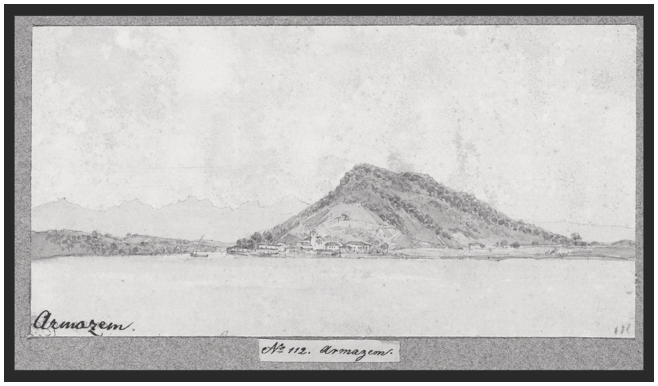
Figure 2.1 Roughshod novelty: Warehouse storage area in Praia Grande (present-day Niterói)
BNd-Iconografia C.I,4,10, Thomas Ender, “Armazém,” (detail, watercolor) in “Zeichnungen von Schiffen, Gräsern und Figuren” (c.1817).
The emperor reveled in these shipments. Word had it that he visited his foreign conscripts daily in the Praia Vermelha barracks next to the Pão de Açúcar boulder guarding the entry to Guanabara Bay. Only his German stallions elicited greater interest according to what empress Leopoldina told her confidante and Pedro I’s own purveyor of colonos and German warmbloods, Georg Anton von Schäffer. By Leopoldina’s own suggestion, Pedro I actually named Schäffer chargé d’affaires in the free Hanseatic cities and the lower Saxony with orders to recruit 2,000 soldiers.Footnote 2 A beautiful thing to behold these uniformed soldiers were in Pedro’s eyes – so much so that in his visit to Salvador to rally for Cisplatina support, he ordered an additional contingent from Lower Saxony to discipline Bahia’s troubled ranks.Footnote 3
Anna Luiza’s landing, the ceremonials held for it, the personnel employed, and the military destination of most of its men all demonstrated the rapid gains in colonization management at the hand of the Brazilian executive. These features also evinced a growing specialization in migrant recruitment and reception. Overseas, Schäffer lured young conscripts under Pedro I’s direct orders, signed contracts, and shipped these and other colonos at cost to either imperial coffers or private individuals. In Rio, a special directorate with its own officials and translators greeted and funneled them to agricultural or military tasks.
These gains came at a price, however. After Brazilian independence, prince Pedro initially sanctioned a Constitutional Assembly in 1823 but arbitrarily shuttered it and exiled its leaders before its proceedings concluded. Then, he handpicked a posse of counselors to write what became the Brazilian Constitution of 1824. Under the constitutional monarchical system, Pedro I’s authority clashed continuously with a novice parliament possessing a heightened consciousness of its attributions.Footnote 4 In this scenario, colonization became a crucial battleground. Executive control of colonization put the emperor at odds with the fledgling legislative power by secretly carrying out unsanctioned military recruitments abroad, and monopolizing petitionary processes related to colonization, which widened the chasm between the two developing spheres of sovereign power. Colonization therefore came to embody a foundational constitutional impasse that only resolved itself when foreign troops inflamed nativist rallying calls against the emperor and gave disenchanted lawmakers necessary leverage to foreclose Pedro I’s options and force him to abdicate.
This chapter traces the successive political uses and meanings of colonization in the first decade of Brazilian independence. Colonization became a site of contention between the constituted executive and legislative powers precisely because legal frameworks to direct migrations and land distribution remained at large. In the absence of statutes, monarch and lawmakers competed fiercely for the jurisdiction of colonizing endeavors as well as for their meaning. Yet, far from a simple tug of war, this constitutional conflict was riven and swayed by multiple military conflicts, including the Cisplatina war (1825–1828) and the Portuguese Civil War sparked by the royal succession crisis (1828–1834), not to mention the colono riots that ransacked Rio in 1828. And, still, even after his abdication in 1831, Pedro, known thereafter as the duke of Bragança, continued to haunt Brazilian lawmakers’ attempts to repurpose colonization to their ends, as they feared rumors of a plan by the erstwhile emperor to “recolonize” Brazil with foreign mercenaries. The executive’s expedient application of colonization toward immediate political ends frustrated efforts to manage colonization proposals under a uniform legal framework during this period. Nonetheless, executive monopoly of colonization did establish the first recruitment and conveyance mechanisms that would make possible future colono transport and arrival policies. Hence, these mechanisms awoke Brazilian statesmen to the utility of colonizing endeavors in times of crisis and beyond.
Constituting Empire: Independence, Colonization and the Executive
The new prince regent Pedro swore to preserve the unity of the Crown as his father João VI rushed to the Lisbon Courts. But by 1822, Pedro adhered to the call for Brazilian independence. Initially hailed as a unifying force, newly minted emperor Pedro I soon instigated profound disagreements with a rising cadre of Brazilian statesmen about the mode and style of government most appropriate for the Brazilian Empire. Notably, colonization became a symptom, a lever, and a casualty of these differences. The emperor and Brazilian lawmakers understood the importation of foreigners, many of whom directly served Pedro I, in radically divergent ways. Their difference in perspective not only reflected opposing viewpoints about sovereign attributions but contributed directly to a deepening cleavage between the exective and the legislative that set back attempts to codify and regulate colonization for many years.
Both Pedro I and the Chamber of Deputies installed in 1826 agreed on peopling as a kind of panacea that could drive economic growth, protect sovereign territory, and address many other post-independence challenges. José Bonifácio set the bases for this view by orchestrating an executive scheme for importing colonos that would soon antagonize the Constitutional Assembly. In August 1822, he instructed Felisberto Caldeira Brant Pontes, Brazil’s new chargé in London, to hire several fully armed and equipped “Irish regiments … under the guise of colonos” in case Portugal invaded. As news that the Portuguese Cortes procured loans for a 4,000-strong army to storm Pará, Brant Pontes scrambled to gather sailors and navy supplies. He sent 170 sailors and 6 officers by early 1823, taking advantage of the high unemployment rate among British Navy officers. When he got wind of the Holy Alliance’s plan to withdraw diplomats from Madrid and restore absolutism in Spain, he hurriedly sent another 265 men and a dozen officers, focusing on conscripts who could be “employed as colonos upon the termination of their military service.”Footnote 5
But José Bonifácio also used colonization to leverage support from Europe’s conservative monarchies. In his instructions for a secret mission to Austria, Prussia, and the German states, he told Schäffer to gather intelligence on the Holy Alliance while recruiting soldiers to establish a military colony in Brazil “with more or less the same organization as that of the Cossacks on the Don and Ural rivers.” The reference to Russian military colonies betrayed a fascination with tsar Alexander I’s campaigns against religious sectarians in the Russian steppes. Even though Russians regarded Brazil as little more than a jocular moniker for Siberia, their “Russian Brazil,” for José Bonifácio Russia epitomized a resurgent monarchism.Footnote 6 Fashioning colonos into Cossacks, José Bonifácio sought to appeal to the Holy Alliance’s imagination but also its pecuniary interests. “Make European powers,” he instructed his minister in Vienna, “feel the importance of Brazil as similar to that of their Italian possessions, which could open with us an advantageous commerce….” However, in 1826 Austria’s prince Metternich rebuffed Brazilian efforts to convince Francis I, Pedro I’s father-in-law, to provide soldier-settlers for Brazil, citing Brazil’s lack of a “proper system” – a veiled way for an absolutist monarchist to criticize the inauguration of the Brazilian parliament. Luckily, José Bonifácio’s instructions to Schäffer also assimilated lessons from British colonies, indicating that soldiers with expired contracts would receive land in Minas Gerais or Bahia “on the same foot as the English colonization of New Holland and the Cape of Good Hope,” a reference that British dignitaries would understand as they brokered the recognition of Brazilian independence in 1824.Footnote 7
Colonization with mercenary soldiers strengthened Brazil’s defensive capabilities at the cost of political polarization. The new regiment of 2,532 mercenary soldiers and high officers easily resolved the dearth of recruits that drove the War minister to consider commuting sentences for prisoners who joined the navy and organizing artillery battalions with freedmen. But also, secretly hiring foreign conscripts under the emperor’s orders gave José Bonifácio an upper hand over adversaries, including those opposing these troops in the pages of radical liberal papers like Pernambuco’s Sentinella da Liberdade.Footnote 8
Moderates largely agreed on the need for a monarchical executive balanced by other powers, but controversies remained regarding the executive’s range of liberties within the other branches. Masonic lodges then consolidating under the umbrella of the Grande Oriente do Brasil fostered this debate, for which reason José Bonifácio tried to co-opt them and later eliminate them. After organizing a secret society known as the Apostolate, which envisioned a monarch with broad powers of intervention in other branches, he succeeded in becoming the Grande Oriente’s grão-mestre (headmaster). He then quickly pivoted against the lodge, instigating Pedro not only to banish his fellow Masons, whom he described as “Republicans assuming the guise of Monarchists,” but to proscribe all masonic activities. The move strengthened José Bonifácio’s hand in molding a strong executive from behind the scenes. Interestingly, some of those affected denounced his actions as a Holy Alliance scheme. Indeed, at the time, José Bonifácio also sought Vienna’s favor by secretly instructing his Austrian envoy to propose that Brazil could “gradually convert the republics in Spanish colonies back into monarchies,” a conceit that illustrated the magnitude of his plans.Footnote 9
A migrant crisis, however, brought colonization into discussion and obligated José Bonifácio to refer the matter to the Constitutional Assembly for it to oversee the very kind of migrant recruitments he had already started without its consent. In April 1823, the Germans from southern Bahia had allegedly walked back on their commitments to two recently arrived colono cohorts from Frankfurt totaling 259 individuals. District authorities in Ilhéus wrote to the government requesting emergency funds to feed and house the newcomers, who had arrived with the expectation of receiving land, shelter, and food rations for two years, as promised by German empresarios. The Assembly, whose delegates included José Bonifácio’s brothers, Martim Francisco and Antônio Carlos, appointed a special commission to oversee the petition and later recommended that colonos receive municipal lands as well as free agricultural tools and financial assistance for two years. The commission, whose majority hailed from Minas Gerais, also showed interest in alternative placements. “Because some colonos might be miners, weavers, tanners, etc., and as such could be adequately employed elsewhere,” it asked municipal officers to “send a list declaring their respective professions.”Footnote 10
In applying these recommendations, the Assembly walked a thin line between its mandate to draft the constituent bases of a new empire and to delimit the competent exercise of executive functions. The Andrada brothers did not oppose this as long as they were in power. They publicly defended equality among three prospective branches of government but privately preferred a strong executive that could keep lawmakers in check. Pedro I agreed. In his opening speech to the Constituent Assembly, he exhorted delegates to mold a constitution “in which the three powers are well divided so that none can self-arrogate rights that they are not entitled to, but instead are organized and harmonized in a way that makes it impossible for them to turn into each other’s enemy later in time.”Footnote 11 With this outward appearance as faithful moderates and their opportunistic loosening of the bounds of executive authority, the Andradas successfully brought their political opponents to their knees. In clearing the way for a strong executive, the Andradas thus opened a road of no return for the young emperor’s ambitions and for the continuation of an unaccountable, confidential colonization project.
Yet in the following months, the Andradas’ newspaper, O Tamoio, strained the spirit of collaboration with an increasingly defensive Pedro when it joined a Lusophobic protestation against Portuguese subjects in government and military positions. Invectives reached a high pitch in a public manifestation on 5 November, when Martim Francisco and Antônio Carlos turned a pharmacist allegedly beaten by two Portuguese officers into a standard-bearer against all Portuguese and prodded a raucous crowd to call for the officers’ deportation or hanging. A week later, the Assembly found itself surrounded on all sides by Pedro’s imperial guard in a daring display of executive force. By day’s end, the emperor had issued a decree dissolving it.Footnote 12 The Andradas, along with many delegates, were escorted to exile.
To draft a new constitution, Pedro I activated a Conselho de Estado (Council of State), a consultative body for the executive. The Conselho served as a conduit for a “fourth power” defined as the “moderating power” by Benjamin Constant on the basis of Stanislas de Clermont-Tonnerre’s distinction between royal and executive authority. As part of the moderating power, the Conselho advised the monarch in the exercise of his veto power over the deliberative branches of government.Footnote 13 To fill this important body, Pedro I selected a Brazilian-born intelligentsia trained at the University of Coimbra that possessed a track record of service to the Braganças. João Severiano Maciel da Costa, for instance, served as governor of French Guiana from 1809 to 1817 and accompanied João VI in his return to Lisbon in 1821 as a “King’s favorite” (valido d’el Rei). Interestingly, Maciel had a proven interest in colonization, having described Rio Grande do Sul as a haven “calling out … for Colonies of European workers.”Footnote 14 Another member of the Conselho, José Feliciano Fernandes Pinheiro, the Arco do Cego disciple who authored a memória on Rio Grande do Sul in 1819, later grounded Pedro I’s vision of a militarized homesteading frontier by presiding over Rio Grande do Sul soon after 1824 and organizing the São Leopoldo colony, a settlement north of Porto Alegre meant to welcome the German colonos sent by Schäffer.Footnote 15
Colonization embodied and channeled conflicted constitutional expectations, as mercenary recruitments and the abandoned colonos in Ilhéus brought questions to the forefront regarding the form and function of the first post-independence Brazilian government. Those who backed a strong executive (one later enhanced by the moderating power) approved of Pedro I’s Prussian conscripts, while those who aspired for parliamentary ascendancy in a constitutional monarchy held hopes that the Ilhéus debacle would return that power to the legislature, paving the way for codifying colonization affairs. Pedro I resolved these disagreements by dissolving the Constitutional Assembly and preempting deputies averse to his unchecked exercise of power. But he also jettisoned José Bonifácio, the very mastermind of his secret recruitments. Yet, with the Conselho’s constitution, the new emperor surrounded himself with figures who would bolster his colonization campaigns and help him consolidate his own Preatorian vision of the state.
Developing the First Colonization Recruitment Network
Back in Europe, Schäffer remained hard at work under the orders originally delivered by José Bonifácio. In following them, always with characteristic cunning and a good measure of improvisation, Schäffer organized Brazil’s first colonization recruitment network, which became a kind of object lesson for innumerable colono-recruiting campaigns thereafter. Later campaigns, however, could only aspire to match Schäffer’s perseverance and sagacity. Despite a cold reception in Vienna, Schäffer stuck to his mission, and in many ways he remained the right man for the job. Growing up in Bavaria, he was familiar with the centuries-old Soldatenverkauf or Soldatenhandel (sale or trade in soldiers), which gradually disintegrated after 1815 due to changing societal codes and territorial boundaries.Footnote 16 As a Freemason, however, Schäffer displeased prince Metternich, who allegedly told him that “a people should never have free will” in reference to Brazilian independence. A better reception awaited him in Munich, where a cousin at the Court of Auditors paved the way for green-lighting his recruitments in the Palatinate.Footnote 17
Shäffer employed great savvy to shape what was, by most accounts, an underground operation. He did so because he was fully aware of the delicate and time-sensitive nature of his mission. Knowing that Metternich cautioned allies against him, Schäffer stealthily continued his activities in Hamburg, where local authorities spied on him and shared intelligence with Portuguese officials. Yet Hamburg authorities could not formally accuse Schäffer since the ships he chartered took on passengers beyond their jurisdiction farther along the Elbe, in Altona.Footnote 18 Much of his ingenious strategies stemmed from the politically urgent character of his instructions to respond to a growing need for overseas mercenaries loyal to the monarch and committed to Brazilian independence against the Portuguese. Indeed, at the time, Portuguese officials despaired for details on Pedro I’s military preparations precisely because they were also seeking Holy Alliance support to recolonize Brazil. In addition, a separatist republican rebellion in Pernambuco led to the declaration of the Confederation of the Equator in 1824 and brought to the fore the need for the emperor to possess a reliable line of internal defense.Footnote 19
With little aid and mostly at his own cost, Schäffer set up a recruitment network that tenaciously expanded Brazilian executive power by eluding both local and Brazilian statesmen’s surveillance. In Hamburg, he moved around continuously to avoid detection, settling eventually at a home in the Neustadt quarter close to the Elbe owned by a man whom Eduard Bösche, a conscript to Brazil, later identified as his secretary. Starting with this secretary, Schäffer also threaded a web of collaborators who crucially furnished credit after the Brazilian minister in London refused to reimburse his expenses with funds tied to Nathaniel Rothschild’s Brazilian loan of 1824.Footnote 20
Eventually, despite his great mettle, Schäffer lost importance in the eyes of a distracted Pedro I. Schäffer’s standing further waned with the death of Leopoldina in 1826.Footnote 21 Interestingly, however, in the face of this threatening demotion Schäffer revealed two crucial dimensions of his work: the extent and nature of his network and his expectation that colonization recruitment would yield personal gains, including for his circle of collaborators. Schäffer tried to cash in on his services as early as August 1825, as he wrote to announce that ships Caroline, Tritton, Wilhelmine, and Fortuna e Georg Friedrick had set sail with colonos. Concomitantly, he asked for authority to make consular and vice-consular appointments, including of his associate, businessman Louis Friederich Kalkmann, as consul to Bremen.Footnote 22 Later, in 1826, Schäffer furnished Pedro I with a list of individuals deserving favors for publicly supporting Brazilian recruitment efforts. The list included residents of the Hanse Cities and the German lowlands, three members of the Société Royale de Sciences de Paris, a lawyer from the Prussian shipyard of Rostock, and Schäffer’s own sister in Göttingen. Like Schäffer, several of these collaborators were confirmed Masons, and those residing in Hanover may have aided him when an arrest order was issued for a Schäffer aide recruiting in the Schwerin-Mecklenburg prisons.Footnote 23
These return favors paled in comparison to Schäffer’s advocacy for himself. Surely, Schäffer had already received some important recognitions. He had been inducted into the Real Ordem do Cristo in 1822, for instance, and when Hamburg’s surveillance forced him to move to Lubeck and Bremen, he obtained a formal appointment to Lower Saxony. But Schäffer wanted more and was not timid about bringing it up. In an overview of his services since 1820, he reminded the emperor of his seizure of an 180-conto cargo of pau-brasil in 1824 sent by the Pernambuco rebels to the Portuguese consul.Footnote 24 He had also written a massive and meticulous tract on the Brazilian Empire that gained ample readership but made him a target of Holy Alliance sympathizers. On account of his sacrifices, Schäffer requested Brazilian naturalization, a post as chargé at Hannover and the Hanse cities, the title of visconde de Frankental Jacarandá, and a pension payable to a business associate who was coincidentally billing the Empire ministry for a loan Schäffer had contracted in Bremen for colono transports.Footnote 25
With his profit-minded jockeying for rewards, Schäffer raised the next generation of colonization promoters. Kalkmann, the consul at Bremen, quickly earned his stripes as a colonization agent by sending the ship Fortuna with 245 colonos to Brazil in 1828.Footnote 26 Daniel Hilldebrand, a Schäffer-appointed commissioner on another such trip, became the director of the São Leopoldo colony established in 1824 and produced its first migrant arrival record and land registry.Footnote 27 These petty entrepreneurs took up new roles in an expanding logistics of arrivals and settlement spurred by the estimated 1,891 soldiers and 665 colonos sent by Schäffer to Brazil from 1823 to 1828. In doing so, they helped to streamline reception measures so that so-called spontaneous migrants who had come by their own accord began to receive the welcome given to the Anna Luiza at the beginning of this chapter. In May 1826, for example, Miranda Malheiro greeted the 70 families of the Frederico Henrique with 293$333 in funds from “his own pocket,” as he later reminded Pedro I in the hopes of “receiving the graces” of a reimbursement.Footnote 28 Later arrivals benefited from swift distribution protocols perfected due to the Cisplatina War as well as from the improvisations of new colonization officials hustling to give them a proper welcome in order to avoid them leaving for other destinations. When the Brazilian Navy in Montevideo captured the Dutch galley Company Patie, which was filled with Germans headed for Buenos Aires, it redirected the ship to Rio, where the Colonization Directorate quickly disembarked its passengers at Praia Grande. Some were then forwarded to Porto Alegre and others, not coincidentally, to southern Bahia, where they would settle next to their countrymen.Footnote 29
Meanwhile, the Cisplatina forced Brazilian ministers to consider recruiting soldiers in the British isles in 1826–1827. Brant Pontes worked his way around the Foreign Enlistment Act of 1819, which forbade such conscription in the United Kingdom but not in Ireland, whose mercenaries had already appealed to other fledgling state-makers in Latin America in part because they were Catholic and in part because of their struggles for autonomy, which mirrored aspects of Latin American independence movements. “How hard is it for Brazil to follow that example?,” the London-based Correio Braziliense had questioned years before. Now convinced, Brazilian authorities sent William Cotter, an Irishman with long military experience in the Portuguese and the Brazilian armies, to fulfill a new recruitment drive. But, rather than prior Latin American drives, it was Schäffer’s recruitment playbook that served as the more immediate precedent.Footnote 30
Shaping Colonization through Law
The Irish recruitment accompanied the rise of the first Brazilian legislature, which took its seat in 1826 with the Cisplatina War and mercenary recruitments in full throttle. At around this time, special British envoy Robert Gordon had arrived in Brazil to wrest a slave trade deal from Pedro I and his Conselho. The novice Chamber of Deputies saw multiple bills to end the slave trade gradually in terms ranging from six to fourteen years, but Pedro I rebuffed these efforts and approved a treaty without parliamentary consent, which the novel deputies saw as an attempt against their legitimacy.Footnote 31 As a recalcitrant Chamber indicted Pedro I’s actions and deepened debate about the slave trade, it solidified its own role as a deliberative branch. As it did so, the Chamber began to take steps to abolish executive monopoly over colonization.
Indeed, deputies bristled at the slave trade treaty as an affront to Brazilian sovereignty.Footnote 32 Yet, at the same time, they pivoted toward peopling dynamics and began considering other ways of exercising the Chamber’s attributions over colonization. Deputies exerted authority over colonization in three interrelated areas: budgeting, legal codification, and ad hoc reviews of company proposals. Regarding the first of these, the legislative branch did possess attributions that delimitated the scope of executive actions. The 1824 Constitution, for instance, authorized the Chamber to check the sovereign’s internal taxing and spending capabilities, which resulted in the relatively steady growth of the empire’s funded debt and by extension of its creditworthiness throughout the nineteenth century.Footnote 33
Pedro I and his cabinet fought back against deputies’ efforts to limit the monarch’s financial power by controlling the budget. They did so by devising more understated, even secretive, ways to fund the emperor’s undertakings. The 1826 budget, for example, barely earmarked colonization funds except to pay arrears to Nova Friburgo employees and issue a small loan to the Swiss colony. But the emperor could circumvent budgetary reporting obligations by downplaying or omitting incidental and personnel expenses related to his recruitment drives. As Finance minister Nogueira da Gama, visconde de Baependi (José Bonifácio’s secretary back in the 1800s), informed the Chamber in a much criticized report in 1826, funds destined to foreign colonization represented a mere quarter of the total expenses of the Foreign ministry.Footnote 34 However, that quantity excluded budget items like Schäffer’s stipends and possible reimbursements. If the Chamber could slash funds for colonization or mercenary recruitments, the executive found ways to mitigate the impact on its drives.
In the midst of this tense interplay, the emperor did offer an olive branch when, in 1825, minister Brant Pontes assembled a commission to draft “a general plan of Colonization that works uniformly for all the Provinces,” citing the need to “increase the population of this Empire as its great territorial extension requires.”Footnote 35 The initiative was nothing short of a hook for deputies to begin codifying colonization, if with a bill crafted by Crown-picked drafters, who nonetheless made up a political balance. Commission members included Pedro I’s Colonization Inspector, Miranda Malheiro; former Santa Catarina president João Antonio Rodrigues de Carvalho; Finance Council officer Manuel José de Sousa França; and father Januário da Cunha Barbosa, one of the masons banished in 1823 who was later pardoned.Footnote 36
Meanwhile, a flurry of colonization proposals, many of which propounded the utility of companies, reminded government officials of the necessity of a legal framework to handle heterogeneous colonization requests. In 1826, for instance, a memória published by a Coimbra-trained Bahian mathematician, José Eloy Pessoa, advocated for ending the slave trade and promoting colonization with European and African colonos.Footnote 37 Eloy Pessoa, who enjoyed some respect for his service as an artillery lieutenant colonel in Bahia’s independence war, intriguingly referred to abolitionists Granville Sharp, Paul Cuffee, and John Clarkson, who were involved in the Sierra Leone Company and the St. George Company for the relocation of Black loyalists from Canada to Africa. These corporate abolitionists inspired Eloy Pessoa to propose a “Company of Capitalists” to import colonos from Africa by purchasing prisoners from African princes. The memória also suggested coordinating with the English Committee on Emigration to transport emigrants from Manchester but ultimately favored African colonization – prefiguring the pro-slavery stance of deputies like Bernardo Pereira de Vasconcelos.Footnote 38
Eloy Pessoa was far from the only or even the first proponent to envision a profit-driven company as an ideal conduit for colonization. In 1824, Joaquim José de Sequeira, a naturalized Brazilian citizen and prominent Rio-based merchant who lost his monopoly on beef supply to the Court, proposed a colonizing Agronomic Association in Maranhão.Footnote 39 Deputies considered this one case in 1826 because Sequeira had requested simply to serve as agent so that he could carry out his plan “without any cost to the Empire” – a petition amounting to a public employment request that, as such, fell “under the Legislative Power according to the Constitution,” in the opinion of the Tribunal da Junta do Comércio. In itself, however, an employment inquiry did not merit getting forwarded to the Chamber. But the “Company for Agriculture and Peopling” proposed by Sequeira reminded one of the tribunal’s members, José Antônio Lisboa, of Pombal’s charter companies of 1755 and 1759, which qualified it for further deliberations.Footnote 40
Deputies clashed over their differing assessments of the historic function of commercial companies. As some cited the failure of old chartered companies like the Dutch East India Company, Bernardo Pereira de Vasconcelos protested ad hoc concessions but averred that companies remained “great instruments of which a good government availed itself.”Footnote 41 However, as “powerful corporations within the state,” companies could also “bring the state to its ruin” if handled incautiously. According to Vasconcelos, Maranhão and Pará would only prosper when the old colonial company set up under Pombal finally dissolved (which only occurred with the sale of its final assets in 1840).Footnote 42 Other deputies focused on the usefulness of private enterprise to helm “peopling and agriculture” in lockstep with “indigenous civilization.”Footnote 43 Romualdo Antônio de Seixas, future conde de Santa Cruz, underlined companies’ ability to operate “at no cost to the Public Treasury” and to employ foreigners to open communication routes as they had done in North America, England, Portugal, and across South America. Seixas then advanced a proposal to authorize tax-exempt companies to navigate Brazilian rivers.Footnote 44
The subsequent trajectory of Sequeira’s project and Seixa’s proposal laid bare the long process involved in streamlining corporate colonization concessions. Both were sent to the Chamber’s commerce commission, which eventually merged both proposals. As presented, Sequeira’s “Agronomic Company” would rise out of a start-up fund of 600:000$000 divided into 1,200 shares. The company would care for transporting, sheltering, and sustaining Catholic craftsmen (colonos artífices) along several rivers in Maranhão, where these would work 10-hour days, 4 days a week, and spend their leisure time in subsistence farming in free plots. Gradually, colonos would contribute to population growth around new river-linked feitorias (in this case, trading posts). As the commission weighed these minutiae, Lisboa and the others at the Tribunal da Junta do Comércio directly consulted Maranhão’s president, who appointed a seven-person commission that added new conditions, including company efforts to settle wild Indians, freedom of religion for colonos, corporate obedience of the empire’s laws, a 10-year exemption from the dízimo, full military support from the government, and the extension of equal benefits to other proposed enterprises in the region. Two weeks later, deputies continued to discuss the complex details of Sequeira’s plan, particularly its peopling component.Footnote 45
These debates delayed any decision on Sequeira’s proposal, confirming the need for a colonization law to outline concessionary processes. Deputies questioned the very nature of companies as they also pitted them against more pressing Brazilian realities. “What will happen,” asked Raimundo da Cunha Mattos, “if we establish this Company, whose ends appear so complicated and whose interest is turned mostly to the advantage of its associates?” For Cunha Mattos, indigenous civilization came before the “interesse próprio” (self-interest) embodied by these companies. Vasconcelos also harped on the Indian question, considering that regions like his home province, Minas Gerais, were occupied by gentios. How was it, he wondered, that the members of this company would avoid war with the Indians? A contemporary proposal for a colony of 750 Swiss settlers in Pernambuco called Cova da Onça and later rechristened as Santa Amélia may have offered a response with its pledge to go after “all fugitive Blacks and Vagabonds,” including “all who took refuge in the woods.”Footnote 46 Although Sequeira did not adopt such a violent justification, his project fell short of concrete measures to integrate or manage indigenous peoples living in the area where his company would operate.
Deputies also raised financial concerns. Cunha Mattos himself wondered how a company could amass its initial capital if the domestic debt had yet to be formally structured, while others insisted that companies pay for themselves “without cost to the Treasury.”Footnote 47 In this regard, mining companies had instructive value. The five British gold firms established in the first few years after independence were bankrolled by foreign capital and obtained special concessions that benefited their agents – as was the case of Edward Oxenford of the Imperial Brazilian Mining Association (est. 1824), George Such of the St. John del Rey Mining Company (1828), and even George Vincent Duval of the General Mining Association (1825), who later attempted an emigration scheme from England.Footnote 48 Like these agents, Sequeira doggedly searched for personal gain. By 1827, he managed to become “viador” (a messenger or valet) for the emperor at São Cristovão and also currency authenticator for the royal mint. Later, he sought funding in England, hoping for support among São Luís’s British cotton merchants and their creditors in Liverpool. By no fault of his own, Sequeira saw his ambitions dashed by the long wait for a colonization code.Footnote 49
In February 1827, Barbacena’s commission finally issued its report, which broke new ground as the first land bill project in post-independence Brazil while evincing a deep resemblance to H. G. Schmidt’s and Domingos Borges’s plans at the Lisbon Courts. The majority in the commission–with the exception of Miranda Malheiro, who submitted a separate plan–sent a “General plan for uniform colonization in all provinces of the Empire” to minister José Fernandes Pinheiro, now known as visconde de São Leopoldo thanks to his loyal service to Pedro I. This plan called for an expansive but efficient system of colonization. It tasked provincial legislatures with distributing measured land plots and provincial presidents with appointing three-member colonization commissions, each with a treasurer, all of which would fall under the purview of a central directory in Rio appointed by the emperor, while in Europe new agents would recruit colonos. A version of the plan arrived at the Senate under the title of “Statute for the Central Directorate and Colonial Commissions to supplement the Law of Colonization and Foreigners,” undersigned by three notables who alluded to old peopling tropes when they stated their objective as fixing “the waning of people.” The Senate then redirected the bill to the Commission on Indigenous Catechism, Statistics and Colonization for closer consideration, where the project languished until the end of the legislative session.Footnote 50
The bill was never taken up again. Shortly after the Senate reconvened in 1828, the Irish regiments at the Court rose in arms protesting pay backlogs and corporal punishment by high officers.Footnote 51 With a regiment setting out from the Campo da Aclamação in the Court’s outskirts and another from Praia Vermelha, at the tip of the western entrance to Guanabara Bay, the foreign troops caused mayhem across the city during four consecutive days.Footnote 52 The press had already raised concerns before the riot. In early 1828, for example, the Aurora Fluminense suggested that the Government “stimulate Capitalists to form associations to carry out [colonization] speculation” rather than bring in “northern Mamluks” to threaten Brazilians’ liberties. A month after the revolts, an anonymous correspondent in O Farol Paulistano recalled that “Rio de Janeiro saw colonos crowned as soldiers, but as the people kept silent, everyone kept talking about colonos,” who ultimately revealed themselves as “demagogues, republicans, sans-culottes, men with nothing to lose who wish to destroy rather than to build.”Footnote 53 The 1828 revolts galvanized public opinion against mercenaries and made manifest the shortcomings of executive-run colonization while efforts to enact colonization laws fizzled.
Laying Down the Arms? Countering the Threat of Restoration
Pedro I’s grand plans for a foreign mercenary army to strengthen his stead began to unravel in the court of public opinion as well as in the Chamber of Deputies. With declining levels of support, the emperor started offloading colonization-related needs to lawmakers in a measured retreat meant to dodge the accumulating evidence of his schemes’ consequences. But also, after 1828, the emperor found himself pulled into the Portuguese dynastic saga unfolding since his father’s death in 1826. When xenophobic pressures and colono-related scandals piled on political discontent, Pedro I gave up his crown and set off to war against his brother Miguel’s claim to João VI’s succession. Back in Brazil, however, statesmen feared Pedro’s return, precisely because he continued to engage in recruitment practices to marshal a new army against his brother, which he could then in principle redirect toward his erstwhile empire.
Indeed, by 1828, public opinion turned increasingly against the emperor due to the loss of the Cisplatina, while the riots in Rio compounded negative views of his colonos. Pedro I and his advisors tried to contain the damage by recourse to peopling, more specifically by promoting homesteading as exemplified in the São Leopoldo colony and redirecting colonos initially hired as mercenaries toward other occupations. Even before the riots, the emperor had sent some of the Irish mercenaries to settle in Ilhéus in Bahia and German soldiers to Rio Grande do Sul.Footnote 54 Later in the year, Pedro I stepped up these efforts with a law on public works that required specialized labor and crafts of the kind many colonos could furnish.Footnote 55 In his last falas do trono (the opening speeches he delivered to inaugurate each elected legislature) in 1829 and 1830, Pedro I also called for measures on land distribution, naturalization, and work contracting in order to incentivize immigration.Footnote 56 Lawmakers abided with the first Brazilian contract work law (lei de prestação de serviços), which regulated contracts signed within Brazil and abroad. Nevertheless, deputies refrained from giving the emperor free rein on colonization matters by explicitly abolishing all funds for foreign colonization in the budget law they approved at the end of 1830, a sign of their unstinting resolve to take over colonization matters.Footnote 57
From 1828 to 1830, an uneasy Chamber of Deputies withheld support for Pedro I’s particular brand of colonization rather than for colonization as a commercial pursuit more broadly. Similar attitudes prevailed in the press. The Aurora Fluminense, for instance, criticized that colonos had come “at great cost” and armed with bayonets rather than sickle and hoes. But, the Diário Fluminense suggested, Brazil should heed what the English political economist William Godwin observed in New York and Philadelphia, where “Companies have been spontaneously established to attract European emigration,” and “ship captains of different Nations … have turned this into an object of speculation.” The key was to focus on administrative and procedural issues that could unlock the gates of industriousness by luring emigrants from Europe with a flexible naturalization law. In all, many of the moderate liberal Brazilian journals understood the need for a “judicious and national administration” but one that would in the main support enterprises such as the “colonization association with which the patriot Serqueira [sic] pretends to gift Maranhão.”Footnote 58
In themselves, these positive assessments did not suffice to restore public, much less lawmakers’, confidence in colonization under Pedro I. From the start, breaches of social norms and contractual expectations compromised colonization’s image and public trust in the government’s capacity to remedy these issues. In 1824, for instance, a shop owner in Rio hired an 11-year-old German boy as his caixeiro (assistant), a common practice at the time. Then, three soldiers from the foreign battalion came to his house at night and spirited the boy away. As authorities looked into it, they discovered the boy’s contract was “so arbitrary” as to be illegal, for which the emperor ordered the colonization inspector to assume custody of the boy. Nevertheless, a month after the incident, the child remained at large.Footnote 59
At the same time, colono misbehavior unrelated to the riots had taken hold in the public imagination and fed a growing xenophobia. By 1830, one paper in Rio alleged that “assaults continue every night” by “gangs of foreign tramps, Spaniards, Portuguese, Italians, French, Germans,” and that a robber recently killed while breaking into a house was a former captain of Pedro I’s foreign troops.Footnote 60 It did not help that many of the colonos established in São Leopoldo after 1828 were Mecklemburg convicts hired to serve as soldiers in the Cisplatina War.Footnote 61
These incidents indicted Schäffer’s recruitment practices, which came under attack by German colonos who had served or considered serving in Brazil’s foreign battalions. In a 1829 chronicle of his time in Brazil, Carl Schlichthorst, who was almost recruited by Schäffer in 1825, decried the level of royal protection enjoyed by this “trafficker of human flesh,” claiming that Leopoldina had once excused Schäffer’s frauds by asking, “What would you have Schäffer do? Sometimes he must lie to recruit people for us.” Still, in 1835, Carl Siedler, a voluntary recruit, condemned Schäffer for selling “the blood of his countrymen in exchange of a mound of gold and a cane field.”Footnote 62
No sooner had the monarch’s mercenaries put down their arms and retreated to their new homesteads in an effort to buck critiques, the outbreak of the Portuguese Civil War raised the specter of a new recruitment drive – one that potentially compromised Brazilian sovereignty. As Pedro I appeared to solve the Portuguese succession crisis in favor of his daughter Maria da Glória, his brother, Miguel, who was supposed to marry Maria and who arrived in Lisbon from his exile earlier than her, claimed the crown for himself. The usurpation sparked a war between conservative miguelistas and constitutionalists defending the charter that Pedro I had provided to Portugal in 1826, which was based on a revised copy of the Brazilian constitution and was meant to resolve the succession crisis. Immediately after the Cisplatina War, the Civil War absorbed the emperor’s attention as detailed reports trickled in from the constitutionalist bastion in the Azores.Footnote 63
Running an empire and managing the politics of his old motherland was a tall order for Pedro I, and his attempts to do both weakened executive colonization in 1828 and unsettled Brazilian statesmen. When London papers broke news of Pedro I organizing an army of emigrados from the Civil War, Brazilian statesmen grew alarmed as they suspected that the emperor’s involvement in Bragança family intrigues threatened a possible reunification of Brazil and Portugal. The term recolonziation popped up in exaltado journals such as O Repúblico, which leveled acerbic attacks against a “recolonizing party” close to Pedro.Footnote 64 Rumor had it that armed foreigners would subdue Brazilians if Pedro decided to claim the Portuguese Crown, which seemed increasingly likely given the emperor’s support for Portuguese aristocrats and administrators fleeing Portugal. These emigrados urgently needed financial help and safe haven, especially when those in England were threatened with extradition to Portugal if Britain recognized Miguel as king.Footnote 65
It was true that, even as Pedro I’s popularity plummeted, a number of Brazilian politicians abetted a military build-up to help Maria da Glória reclaim the Portuguese throne. And it did not quell alarms when they sought to downplay their activities. For instance, in 1830, Miguel Calmon du Pin e Almeida, a young Coimbra graduate from Bahia and Constitutional Assembly veteran who was then Finance minister, tried to mollify his peers about Pedro I’s support for the emigrados. The emperor, he told deputies, had helped the Portuguese exiles for purely philanthropic reasons, further providing Maria da Glória with Portuguese soldiers to accompany her in her transatlantic voyage simply because she required such protection as a Brazilian subject. Pedro I, he claimed, had acted no differently than Great Britain, France, and other nations aiding her cause.Footnote 66 In parallel, however, Calmon was also making secret plans to promote monarchies throughout Brazil’s Spanish American neighbors. Taking advantage of European support for a new independent monarchy in Greece, Calmon authorized the marquês de Santo Amaro, special envoy to Europe, to speak to France, England, and Russia about Brazil’s willingness to help pacify the Spanish American republics and replace them with monarchical regimes.Footnote 67 By defending Pedro I’s support for emigrados and advocating for European intervention in the Americas, the emperor and his supporters readied themselves for throwing their full weight behind Maria da Glória’s claim to the crown.
However, these plans disintegrated as Pedro’s blunders caught up with him at the end of 1830 and rapidly narrowed his options. To begin with, the emperor had a very public falling out with one of his leading supporters, Brant Pontes, by then ennobled as marquês de Barbacena. As the official guardian of Maria da Glória on her voyage to claim the Portuguese crown from the “usurper,” Barbacena returned in 1829 also with a new wife for Pedro I and an appointment to the Finance portfolio. Yet, having been tasked with overseeing emigrados’ affairs in London, Barbacena was accused of mishandling and even appropriating emigrado funds.Footnote 68 Barbacena defended himself, but the public accusations opened an unsalvageable rift between him and Pedro I. In October 1830, the emperor asked Barbacena for his resignation without foreseeing that other Brazilian statesmen would understand the dismissal as inimical to the national cause and favorable to the Portuguese.Footnote 69
Other scandals piled on, one of which bore direct connection to Pedro I’s colonization schemes. In November, the assassination of Giovanni Battista Libero Badaró, the Liberal Italian editor of the Observador Constitucional, by German colonos allegedly sent by Pedro I further narrowed the emperor’s political future.Footnote 70 On 13 March 1831, as the Portuguese party prepared to celebrate Pedro I, a bloody revolt targeting Portuguese people broke out at the Court that later became famously known as the “noite das garrafadas,” the night of bottle-breakings.Footnote 71 Abandoned by his ministers some weeks later, on 7 April 1831, Pedro I abdicated the Brazilian throne, leaving a Regency in place as stipulated by the constitution, and sailing for the Azores to take part in the Portuguese war.
Meanwhile, exaltados and moderados celebrating the abdication as a “real independence” quickly awoke to the threat of a Portuguese recolonization, as Pedro, now officially known as the duke of Bragança, found himself at the head of an army that could eventually retake Brazil. Indeed, rumors at the Court about the existence of a partido restaurador planning Pedro’s welcome gave credence to a possible invasion. Then, in June 1833, a series of documents sent by Brazilian diplomats in Europe appeared to confirm takeover plans by the duke. In the Chamber, an appointed commission studied the documents but chose to speedily produce a report rather than directly share the original documents.Footnote 72 The commission report described the alleged proofs of an impending re-invasion, beginning with a European news article arguing that an invasion would prove easy and that the legislature would quickly comply with the emperor’s return. The proofs also included a recruitment contract for Portuguese and other foreign soldiers, and a colono contract stating a preference for military personnel. And there was yet more evidence: an article from a gazette speculating over the destination of presently active troops in the duke of Bragança’s constitutional army, anecdotal accounts of promises of land in Brazil made to recruits in Porto, as well as an opinion piece on how the diaspora of Polish mercenaries expelled by the anti-Russian Polish uprising of 1831 disliked Portugal and would not remain there after service. The written opinion of the Brazilian consul himself, who confirmed suspicions about a possible coup, closed this litany of proofs.
Despite the growing evidence, the majority of the six-person commission, including Miguel Calmon and rising conservative Pedro de Araújo Lima, light-heartedly dismissed concerns over these documents and judged an invasion improbable. Only the sixth member of the commission demurred, underlining the suspicious clauses in the duke of Bragança’s contracts with the French, German, and Polish mercenaries Pedro was in fact recruiting. According to the agreement he signed with an old Polish officer in May 1833, his drive sought up to 3,200 men.Footnote 73 As the commission’s dissenter saw it, foreign troops were hired for a three-year service “within or beyond Portugal” – and Brazil was the only tenable destination for Pedro’s forces after Portugal. Moreover, the documents proved that an association set up in England under Pedro’s name had hired colonos for Brazil – including decommissioned army and navy personnel.
The alleged restorationist plot continued to creep into legislative debates. Barbacena spoke of Bonaparte, Murat, and Iturbide to illustrate that abdication did not preclude fateful returns, especially when no legal measure prohibited Pedro from claiming a regency over his son. By the end of June, as the Senate weighed an amnesty for conservatives who rose up in the Revolta da Fumaça in Ouro Preto, lawmakers debated the possibility of an invasion. Blaming the previous ministries for the emergence of a restorationist party, a deputy from Minas proffered that a “restoration cannot be accomplished without an invasion of Brasil.” The following day, senator José Ignácio Borges insisted on the existence of a restorationist party and mentioned that the alleged colonization society in London sought “colonos in the military class,” in other words, mercenaries. Powerful conservative figures kept offering reassurances, claiming that to speak of a possible invasion was not only premature, but an outright provocation.Footnote 74
* * *
The duke of Bragança won the war, but his rapid deterioration and subsequent death from tuberculosis in 1834 dashed the possibility of a return to his old homestead, Brazil. Nonetheless, the very possibility that he could have staged a comeback remained significant. Any such plan would have been the product of recruitment and settlement ploys perfected through Brazilian independence, the Cisplatina War, and the cause of Portuguese constitutionalists. Colonization, in other words, had nestled itself deep in Brazil’s constitutive processes as an independent empire but could also be turned on its head and imperil Brazilian independence, forged as it was by executive caveat.
Pedro I had inherited from his father a multipurpose form of colonization hinging on royal patronage and, in line with it, he continued to sponsor the colonies started under João VI, especially Nova Friburgo and Leopoldina. But if, by the end of his Brazilian stay, João VI had begun to see colonization as a kind of hobby horse that required little more than his royal graces, for Pedro colonization quickly became a martial expedient to secure Brazilian sovereignty and then also strengthen royal authority vis à vis a rising legislature. Indeed, colonization became the fulcrum of the conflicting aspirations of a fledgling parliament and the imperial executive. As the emperor and his ministers freely and rampantly recruited and later settled mercenaries, lawmakers struggled with such unchecked use of executive power and similar initiatives proposed by private individuals such as Sequeira. As this process unfolded, ideas about proper colonization came into greater relief, with commercially oriented schemes acquiring the sheen of legitimacy lost by the emperor’s colonization drives.
In the long process of Brazilian independence and government-making, colonization therefore became the site of an escalating constitutional conflict. Yet, despite partisan bickering and differing opinions about Pedro’s mercenary drives, colonization began to command a growing interest among Brazilian politicians and businessmen. In the years ahead, many of these – including those who dismissed concerns about the duke of Bragança’s return – in fact became colonization boosters. During the Regency that followed Pedro I’s abdication, Calmon and Araújo Lima in particular cemented their political fortunes as presidents of the first homegrown colonization companies and later enjoyed prodigal political ascents. Colonization thus afforded erstwhile monarchists the chance to restore their political standing after their potentially damaging public support for the duke of Bragança’s stratagems. Because colonization projects increasingly portrayed the pursuit of a “public good,” statesmen who patronized them would go on to earn social and political respect. As they did, they also came to understand how colonization could continue to channel the objectives of a government in the process of formation.

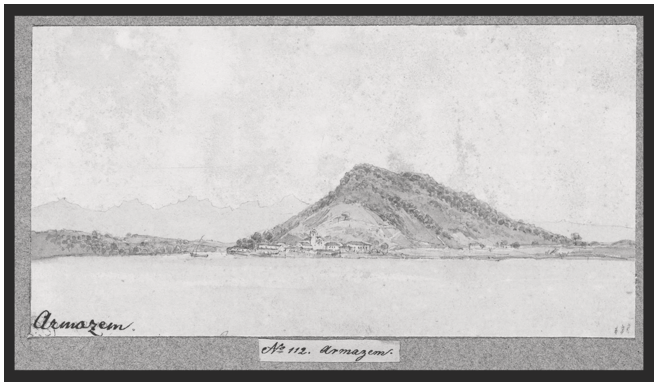

 Open access