


What do you do when you are frustrated? You go out and drink.
Stevoh on the Road
It was as a member of Catherine’s household that I began my fieldwork in January 2017, and it was through her and Mwaura that I came to know the immediate context of Ituura. By the same token, neighbours came to know me through my membership in that household. I gradually came to be recognised as ‘wa Kimani’, a member of Paul Kimani’s family, less of a guest (mũgeni) than his fictive kinsman. Some of my first forays into the wider neighbourhood took place alongside Mwaura as we went house-to-house collecting peels to cook in the jikoni (an outhouse for cooking) and feed to the family’s pigs – a typical household chore. On Saturdays and Sundays, we perambulated the immediate neighbourhood, walking the dusty backstreet of Ituura, gradually filling up our buckets with vegetable waste left outside other houses, while stopping to greet old men and female vendors on the road.
Mwaura and I became practically inseparable during those early months, bonding over our love of Premier League football, our routines revolving around Arsenal and Manchester United fixtures, when we would disappear to the local pub, the nearby ‘Motel’, to watch matches. A popular drinking den for local men, the Motel was a large hall furnished with leather-covered chairs and metal tables. Flat-screen television screens were fixed to the walls, where they regularly broadcast football matches from across Africa and Europe, occasionally switching to national news channels. In the corner was the bar, where bottles of spirits were kept behind a defensive perimeter of iron bars. Outside the Motel, one could sit under canopies in its grounds, canopies that displayed the advertising of Kenya’s major beers: Tusker, White Cap, Pilsner. Unlike the cheaper bars in the nearby town of Raini, which bordered on the tea plantations further north, or the raucous bars of Chungwa Town, Mwaura thought of the Motel as a ‘legit place’. Somewhat upmarket and aimed at wealthier clientele, its car park filled up at weekends with working men who had journeyed from further afield to meet and drink together.
A bastion of masculine sociability set amongst the farmsteads of Ituura, the Motel introduced me to Kiambu’s landscape of divergent economic fortunes and its consequences in terms of male prestige and patterns of alcohol consumption. While circles of local businessmen drove to the Motel in their cars before emptying bottles of expensive Tusker beer at their tables, a practice known as ‘darkening the table’ (kuchafua meza), and a sign of their wealth, loners clutched 250 ml bottles of cheap Kenya Cane spirit, known as ‘kanusu’. The same price as a bottle of beer, at 40 per cent ABV, Kenya Cane was a cheap way to get drunk, and those who did so were typically poorer men from the neighbourhood.
It was through these early experiences of the neighbourhood and Kiambu’s wider peri-urban landscape that I came to understand Mwaura was something of an exception for his generation in Ituura. Then a nineteen-year-old university student, one of a handful in his neighbourhood to go on to higher education, Mwaura could look at his peers and believe he would progress to something better, at least in those days. Mwaura generally heeded his father’s warnings about alcohol and took aim at local youths who – as he saw it – were not ‘responsible’, and he regularly showed a capacity for moralising about what he saw as his peers’ rapid expenditure of their money – behaviour that ‘doesn’t make sense’, as he often put it. As Catherine remarked of her son, a football-obsessed teenager who regularly spent his time reading about his beloved team, Manchester United, football was ‘his beer’ (pombe yake).
On one of our trips through the neighbourhood in February 2017, we ran into Stevoh, Mwaura’s twenty-six-year-old neighbour and ‘very good friend’, Mwaura’s oft-used phrase to describe anything from an acquaintance to his own uncle, Murigi. That day, Mwaura and I already had plans to go to the Motel to watch Manchester United. Standing alongside a group of men on the backstreet where he usually spent time when he was unemployed, Stevoh asked if he might join, and whether I would buy him a soda there. Keen to meet Mwaura’s neighbours in those early weeks and months, I agreed, and after Mwaura and I finished our chores, we met Stevoh at the roadside once more and walked together towards the Motel. According to Catherine’s instructions, however, we were to return after the match and dig up potatoes on the shamba.
Once we arrived and settled at our seats ready to watch the game, Stevoh quickly upgraded his request to a kanusu bottle of Kenya Cane. I obliged, and the three of us sat together in front of one of the TV screens. While Mwaura’s gaze was fixed on Manchester United, Stevoh spoke to me about his life, one that was rather different from his friend’s. ‘When at home’, he said, his words becoming a little slurred from the KC, ‘every day is the same. You feel hopeless. Rather than be idle, I come there.’ He gestured towards the backstreet of Ituura, where Mwaura and I had found him an hour or so earlier. He then began to contrast his life of idleness at home with the fun of working on construction sites. ‘When you’re working, even if the work is hard when you’re joking, you’re not thinking, you’re laughing – your mind is not there.’
Mwaura was less certain about how fun such work might be. ‘He doesn’t like it’, he said, when Stevoh had gone to the bathroom. ‘But he has to cope with it. He has no otherwise.’ Mwaura himself rarely, if ever, took work on construction sites, claiming that he lacked the physical strength to lift the heavy stones that such work often required. Construction (mjengo) work was notoriously gruelling, and though it lacked the prestige to which Mwaura himself aspired as a soon-to-be graduate, it was still an income and Mwaura nonetheless envied his friend’s money, and his capacity to generate it from such work. Stuck at home with no job of his own, on our trips to the county Motel, Mwaura opened up about his frustrations, and self-other comparisons. Men like Stevoh had money, he told me. ‘And I don’t have money.’ But Mwaura always noted that Stevoh spent his money on ‘podium’, a term he had coined for alcohol. ‘Sometimes he can spend 11k [11,000 KSh] on podium’, Mwaura told me, exaggerating a little bit. But the truth was not far behind, as we shall see towards the end of the chapter, when we will catch up with Stevoh’s story as it unfolded over the years of my fieldwork.
Soon enough, the game was interrupted by a power cut, and the three of us walked up the hill to Kandy, another local dive bar, where we hoped to find the match being broadcast. ‘This is my life as you see it here’, said Stevoh as we walked up the hill, now visibly inebriated. At Kandy, he bought himself a small bottle of Legend brandy, another hard spirit.
After the match finally finished, the three of us returned to Catherine’s homestead to dig up potatoes from the earth, as promised. We arrived to find Catherine hosting a meeting of a kĩama, a rotating credit association, and several women were at the house dressed in formal attire.Footnote 1 I was a little surprised but Stevoh was instantly worried and backed off instantly. ‘I don’t want the ladies to see me’, he insisted. ‘I’m not drunk. I just don’t want them to see me.’ For a moment, we huddled in my room, the outhouse situated on the edge of the homestead, and Stevoh took a few swigs of the unfinished bottle of Legend he had brought with him, hidden under his shirt.
At the shamba, the three of us worked while Stevoh regaled us with tales of his adventures in the area, especially with his ex-girlfriend, making crude gestures as he dug up potatoes with his hoe, taking the occasional sip of Legend. ‘She gave me gifts’, Stevoh regaled us, creating a dramatic tension as I asked what he had been given by his former partner. ‘She gave me … condom!’ Mwaura cracked up laughing. Once we were finished, he threw the empty glass bottle into the bushes, hoping no one would find it.
Finally, we returned to the house, Catherine’s guests having since departed. She served us tea and Stevoh sat on one of the chairs in the living space in an anxious state. Entering the domestic space, he was keen to stress that he had not been a burden. ‘I’ve not misbehaved’, he insisted. ‘Usually when I’m drunk, I misbehave. Peter, have I done something [to help]?’, he asked, looking for support. I could not help but agree. Soon enough, he relaxed, and in his semi-drunk state, Stevoh entertained his friend’s mother with stories of his heroism – how he had run for help for his thirty-three-year-old neighbour, Ikinya, after the latter had fallen down drunk at a local bar. Ikinya’s own family had refused to help. Catherine laughed at his stories, approving of his behaviour, and showing no intolerance towards him whatsoever. Although the circles of propriety in which she was involved (Chapter 6) moralised against alcohol, Catherine was not a person to judge, and Stevoh was viewed as such a likeable character in the neighbourhood that people only commented upon his drinking privately.
After Stevoh left, I asked Mwaura about his friend’s drinking, whether he saw it as cause for concern. I had been astonished at the sheer amounts of hard liquor he had managed to consume in one day. Mwaura’s attitude was dismissive and unconcerned. After all, he enjoyed his friend’s company, and from February, continued to ‘idle’ with him on weekdays when they were both unemployed. During those bored months in the homestead, while his university lecturers continued to strike, Stevoh’s company and stories of masculine shenanigans offered rare entertainment for Mwaura. ‘Man, Stevoh is good because he can’t spend his own money on booze, only when someone else buys for him [can he drink].’ At that point, Mwaura saw Stevoh’s family background as a safeguard against excessive drinking: their stone house and the frequent and sociable presence of his father John Thairu, a respected older man, in the neighbourhood’s streets. ‘He’s from a stable home, but others in his crew won’t be.’ There was hope yet for his friend.
Hopeless Consumptions
Meeting Stevoh in February 2017 was the beginning of my introduction to Ituura’s terrain of masculine alcohol consumption, its various manifestations and styles. For young men like Mwaura, the weekend was an opportunity to punctuate the long days of boredom he spent at home during the week with the fun of Premier League football and the company of friends. But Mwaura’s relative privilege – specifically, his university education – not to mention his comparative sobriety, only threw into further relief what was a wider topography of male drinking, typically associated with economically powerful older men, but one that younger men like Stevoh could partake in if they had ‘cash’ (mbia). While wealthy men drank happily at the Motel, the presence of poorer loners spending their meagre earnings from ‘casual’ (kibarua) labour reflected a bleaker side of neighbourhood life. It was a place where Mwaura and I would find older men who had sold land to fuel their drinking, or younger men keen to spend what little money they had earnt on cheap spirits.
These early experiences introduced me to the varying fates of Ituura’s young men in the shadow of their limited access to land and their joblessness, their generational downward mobility. In the opening of this section, we saw the transformation of this economic predicament into a crisis of hopelessness, fuelling alcohol consumption, a palpable feeling that the future was not worth living. In Ituura, this crisis took on an intimate and worried quality. Mothers lamented the effects of njohi on their sons, unable to carry family names into the future. Young men were said to have ‘wasted’ themselves by descending into full-scale alcoholism. Such men were shunned as failures, any structural reasons for their marginalisation obviated with a discourse of choice that articulated their addiction as a ‘decision’, a moral dereliction of one’s proper purpose in life – to work for the future, eventually by building a proper house and starting a family.
The chapter illuminates how inter-generational downward mobility is lived within households and experienced in terms of moral discourses of masculine irresponsibility. Elizabeth Cooper (Reference Cooper2018) has written about how being ‘serious’ is a requirement of adulthood and success in Kenya. In Kiambu, a similar discourse of ‘seriousness’ circulated, distinguishing morally responsible young men from others seen as ‘wasted’ or ‘lost’. Through moral claims and life projects, young men from Kiambu families sought to position themselves as ‘serious’, working towards ‘success’ in contradistinction to their peers who had been drawn into lifestyles of heavy alcohol consumption. In other words, moral discourse about masculine personhood, seriousness, and the significance of work as a means of accessing a better future manifested a politics of distinction in neighbourhood life as families and their young sons sought to draw moral boundaries between their self-styled ‘struggles’ for success and the apparent delinquency of others.
These discourses and ideas about economic failure complicate the terms in which anthropologists of Africa have sought to frame youth experiences of ‘waithood’ (Honwana Reference Honwana2012) as a product of the continent’s moment of mass unemployment and underemployment.Footnote 2 Remarking upon the judgement that apparent idleness evokes from older generations (Masquelier Reference Masquelier2013: 480; though see Jones Reference Jones2020), anthropologists have responded by painting a relatively optimistic picture of the way young men across the continent spend these hours of boredom, especially through practices of all-male sociability. Scholars have stressed the agentive mode of waiting, not only to counteract tropes of ‘laziness’ that they observe locally, but to see these practices as generative of future economic opportunities from the associations male youth create while waiting. ‘In the process of waiting’, write Michael Stasik, Valerie Hänsch, and Daniel Mains (Reference Stasik, Hänsch and Mains2020: 2), ‘African youth build relationships that provide a foundation for transforming their lives.’ The situation of waiting is seen as inextricably linked to the cultivation of hopeful dispositions: ‘the power to reorient action through the potentiality of the not-yet’. Acts of consumption are seen as productive, even to the extent that they might look like waste (of time or money) on the surface, productive of status and social relationships that might yield future support (see also Newell Reference Newell2012).
While anthropologists of waithood have discussed the substances that facilitate waithood, they have tended to focus on stimulants like khat and tea, discussed respectively by Daniel Mains (Reference Mains2012) and Adeline Masquelier (Reference Masquelier2013); the possibility that practices of waithood might involve alcohol addiction gives them a rather different inflection, and not just to the anthropologist observer. Like the members of the older generation encountered in Chapter 1, many of my young male interlocutors did not see men like Stevoh drinking in an optimistic light. Alcohol itself was singled out as a dangerous substance in this regard, a source of temptation, addiction, and self-destruction. As one of my friends put it succinctly, ‘You start having a nice time, then you realise you’re addicted to it.’
In illuminating these anxieties about falling into poverty and destitution, the chapter makes a more specific argument about the significance of ‘hope’ for the young men it discusses, framing alcoholism as the consequence of a process of generational downward mobility, and of bitter disappointments about the material limits of aspirations for better lives amidst high pressure to succeed amongst young Kiambu men. It advances the argument introduced in the Introduction and Chapter 1 – that cash scarcity in contemporary Kiambu is shaping an unequal capacity to dwell in the future, an exclusion from the privilege of living in the long-term (Bourdieu Reference Bourdieu2000). Unable to accumulate the money that would allow them to provision households, young men have come to embrace the short term as a site of escape. Although such desires to ‘live for the moment’ (Day, Papataxiarchis, and Stewart Reference Day, Papataxiarchis, Stewart, Day, Papataxiarchis and Stewart1999) are seen to contravene the proper ‘slow’ reproduction of the household, I do not wish to invest such acts with significance as forms of resistance to mainstream middle-class aspirations (Howe Reference Howe1998a). The ‘binge economies’ (Wilk Reference Wilk2014) produced by Kenya’s colonial history should be seen as nothing other than a response to rural destitution (see, e.g., Kitching Reference Kitching1980; Iliffe Reference Iliffe1987; Lonsdale Reference Lonsdale, Berman and Lonsdale1992). To say this is not to engage in so-called ‘miserablism’ (Englund Reference Englund, Bornstein and Redfield2011: 75). It is to advocate for a rational appraisal of the material limits of everyday life (see also Adebanwi Reference Adebanwi2017) and their consequences. This chapter focuses on ethnographic encounters with men who lack agency, who have become ‘demoralised’, to borrow Ivan Rajković’s (Reference Rajković2018) use of the term, recognising the real limits of their striving in the informal economy, and openly considering ‘giving up’, spending their earnings on alcohol instead of planning for the future.
In the midst of this predicament, the chapter draws attention to the ways Kenya’s youth attempt to hold on to dreams of long-term reproduction, avoiding alcohol, and hanging on to the dream of ‘making it’ amidst an economic predicament of working for low wages in the informal economy. As Samuli Schielke (Reference Schielke2015: 44–6) has written in his ethnographic study of low-income youth in Egypt, a critical aspect of the way people cope with poverty and inequality is the conscious investment of precarious life with meaning, an attempt to give weight to their struggles working for wages in the informal economy, and to transform necessity into a virtue. I show how youth describe the importance of economic practices oriented towards the future through a range of practices and strategies: prayer, careful spending, and even avoiding peers in order to pursue prosperity as a rather more bounded individual. All of these practices respond to the insistence that individual conduct is critical for economic success, even to the extent that the constraints of low, piecemeal pay are recognised. These are ‘popular’ (Hull and James Reference Hull and James2012), pragmatic ideas about how to live and economise in the informal economy and hold on to hope for better days in the first place.
The type of ‘hope’ explored here is therefore not quite the same as the radical dispositions of openness and possibility described by Marco di Nunzio (Reference di Nunzio2019) in his ethnography of low-income youth finding a living on the streets of Addis Ababa. The genre of hope I describe can be seen as a sort of faith that honest work – the ideology of slow labour – will lead to a prosperous future. It is closer to what Stef Jansen (Reference Jansen2016: 12) has called ‘yearning’, the longing to be able to hope for something in the first place, and ‘a dread of unfulfillability’. It is nothing other than the capacity to believe that middle-class ethics of work and careful economisation will get one where one wants to go, even when that belief is undermined by the reality of low wages. A central aspect of this is how young men narrativise their own moral agency to choose not to be drawn in by a temptation to consume, and the distinction that creates from them and their peers who have. Their discourse is shown to align with the labour-oriented ideology of the senior men we saw in Chapter 1, and thus operates as a way of policing what can be seen – from the hegemonic point of view – as immoral, delinquent, and dysfunctional consumption. But these narratives are also seen as having a vital existential import to these men themselves. Their capacity to create their own narratives of moral agency is shown to allow them to maintain belief that they will have better futures than their ‘wasted’ peers.
Wayward Sons
During what was only my second week in Ituura, I returned from a language lesson in Nairobi one afternoon to find Mwaura and Catherine discussing in surprised tones the events that had befallen Mwaura earlier that day. It had started with Mwaura’s journey to Nairobi. Mwaura’s old laptop was just about in working condition, and we realised that it could probably run FIFA, the world-famous football computer game he and I ended up playing together for hours in those early months. While I went to my language class, I gave Mwaura some cash to go to town and find some new game controllers for us to use. Off Nairobi’s Juja Road, where Mwaura had gone searching for knock-off Playstation controllers, he had by complete chance discovered his neighbour Ikinya unconscious outside a bar with what looked to be a serious head injury. Mwaura hauled the drunken Ikinya towards a matatu bound for Chungwa Town and helped the thirty-three-year-old back to his home, where he was shortly taken to hospital by family members.
As Mwaura told the story to me and his mother in Gĩkũyũ, Catherine could not help but render it for me in Kiswahili, as if to make the point to her new guest. ‘Indeed, alcohol is bad!’, Catherine argued, ‘Drinking and drinking is bad! The one who drinks doesn’t give his wife money’ (Ĩĩ! Pombe ni mbaya! Kunyua kunyua ni mbaya! Anakunyua hampatea mke wake pesa!).
Catherine contrasted Ikinya with Benni, who we met in the interleaf, remarking in a tone of praise that he was ‘a good man with a wife and a child’ (yeye ni mzuri, ako na bibi, mtoto). At that point in the story, Catherine and Mwaura could see alcoholism as a misfortune having befallen Ikinya – someone who was still a ‘good guy’, to use their words. Though this concealed a growing frustration that Ikinya’s family felt towards him.
Aged thirty-three, Ikinya’s alcoholism was no longer indulged as it sometimes was in the case of younger men in their early twenties. He was no longer young enough to be able to drink and have it chalked up to youthful fun. His failure to start a family was seen as a moral one – indicative of the effects of alcohol, but also his own personal failing to grasp what really mattered or what was seen (from the perspective of broader, household-based discourse) to really matter. ‘He’s old!’ (Ni mzee), Catherine insisted. ‘He should find a wife!’ (Anafaa kupata bibi). Catherine’s condemnation of his drinking expressed a common view – that marrying, having children, and somehow finding a way to experience economic success constitute the pillars of a good life. Ikinya’s drinking, however, had left him lagging behind the normative teleology of masculine becoming. That Ikinya continued to reside within his ‘cubu’, a corrugated iron cube that Kikuyu youth move into after initiation at around the age of fourteen when they can no longer dwell within their mothers’ houses, was a sign of his not having progressed much beyond childhood. Ikinya was judged not only because he had not started a family but precisely because he did not appear to desire to do so – that he did not value it. It was by this yardstick – of failing to comprehend what really ought to matter – that Ikinya was seen as ‘useless’ (tũhũ), a person lacking in social status.
For his family, his drinking had serious ramifications, creating tensions between himself and his older brother in particular. One evening in early March 2017, I was visiting the house of Ikinya’s mother, Mama Gethii, with Catherine and Mwaura. By March, I had struck up friendships with Feye, Mama Gethii’s twenty-four-year-old daughter, and Roy, her youngest son, twenty-three years of age, whose football team I joined during my fieldwork. Feye held down an office job in Nairobi. She and I had been chatting in English about ‘Road to Destiny’, the telenovela that was airing at the time, and her plans to open a bakery, with her sister-in-law, using the wages she had been saving. Meanwhile, Mama Gethii and Catherine were embroiled in an animated discussion in Gĩkũyũ on the next sofa. Eventually, Ikinya appeared in the adjoining hallway, hanging around furtively and refraining from entering the room. Feye’s expression dropped. She was not pleased to see him. ‘I’m bored of what he says’, she told me.
After hovering at the doorway for a few moments, Ikinya entered – a big grin on his face. He shook my hand and Catherine’s. Roy upped and left to talk to Ikinya in the corridor, and Gethii, Mama Ngugi’s eldest son, arrived from his house next door (built on the same plot of land). It soon became apparent that Ikinya had returned from a local bar drunk and was searching for money he could take back with him to continue drinking.
While he was briefly out of the room, Catherine and Mama Gethii took the opportunity to joke at his expense. ‘Nengeraĩ’ (give me), Catherine said, imitating Ikinya’s begging disposition. Her joke recognised the absurdity that he could be asking for money when he had already spent what he had on alcohol. Feye and Mama Gethii were soon in hysterics. Ikinya’s state was ridiculous, and the women took the opportunity to mock him together. Mama Gethii picked up where Catherine left off, speculating that it was when his money was short at the bar that he was encouraged by the barkeep to return home to ask his mother for cash. ‘When it’s [money] finished he’s told, “Go and tell your mum to give you!”’ (Ciathira ũkerwo, ‘Thiĩ wĩre mami akũnengere’). Catherine and Feye burst out laughing. Gethii, now back in the room, was also chuckling. ‘Do you want me to get a headache?’ (Ũrenda ndĩo nĩ mũtwe), Catherine asked Mama Gethii as she recovered from the laughter.
Gethii then became the subject of the conversation. Angela, an adoptive member of Mama Gethii’s household, who had originally been hired to care for Mama Gethii’s husband, interjected.Footnote 3 She criticised Ikinya in comparison to his elder brother. Ikinya, she argued, wanted his elder brother to give her money for everyday items such as foodstuffs. ‘He doesn’t want to give his [money]’ (Ndarenda kũruta ciake). In contrast to Ikinya, Gethii (who was around two years his elder at thirty-five) was married with a daughter about to start primary school. He had a job in Kiambu Town and had built a small house on his family’s plot of land from mabati – a sign of a modicum of success or at least the economic stability Ikinya lacked.
However, Ikinya’s failure to be an upstanding, responsible man was not simply a laughing matter, and the conversation took a more serious tone as Mama Gethii went on, describing the relationship between her two eldest sons. ‘Gethii doesn’t bother with him, he just looks at him like a [photo] album’ (Gethii nake ndatindanagĩra, nake no kũmwĩrorera ta album). Catherine attempted to re-inject some humour, ‘Don’t you hear him asking, “Give me that two hundred (bob)”? It’s like he had given [it to] you’ (Ndũraigwa akĩmwĩra, ta nengera mau magana merĩ, nĩ ta he mbeca agũtũnete ũmũigĩre), she said, laughing. But the moment had passed. Gethii’s tone was somewhat less amused as he reflected on his troubled relationship with his brother. His brother begged money from him, in his opinion, ‘So that he can eat from my sweat’ (Arĩe thithino yakwa), he lamented, picking up where Catherine had left off. In other words, Gethii worked, while Ikinya sought dependence. ‘So you just look at him?’ (Yaani we wĩkiragĩra ũguo?), Catherine asked. ‘I just look at him, [thinking] what do I do now?’ (Ndĩmwĩroragĩra kŭmwĩrorera, ngŭgĩka atĩa rĩu), Gethii answered. ‘No one here talks to him’, said Mama Gethii in a tone of disappointment. Gethii echoed this expression of dismay. ‘When you talk to him, he tells you he knows what he’s doing. You just keep quiet’ (Wamwarĩria agakwĩra nĩ aramenya urĩa areka, ĩti wĩkirĩre).
When Ikinya returned to the room, he was chastised in a joking tone by Catherine, who insisted that he buy bread (mũgate) for his mother, suspecting that Ikinya had already spent his money at the Motel, that even siphoning off a small amount of his cash for his mother was beyond him.
As Catherine, Mwaura, and I left, Ikinya followed us out through the gate of his family’s plot of land, presumably to return to the bar he had originally arrived from. Catherine turned to urge him to return in an angry turn. ‘Go back, Ikinya!’ (Coka, Ikinya) she shouted repeatedly. Mwaura cut a frustrated figure as we waited, and Ikinya eventually passed us on the way to the local Motel. It was a rare moment of anger from Catherine, an evident frustration with the young man and his addiction.
Anxieties of Continuity
A burden on his family and with few prospects for the future, Ikinya’s state connects to a wider feeling in Kiambu, and central Kenya more broadly, that young men are not becoming adults in the proper way, not becoming ‘serious’ persons with families of their own (Cooper Reference Cooper2012). It was not simply that such men were alcoholics that made them reprehensible in the eyes of mainstream middle-class moralising, but that they had abandoned their own futures, failing to adopt the practical forms of reasoning that underpin careful economisation. As Mwaura put it, he was someone whose behaviour did not ‘make sense’. Men like Ikinya were seen as throwing their earnings away on trivialities – especially alcohol – before he had settled matters at home. He was described in neighbourhood gossip as a ‘mũgũrũki’, a ‘crazy person’. Yet another youth who had been ‘lost’ to alcohol, a man who had ‘given up’ on his future and whose conduct was not to be emulated.
Ikinya’s failings were exemplified, not in his relative poverty – the poor state of his house, for instance – but in what this predicament meant for his future, and specifically his capacity to become an upstanding man with a family of his own. When I returned to Ituura over July and August 2019, Mwaura remarked how worried Mama Gethii had become about the state of her son’s life. We compared Ikinya to another local man who could also be spotted drinking at local bars, and regularly begged myself and other men of means to purchase him further drinks once he had exhausted his own budget. But Mwaura insisted this man ‘was somewhere’, in other words, he at least had a family. ‘That’s your pride, man’, Mwaura remarked. ‘It’s the ways of the Kikuyu’, said Gathu, my twenty-six-year-old friend from the soon-to-be-introduced Star Boyz football team told me in 2022. ‘Leaving something behind. What are cars and money if you’re not leaving something behind?’
Like a number of African contexts, central Kenya is a place where parenthood represents ‘a sine qua non for the attainment of the full development as a complete person to which all aspire’ (Fortes Reference Fortes1978: 125). In central Kenya, male personhood was typically unthinkable without the wealth of a family, procreation and lineage, central aspects of masculine self-accomplishment (Lonsdale Reference Lonsdale, Berman and Lonsdale1992). ‘It’s a MUST!’, said Gathu. ‘And must is in capital letters!’ In Kikuyuland, the achievement of fatherhood has had a particular existential significance. The names of grandfathers are passed on to their grandsons, recurring through the generations. Yvan Droz (Reference Droz, Jindra and Noret2011) has argued that such practices reflect a ‘deep-rooted desire to remain immortal through remembrance’, reminiscent of Marshall Sahlins’ (Reference Sahlins2011) notion of a ‘mutuality of being’ projected forwards through time towards the future: the importance of dwelling in the future through kin, and kin who are yet to be born. As we have already seen, John Lonsdale (Reference Lonsdale, Berman and Lonsdale1992) called this a ‘dynastic’ mode of thought, one in which masculine self-realisation was intimately connected to the creation of a lineage.
These naming practices are still the norm. In 2021, twenty-six-year-old Roy, my one-time neighbour in Ituura and Ikinya’s younger brother, had newly built a house to mark his masculine independence. His words give some sense of how important naming continues to be:
Like now for instance my dad passed away some years back and I need to bring him back to life by naming my first boy after him. Secondly, you have children ili usipotelee ivoh tu [so that you don’t get lost like that], people have someone to remember you with.
‘It’s always a disappointment when your name goes out in flames’, Roy explained, impressing upon me the importance that one’s identity does not become ‘lost, like that’ (unapotelea tu ivoh). His choice of words implied that without named kin, one’s existence will be gone from the world quickly, and fundamentally. It is significant that some years before I began my fieldwork, Ikinya had fathered a child with an ex-girlfriend who had left him, taking the child with her. When I asked Roy whether fatherhood meant that Ikinya had achieved continuity, he rejected the assertion. ‘Man, that’s not a family. The child doesn’t have his name.’
While men like Ikinya lived lives of ‘youth’ into their thirties, elders who witnessed such transgressions insisted upon the significance of remembrance and continuity – that families constitute genealogical lines, projecting the self towards the future through existence in others (Shipton Reference Shipton2007). In November 2017, Mwaura and I were invited to a birthday party for the granddaughter of a neighbourhood friend known as Ndovu. An mzee in his late sixties, Ndovu was one of the elders of Ituura with whom I had struck up a friendship through a series of interviews I had conducted with him on the history of the area, his knowledge of Kikuyu customs and traditions related to the land, and his political opinions. Mwaura and I had been interviewing Ndovu together sporadically, usually in the yard of his house where he tended to his cow and chopped wood, surrounded by chickens. His life as a cook at the University of Nairobi in the 1970s had fascinated me, not least since he had witnessed the early careers of contemporary politicians during their first forays into student politics. Ndovu was now retired. He and his wife looked after the children of their children, who had taken work in Chungwa. Like most older men in Ituura, he drank alcohol, sometimes to excess. But he was not judged for this as young men could be. Ndovu had apparently earnt his right to drink in his old age, through his hard work over the course of his life establishing a prosperous household.
That evening, Ndovu’s household looked to be an ideal one. His wife prayed for his granddaughter to ‘go ahead’ (gũthiĩ na mbere) with her education, calling on the Lord (Mwathani) to guide her ‘footsteps’ (makinya). Meanwhile, Ndovu lectured me vociferously on the importance of having a family. I suspected he might have had a bit too much to drink, but I went along with it anyway, listening as best as I could amidst the gospel songs being played from the television at high volume. ‘Huyu bila watoto analost!’ (the one without children is lost), Ndovu told me, remarking upon the younger generation. ‘They are lost!’, he practically shouted. ‘Lazima ukuwe na watoto’ (it’s a must you have children). He talked of his own children as his fruits (matunda yangu), but he never quite got beyond the central point: to perish without a legacy, to fail to achieve upstanding masculinity, was to be a social failure.
‘We’re not going to last much longer’
While elders like Ndovu moralised, young men created their own counter-discourses about the foolhardiness of working towards the future. My everyday life in Ituura, spent alongside Mwaura, Roy, and Stevoh, gave me insights into the discourses of so-called ‘wasted’ men, their ironic, joking narratives of their own hopelessness and alcoholism. Some of these interactions took place around burial services (mathiko), especially the day prior to burial services, when men from the neighbourhood gather to dig the grave (kwenja irima) on the ancestral land of the deceased in exchange for food.
It was at the burial of one of Catherine’s elderly neighbours in March 2017 that I had the first of these experiences. By that point, some of the male grave-digging party were known to me. But there were new acquaintances, including those too who took it upon themselves to introduce me to the neighbourhood and central Kenya.
Towards the end of the digging, I began talking to David, a thirty-five-year-old matatu driver. Remarking upon the value of land in Kiambu – ‘We are sitting on money!’ – he began explaining to me in animated tones how the land of Ituura was a product of Mau Mau rebellion, remarking with pride that it was land that ‘we Kikuyu’, as he put it, fought for at independence.
People fought for this land! People died for this land! We cannot sell! Our ancestors in Mau Mau fought for this land against the white man!
David punctuated his narrative by introducing me to several other young men at the digging. Gesturing to his friend Nduma, a twenty-three-year-old construction worker who was evidently drunk, David grabbed the young man’s head and shouted: ‘This is another mũgũrũki! Another Michael Jackson!’ His words were a reference to the ‘Moonwalk’ brand of spirits that had a silhouette of the late disgraced pop singer on the bottle’s label. Continuing to tease his friend, he continued:
This one is nusu [i.e., lit. ‘a half’, a reference to the ‘half’, 250 ml bottles of Kenya Cane regularly drunk by young men]! He can’t do anything unless he has a nusu first thing in the morning!
Aside from these introductions, David continued to tell me about the value of land, the dangers of selling: ‘You can sell!’, he explained. ‘But there’ll be repercussions! Like this one!’ He gestured towards another local man in his forties nicknamed Gilbeys. ‘He wants to sell his land for 5 million!’ Gilbeys laughed shyly. David continued joking. ‘Actually I’m telling him to sell his land for 3 million, we take the SGR [standard gauge railway] to Mombasa, we start spending. Because we’re not going to last much longer!’ He broke apart laughing.
As a story about the value of land, David’s discourse was shot through with ironic reflection on his generation’s predicament as destitute men who had – in some sense consciously – abandoned the future. He laughed not so much at himself, but at his words: his open admission of desires for consumption – to exchange land for experiences of consumption and fun (raha). He played the role of mock-moraliser, his friends laughing at his representation of their delinquency, laughter that seemed to claim him as one of them.
Encounters with burial digging parties were experiences of the sort of sociability that prevailed amongst local men, especially their desires to consume alcohol in the knowledge of its being an aberration. These encounters introduced me to men in their thirties who consciously rejected the family as a horizon of self-accomplishment, often citing the untrustworthiness and ungratefulness of women, and the fool’s errand of work when one could consume instead (Chapter 3). They recognised the association of consumption – of converting land into cash, and cash into alcohol – with the closure of the future itself. Their tones were mirthful, but it was starkly black humour. They struggled to imagine their futures. No sooner had the digging ended than the men went to a local bar to continue drinking hard spirits.
Such a conscious rejection of masculine responsibility and an investment in transient experiences of short-term fun recalls arguments made by Sophie Day, Ethymous Papataxiarchis, and Michael Stewart (Reference Day, Papataxiarchis, Stewart, Day, Papataxiarchis and Stewart1999) about ideologies of ‘living for the moment’ that prevail amongst economically marginal persons across the globe. These are people who eschew mainstream middle-class visions of economic progress and invest what little cash they have in immediate experiences of pleasure and enjoyment that are directly, and in some cases consciously, counterposed to the former. In a similar regard, Ethymous Papataxiarchis (Reference Papataxiarchis, Loizos and Papataxiarchis1991) has described the forms of sociality that prevail. Like ‘raha’, the fun of drinking, kefi constituted a short-termist orientation towards an in-the-moment experience of affection with other men. Destroying wealth with friends, ‘wasting money’, becomes a sign of commitment to the experience of friendship itself, its value independent of the rivalries that persist between households in their pursuit of economic independence. In fact, Papataxiarchis (Reference Papataxiarchis, Loizos and Papataxiarchis1991: 161–2) conceptualises friendship as thoroughly anti-instrumental, anti-economistic in this sense.
Along with Mwaura and Stevoh, Roy sometimes in tow, our weekends took on a similar texture to these masculine friendships described by Papataxiarchis in Crete. We regularly visited the local Motel together, departing the domestic space of the homesteads to watch football and drink beer out of sight of parents and women, whose gossip Mwaura feared in particular (Chapter 6). At night, the football would end and the Motel would transform into a club, and we would end up dancing and singing to the reggae music popular with Kenya’s youth (‘Iron!-Lion!-Zion!’). At other times, we chewed mũgũũka (khat leaves), entering into contemplative states that spurred deep conversations about life, love, and our hopes and dreams for the future.
I would usually buy the drinks, and I knew that my own budget allowed men like Stevoh and Roy to participate in lives of raha more than they otherwise might have. My presence likely made the money I had a sort of ‘windfall’ to them, and I could see the excitement it triggered when they had the chance to drink in my company, Roy sometimes referring to me as a ‘sonko’ (a boss) or a ‘sponsor’ to evoke the necessary generosity he expected, and the one-off consumption such experiences afforded. From a poor family, Roy otherwise scrimped and saved his money from piecemeal work on local construction sites. This was a chance to spend money not earned, money these men otherwise had no claim upon. It was, in a sense, a ‘free hit’.
However, Stevoh soon had his own income. In February 2017, he began working as a foreman on a truck delivering rubbish (takataka) to the dump in Nairobi: a job acquired through a ‘connection’ from his mother. ‘The takataka job’, as Mwaura and I called it, was a lucrative enterprise for Stevoh, one that allowed him to make several thousand shillings in a week. Throughout this period, Stevoh became a regular at the Motel and at various drinking haunts in nearby Ruaka Town, spending his earnings. From what Mwaura and I could see, it was a period of immense binge drinking for Stevoh, one in which he regularly emptied his pockets over the course of a weekend.
While Stevoh literally did spend much of his money on alcohol as soon as he had earned it, in Mwaura’s view, he had not yet reached the point of Ikinya and other ‘wasted men’. The expectation and hope remained that Stevoh would one day ‘become serious’, adopting a responsible masculine subjectivity, investing the money from his work not in alcohol but in business ventures or in a romantic relationship and a family to come.
At the end of the chapter, we will circle back to Stevoh’s story and find out how it ended. That ending serves as a reminder to anthropologists of poverty that short-termism as an ‘ideology of the present’ ought not always be romanticised as a heroic form of resistance to mainstream middle-class ideologies (Day, Papataxiarchis, and Stewart Reference Day, Papataxiarchis, Stewart, Day, Papataxiarchis and Stewart1999: 21; cf. Wilk Reference Wilk2014), particularly when it creates genuine vulnerability, genuine addiction, and genuine destruction not just of money, but of persons.
‘Giving up on themselves’
As we saw with Ikinya, some men appear to reject outright this preparation for the future, embracing youthful fun even into their thirties. ‘At least he is working’, commented Roy, Ikinya’s twenty-three-year-old younger brother, ‘but you know where the cash normally ends up.’ As Ikinya’s twenty-eight-year-old sister-in-law, Lily, claimed, Ikinya’s peers encouraged him not to marry, telling him that, as she put it, ‘getting a wife will just be a burden’. ‘They give up on themselves’, Mwaura insisted.
It is in this sense that Ikinya’s lifestyle could be seen by other young men as a choice, a decision not to live ‘for tomorrow’, as my interlocutors put it. Linda Jata, one of my neighbours who revealed herself as a short-story writer in 2021, had a story published on a Kenyan writing blog named ‘Unmarried Men’. It discusses the predicament of men in Ituura who appeared to be resisting male adulthood. Jata’s writing allows us to generate a sense of the shame that not having a household carries for unmarried men who had not invested in the future when they were young.
[Kimani] had no property other than the small iron sheet house with a thatched roof he had built in his young adult years, and even that had no toilet. He had to borrow the toilet from the neighbours. His small piece of land was only enough to grow about thirty head of kale and maize, enough to feed him only. But even that looked unhealthy from the lack of fertilizer and manure. Men his age had large pieces of land, and those who had small pieces at least had fertile pieces. Men his age had stable sources of income from employment or entrepreneurship. Most importantly, men his age had children, a wife, and maybe a girlfriend. His unmarried status was the great thorn to his side on a day too many now. This, above everything else, made him feel even smaller.
Her central character, Kimani, was likely based on local men in similar situations to Ikinya, and presented a chance to imagine the perspectives of such men whose motivations remained mysterious, even for close family. Ikinya’s sister Feye remarked that, even when his late father (d. 2015) had tried to remonstrate with him about his drinking, he would simply walk away. ‘He will just abuse you’, said Lily when I asked her if she had tried to talk to him about his drinking. Roy thought that it was his brother’s ‘decision’ to ‘be like that’, that he had already given up because he lacked the capacity to keep hope alive. ‘He already gave up man, it’s so disappointing.’
Ikinya’s drinking was framed as decision – rather than the product of economic constraint – by Roy, because of Roy’s economic uncertainty and his experience of the challenges of working towards a better future through casual ‘kibarua’ construction work. After I arrived in Ituura in January 2017, Roy had become one of my closest interlocutors after Mwaura. When he introduced me to his football team, Star Boyz, in May 2017, we quickly became friends. Knowing my love of football, Roy invited me to football training at a school field in nearby Limuru. Training sessions with the team soon became a regular hang-out for me during my fieldwork in 2017 and 2018. Initially, my afternoons spent playing football with Star Boyz were an opportunity to let off some steam, play, socialise, and, of course, talk endlessly about football (Figure 2.1). But, as one might expect, the curiosity of these men about my research soon led to conversations that brought up issues of youth hopelessness.
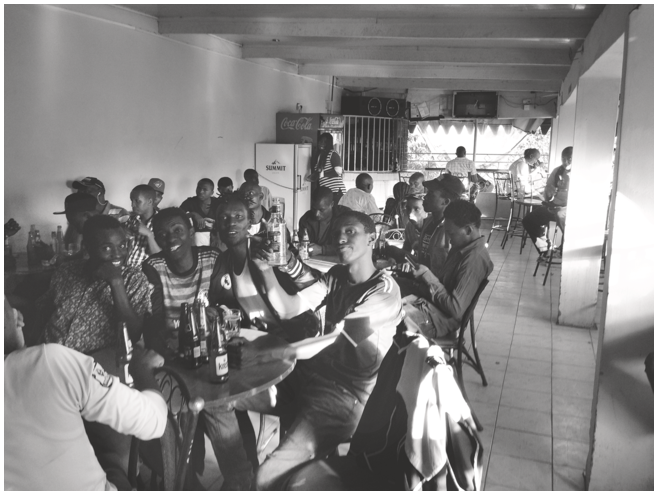
Figure 2.1 Weekend drinking and football watching
Figure 2.1Long description
A group of young men sit at a table in the foreground, raising their beers towards the person taking the photograph. Beyond them, the tables are packed, with groups of men watching football on the television screen beyond. Bottles of soda are arrayed on the table. At the table in the foreground, some of the young men are wearing football jerseys. Bright incoming sunlight is cast onto the yellow pillars of the bar's interior.
By May 2018, I had played with the Star Boyz football team for practically a year, and I regularly attended games as a ‘fan’, and sometimes even moonlighting as a player. Curious about my presence in rural Kiambu, I openly shared the topic of my research with Star Boyz players. In 2018, after hours of conversations with these men while walking to and from training, I began a more formal survey of my team mates and their livelihoods. Aged between eighteen and twenty-seven, most had finished secondary school, but a minority had been educated to primary-school level. The players were from a mixture of backgrounds, some from nearby neighbourhoods, their parents having ancestral land. Others were from further afield, the sons of labour migrants from western Kenya. Practically all were working on a casual basis in the local construction industry, like Roy himself, for a meagre 500 KSh per day – work that was all too intermittent for any of them to accumulate substantive earnings. Even pay was subject to uncertainty. Kanja, a twenty-three-year-old roofer, worked for six months in 2019 installing tiled roofing on new housing estates in Kiambu. Despite assurances from his boss, Kanja and his twenty-five-year-old cousin, CJ, with whom he worked, were never paid.
Star Boyz players understood all too well the predicament of working in the informal economy for low (or no) wages. It was on that basis that they could extend moral sympathy to those amongst them who had become alcoholics, a rate of hope that was pegged firmly to the Kenyan shilling. One match day in May 2018, I began talking with a youth known as Jose, one of Star Boyz’ former players who now came to matches to cheer on his friends. At the side of the pitch, I started talking with him about my interest in youth alcoholism. I asked if Jose would participate in my survey. He agreed, and I took a notebook out of my bag to begin the survey, asking him about his monthly income, only for him to quickly seize it, along with my pen, and begin scrawling. ‘Let’s say a guy comes here from Muranga to search for greener pastures’, he began. ‘He works three days a week.’ He scrawled ‘3 × 500’ on the page. ‘Per month, that’s times by four.’ ‘Ok, that’s 6,000’, I interjected. ‘6,000’, he repeated. ‘Then his rent is very cheap, like 1,500.’ He wrote that too. ‘Then he has 4,500. 2,500 goes on food, clothes, things you need.’ We were down to 2,000. ‘1,000. Your girlfriend asks you for 1,000.’ Only 1,000 was left. ‘That’s before you’ve had any fun yourself!’ But Jose went on, his explanation not yet finished. ‘That’s when you start to take that kanusu.’
Jose was a ‘hustler’, self-described. And he knew this life all too well. ‘How much do you earn per week?’, I asked him. ‘Huwezi sema’, he replied. ‘You can’t say. Maybe 3k [3,000 KSh], two-five, hapa [thereabouts].’ He seemed forlorn, and our attention returned to the game.
Jose’s words draw attention to the significance of cash in sustaining hope in the labour ethic – the idea that work will get one where one wants to go in life. It recalls Bourdieu’s writing in Pascalian Meditations (Reference Bourdieu2000: 221), that ‘real ambition to control the future’, not to mention the rational pursuit of it, ‘varies with the real power to control that future, which means first of all having a grasp on the present itself’. Jose framed a crisis of hopelessness as a response to a lack of capacity to pave the way for a better future because of a sheer lack of money, the crucial means to creating a better life in a world of expectation – both one’s own and pinned upon one by relatives and friends. His argument was that it was hardly surprising men gave up, such was their predicament, the heights of even their modest ambitions far outstripping what they could afford.
Several Star Boyz players articulated their struggles to spend money on ‘good things’ like their young families, their houses, or, indeed, a pair of football boots to help carry the team upwards in the league. ‘He sold his boots for keg [beer]’, players would joke at their peers who had apparently misplaced their shoes. Such jokes betrayed deeper anxieties about the uses of money. As Jayso, Star Boyz’s twenty-five-year-old midfielder, explained to me in February 2022,
I use money well since I was brought on a humble background but the more money I get the much [more] I misuse it. [PL: How do you mean misuse it?] I misuse it any ways … one way I always chew khat most of the time and buying alcoholic drinks. I do this to forget probably the failed dreams. On the other hand, I use it the best way by paying my kids school fees … buy him new clothes and also buying food for my pigs that way I feel I have used it the best way.
Jayso’s failure to qualify for entry into the army had been his own personal catalyst for turning to drinking. But in his view, like Jose’s, his drinking was a failure of ethics – of choosing to make the right sorts of economic conversions, of turning money into drink rather than school fees.
‘Bold to make it’
Proximity to the dangers of becoming wasted men shaped the anxieties of youth who claimed they would never follow in the footsteps of their consuming alters. To his peers, men like Ikinya were ‘wasted’ men who stood to destroy their futures and their legacies. ‘That’s how you waste your life’, said Gathu, a twenty-seven-year-old member of Star Boyz. ‘Family pushes you to be responsible. You can’t go drinking if your child needs school fees, your wife needs unga [maize flour]. That’s why I stopped drinking.’ He compared himself to one of his younger, former teammates who had given up football despite his talent. ‘Right now, he’s drinking a lot. He drank his first alcohol at 22, now he’s drinking almost every day.’ For Gathu, the fault lay with his team mate’s peers – a ‘bad crowd’ who had influenced him to drink. ‘They will waste him.’ To be not like these men was a matter of urgent distinction and existential fortitude, the capacity to maintain one’s hope for a better tomorrow in spite of a life of low wages and limited opportunity. ‘Life depends with one’s capability to withstand the problems, man’, Roy told me in February 2022, looking back on his former struggles. He had recently built a new house, at great financial cost (Chapter 8). ‘You must be bold to make it’, he insisted.
In figures like Ikinya, men like Mwaura and Ikinya’s own brother Roy encountered exemplars of their own fears about economic failure. Men like Ikinya evoked what Stef Jansen (Reference Jansen2016: 12) has called the ‘dread of unfulfillability’. Their own ‘yearnings’ for better lives were tinged with the recognition that on the other side of it lay the destitution they saw in others. Hope itself was an object of moral reflection: that one could run out of it, and ‘give up’. Sustaining belief in the work ethic – that careful economisation will get one where one wants to go, even when that belief is undermined by the reality of low wages – was of vital import.
My team mates in Star Boyz constantly referred to the need for moral fortitude in order to avoid the contagion-like aspect of hopelessness, and the descent into alcoholism. By July 2017, Ikinya’s brother Roy had become one of my closest interlocutors. After he had introduced me to the Star Boyz football team, he became a constant fixture in my weekly routine, and we regularly walked to football training together. It was through our meetings and discussions that I came to understand the texture of his everyday life, composed of short-term work on local construction sites, football training sessions, and hours spent bored at home and on Ituura’s backstreets. ‘It’s hard out there’, he lamented, speaking of his condition. We saw above his identification of qualities like ‘boldness’ as central to his capacity to resist the temptations of giving up on life.
Throughout 2017 and 2018 Roy had been working sporadically as a construction worker on local middle-class gated communities. This was gruelling work, but he diligently attended football training, leading his team to promotion in the 2018-2019 football season as a powerful presence in the midfield, and regularly filling in different positions throughout the team. For practically this whole period, Roy’s routine oscillated between a few days of construction work here and there, and long weeks of idleness watching movies at his home, spending time on the backstreets. As he told me later, he believed football had saved him from a far more miserable fate as a young man tempted by the cheap alcohol to be found in the nearby town of Raini.
Roy did not deny being tempted to go the same way as his brother, and he had almost walked the same path himself.
Just because I haven’t it doesn’t mean it haven’t ever come up in my mind. I started it for a while but at the end esteem ya mtu ndo hudecide [of a man decides the] final results. I myself just go to play football to release stress and relax your mind to avoid overthinking too much. And at the other hand you use what you have to grow yourself.
Roy’s discourse emphasises the importance of controlling desires for short-term fun in order to live in the future, and a high degree of consciousness about the stakes of such decisions. As he saw it, drinking was a slippery slope. ‘You start having a nice time, then you realise you’re addicted to it’, he told me in 2022 as we shared a beer together at the Motel with Mwaura as we watched the Premier League.
For young men from Ituura and beyond, belief in God’s favour helped them to cope with the economic uncertainty that pervaded their lives of sporadic work and low, intermittent pay. In his work as a roofer, Kanja welcomed God’s ‘protection’ while working at great heights on new buildings across Kiambu. But it was also God’s capacity to grant favour to those who believed in him that shaped Kanja’s belief. In our discussions about religion, in which I never tried to hide my atheism, he insisted upon God’s ability to reward those who struggled. Kanja quoted me Proverbs 22:4, ‘Favour is sustained by humility and fear of the lord.’ He also quoted me an old Kikuyu proverb, that ‘God helps the one who helps themselves’ (Ngai ateithiaga wĩteithĩtie).
While they agreed upon the importance of being close to God, for Kanja and his younger brother Gĩthire, Star Boyz’ nineteen-year-old lightning-paced striker, their success in avoiding the alcoholism of their peers was also down to their own moral agency as much as belief in God. Speaking to them about their beliefs after football training in 2018, they discussed their attitude towards their peers, and their feelings that football and their commitment to proper reasoning, oriented towards the future, had blocked them from following some of their peers towards addiction to bhang (cannabis), in Kiambu, usually said to be laced with other substances such as amphetamines.
Gĩthire: It’s personal choice! If I get money, I drink all of it? No! If I drink, there must be an occasion.
Kanja: You asked why are we not addicted? Because there are those people who I can see who took bhang, and in their head they got mad, they start losing purpose because of using a lot.
Gĩthire: Most of us go with peer pressure. My friend in high school, they used to take bhang. I took it just one day and I said I would never take it again. Me being a Christian, that I don’t take.
A committed footballer with dreams of playing for Chelsea, Gĩthire insisted that ‘Having the football is like losing us from those things. Because we love it so much’,
If you [i.e., others] see money it’s just about having fun, going to Two Rivers. If I’m getting money I only think about football.
Prayers were frequently a source of moral fortitude, for bolstering one’s capacity to cope with the temptations to abscond on obligations by joining in with others ‘having fun’. As Kanja’s brother JJ told me, ‘I ask God, “Please, let me be so good!”’ A young father, JJ explained that his request for morality was so that he would spend his money on his daughter rather than be drawn into the temptations of the town in which he lived – the opportunities to go drinking with his friends. ‘Peer pressure’ was cited as a cause of alcoholism, the idea that one’s friends would always beckon one to join their weekend adventures. As Roy noted, part of his ‘sacrifice’ was withdrawing from these social networks. Lily claimed that Ikinya’s peers encouraged him not to marry, telling him that, as she put it, ‘getting a wife will just be a burden’. In this sense, one’s friends are seen to be a pull factor on expenditure amongst youth, highlighting one’s diligence in not joining in with these activities, and allowing certain youth to claim morality and distinction from their peers by deliberately setting themselves apart from these social networks.
Claims of Distinction
Aside from a way of coping with one’s economic uncertainty, ideas about moral fortitude were also claims of distinction, ideas about the need to separate oneself from one’s peers to pursue prosperity for oneself. When Roy had told me about his travails mediating with the vagaries of the informal economy, he had contrasted his position with that of his younger team mates who were included within the moral communities of their households. While he had to ‘hustle’ for his money, he felt that some of his team mates benefited from being fed by their mothers – that they did not know how ‘hard’ it was ‘out there’. Like Roy, others also drew attention to the malaise of others as a way of emphasising their own diligence and morality.
‘That’s the biggest problem for Kikuyu right now’, Gathu told me, right after I had brought up the spectre of youth alcoholism. It was January 2018, and we were walking home from training, a typical moment in the daily routine when I would enter into deeper discussions with my new friends. ‘Drinking alcohol, chewing mũgũũka.’ Why, why do they do it, I asked him, genuinely interested in his perspective on the issue. ‘I don’t know, it’s like a spirit’, he answered. ‘Or a curse.’ Like a ngoma?, I asked in Gĩkũyũ, using the word for ‘spirit’, sometimes used for ‘devil’. He laughed at my having known such a word. ‘Ĩĩ’, he chimed in agreement, ‘Nĩ ta ngoma’ (it’s like a spirit). But on further reflection, Gathu put forward a more straightforward reason: ‘They don’t want to work’, he added.
By then it was a full year since I had first began conducting research in the area, and I had struck up friendships with a number of low-income youths in Chungwa Town, men whose lives I have discussed elsewhere (Lockwood Reference Lockwood2020b). My knowledge of their lives, their lack of support from parents, and the lack of jobs pushed me to argue with Gathu. I told him about my research with the ‘maboyz ya Chungwa’ (young men of Chungwa), and how they struggled to find decent paying work.
‘But there are jobs’, Gathu insisted. ‘Here on the tea plantations. Ask them why they don’t do these jobs. They’ll give you some funny answers like, “These jobs are for Luhyas.”’ Gathu evoked not merely the widespread stereotype in central Kenya that members of the Luhya ethnicity are hardy and hard-working, more willing to take manual labour jobs than Kikuyu. He also referred to the same opinions we encountered in Chapter 1, that by sheer distinction of being a Kikuyu, an association with wealth itself, working with one’s hands (wĩra wa moko) demeaned one.
‘I think our parents are too good to us’, he continued. ‘They’re just eating from their grandmothers. They do jua cali [‘hot sun’ labour, i.e., manual work, typically construction] one day, think they’ve got enough for the week, 20 shillings for mũgũũka. They’ll think: “Now I’m good.”’
Gathu explained how he had encountered such attitudes in a previous football team, the predecessor of Star Boyz. ‘We used to have a very good team here. It was called West Ham. It was when I was in high school.’ Gathu had then left the area for a time, living in Nairobi for work. ‘When I came back from Nairobi, they were all like that. All of them were wasted. I bought two balls for them, and they sold one for stupid things. That’s where the ill-will started.’ Gathu left the team shortly afterwards.
Gathu contrasted the irresponsibility of his peers with the morality of his own work ethic. ‘The day I graduated I moved out of my parents’ home’, he explained to me, underscoring his determination to become economically independent. Why?, I asked him. What was it that motivated him?, I asked. ‘Because I’m like that’, he insisted. Jose had also described the descent into destitution he saw himself as having avoided with his ‘strong heart’, an integrity that he supposed others lacked. But avoiding peer groups mattered too – withdrawing from friendships oriented around spending money on alcohol. As we shall see shortly, Mwaura himself gradually withdrew from Stevoh’s company over 2017, and began to see his friend as ‘pathetic’, a ‘drunkard’, someone to be avoided for their destitution.
Narratives of moral strength allowed such men not only to cope with their situation, but to draw distinctions between themselves and ‘lost’ others. Hadas Weiss (Reference Weiss2022) has recently argued that such narratives show us that, in the absence of success, endurance and struggling can themselves become powerful modes of moral distinction because there is nothing left to draw upon other than such self-valorisations. ‘Endurance becomes a merit when people can no longer distinguish themselves materially’ (Reference Weiss2022: 47), she writes, chiming with Leo Howe’s (Reference Howe1998a: 71, Reference Howe1998b) classic discussion of the politics of distinction that prevailed amongst long-term unemployed men in Belfast. Howe argued that a work ethic provided a pivotal means through which the long-term unemployed were castigated as workshy scroungers, seen to ‘to prey parasitically on those who do work for a living’, and seen as a choice by mainstream middle-class opinion, a rhetoric that casts them as at fault for their own predicament. Crucially, however, unemployed people made the same distinctions, stressing their own commitment to a work ethic and the honest future it evoked, distinguishing themselves from other ‘bad’ unemployed people who would never live up to this aim.
Howe draws our attention to the moralising that takes place amongst the poor, and the use of the work ethic as an ideological tool through which the poor reproduce their subordination to mainstream norms of middle-class economising (Howe Reference Howe1998a). And yet, while Howe’s work discusses the power of certain narratives of future-orientation and its moral associations, to see these distinctions only in instrumental terms undermines their significance as personal narratives through which the speakers in question find meaning through such distinction, and morality in their own conduct. As much as these ideas allowed for the scorn of others, they were powerful ways of sustaining hope amidst a landscape of masculine failure – of ‘hanging on’, as Hadas Weiss (Reference Weiss2022) puts it, to the belief that work will get one where one wants to go.
For men like Roy, Enrique, Gathu, Kanja, and Lee, their claims of moral distinction were undoubtedly denigrating towards the destitute. Yet they were also their own ethical experiences turned outwards – discourses of ‘boldness’ and moral fortitude that reflected their ongoing navigations of life on the peri-urban margins; to avoid the temptations of alcohol and the loss of hope embodied by other, known wayward youths. Through his research with young men in Guinea-Bissau’s capital Bissau, Henrik Vigh (Reference Vigh2010) has popularised this term, ‘navigation’, as a way of describing the way movement is understood by his male interlocutors as the central mode of being required by an uncertain political economy, a means of unlocking futures yet-to-come amidst the illegal drugs trade and the illicit urban economy. Other studies of urban life in Africa have taken a similar direction, emphasising movement and fluidity as central characteristics of youth experiences of the informal economy and their very ability to reckon with its uncertainties (Simone Reference Simone2004; Thieme Reference Thieme2017; di Nunzio Reference di Nunzio2019; Guma et al. Reference Guma, Mwaura, Njagi and Akallah2023). This chapter has taken a different approach, demonstrating that the capacity to endure in Kiambu’s proletarianising landscape is lived as an ethical struggle to endure hardship, to avoid ‘giving up’. This is a challenge met through a range of moral resources and strategies, from Christian resolve to careful economising in anticipation of future ‘stability’. This type of navigation is manifest not in physical movement nor in personal adaptability to change but rather in a dogged commitment to a better future, economic and existential. The ethical dilemmas that constantly crop up, often mundane opportunities to drink alcohol, require steadfast commitment to the path these men have set themselves upon: to avoid peri-urban destitution. In a terrain of cash shortages, the very spending of a day’s wage became the subject of ethics, a decision point upon which these men argued futures could turn.
The End of ‘the takataka job’
Looking back from 2022, I can better understand now that Stevoh’s drinking was caused in part by a deep depression. ‘I don’t have to think about anything else’, he told me one night out at the county Motel in this period. What was a night of fun for Mwaura, Roy, and I – watching football and dancing to reggae music later in the evening – was, looking back, something more self-destructive for Stevoh, who regularly drank himself into states of silence. His suicide in 2019, after my doctoral fieldwork ended, transformed my perspectives on these evenings of fun. A somewhat naïve field worker in 2017, I barely questioned his drinking. After all, to his own family and friends it had already been thoroughly normalised.
In 2017, Stevoh’s spending enabled by the takataka job was brought to an abrupt end that ultimately accelerated his descent into alcoholism. By early March, Stevoh had lost his job. One Sunday night, he drank too much and failed to wake up for work on Monday. It was Mwaura who relayed the story to me, one afternoon after returning from language lessons in Nairobi. ‘So Stevoh woke up fired’, he explained. There was no way he would go back to construction work now, Mwaura said, since the takataka job had paid so much more. Mwaura was worried about his friend, but he was also concerned about his own situation. The previous week, Stevoh had negotiated for him to join his team for a cut of the money. With Stevoh fired, this looked unlikely. Mwaura encouraged me to write a letter of apology that Stevoh could sign, or that we could convince him to apologise. But Stevoh refused to do so out of what Mwaura felt to be ‘pride’.
After Stevoh lost his job, he now planned to become ‘serious’, to change his ways, Mwaura explained. But in the months that followed, I almost always encountered him at the Motel on weekends, where he briefly worked cooking soup. He was often intoxicated, having arrived from pubs located closer to Nairobi.
By May, Stevoh had practically become an alcoholic. By then, Catherine’s forty-five-year-old brother Philip was visiting the homestead, staying with us as he searched for work in Nairobi. A proud father, masking his own destitution in distant Nakuru where his motorbike taxi-driving was barely keeping his home afloat, Philip prided himself on his appearance at the homestead and his work in Nairobi. ‘As a man’, he told me one morning, as he woke up from the couch in Catherine’s living room, ‘you must get up and hustle’. A few nights into Philip’s stay, Stevoh arrived drunk at the house, exhorting us to go to the Motel. The four of us went together. At the Motel, I bought Philip and Stevoh bottles of Kenya Cane. Mwaura and I drank Summit beer. Already in a drunken state, Stevoh finished his drink quickly then asked me for another bottle. While I tried to ignore his request, he then began to focus on Philip, asking him to ‘request’ to me on his behalf. Philip grew annoyed, but eventually Stevoh gave up and left of his own accord.
As we walked home at the end of the night, Mwaura spoke his mind. ‘Since when has Stevoh become so pathetic?’ Philip also criticised Stevoh, saying such begging was not fitting of a man. When we arrived home, Philip, somewhat drunk himself, explained the situation to Catherine. Elaborating his own responsible conduct, he condemned Stevoh’s.
Even if we go to big hotels. I myself I’m a disciplined person. Stevoh was moving from our table to another table saying, “Can you buy for me?” Was I begging? No, I’m man enough.
I wondered if Philip might have liked another bottle too, but either way, he had not missed the opportunity to perform respectability, articulating distinction between his restrained conduct and that of Stevoh’s ill-discipline. He praised Mwaura, pretending to Catherine that his nephew had honourably refused my offer of alcohol and drunk soda instead. ‘You see, my son is drinking Krest, a plain water like this one.’ Philip picked up a glass of water from the table as Catherine laughed in response, likely suspecting Philip’s own drunken state. ‘He’s so good and I appreciate as my son. Mwaura, as a son of this house: be like that! Don’t rush to beer taking.’
When I spoke to Catherine about the broader phenomenon of male youth alcoholism, she remarked on the laziness of Mwaura’s peers – their responsibility for their predicament. For Catherine, the question evoked a wider issue with ‘boys’. ‘Wavulana! Hawataki kuwa choka’ (they just want to sit). She turned her attention to the young men from the neighbourhood who frequently idled in the backstreets of Ituura. As Catherine saw it, these men bad-mouthed Mwaura, seeing him as less manly for remaining in the domestic, feminine space of the homestead (Masquelier Reference Masquelier2005). ‘The people that stay down there, they say he’s a fool, how he spends time with his mum’ (Watu wanakaa hapo chini, wanasema yeye ni mjinga, anashindaje na mama yake). Perhaps they are jealous, I ventured. ‘Baas [Exactly]! Because he is going to school.’ If Mwaura’s relative success and avoidance of alcohol (at least when at home from university) could be a problem locally, he also appeared moral in the eyes of his mother and other members of Ituura’s senior generation. Catherine could see in Mwaura the beginnings of a ‘serious’ man.
Conclusion
This chapter has explored the way young men in Ituura and around confronted their status as paupers living on the margins of a peri-urban economy. This confrontation was grasped by exploring the intimate consequences of a wider crisis of alcoholism in contemporary central Kenya – its inflection as a crisis of masculine futures, and its roots in the hopelessness men feel about their chances of ever achieving the economic success they desire.
Anthropological literature on waithood has identified the coping strategies that young men across Africa adopt in order to ease their condition on the economic margins, arguing that the generational predicament of ‘waithood’ (Honwana Reference Honwana2012) is characterised not by despair but by hope and possibility. This chapter has had a quite different starting point. By looking at local fears about the scourge of alcohol, it has shown how young men struggle against the dangers inherent within their idle time, trying not to get drawn into the lives of addiction they associate with men who have ‘given up’, and are now simply ‘idle’, begging for others’ money in order to purchase beer or spirits. Drawing attention to narratives of economic advancement, and the capacity to even believe this is possible, the chapter has looked instead at the ethical work young men undertake to maintain their hopes for the future and its practical consequences: the careful saving of money, the avoidance of one’s peers who might pull you into a life of consumption. Prayer and a determined sense of one's own resilience were critical resources for the maintenance of moral fortitude, an ethics of endurance. Yet, these men evidently struggled to believe that work could provide them with a better life and ran into the material limits of their wages’ capacity to create a future. There were material limits to the practice of hope, as both Jose and Roy recognised. Chapter 7 returns to these men and this question four years later.
This chapter also sets the scene for Chapter 3, where I explore how such short-termism is seen to lead towards the sale of ancestral land, severing family ties with the future. In 2017, Mwaura could extend sympathy to Stevoh’s predicament, but by 2021, he was more circumspect. Stevoh took his own life in 2019, his friends and family realising all too late that his drinking might have covered up more serious mental illness. Though Mwaura missed his friend deeply, he also felt that Stevoh had benefited from far greater parental assistance than what he himself had received. Mwaura described Stevoh as one of Ituura’s ‘prodigal sons’, someone who was ‘spoilt’ by his parents. ‘I can’t be that bad and still be embraced by Paul Kimani’, Mwaura said of his own father. Stevoh’s parents were always there for him, Mwaura insisted. ‘I mean, his mother always bought him milk!’ Mwaura connected Stevoh’s parental coddling to his drinking, seeing it as an incentive to stay at home, never to grow up and ‘hustle’ seriously and make his way towards fatherhood. ‘Even someone like Stevoh. I think in the long run he was going to sell the land. Just chill’, he told me in 2022. Speaking to the lives of his peers rather than his own one, Mwaura went on to articulate what he felt to be a predicament of laziness, of young men becoming future expropriators through their avoidance of work.
Our problem is we don’t want to work, generally. Most people had opportunities to join the matatu business. In the end, they got to a point where they just want to stay like that. It’s not like they can’t be makangas [matatu touts]. They can’t have that commitment. Just go take mũgũũka [khat leaves]. You can stay like that without working. If you’re taking drugs then there’s a problem. Not working, spending more than 500. On mũgũũka. You have to drink. Betting. So you end up asking for handouts. Where do you expect that money to come from?
In 2021, Mwaura showed me a clip circulating on Kenyan TikTok of a young man eating grilled goats’ meat (nyama choma), the prestige food of the wealthy saved for weekends and special occasions. ‘If the money that you have is not helping you, eat that money!’ ‘This is how we young people reason’, he remarked. Mwaura suggested that his peers from the neighbourhood were on their way to selling land to cover their desires for consumption. When it came to Ikinya, his brother Roy agreed:
You know, when you become addicted to alcohol and you don’t have a family, it’s like you have reached the end and it’s easier to sell. [PL: Do you worry about Ikinya?] Yeah man, I worry a lot since my dad said we never sell and the way he is right now, he can.
To Roy, Ikinya’s life embodied an abandonment of the future and its reproduction by holding on to land and working for wages to support a family. Could you ever contemplate selling in this way, I asked him. ‘Nope. Over my dead body. Never for me.’
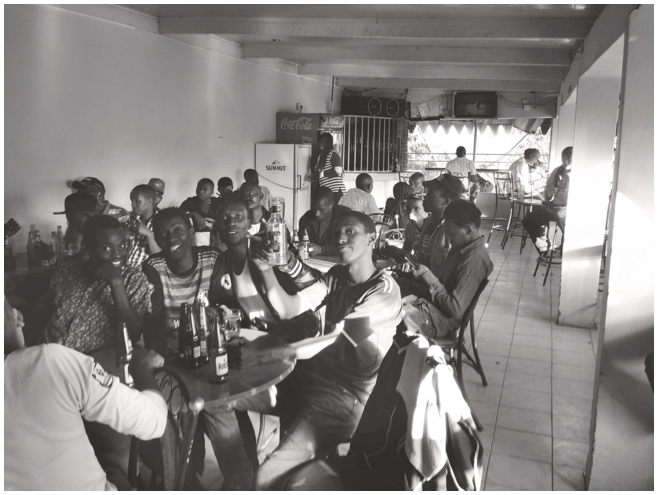

 Open access