

1.1 The Deepwater Horizon Blowout
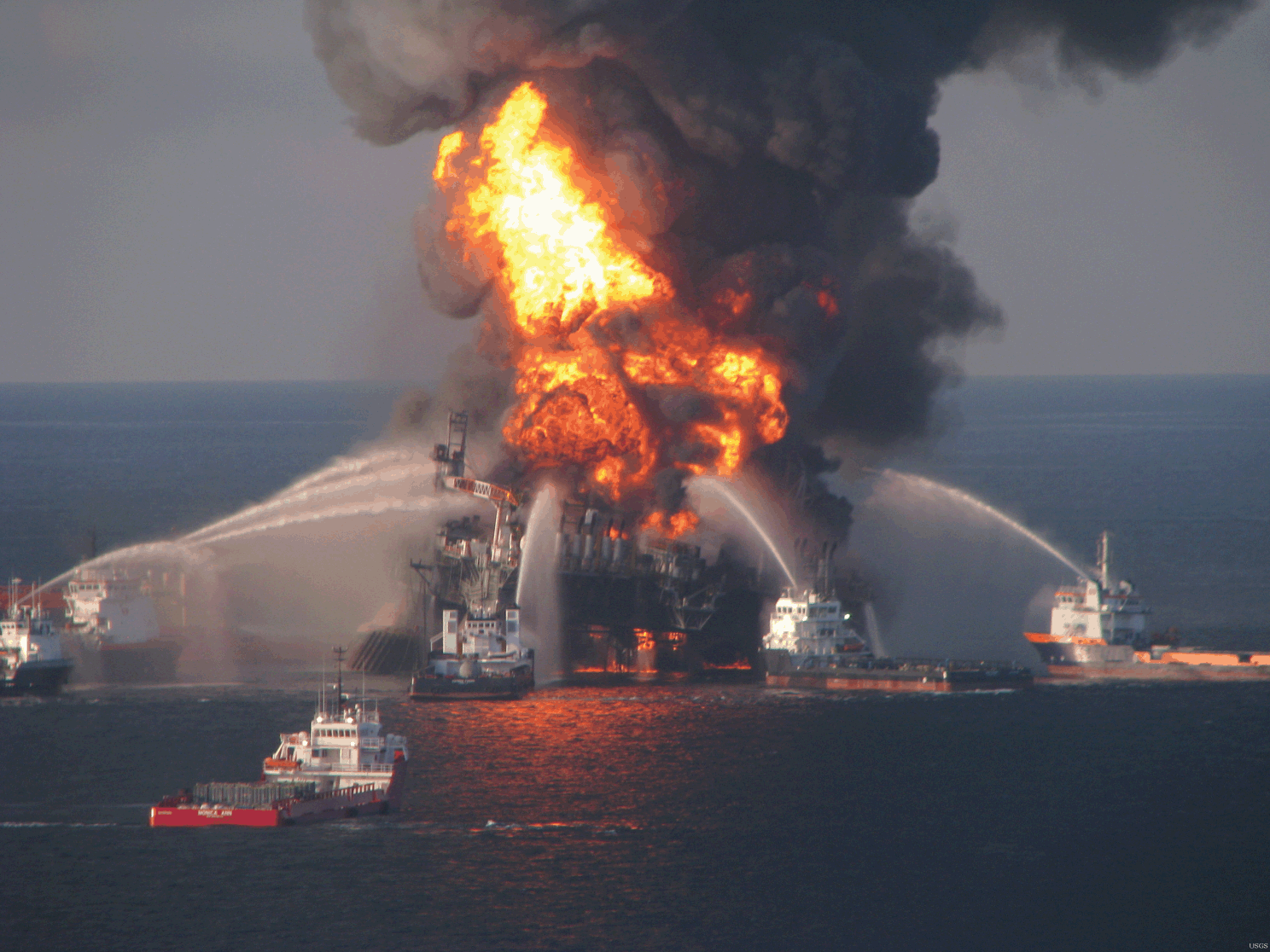
The Deepwater Horizon blowout of the Macondo well in Mississippi Canyon Block 252 in the deepwater Gulf of Mexico began on April 20, 2010 (Figures 1.1 and 1.2). Eleven people died and approximately four million barrels of oil leaked into the Gulf of Mexico (Reference Boebert and BlossomBoebert & Blossom, 2016). Through this event, the general public became aware of the enormous pressures encountered in sedimentary basins and of the extraordinary complexity and risk associated with finding and producing hydrocarbons in the deep ocean.
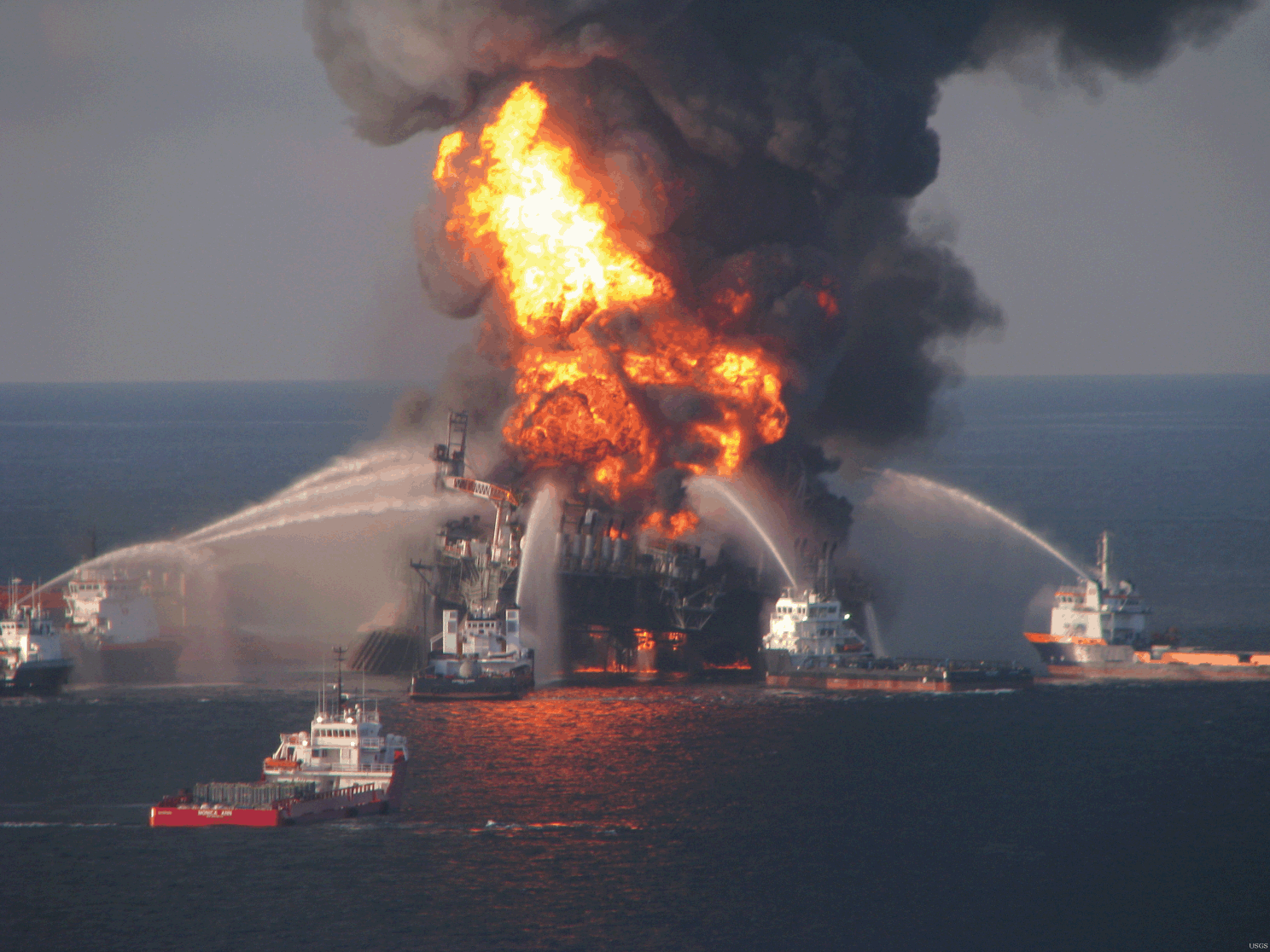
Figure 1.1 Fire boat response crews battle the remnants of the Deepwater Horizon drillship. Multiple Coast Guard helicopters, planes, and cutters responded to rescue the Deepwater Horizon’s 126 person crew.
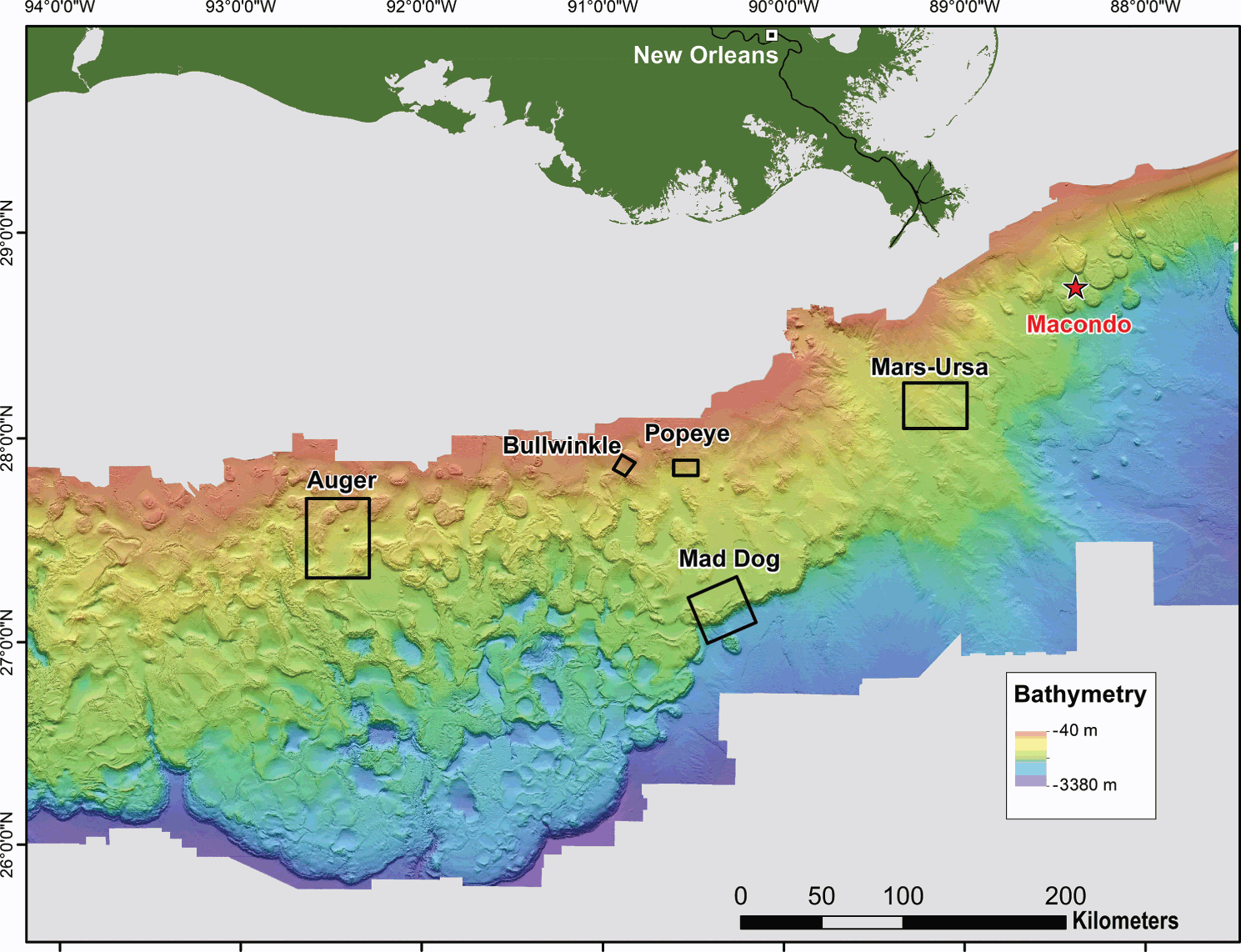
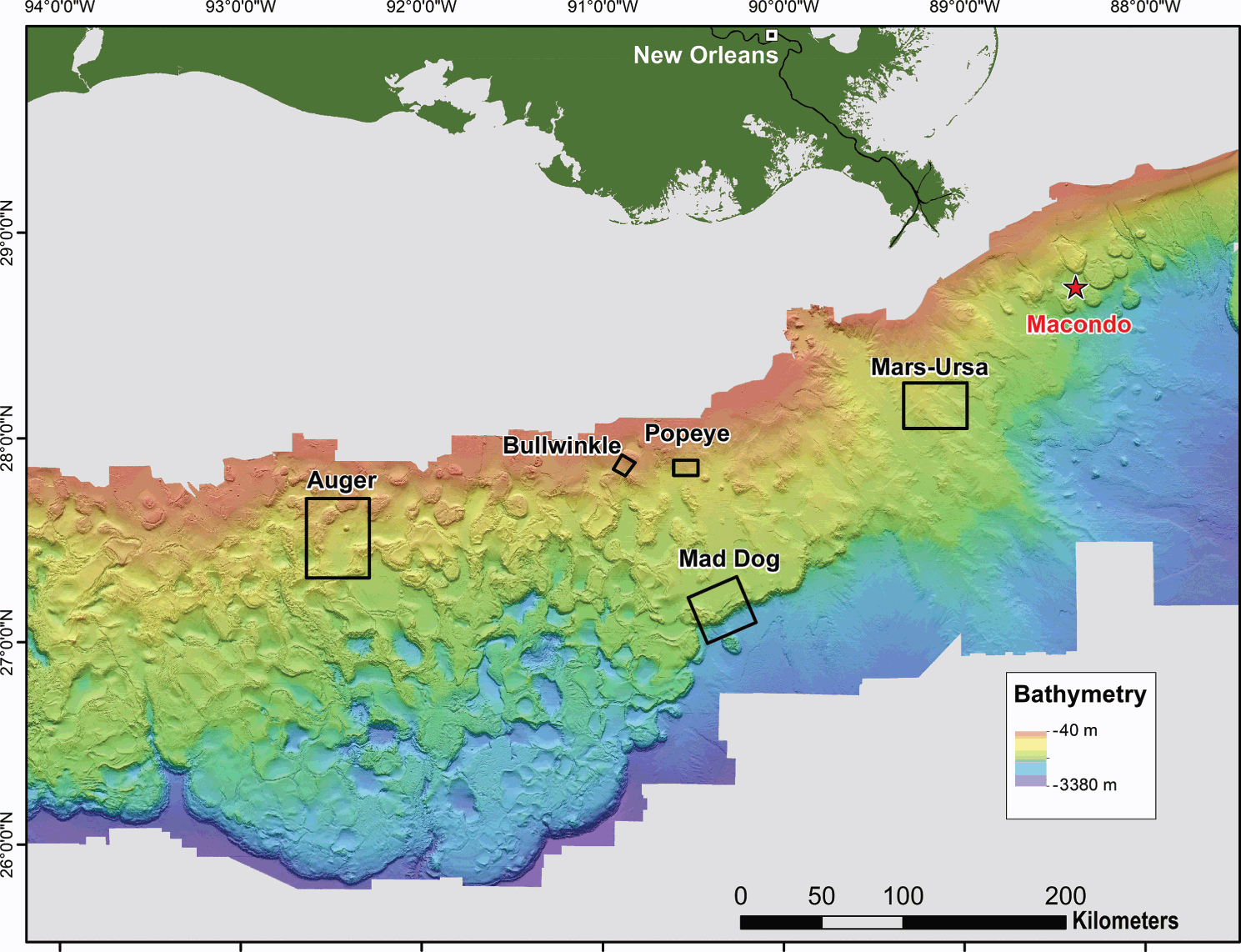
Figure 1.2 Bathymetry of the slope of the Gulf of Mexico. Multiple locations studied in this book are shown. Bathymetry is based on a 3D seismic deepwater bathymetry grid of the northern Gulf of Mexico made available for public use by the Bureau of Ocean Energy Management.
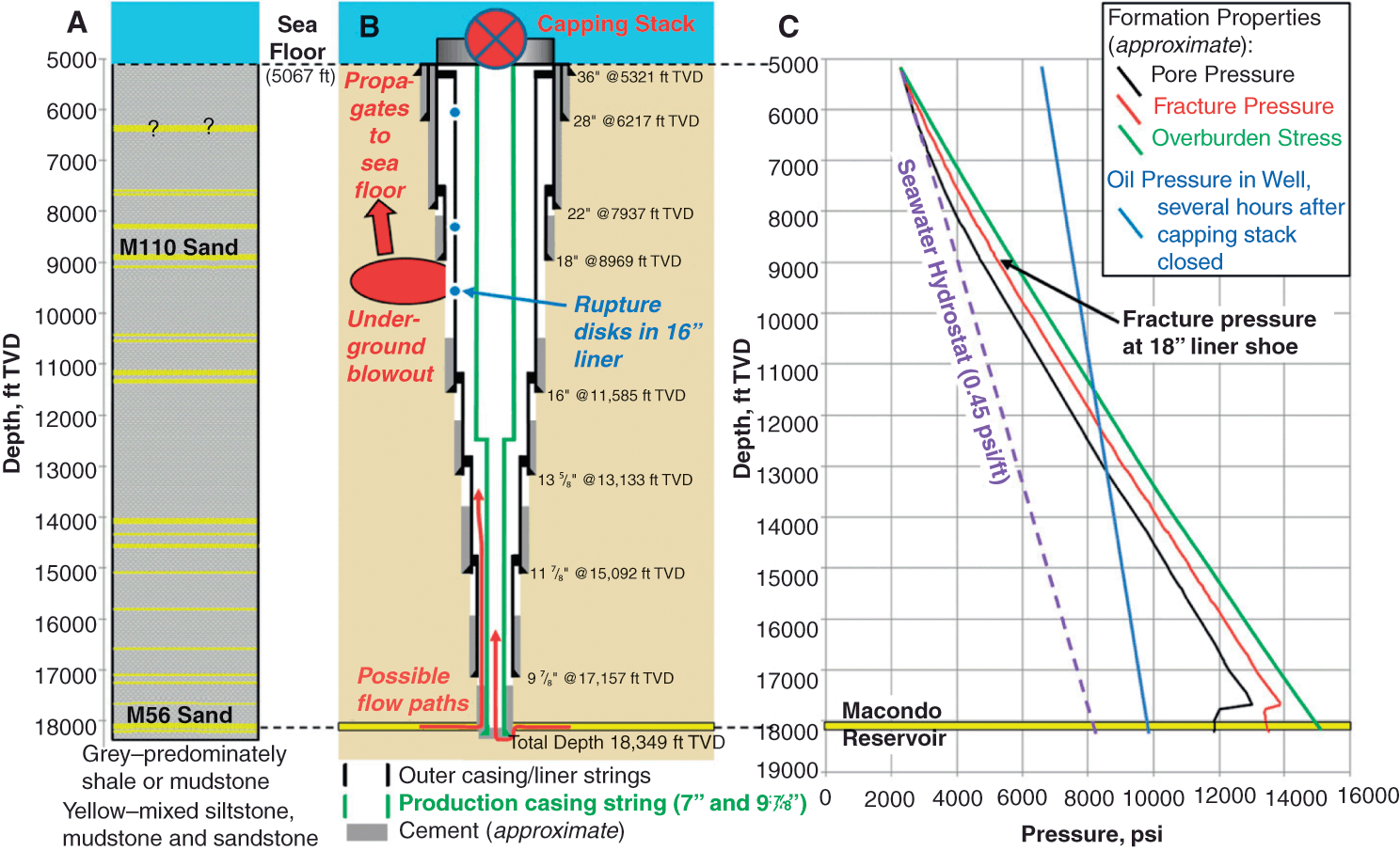
In fact, the Macondo well was a dramatic but not unusual illustration of the conditions encountered when drilling in deepwater basins. It was not in particularly deep water, nor was its total depth particularly great (Fig. 1.3) (Deepwater Horizon Study Group, 2011). However, the pressures and stresses encountered in this well (Fig. 1.3) record many of the processes that are the focus of this book.
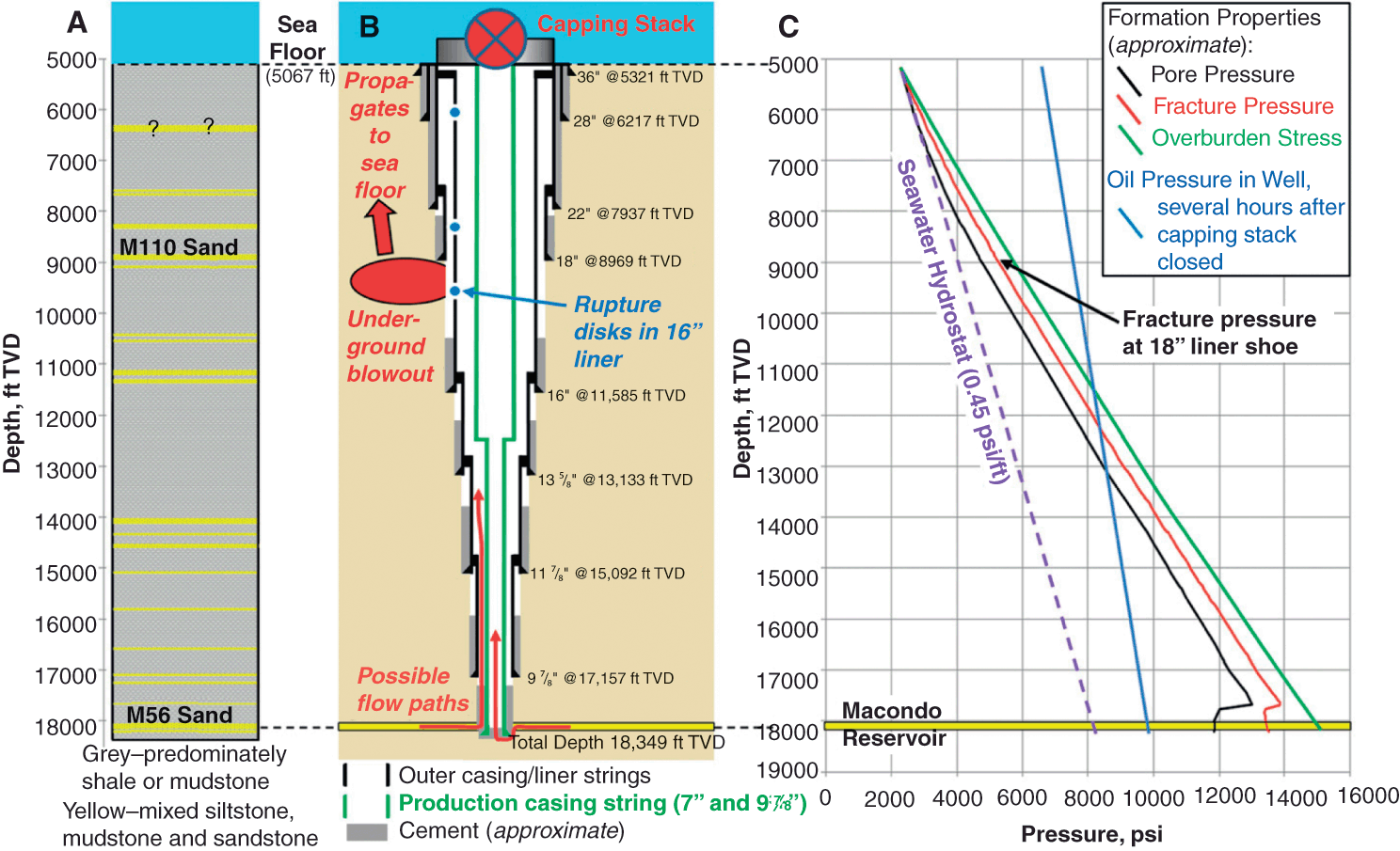
Figure 1.3 (a) Schematic lithologic section for the Macondo well based upon analysis of data acquired during drilling (Source: BP). Depths are total vertical depth (TVD) below the Deepwater Horizon rig floor, 75 ft (23 m) above mean sea level. (b) Completion diagram for the Macondo well showing outer nested casing and liner strings cemented in place during drilling, and production casing cemented across the Macondo Reservoir (M56 sand, yellow). Possible oil flow paths during blowout (shown in red) were either inside the production casing, between the production casing and the outer casing/liner strings, or both. (c) Approximate in situ pore pressure (black), fracture pressure (red), and overburden stress (green). The blue line shows the approximate oil pressure in the wellbore corresponding to a capping stack pressure of 6 600 psi, which was observed several hours after the well was shut in (calculated for an oil pressure gradient in the well of 0.25 psi/ft). From Reference Hickman, Hsieh, Mooney, Enomoto, Nelson and MayerHickman et al. (2012) with permission of the National Academy of Sciences.
At Macondo, and in most sedimentary basins, pore pressure,
 , is bounded below by the hydrostatic pressure,
 , (Fig. 1.3, dashed purple line) and above by the overburden stress,
 (Fig. 1.3c, green line).
 records the pressure due to a static column of water from the sea surface, while
 approximately records the stress due to the weight of the overlying sediment and water. The overpressure,
 , is the pressure above the hydrostatic pressure
 . The difference between the overburden stress and the pore pressure is the vertical effective stress
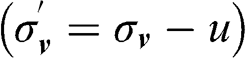 .
.
At Macondo, pore pressures (black line, Fig. 1.3c) roughly parallel the overburden stress (green line, Fig. 1.3c); the vertical effective stress is the difference between these two and is almost constant from near the seafloor to 17 640 ft (5377 m). The reservoir pore pressures result from both elevated water pressure and the buoyancy of the hydrocarbons trapped within the reservoir. Petroleum reservoirs are multiphase systems and can be composed of water, oil, and gas, each of which can have discrete pressures. To unravel the pore pressure distribution, and understand the implications for how hydrocarbons are trapped, the distribution of the different hydrocarbon phases and their pressures must be understood. I review how to describe pressures in multiphase systems in gravity and capillary equilibrium in Chapter 2. I review how water phase overpressures such as those at Macondo are generated in Chapter 4, and I illustrate how to estimate the trap integrity as a function of these water phase pressures for hydrocarbons or CO2 in Chapter 9.
Petrophysical measurements (e.g., density, resistivity, and velocity) are commonly used to predict pore pressure in mudrocks, and this approach was used at Macondo (Reference Pinkston and FlemingsPinkston & Flemings, 2019). This is possible because the mudrocks are very compressible and their compaction state records the effective stress as is discussed in Chapter 3. In Chapters 5, 6, and 7, I discuss methodologies to estimate pore pressure from the compaction state from log, core, and seismic data.
As the main reservoir target, the M56 sandstone, is approached, pore pressures drop abruptly by 1 200 psi (8.3 MPa) over 370 ft (113 m) (Fig. 1.3c). The decrease in pore pressure at the base of the Macondo well was one of the challenges encountered when drilling and completing the well (Reference Pinkston and FlemingsPinkston & Flemings, 2019). Pressure regressions like this are common and result from two- and three-dimensional flow of pore water in the subsurface. In Chapters 10 and 11, I present two- and three-dimensional conceptual and quantitative models to describe this flow. These models illustrate how permeable interconnected reservoirs trapped within overpressured mudrocks can result in dramatic pressure variation. I show how to predict this variation regionally.
The red line in Figure 1.3c is an estimate of the least principal stress. During drilling, the pressure in the open borehole is generally maintained to be above the pore pressure and below the least principal stress. When the pore pressure exceeds the wellbore pressure, flow from the formation into the borehole can occur (a kick) and when the borehole pressure approaches the least principal stress, borehole fluid can be lost through fractures into the formation (a loss to the formation). The small difference between pore pressure and least principal stress is the reason why so many casing strings were required on the Macondo well (Fig. 1.3b). Least principal stress is also a primary control on hydrocarbon trapping in the subsurface. In Chapter 3, experiments and models are presented to describe the magnitude of least principal stress. In Chapter 8, methods to estimate least principal stress are described. In Chapter 9, I describe how hydrocarbons are trapped by least principal stress and estimate the column of hydrocarbons or CO2 that can be trapped in the subsurface. Finally, in Chapter 11, models are presented to describe how reservoir pressures can exceed the least principal stress in bounding mudrocks, cause trap failure, and drive fluid venting at the seafloor. This insight can be used to predict optimal locations where hydrocarbons are trapped.
1.2 Audience and Application
I wrote this book for those in industry who study subsurface pressure and stress and for the graduate student with a passion for understanding how pore pressure drives geological processes. As a geoscientist, I hope this book will inspire the geoscientist to advance their understanding of Earth processes through insights provided by geotechnical and petroleum engineering science. In turn, I hope this book will inspire the engineer to extend engineering concepts to the larger scales, stresses, and depths of geological systems.
In the energy industry, there are a myriad of reasons to understand subsurface pressure and stress. In the exploration phase, an understanding of pressure and stress provides a tool to predict where hydrocarbons are trapped and how and to where hydrocarbons migrate in the subsurface. To design and drill a well safely and economically, it is necessary to constrain subsurface pressures and stresses. In the development phase, an understanding of pressure is an important tool to understand fluid distribution and reservoir connectivity, and it provides insight into the impact and risk of subsurface injection to maintain pore pressure (Reference Naruk, Solum, Brandenburg, Origo and WolfNaruk et al., 2019). The concepts presented also apply to understanding the state of pressure and stress in unconventional basins (Reference Couzens-Schultz, Axon, Azbel, Hansen, Haugland and SarkerCouzens-Schultz et al., 2013) and can be used to gain insight into the processes by which injection-induced earthquakes occur, whether by hydraulic fracturing or for waste water injection (Reference EllsworthEllsworth, 2013).
As we look to the future, it is clear that subsurface CO2 sequestration will become one vital tool to limit the impact of continued use of carbon-based fuel on global climate change. This book has significant application to this practice. Subsurface CO2 sequestration involves injection of an immiscible buoyant fluid (Reference Benson and ColeBenson & Cole, 2008). Structural trapping is one important component of CO2 sequestration, and it is directly analogous to how hydrocarbons are trapped. In addition, the design of injection programs will need to involve a complete understanding of the pressure and stress conditions in the subsurface.
Finally, this book provides a platform to understand how pore pressure and stress drive fascinating geological processes. Pore pressure and stress are driving forces in earthquakes and faulting (Reference Cruz-Atienza, Villafuerte and BhatCruz-Atienza et al., 2018; Reference Rogers and DragertRogers & Dragert, 2003; Reference Saffer and TobinSaffer & Tobin, 2011). Submarine landslides can be driven by elevated pore pressure (Reference Dugan and FlemingsDugan & Flemings, 2000a). Sandstone injections (Reference Boehm and MooreBoehm & Moore, 2002) and seafloor vents record the interaction of pore pressure and stress, and complex biological communities thrive at vent locations (Reference Brooks, Kennicutt, Fisher, Macko, Cole and ChildressBrooks et al., 1987).
1.3 The Discipline of Pore Pressure Analysis
The field of pore pressure analysis lies at the interfaces of geoscience, petroleum engineering, and geotechnical engineering. Advances will lie at these interfaces. I direct my graduate students in geoscience to have a strong basis in basic geoscience (particularly understanding of sedimentary rocks, stratigraphy, and structural geology), to have an exposure to how rocks deform and fluids flow through them (particularly through hydrogeology, geotechnical engineering, and geomechanics), and to understand multiphase behavior (through courses in petroleum engineering). Multiphase behavior has not been emphasized in the geosciences but is increasingly recognized as a vital component of geological systems.
Reference DickinsonDickinson (1953) characterized basin overpressures and attributed their origin to the inability of low permeability shales to expel their fluids during compaction. Reference Hubbert and RubeyHubbert and Rubey (1959) and Reference Rubey and HubbertRubey and Hubbert (1959) quantitatively explored the origin of overpressure in basins and how to predict these pressures, and presented models to describe least principal stress. However, as noted by Reference Rubey and HubbertRubey and Hubbert (1959), the foundation for understanding and predicting pore pressure is rooted in the study of consolidation as developed in geotechnical engineering (Reference TerzaghiTerzaghi, 1923, Reference Terzaghi1943). A series of now-classic papers followed that developed practical approaches to apply these seminal concepts (Reference EatonEaton, 1969, Reference Eaton1975). As I discuss in Chapter 4, pore pressure research continues to develop practical approaches that rely on these concepts. For example, new compaction models have been developed to describe an observed porosity-effective stress relationship, or a different empirical relationship has been presented to describe the relationship between least principal stress and pore pressure.
Two books review overpressure in basins (Reference FertlFertl, 1976; Reference Mouchet, Mitchell and BoussensMouchet et al., 1989). They focus on the origins of overpressure, review compaction behavior, and discuss methods to detect and predict abnormal formation pressures with wireline logs. These studies emphasize a one-dimensional analysis (e.g., a well profile). Edited volumes have also provided overviews of different aspects of pore pressure research. For example, Reference DuttaDutta (1987) reprinted some of the classic historical papers on geopressure and Reference Huffman and BowersHuffman et al. (2001) captured many important contributions. The remaining literature is extensive but distributed in the geological and engineering literature. Many of these publications are cited in this volume. However, the references herein are not intended to be exhaustive.
The field of pressure and stress analysis began to evolve rapidly in the early 1990s. This evolution was driven by the dramatic expansion of the energy industry into the deepwater. In this environment, drilling is brutally expensive, and new problems were encountered. To operate effectively in this environment, pressure and stress had to be better understood. To do so, new tools were developed, more and better data were acquired, and resources were devoted to understanding the geopressured system. Operators began to deploy integrated teams of geophysicists, geologists, and petroleum and civil engineers to characterize and predict subsurface pressure and stress in order to develop exploration targets and then design and drill wells safely and economically. As a result, the study of pore pressure was no longer restricted to the silo of the drilling engineer or the explorationist. One example of this integrated approach was the coupling of seismic and well data to provide an integrated understanding of the three-dimensional distribution of subsurface pressure and stress (see Chapter 7). This view advanced us beyond the study of single vertical wells and into the domain of understanding the entire subsurface system.
As a result of these efforts, we now know that dipping permeable reservoir layers trapped within overpressured mudrock set up a complex hydrodynamic system (Chapters 10 and 11). This system results in locally depressed or elevated pore pressures relative to what is predicted from one-dimensional analysis. This is a vital insight for well design, as it controls the entrapment of hydrocarbons and drives a range of geological processes. We now understand how the evolution of structure and stratigraphy controls the entrapment of hydrocarbons, the expulsion of fluids through seafloor seeps and mud volcanoes, and the generation of submarine landslides. Chapters 10 and 11 focus on this behavior.
Historically, the disciplines of pore pressure analysis and geomechanics were separated; pore pressure was calculated independently and provided as input to geomechanical models. Today, we often link the analysis of pressure and stress. In Chapters 6 and 7, I present coupled approaches to predict pressure and stress. In addition, most geomechanical approaches have relied on poroelastic material models with Coulomb failure. Today, we are beginning to incorporate more realistic material behavior including elastoplasticity, stress-dependent strength, and creep into pressure and stress analysis. I begin this discussion in Chapter 3, and continue it in Chapters 4, 6, and 7.
These approaches are supported by a new generation of experimental studies on material behavior of mudrocks. Historically, the field relied on insights from low stress experiments conducted in geotechnical engineering laboratories. Now, experiments are routinely run at pressures and stresses characteristic of those encountered in the energy industry. Through these experiments we have a much better understanding of how rocks deform as a function of their composition at geological stresses. In Chapter 3 I review the experimental behavior of mudrocks, and in Chapter 8 I discuss the implications of these experiments for the prediction of least principal stress.
In the future, the fields of geomechanics and pore pressure analysis will continue to merge through two- and three-dimensional Earth models. It is within our reach to routinely predict both pore pressure and the full stress tensor in three dimensions within sedimentary basins (Chapter 7). Finally, there is strong potential to link the study of pressure and stress with the velocity anisotropy that results during compaction. Thus, there is the potential both to use seismic data to more fully predict subsurface pressure and stress, and, in turn, to use our understanding of stress and pressure to improve subsurface imaging.
1.4 Nomenclature
Geomechanics, petroleum engineering, and geotechnical engineering all have an internal nomenclature and this nomenclature can conflict. I provide a nomenclature table and a reference to where each term is first presented (see List of Nomenclature). In many areas of conflict, I have adopted the geotechnical expression. I apologize in advance to those who will be frustrated by unfamiliarity with these terms.
1.5 Summary
The Deepwater Horizon blowout at the Macondo well was a catastrophic human, environmental, and economic disaster. It exposed to the public the enormous pressures encountered in the subsurface. In fact, the pressures and stresses encountered were not unusual but characteristic of those encountered in deepwater drilling. This book illuminates the underlying processes that lead to pressure and stress profiles such as those encountered at Macondo and it provides strategies to predict those conditions ahead of the drill bit.
Significant advances in understanding pressure and stress in sedimentary basins began in the 1950s, with the foundation for these advances stemming from the study of soil behavior in the 1920s. With the advent of deepwater drilling, our understanding of overpressure and our approaches to pressure prediction have dramatically advanced over the last thirty years.
Future advances in the field will result from the continued integration of geomechanics with pore pressure analysis, and increased study of the material behavior of mudrocks at high stresses and temperatures. In the near future, it will be routine to predict the full stress field and pore pressure in sedimentary basins, and there is strong potential for coupling seismic imaging more closely to the state of stress in sedimentary basins.