




Simultaneously romanticised and forgotten about as a parenthetical prelude to the almost four-decade Franco dictatorship, one of the principal concerns of the short-lived Second Republic (1931–6) was to make education less exclusive and to chip away the monopoly that the Catholic Church had on instilling a sense of civic and national identity. In this crusade to combat illiteracy (particularly pronounced amongst inhabitants of rural areas), educated women found a space, beyond the limits of the domestic household, for civic and political engagement, accelerating ‘the shift from homosocial to heterosocial culture’Footnote 1 that was at the time gaining traction across America and Europe.
These plans for popular education were rooted in the ideas of the so-called regeneracionismo (‘regeneration’) movement, a group of intellectuals and scholars who, since the end of the nineteenth century, had advocated for combating illiteracyFootnote 2 and reforming education as a means to reverse a widespread sense of national decline and backwardness, which became particularly pronounced in the wake of Spain losing the last remnants of its American and Asian colonies in 1898.Footnote 3 From 1931 onwards, many heirs to regeneracionismo began to enter government and put in place various pedagogical initiatives. One important strand of this strategy was subsidising touring troupes that would bring theatre to small towns. Particular emphasis was placed on early modern Spanish drama, known as Golden Age theatre, considered an effective means ‘to create a long-lost community and to mediate the tensions between those who wanted to see Spain more Europeanized and those who wanted to see it more Spanish’.Footnote 4
Created in 1931 at the Central (later Complutense) University of Madrid, the theatre group La Barraca (‘The Hut’) is one of the most important and cited examples of state subsidised travelling theatre companies, a notoriety enhanced by the fame and tragic death of its director, the poet and playwright Federico García Lorca (Spain’s most iconic writer of the last century). Lorca resigned as director of the group at the beginning of 1936; a few months later, in July, a coup orchestrated by military, nationalist and conservative forces to overthrow the democratically elected government resulted in the outbreak of the Spanish Civil War. Lorca was assassinated by the rebel forces in August 1936 (and the original La Barraca group dissolved soon afterwards). In the near century since then, La Barraca has been predominantly construed in relation to Lorca, and in the ongoing cultural wars surrounding how the Civil War ought to be remembered. For those on the Left, memories of La Barraca are tinged by a strong nostalgic discourse,Footnote 5 by which the initiative and troupe stands as a metonym of the Second Republic’s ideological commitment to educate and provide culture for the citizens of a new Spain.Footnote 6
Such a discourse has been reiterated by generations of scholars, despite the seeming lack of any evidence surrounding La Barraca’s pedagogical impact. As Sinclair has recently observed in relation the Misiones Pedagógicas (‘Pedagogical Missions’) – an official project that organised expeditions to rural areas with the aim of training and giving support and materials to local schoolteachers that also had a travelling theatre group, the Teatro del Pueblo (‘Theatre of the People’) – our knowledge about such state-funded missions derives from those who organised and conducted them; in these narratives the voice of ‘those visited is often edited out’.Footnote 7 Given this context, what sources and methodologies might be used to counteract a widespread memory bias in relation to La Barraca?
The principal hypothesis of this article is that, for all its worthy pedagogical intentions, the most significant legacy of the troupe – indelibly linked in the popular and scholarly imagination with Lorca – resides in its foundational role in women’s history. In an article published in summer 1933, the writer and activist María Teresa León articulated her doubts surrounding the Spanish classic theatre repertoire performed by La Barraca and Teatro del Pueblo. According to León, the groups were not presenting their rural audience with plays that reflected the major social upheavals instigated by the Second Republic government. She included gender dynamics amongst these significant changes.Footnote 8 During the country’s second attempt to establish a democratic republic – ‘a melting pot in which egalitarian discourses, couched in the language of socialism, gained an unprecedented momentum’Footnote 9 – women won the right to vote (1931); Spain’s first divorce and civil marriage laws were passed (1932); and the regional government in Catalunya even approved a Decree of Artificial Interruption of Pregnancy (1936), amongst the most advanced in Europe.Footnote 10 What León seemingly did not recognise has remained concealed ever since: La Barraca was one of Europe’s first mixed gender university theatre groups.Footnote 11 It thereby constituted a form of cultural and political praxis as regards the Second Republic’s progressive social and gender(ed) agenda.
Historiographical approaches to gender on the period have thus far disproportionately focused on big names – intellectuals, politicians and artists at the vanguard of the struggle to expand women’s place(s) in society – alongside the associations and institutions they helped to create. Less attention has traditionally been paid to the study of practices and behaviours. Changes are nevertheless afoot in this regard with greater scholarly attention paid to leisure activities linked especially as regards a nascent consumer culture (magazines, cinema and dance halls in particular).Footnote 12 My exploration of La Barraca similarly pays attention to female participation in leisure activities but expands the remit by focusing on them in relation to education.
How, we might reasonably ask, did theatrical activities linked to the university setting challenge traditional gender and cultural norms? What were the social discourses and challenges associated with the presence of women on stage? What were the profile of university students that accepted to take part in these activities and what were the admittance criteria? How did gender dynamics operate within groups such as La Barraca? And finally, what did the experience mean for the lives of its young female participants? After reflecting on the process of documenting La Barraca and reconstructing its origins and functioning, I proceed to enumerate wider lessons that can be learnt in relation to each of the aforementioned questions.
Documenting La Barraca: Opportunities and Challenges
Funded by the Spanish Ministry of Education and inextricably linked to the name (and martyred death) of Lorca, La Barraca received heavy press coverage during its brief lifetime. While the radical nature of both the Second Republic and La Barraca was underplayed throughout the Franco dictatorship, a renewed interest in the life and work of Lorca since the return of Spanish democracy in the late seventies resulted in the appearance of multiple interviews with and memoirs by former members of the theatrical group.
Contemporary press coverage and subsequent published interviews and memoirs are the main primary sources used in this study. I also performed my own interviews with some descendants of members of La Barraca (see Acknowledgements); these testimonies were especially important in those cases where information was almost non-existent. Historians of course need to remain alert to the limitations and constraints of working with such sources. Contemporary press coverage offers very limited information about the group and is very much embedded in the often bitter politics of their time; depending on political leaning, newspapers are either extremely laudatory or overcritical in their judgement of La Barraca’s work. Memoirs and interviews provide invaluable first-hand testimonies, especially when it comes to critically interrogating the frequent differences and even tensions between personal and public narratives, as well as drawing attention to voices that have been marginalised or omitted by mainstream historiography. Conversely, as Penny Summerfield has explored, narratives of the self are no panacea.Footnote 13 Accuracy (and reliability), for instance, have traditionally ranked highly as a concern for historians, especially when memory’s inherent subjectivity and mutability becomes exaggerated over time, and when transmitted across generations.Footnote 14 In Margarita Aguado’s pithy assessment: ‘Al final cuando hablamos tantas personas distintas con nuestros propios recuerdos, seguro que tenemos contradicciones’ [‘Ultimately, each of us has its own version of the facts, so we will probably contradict each other’].Footnote 15 When interviewing descendants (all of them women), I was also confronted with gaps. Most of these prosthetic testimonies concurred around the importance for relatives of participating in La Barraca, and yet when asked about transmitted anecdotes of those years (related to either La Barraca or other activities), none of my interviewees were able to provide additional information to that which can be found in memoirs. Conversely (and perhaps predictably), it was easier to obtain more detailed and new data about how the female members of La Barraca met their male partners (or, in some cases, about the memory and achievements of the partners themselves). As Summerfield states, ‘ideologies that circulate in localities, especially gendered ideologies, colour the version of the past that can be told in different situations’.Footnote 16 My experience with one of the interviewees was particularly revealing in this regard. After reading the final iteration of this article, Ana María Prados was concerned about the way some of my claims could be understood. She particularly asked me to emphasise the presence of a chaperone to dispel suspicions of sexual freedom inside the group. Her reasons were political; according to her, ‘la guerra civil no ha terminado, los elementos de la derecha están constantemente insultando a los republicanos, también a Lorca y los miembros de La Barraca […] la derecha ha dicho que eran unas putas’ [‘the Spanish Civil War hasn’t ended, the Right is still insulting those who believed in the Republic, amongst them Lorca and the members of La Barraca […] the Right denigrated them as sexually promiscuous’].Footnote 17 This didn’t seem so problematic for her mother, however, who in several interviews given to the press proudly states that they didn’t pay much attention to the chaperone and that she was, in fact, later dismissed, a point to which I will return.
To have a more complete picture I corroborated (and nuanced) information gathered during interviews with data (mainly details referring to the historical record) from archival and printed records. Such materials come with their own problems. One of the main sources of information about the group and its members (the General Archive of the Complutense University) is markedly incomplete, since most holdings relating to the Republican period were destroyed during the Spanish Civil War. While the material found helped me to confirm enrolment details and careers chosen by some of La Barraca’s female members, the lack of information in other cases doesn’t necessary discredit or contradict oral testimonies.
Despite these limitations, La Barraca is comparatively (extremely) well documented in relation to roughly contemporaneous pre–Second World War mixed gender university theatre groups, and as such is a particularly useful case study for understanding broader dynamics and trends.
A Mixed-Gender Pedagogical Theatre Initiative in the Central University of Madrid
Before starting the exploration of the way La Barraca challenged traditional gender and cultural norms, it is important to understand its origins and structure. La Barraca was an initiative of the Union Federal de Estudiantes Hispanos (‘Federal Union of Spanish Students’, UFEH), a national network connecting all liberal student associations (FUE). The UFEH was created in 1928 as a counterpart to the until-then hegemonic Asociación de Estudiantes Católicos (‘National Catholic Students Association’) and in opposition to the educational policy of the dictatorship of Miguel Primo de Rivera (1923–30). Following the return of democracy in 1931, the UFEH’s defiance of the dictatorship was rewarded, and it was soon bestowed full membership (including voting rights) in government boards of the Second Republic. The UFEH was quickly granted the monopoly over student representation bodies and played a central role in the political and cultural life of higher education establishments.Footnote 18
One of the UFEH’s pilot cultural initiatives was the creation of a theatre group at the Central University of Madrid, a project that had been on the cards since December 1928.Footnote 19 This aspiration became a reality in November 1931 when the UFEH adopted Federico García Lorca’s project of a touring company devoted to ‘educating the people of our beloved Republic by means of restoring to them their own theatre’.Footnote 20 Lorca’s reference to ‘their own theatre’, in a twist of Herder’s Romantic idea of literature as a reflection of the volksgeist, related back to the national Golden Age drama. As previously mentioned, the project chimed with the incoming government’s plan for popular education and obtained subsidies from the Second Republic’s Ministry of Education to cover expenses (the principal promotor of the project was the minister himself, Fernando de los Ríos). The members of the company were all unremunerated volunteers. There was some overlap in members between La Barraca and the abovementioned Teatro del Pueblo (directed by the soon-to-be prominent playwright and teacher Alejandro Casona).Footnote 21 However, the former was exclusively comprised of university and bachillerato students,Footnote 22 toured less deprived areas and privileged artistry over pedagogy.Footnote 23
La Barraca was run by a management committee of university students (four from the Faculty of Philosophy and Letters and four from Architecture) accountable to the UFEH president. Regular student members of the company divided into two groups depending on if they had artistic or administrative and technical roles. Two established writers assumed overall artistic direction (Lorca and Eduardo Ugarte).
Consisting of around forty members in total, the number of women varied but never exceeded 25 per cent. With the exception of the Argentinian artist Norah Borges (in charge of the costume design of the production of Juan del Encina’s Égloga de Plácida y Vitoriano Footnote 24), they were all female students carrying out artistic roles (as either actors or musicians). Although they only participated very sporadically and in minor roles, Isabel García Lorca (Federico’s sister) and Laura de los Ríos (the daughter of Fernando de los Ríos) are the two more frequently referenced female members of La Barraca as a result of their family connections.Footnote 25 With a couple of exceptions,Footnote 26 history has not done justice to the other young women involved, extant biographical data being partial or non-existent.
What we do know is that most were aged between fifteen and twenty-three, many were born outside of Madrid and the majority were the daughters of liberal republican upper middle and middle-class families. Julia Rodríguez Mata’s grandfather Tomás Rodríguez Mata was involved in the so-called Glorious Revolution, the movement that overthrew Queen Isabella II in 1868 – he was subsequently appointed Minister of State Finance during the so-called First Republic (1873–4). Her father was a professor of medicine and doctor, Hipólito Rodríguez Pinilla.Footnote 27 Mercedes Ontañón was the daughter of José Ontañón (educator and translator for the Ministry of Foreign Affairs), and her family was very linked to the Institución Libre de Enseñanza (‘Free Institution of Education’, ILE), amongst the most progressive and influential pedagogical outcomes of the aforementioned regeneracionismo movement.Footnote 28 The father of Carmen Diamantes was a civil engineer from Izquierda Republicana (‘Republican Left’), who was appointed Jefe del Circuito Nacional de Carreteras (‘Director of National Highways’) during the Second Republic – following the rebels’ victory, he received a twenty-year prison sentence (although he died in 1945).Footnote 29 María del Carmen García Lasgoity was the daughter of a businessman of liberal republican ideas (he was also incarcerated after the Spanish Civil War).Footnote 30 She describes her mother, of Uruguayan origins, as a woman of great culture.Footnote 31 Conchita Polo was the daughter of a notary from La Coruña; her brother Antonio Polo, professor of law, was sacked as part of the purges enacted during the Franco dictatorship for his republican and liberal ideas.Footnote 32 María Gloria Morales’s father (Isidro Morales López) was a doctor (he came from a medical family in La Rioja); according to her granddaughter,Footnote 33 he was close to the Partido Socialista Obrero Español (PSOE, ‘Spanish Socialist Workers’ Party’), and during the war he attained the status of Comandante Médico (‘Medical Major’) of the Republican Air Forces; initially sentenced to thirty years in prison, he was pardoned in 1945.Footnote 34 Carmen Galán was the niece of the doctor Julián Torres Fragua, an unsuccessful PSOE candidate to become member of the parliament in the 1933 general election.Footnote 35 Others came from atypical non-republican families. Carmen Antón describes her background as conservative, her mother’s family being stanch Catholic, and her father as far-right leaning.Footnote 36 However, her single mother (Segunda Trinidad García Antón), from whom she took her surname, had professional medical training to work as an assistant in hospital – Antón refers to her as auxiliar de medicina (‘medical assistant’), working in a children’s hospital during the war.Footnote 37 His father, despite his reactionary political orientation and being away from home, paid and incentivised (but also put limits on; see n. 61) Carmen’s education. The sisters Enriqueta and Pilar Aguado came from a wealthy background: their father (Luis Aguado Rodríguez Quintana) was a conservative lawyer – during the war he wrote under the pseudonym Luis de Fonteriz the book Red Terror in Madrid (London: Longmans, 1937), which chronicled the violence in Republican Madrid. He served as ad honorem member of the Legal Military Corps of the Francoist rebel forces.Footnote 38 The mother belonged to a Sevillian family connected to the world of bullfighting and the antiques business; she owned a boutique near the Prado Museum in Madrid. Described by her granddaughter as liberal in manner albeit not in political alignment,Footnote 39 she was the sister-in-law of Lionel Harris, the owner of the Spanish Art Gallery in London.
The inclusion of women as actresses was an innovative and daring venture for La Barraca as university theatre groups with a much longer trajectory such as the Oxford University Dramatic Society or Cambridge’s ADC Theatre continued to only cast professional actresses for female roles.Footnote 40 More broadly, the position of women in theatre around the world was at this time ambiguous, as we shall see in the following section.
Gender in Performance
The main challenge that La Barraca presented for its liberal upper middle and middle-class young female members was related to the conflicting discourses and imaginaries around women on stage, a much-understudied area of gender(ed) cultural history. Acting in 1930s Spain was one of the few professions in which women could be more respected and earn considerably more than their male counterparts. Theatre was dominated by female actor-managers, and it was the only art in which women’s equal (or even superior) talent was accepted even in roles for male actors.Footnote 41 For instance, if we are to believe what was later published in the newspaper La Estampa, the painter Rosario de Velasco obtained the second prize as opposed to the first prize in the 1932 National Spanish Art Exhibition, simply because there were not precedents for a woman winning.Footnote 42 While female film acting became increasingly associated with fashion icons and establishing prototypes, theatre and opera divas were praised in the press first for their talent and only secondly for their beauty.Footnote 43 With the exception of a few ‘feminine’ trades such as family-run small enterprises and the care sector, women working in show business were unusual in receiving legal authorisation and cover for carrying out night-time labour.Footnote 44 This is symptomatic of the fact that women didn’t always have to choose between the theatre and respectability. Spain’s first modern theatrical diva, María Guerrero (1867–1928), was the daughter of a prosperous merchant, connected to the world of theatre. Through her marriage to an aristocrat, the actor Fernando Díaz de Mendoza, she rose the social ladder and enjoyed a life free from the social scandals that surrounded other international theatrical celebrities with extra-marital affairs or children (e.g., Sarah Bernhard, Eleonora Duse or Ellen Terry).
The existence of prestigious and integrated precedents did not, however, translate to unconditional respectability. Interviews and memoirs are full of accounts of how Spanish upper- and middle-class families were averse to the idea of having a female member in the theatre. To mention two examples, in her memoirs María Teresa León talks about how her family categorically rejected the idea of having a comedianta [‘female thespian’] at home, a blight on a family name whose other female members had always been upstanding citizens. The playwright, and set and costume designer, Victorina Durán, herself the daughter and granddaughter of female dancers of the Teatro Real (Madrid’s prestigious opera house), had to wait for the death of her father to embark on a career in theatre.Footnote 45
The pedagogical remit of La Barraca made it less problematic and more respectable an occupation than a professional career in theatre. Teaching was one of the first professional jobs open to women, as a result of it being conceived as a logical extension of domestic caring responsibilities. That said, the specific circumstances surrounding La Barraca resulted in additional challenges that were characterised by one of the actresses as an affront to buenas costumbres (‘proper manners’).Footnote 46 As a touring company, female and male members often spent many hours together and even stayed overnight in places far away from the surveillance of the parents. Whilst on the one hand, women had begun occupying new places in the city – such as the talks and cultural events organised by the Ateneo de Madrid, the cinema or dance venues (as documented in the autobiographical references of female members of La Barraca)Footnote 47 – night-time remained off-limits to respectable women: ‘en Madrid no se salía nunca de noche, la niña tenía que estar a las diez en casa’ [‘in Madrid, nice girls didn’t go out at night, they needed to be back home by 10 PM’].Footnote 48
Emilio Garrigués Díaz-Cañabate, a member of La Barraca’s management committee, recalls the difficulties in recruiting female talent, even within the University setting: ‘en 1932 ser actriz era poco menos que ser meretriz’ [‘in 1932 being an actress was almost like being a prostitute’].Footnote 49 In this sense, the case of La Barraca reveals that women students of the period cannot be treated, as they often have, as a homogenous group, and that secondary school education and family background are instrumental to understanding the experiences and behaviours of individual women.
A Minority Within a Minority: La Barraca’s Female Actors in the Context of Madrid’s Central University
Following the Royal Decree of 1910 granting women access to higher education under equal conditions, there was an exponential growth in female university students in Spain. This was linked with increased employment opportunities in the tertiary sector, especially in primary schools; teaching, as in many other countries, was gradually becoming a feminine and feminised profession.Footnote 50 By the end of the 1920s female university students were no longer viewed with widespread suspicion, having become a well-regarded minority in the classroom. According to the data provided by the Anuario Estadístico de España (‘Annual Statistic Bulletin’),Footnote 51 during the 1920s and early 1930s Madrid’s Central University was home to between 24 and 37 per cent of the national student numbers. This figure increased greatly (between 37 and 56 per cent) when it came to female students. In other words, if initiatives such as La Barraca were going to succeed in recruiting female volunteers anywhere, it was here; and yet it was no easy task.
Belonging to a university theatre group was, however, challenging even amongst the forward-thinking women that ventured into higher education. Scholars have traditionally treated the nascent female student experience in Spain as homogenous, but as the microcosm of the La Barraca shows, this does not correlate with the lived experiences of young women in higher education. In her memoirs, Isabel García Lorca says that on embarking on a degree in Philosophy and Letters in 1930, some of her mother’s female friends still expressed concern over the family allowing their daughter to sit side by side with male students on a daily basis.Footnote 52 The official statistical census of students reveals a high number of female undergraduates enrolled as ‘non-official’, which equated to sitting exams without attending classes. Private and public study were, in other words, construed differently and carried different levels of respectability.Footnote 53
For those who did attend teaching, the experience was often discipline dependent. Although the members of the group came from different subject areas, the Faculty with the most prominent female representation in La Barraca was, not surprisingly, that of Philosophy and Letters.Footnote 54 Most of the administrative team behind the theatrical endeavour came from here and, according to the data provided by the Anuarios, it was second only to Pharmacy in terms of the number of female students in absolute terms. In terms of the male–female ratio, Philosophy and Letters topped the list. During the 1930–1 academic year, women even outnumbered men, a source of great amazement to foreign visiting students. According to the testimony of a German student:
Los estudiantes resultan caisi arrinconados en esta reunión de señoritas. La facultad así recibe cierto acento deportivo, elegante, mundano y alegre perdiendo cierta serenidad científica necesaria.
[Male students are almost marginalised amidst the young ladies. The Faculty thus has sporty look, smart, mundane and cheerful; but it loses the tranquillity required for scientific thought.]Footnote 55
During the Second Republic, this Faculty inadvertently became one of the most exciting places to study in Spain. As a result of an anticipated growth in student enrolments (given a further boost with the inauguration in 1932 of a degree in Education, the only training route for future primary and secondary-school teachers), it was the first to occupy the buildings of a new campus (Ciudad Universitaria) with better facilities (including a gym), situated in the outskirts of Madrid. More fundamentally, Madrid’s (and Barcelona’s) Faculties of Letters and Philosophy were used as test cases for wider educational reforms in the Second Republic; if successful, it was envisaged that they could be rolled out to disciplines such as Medicine where the quality (or lack thereof) of graduates could potentially be a matter of life and death. The Civil War put paid to such plans. Writing from exile in Paris in 1937, the philosopher José Ortega y Gasset referred to the Morente Plan (named thus for the Dean of the Faculty of Philosophy and Letters) as ‘una verdadera maravilla; en ciertos respectos, algo hoy sin par en todo el mundo’ [‘a genuine wonder, something in many respects without equivalent in the world’].Footnote 56 Faculty members had full autonomy to design curricula, students were free to enrol in courses of their choosing, and assessment was separate from teaching. The Faculty also offered a range of extra-curricular activities.Footnote 57 To give just one striking example, all undergraduate students of Philosophy and Letters in Spain had the opportunity (generally funded) to embark on a forty-five-day Mediterranean cruise, visiting several key archaeological sites (the itinerary included talks and there was an on-board library). Of the students who took advantage of this heavily subsidised opportunity, 55.38 per cent were women, amongst whose ranks were several members of La Barraca. In Greece, the arrival of ‘the most beautiful girls of Spain’ was greeted with enthusiasm by the local press.Footnote 58 The Spanish media also documented transitions in the Spanish education system. Under the title of ‘Women are the main settler of Ciudad Universitaria’, in 1933 the centrist newspaper Ahora published an article with several pictures of classrooms from the Faculty of Philosophy and Letters packed with smiling and seemingly well-integrated female students.Footnote 59
Studying elsewhere could, however, be less straightforward. Carmen Antón recalls the persistence of antiquated gender dynamics at the Faculty of Medicine, where she studied:Footnote 60
En mi curso, apenas si llegábamos a doce las alumnas que en algunas clases, como la del profesor Tello de Histología, nos sentábamos en un sofá delante del estrado, con prohibición de hacerlo en los asientos del anfiteatro. … Todavía los chicos estudiantes conservaban algo de otras épocas y siendo tan pocas teníamos infinidad de guapos, o menos guapos, que se insinuaban. ‘Te llevo los libros’.
[There were never more than 12 female students per year. In some classes, such as those given by Professor Tello de Histología we were told to sit in a sofa at the front, segregated from male students seated at the back of the lecture hall … From another time, the handsome and non-so handsome male students were always making advances, offering their services to carry our heavy textbooks.]Footnote 61
The choice of degree was not the only element that made women more likely to enrol in La Barraca. An even more decisive factor was their early education. Prior to the Second Republic, single-sex female primary and secondary schools were the preferred option for middle- and upper-middle-class girls.Footnote 62 For many young women, university entailed learning new ways of interacting with men as well as the realisation that they were at a disadvantage in relation to their prior background. Isabel García Lorca captures this double bind in her memoirs:
Era entonces muy extraña la relación entre chicos y chicas. Primero te seguían por la calle … y luego la paseaban de arriba abajo con la mirada puesta en los inaccesibles balcones. A veces una carta. Eso era todo. / Gracias a Dios, la universidad era otra cosa. Por nuestros encuentros y conversaciones en el viejo patio de la facultad me di cuenta de que mis compañeros eran superiores en lecturas e ideas a las chicas, así que para no quedarse atrás y estar a la altura había que esforzarse.
[The way we interacted with young men was very peculiar. First, they followed you in the street … and then they walk up and down staring up at your balcony. Sometimes they sent a letter, but that was it. / Thanks God, the university was different. Meeting and talking with my male colleagues at the old Faculty yard, I realized they had read more and had more ideas than women, so if you didn’t want to be left behind you had to make an effort.]Footnote 63
And yet, she belonged to the privileged few with regard to the education she received. Having initially studied at a religious school in Granada, a disagreement between the nuns and her family resulted in her continuing her studies alongside her friend Laura de los Ríos. They were supervised by the latter’s mother, Gloria Giner, who was a teacher at the Normal School of Granada and the daughter of one of the founders of the aforementioned ILE.
Laura and Isabel’s home education was an exception within La Barraca. Most female participants were former students of the prestigious Instituto Escuela (‘Institute School’, IE). Created in 1918 by the Junta de Ampliación de Estudios e Investigaciones Científicas (‘Board for Advanced Studies and Scientific Research’, JAE) – the principal official institution dedicated to research in Spain – the IE sought to transfer pedagogical reforms carried out by the private ILE to the state system funded arena. Together with the ILE, for instance, they were the only schools attended by middle and upper middle classes that did offer mixed primary schooling (from 8 to 11 years).Footnote 64 The original plan to extend coeducation to the secondary level were thwarted, with boys and girls kept apart until 1931.Footnote 65 That said, testimonies by Julia Rodríguez Mata and, in particular, María del Carmen García Lasgoity, reveal that girls and boys who had once studied together often maintained contact.Footnote 66 Once in university, they often felt different to their other female contemporaries:
Los del Instituto Escuela estábamos más unidos, mejor preparados; los profesores más de izquierda nos tenían una gran simpatía porque decían que éramos muy distintas a las demás, que estábamos mucho mejor preparadas, que teníamos más desparpajo (había muchas chicas conservadoras). O sea que la actitud ante la vida era muy distinta de las de otras.
[Those, like me, who had attended the IE formed a close-knit group and were better prepared; the more liberal professors liked us because they said we were very different to other female students, better educated and less conservatives in our manners and behaviours. Our attitude to life was completely different.]Footnote 67
Those girls from the IE not only felt different, but they were also perceived as different. Antón recalls how, before joining La Barraca, she though it would be difficult for her to integrate as her background was not as ‘avanzado pedagógicamente’ [‘pedagogically advanced’].Footnote 68 This testimony is particularly revealing given that Antón had studied in a mixed state-funded high school, the Colegio de San Isidro. As such, she had studied alongside and with the same curriculum as her male schoolmates, although, as would also happen at university in the Faculty of Medicine, male and female students were divided not just in classes but also during the breaks.Footnote 69
An anecdote from La Barraca’s early days indicates the significance of the IE for the group: having struggled to recruit female members at the Central University, some IE alumnae in the Barraca management committee recommended that Federico García Lorca attend the annual Christmas performance of their former school so as to identify final year students who would begin university the following year. The suggestion reaped dividends. García Lasgoity, one of La Barraca’s first female actors, was recruited.Footnote 70 Described by her male colleague Luis Sáenz de la Calzada as the ‘núcleo de la Barraca, merced al cual ésta resistió vaivenes y borrascas’ [‘the core of La Barraca, thanks to whom the group withstood ups and downs’], García Lasgoity played the very first character to be seen on stage in La Barraca’s debut production (of Cervantes’s comic short piece La cueva de Salamanca). She stayed in the group till the end.
A Communal Utopia? Gender Dynamics Inside La Barraca
Aquí no hay primeras ni segundas figuras … no se admiten los divos. Formamos una especie de falansterio en que todos somos iguales y cada uno arrima el hombro según sus aptitudes.
[There are no leading or minor roles … divos are not allowed in the group. We form a phalanstery of kinds, we are all equal and each one helps according to their skills.]Footnote 71
Federico García Lorca explained thus in December 1932 the functioning of the newly constituted university theatre group. Strictu sensu, La Barraca did not forge a new way of communal life as per Charles Fourier’s phalansteries terms. Members only lived together during tours and the accommodation and living costs were covered by the Ministry of Education grant (the group usually slept in hotels or locals’ houses and ate in restaurants).Footnote 72 There were no domestic tasks and most of the communally performed labours were restricted to organisation of theatrical performances. La Barraca did nonetheless constitute a new space for socialising between men and women; sexual division in look, labour and behaviour was sometimes stressed, but it was also frequently blurred.Footnote 73
One of the most iconic and commented upon features of the group was the blue boilersuits worn by male members, which self-consciously echoed those worn by the workers. As the journalist Salaverría correctly noted in 1932,Footnote 74 it was a means of lending symbolic support to the definition of the nation articulated by Socialist sectors that, after much debate, was ratified in the 1931 Constitution.Footnote 75 Spain was to be a ‘república de trabajadores de todas las clases’ [‘Republic of workers of all classes’]. As a government-funded theatre group, La Barraca was formed by artisans, not artists; as Lorca explained to a French journalist: ‘Ils n’oublient pas qu’ils sont sourtout des éducateurs’ [‘the members of the group never forget that they are first and foremost educators’].Footnote 76 The uniform also sought to disguise the middle-class origins of La Barraca’s students (and tempered the potential cultural clash with the locals in poorer towns and rural areas). However, female members wore less striking and more practical uniforms: their regulation uniform (white blouse, blue skirt and long jacket) gave them more the air of secretaries than manual workers.Footnote 77 Some extant photos show members wearing, presumably as part of the uniform, similar berets or caps (the men) and white hats (the women). Nevertheless, images show them uncovered, following a fashion (the so-called sinsombrerismo, ‘without hat movement’) that was initiated by small group of artists born at the turn of the century (García Lorca was in fact one of the initial promoters) and gained momentum amongst younger generations.Footnote 78 Members of La Barraca all wore a badge designed by the artist Benjamin Palencia (a theatre mask covering a cart wheel to symbolise the group’s itinerant nature).
If, on the stage, men and women were ostensibly equals, different uniforms correlated with the sexually differentiated tasks performed elsewhere. Men installed lighting and built and took down makeshift stages and sets; women were charged with finding spaces that could be commandeered as dressing rooms as well as taking care of costumes and props.Footnote 79 Such divisions were not always entirely clear-cut. Individuals took care of their own make-up, sometimes (as the only recording of the group shows) with the help of artist José Caballero.Footnote 80 Men and women got dressed and slept in different rooms, but they travelled together in the same vehicles.Footnote 81
According to García Lasgoity, the first public announcement of La Barraca was greeted with consternation by the Catholic press, which cast moral aspersions on the inclusion of women.Footnote 82 To appease such concerns, Lorca employed a chaperone, initially Eulalia Lapresta, the secretary and right hand of María de Maeztu at the Residencia de Señoritas (‘Young Ladies Halls of Residence’),Footnote 83 and later Pilar Aguado, the company’s dressmaker – she was the owner of the shop where La Barraca’s dresses initially were made – and mother of two of the actresses (see Figure 1, fifth from the right).Footnote 84 The company eventually hired a professional chaperone, whose salary appears to have been amongst their biggest expenses if the extant account books are accurate .Footnote 85 By the spring of 1934, after the tragic death of one of the young actresses, Conchita Polo, from leukaemia,Footnote 86 the chaperone was dismissed. There were perhaps practical explanations for this dismissal: with the arrival of the conservative government following the general elections of 1934, La Barraca’s subsidy was cut in half.
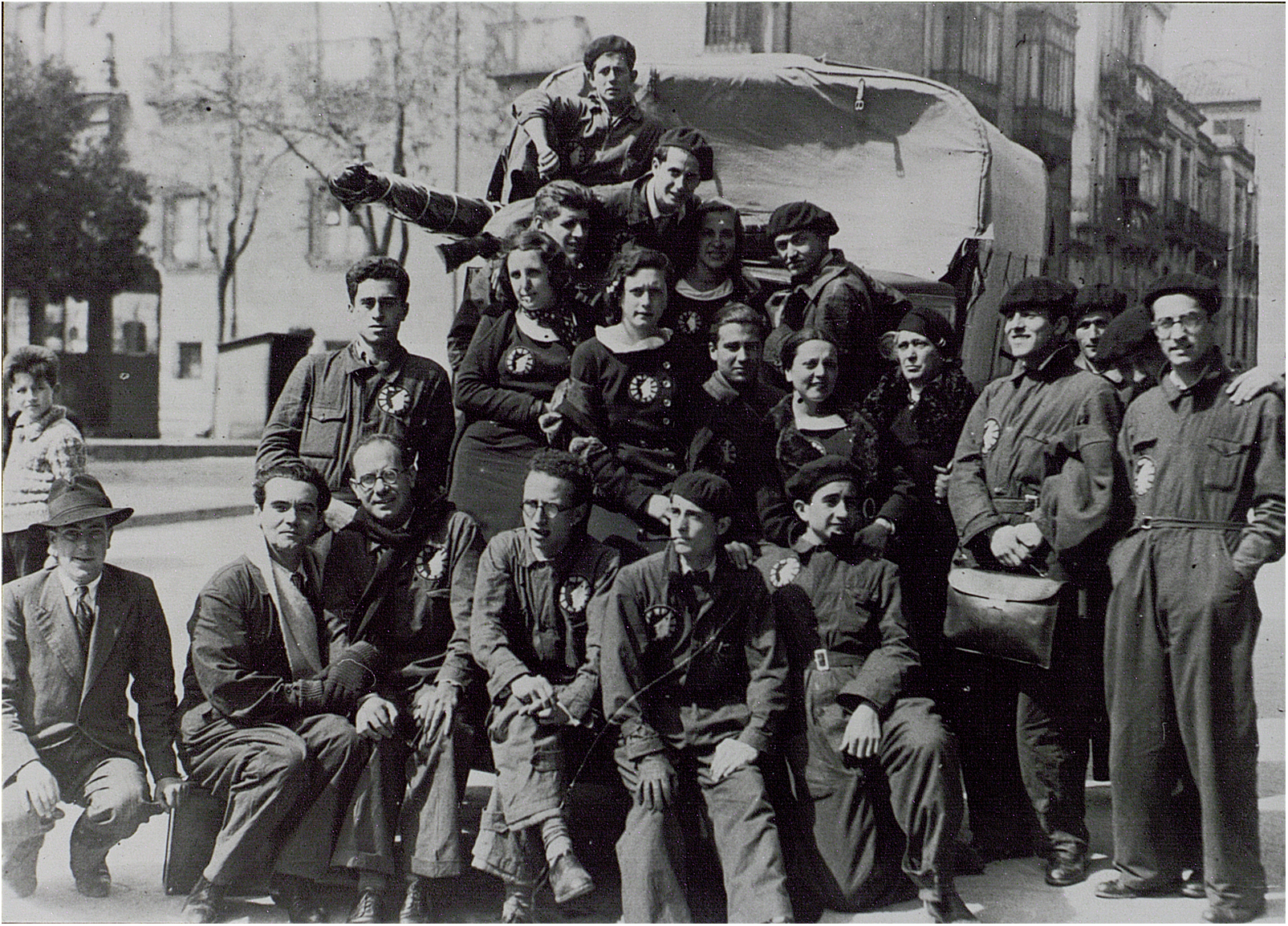
Figure 1. Members of La Barraca, 1933. From left to right, seated: unidentified person, Federico García Lorca, Eduardo Ugarte, José Obradors, Jacinto Higueras and Diego Tarancón. Standing: Eduardo Ródenas, María del Carmen García Lasgoity, Carmen Galán, Edmundo Rodríguez Huéscar, Julia Rodríguez Mata, Pilar Aguado (the chaperone), Rafael Rodríguez Rapún, unidentified person, unidentified person and Diego Marín. At the upper level: Modesto Higueras, Ambrosio Fernández Llamazares, Conchita Polo and José García García; above them: Aurelio Romeo. Fundación Federico García Lorca Archive, Centro Federico García Lorca, Granada (Spain).
In any case, several female members of the group claim that the chaperone was more about keeping up appearances than policing actual behaviour: ‘le dábamos esquinazo muy fácilmente … cuando íbamos a comer nos las arreglábamos para que no le quedara sitio en la mesa y tuviera que sentarse con los chicos’ [‘it was easy to escape her control, during the meals we never leave her a seat in our table, so she often ended up eating with our male colleagues’].Footnote 87 This recollection hints indirectly that women often preferred to spend time together rather than fraternise with male colleagues during their free time.Footnote 88 That said, extant photographs of the group often show men and women having a dip in the sea or sunbathing together (see Figure 2).Footnote 89
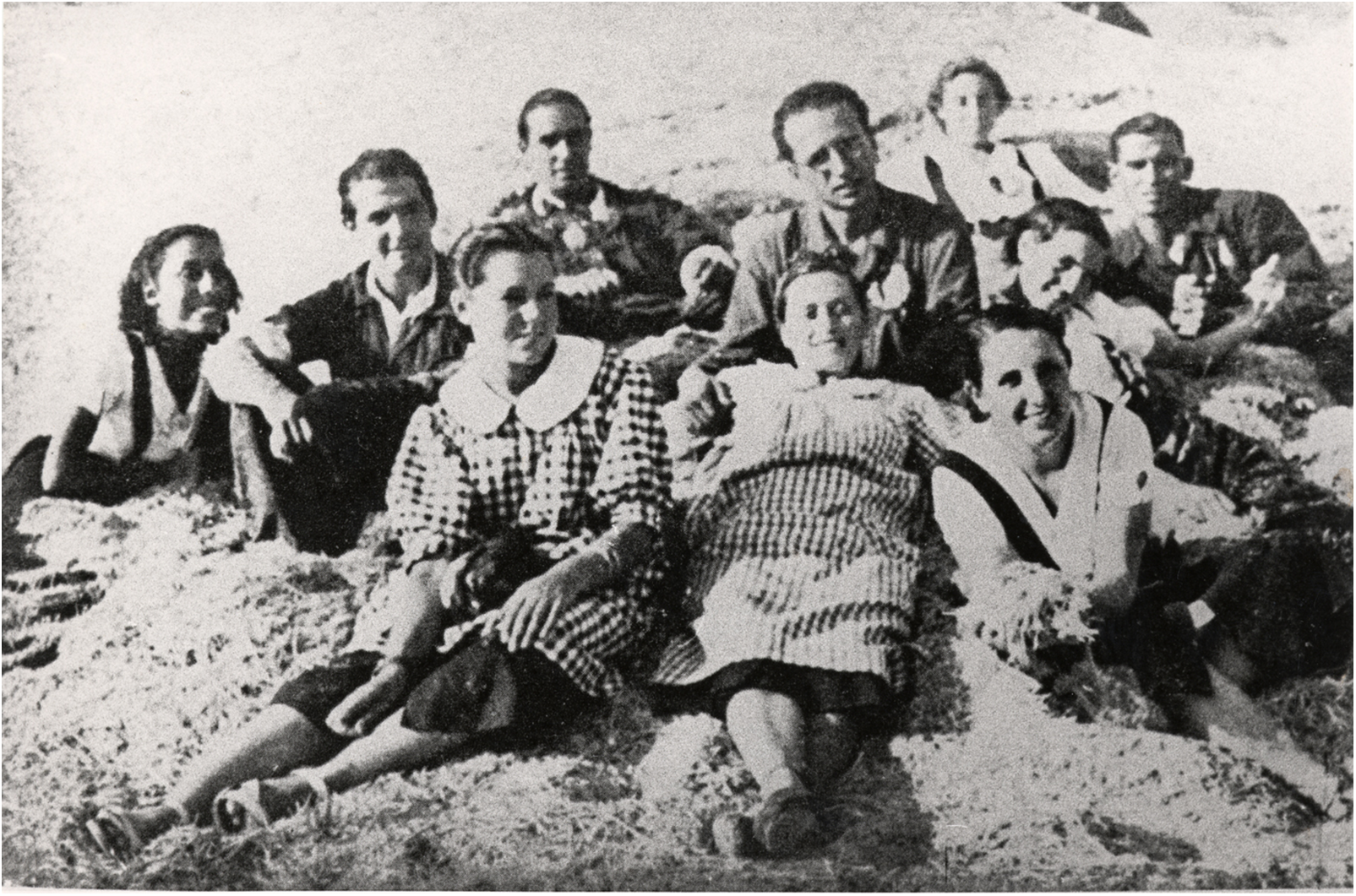
Figure 2. Members of La Barraca. Below, seated, from left to right: Carmen Risoto, Carmen Galán and Carmen García Lasgoity. Behind them: Carmen Antón, Nicolás Cimarra, José Caballero, José Obradors del Amo, María Gloria Morales, Carmen Torres Fraguas and Francisco Boluda. Library of the Fundación Juan March (Madrid, Spain). Copy from the exhibition ‘La Barraca and its theatrical environment’ at the Galería Multitud (Madrid, 1975).
Nevertheless, La Barraca would never be viewed as respectable by some sections of Spanish society. La Rioja newspaper reputedly criticised La Barraca for the language used on stage,Footnote 90 with specific offence taken with the use of the word maricones [‘puffs’] by the raped peasant woman (Laurencia) to shame the men of her town in a production of Lope de Vega’s seventeenth-century play Fuenteovejuna. Footnote 91 The classics could be more daring and overt than conservative twentieth-century mores. They could equally challenge women’s (conveniently) limited knowledge about their own anatomy. The actor María del Carmen García Lasgoity recalls how during the rehearsal of Juan del Encina’s Égloga de Plácida y Vitoriano she innocently asked for the meaning of the word virgo – an old fashioned, although transparent synonym of hymen – spoken by her character, the procuress (and hymen mender) Eritrea.Footnote 92
My own archival research in newspapers has not uncovered the attacks on the morality of female members of La Barraca repeatedly highlighted in memoirs and interviews. For instance, in an interview García Lasgoity mentions an article published in the satirical right-wing magazine Gracia y Justicia in which La Barraca was referred to as a brothel, with one of the actresses referred to disparagingly as the ‘la hija del carnicero [que] vive en la calle del Carnero’ [‘the butcher’s daughter who lives on the street of the ram’]; carnero [‘ram’] could be understood in relation to its frequent sexual connotation as a ‘cuckold’.Footnote 93 I was able to identify a Gracia y Justicia article with a similar observation albeit applied to a male participant; ironically in this case there is no reference to the group as constituting a brothel, and the only insult addressed to the women dismissed them as niñas bien and izquierdosas, ironically ‘posh left-wing girls’.Footnote 94
Irrespective of whether the attacks were misremembered or real, what is very clear is the extent to which the conservative press fixated on Lorca’s sexual orientation. A few days after members of La Barraca were involved in a traffic accident, Gracia y Justicia published another article whose title included a play on words that cast aspersions on Lorca’s sexuality before, in the body of the text, saying that he was safe and sound as he was in the female van as opposed to the one transporting the men.Footnote 95 The unsophisticated joke would not work if La Barraca’s women had been considered promiscuous. Curiously, Lorca’s most important biographer, Ian Gibson, recalls that it was precisely the female members of La Barraca who years later were most resistant to the idea that Lorca had been a homosexual.Footnote 96 To sum up, Spain was at this polarised moment split between left and right but ought not to imply that those associated with the former had the beliefs that would be acceptable in all regards to progressives of the present-day or that they had not internalised some of the prejudices of their detractors.
Comradery between men and women inside the group went a step further in four cases and led to (heterosexual) romantic relationships, three of them ending in weddings.Footnote 97 For the two youngest women in the group, meeting their future husbands inside La Barraca, paradoxically, resulted in them following more traditional lifepaths. As mentioned above, Enriqueta Aguado and Carmen Galán had not finished their secondary studies when they entered the group (see n. 71). They began relationships with two (elder) male colleagues: the future prize-winning architect (and president of the UFEH) Arturo Sáenz de la Calzada, who had helped found La Barraca; and the lawyer José Obradors del Amo. The available evidence suggests neither woman ended up going to university.Footnote 98 And, in general, if we examine the future lives of young female members, it is self-evident just how exceptional and unforgettable this brief experience was for many of them.
Post-Barraca Female Lives
As mentioned at the outset, with a couple of exceptions, biographical information on the vast majority of the female participants of La Barraca is scarce. In five (out of sixteen) cases, I was unable to find any trace of what happened to them after the group’s dissolution.Footnote 99 Regarding the rest, the scattered information available in memoirs and interviews, and in the (not always reliable) accounts of their descendants, is piecemeal at best. And yet, although it is not always possible to draw definitive conclusions on their post-La Barraca lives, the information that we have is valuable when it comes to understanding what the experience of being part of the university theatre company might have meant to them (a point to which I will return in the next and final section).
As La Barraca disintegrated with the onslaught of the Civil War, many of its female members continued their civic and political engagement with propagandistic and humanitarian activities, often under the auspices of the UFEH. García Lasgoity, Antón and Rodríguez Mata enrolled in the so-called children’s colonies, coordinating the evacuation of youngsters from Madrid to Alicante and Valencia.Footnote 100 Carmen Diamante formed part of the cultural and pedagogical initiatives designed for those fighting at the front or sent wounded to hospitals.Footnote 101 Following the dissolution of the original La Barraca, the UFEH created a second theatre group with the avowed aim of starting ‘una campaña de teatro antifascista de guerra’ (‘an antifascist theatre campaign in times of war’).Footnote 102 Although its remit was very different from the original La Barraca, the company would eventually adopt its name and part of its repertoire, defining itself as a commemorative continuation of Lorca’s effort. With many of La Barraca’s young male members mobilised in the war effort, the female contingent played an important role in guaranteeing this continuity. The casting for the new initiative took place at Carmen Galán’s home, under the direction of her and her future husband (José Obradors del Amo).Footnote 103 The sisters Carmen and Teresa Risoto joined the new group, which was now almost exclusively integrated by bachillerato students (see n. 23).Footnote 104 In August 1937 the UFEH commissioned Carmen García Lasgoity and two other male members from the original Barraca to train the actors and direct a revival of productions of Cervantes’s short plays as well as Lope de Vega’s Fuenteovejuna. The original plan to take the productions to the Spanish Pavilion of the 1937 Paris International Exhibition failed and, following a couple of performances in Valencia, García Lasgoity left for Barcelona. Some months later this second theatre group also dissolved.Footnote 105 But La Barraca’s women were not completely absent from the International Exhibition: due to her knowledge of French, Carmen Antón was sent by the Republican government to work in the book shop of the Spanish Pavilion. She would here meet her future husband: the artist and set designer Gregorio ‘Gori’ Muñoz. It was not the only case in which the knowledge of languages, typical of a middle and upper middle-class education, gave female members a role to play in the propaganda of the Second Republic. Earlier that year, in January 1937, María Gloria Morales accompanied her husband Luis Martínez Sancho Simarro (also a former member of La Barraca) to the United States on an official mission to give talks in support of the Republican government. According to their daughter, before the journey, a stray bullet had wounded Martínez Sancho Simarro’s jaw and María Gloria had to take his place in the talks conducted in English.Footnote 106
Whilst some male members of La Barraca died in the Civil War (such as the aforementioned Martínez Sancho Simarro, Major and Chief of the Republican Army’s 15th Corps, one of the main forces acting in the major Battle of the Ebro), there were no mortal female casualties, as far as we know. Almost half of them did, however, have to leave Spain and go into exile (often for decades and sometimes forever) due to their or their male partners’ involvement in the Republican cause. From their exile during the war, they continued with humanitarian aid to children; María Gloria Morales, Enriqueta Aguado and Julia Rodríguez Mata assisted in the evacuation and care of Spanish children in France and Belgium, the United Kingdom, and the Soviet Union, respectively.Footnote 107
With the end of the war, a considerable number settled, often after extensive wanderings, in Latin America.Footnote 108 Many were unable to finish their university studies, frequently living the rest of their life in the shadow of their husbands. María del Carmen García Lasgoity married the economist and Professor Jesús Prados Arrarte in 1937. García Lasgoity and Prados Arrarte left Spain separately, in 1938 and 1939 respectively – living in exile in France, Argentina and Chile. They returned to Spain in 1954, where Prados Arrarte belatedly recovered the professorial position that he had achieved before the war. That said, the couple had to go into a briefer second exile to Perú in 1962, after Prados Arrarte’s involvement in the so-called Contubernio de Munich (‘Munich conspiracy’), an attempt to force the Francoist regime to adopt democratic reforms by members of the opposition reunited at a conference held in Munich under the auspices of the European Movement. Prados Arrarte would become a member of the Real Academia Española (‘Royal Spanish Academy’), Spain’s official institution responsible for overseeing the use of Spanish language in 1981, and died a couple of years later, in 1983. García Lasgoity never finished her degree in Philosophy and Letters and was a housewife for the rest of her life.Footnote 109 After the death of Martínez Sancho Simarro from tuberculosis in 1939, María Gloria Morales supported herself and her young child by working as a dressmaker and teaching in dressmaking schools, first in Belgium and later in Chile (where she remarried).Footnote 110 Carmen Antón married ‘Gori’ Muñoz in 1938, that same year they crossed the border to France, eventually settling in Argentina. After being a housewife for several years, she established and ran a successful children’s clothing shop and later a boutique in Buenos Aires whilst having to care for her husband, who suffered from Parkinson’s disease for twenty years.Footnote 111
The war interrupted Julia Rodríguez Mata’s Pedagogy studies at the Central University, but she had a primary school teacher’s qualification and position. During the war, she returned to teaching, first in Alicante and, after abandoning Spain – in 1937 she accompanied a group of the evacuated children of Republican military pilots – in the Soviet Union. On the other side of the future iron curtain, she also worked sporadically as a translator and started a new university degree in French Studies, left unfinished (this time because of the onset of the Second World War). In 1941 she married the pilot Ernesto Navarro and, when the German forces invaded Russia, the couple moved to Uzbekistan, living in very poor conditions. In 1946 they finally settled in Mexico, where, after a period as a housewife, Julia worked for a publishing house first and, later, as a librarian in the Scientific Centre, an institution linked to the French Embassy in Mexico.Footnote 112 As previously mentioned, Enriqueta Aguado never even started her university studies. Thanks to the intervention of British relatives, she was able to leave Spain and travel to the United Kingdom in 1937. Arturo Sáenz de la Calzada joined her soon afterwards. They then moved to France before finally settling in Mexico, where Enriqueta worked sporadically as a sewer.Footnote 113
According to the information at my disposal, only four female members of La Barraca were able to use their degrees to make a living. According to her relatives, Pilar Aguado finished her law degree after the war and worked at her father’s law firm, which her brother later inherited. Having to take care of her five sons after separating from her husband, she changed jobs, working first in the firm Brown-Raymond and later at Torrejón Air Base, by then run in collaboration with the United States Air Force.Footnote 114 Mercedes Ontañón, Isabel García Lorca and Laura de los Ríos, on the contrary, had finished their studies at the Faculty of Philosophy and Letters before the start of the war. After completing her French Studies degree, Mercedes Ontañón obtained a permanent high ranking secondary-school position in 1933. Persona non grata in the Francoist education system (due to her family’s links with the liberal ILE), she nevertheless stayed in Spain, where she eventually founded a self-financed school with her husband.Footnote 115
From a professional perspective, the most successful female members of the group were the best connected. Isabel García Lorca and Laura de los Ríos went into exile in the United States, where they taught Spanish Studies in women-only university colleges (Laura, after finishing a PhD at Barnard College). Isabel’s reflections on this experience – ‘tengo que confesar que aquello me pareció una extraña Edad Media … a la gente más progresista y más culta que usted se pueda imaginar le hablaban de la coeducación y se ponía frenética’ [‘for me, it was like going back to the Middle Ages … even liberal and highly educated people were frightened of coeducation’] – bears testament to how advanced and ingrained the co-educational model had become during the Second Republic.Footnote 116
Conclusions: The Legacy Of La Barraca
Amongst the principal merits of Tapias’s 2014 documentary on Las misiones pedagógicas de la II República Española was the inclusion of first-person testimony from the increasingly small pool of living citizens to have participated in or benefited from activities such as the Teatro del Pueblo. These first-person recollections are often vague, and the spectator is left with the impression that the experience had no real impact in their lives, thereby constituting a counterbalance to often excessively hagiographical scholarly accounts. Paternalistic and short lived, the touring companies supported by the Second Republic, such as La Barraca and Teatro del Pueblo, seemingly left a greater imprint on their middle-class participants than on the illiterate and barely educated audiences they were meant to serve.
Awarded a prominent position in the government’s political agenda, education – still one of the few qualified jobs and liberal professions open to women – channelled female desires for greater civic (and political) responsibility. Extra-curricular activities such as La Barraca offered young female university students the opportunity to expand women’s role as educators outside the confined boundaries of the classroom and into a new space, involving more equal collaborations with men. Gender divisions didn’t disappear, but the challenge of spending days and nights away from home, standing shoulder to shoulder with their male colleagues, chipped away at longstanding ingrained hierarchies. In some cases (especially María del Carmen Antón and María del Carmen Lasgoity), their years in La Barraca gave them visibility later in life, when they were invited to speak about Lorca and the group at conferences and events. As Rosa Peralta puts it in the introduction to Antón’s memoirs, ‘hasta ahora había sido la señora de Gori Muñoz … [a partir de los noventa sería] ella la protagonista de su historia, una de las actrices más jóvenes de La Barraca, que revivía sus recuerdos … [para] un público ávido de escucharla’ [‘Until then she had been Gori Muñoz’ wife, from the 90s on she was the protagonist of her story, one of the youngest actresses of La Barraca, talking about her memories in front of an eager audience’].Footnote 117
In a seminal work on spoken history, Portelli reminds us that ‘the importance of oral testimony may lie not in its adherence to fact, but rather in its departure from it, as imagination, symbolism, and desire emerge’, they tell ‘less about events than about their meaning’.Footnote 118 The testimonies of La Barraca’s female members (and their descendants) are contradictory and not always accurate, but they are consistent when it comes to articulating the emotional imprint of the group on individual lives.Footnote 119 Whilst the war ensured that their later lives often followed the more traditional (narrow) paths reserved for women, the memory of La Barraca often stands as one of their happiest (if not the happiest) times. One of Antón’s daughters recalls how, for her mother, La Barraca was an important experience: ‘se sentía libre y hacía algo que le encantaba. A ella esa vida la había deslumbrado’ [‘she felt free doing something that she loved. It was a way of life that dazzled her’].Footnote 120 Before passing away in September 2007, she left very specific instructions regarding her mortal remains: her ashes should be scattered around a statue of García Lorca located in Buenos Aires El Rosedal Park, where they lay still.Footnote 121
Acknowledgements
I would like to express my sincere gratitude to the relatives of the female members of La Barraca who generously dedicated their time to speak with me: Enriqueta ‘Kotela’ Sáenz de la Calzada and Margarita Aguado (daughter and niece respectively of Enriqueta Aguado Rodríguez, who also provided valuable information about their aunt Pilar); María Antonia ‘Tonica’ Malajovich and Carmen ‘Gorita’ Bernard (María del Carmen García Antón’s daughters); Ana María Prados (María del Carmen García Lasgoity’s daughter); and Emilia ‘Milichu’ Martínez Morales (María Gloria Morales Vicente’s daughter). I would also like to thank the Centro Federico García Lorca and the Fundación Juan March for granting permission to use the photographs free of charge; Professors Javier Huerta Calvo and Julio Vélez-Sainz for encouraging me to write about the topic; and Professor Dolores Romero López for her valuable feedback on the article.
Funding statement
This work was supported by the projects ‘Federico García Lorca en los escenarios de Europa (1936–1960)’, under Comunidad Autónoma de Madrid (Programa Talento Modalidad 1) grant number 2022-T1/HUM-23759; ‘CONSTEMAD-CM. Constelaciones y redes digitales como herramientas para la documentación y análisis del patrimonio teatral del Madrid contemporáneo’, under Comunidad Autónoma de Madrid Grant number PHS-2024/PH-HUM-437; and ‘PERFORMA3. Teatro sin teatro: teoría y práctica del no actor en la escena española contemporánea’ under the Ministerio de Ciencia, Innovación y Universidades of Spain (Agencia Estatal de Investigación, Programa Generación de Conocimiento) grant number PID2023-149349NB-I00.


 Open access

