





1. Introduction
It is well-known that the Julia set J(f) of a rational map f can be a Cantor set. The simplest examples arise for quadratic polynomials  $z^2+c$ when c is not in the Mandelbrot set. It is also well known that every Cantor set embedded in $\overline{\mathbb{R}^2}$ has a defining sequence consisting of topological disks, that is, every such Cantor set arises as an infinite intersection of a collection of nested disks, see [Reference Moise16].
The goal of the current paper is to study topological properties of Julia sets of uniformly quasiregular mappings (henceforth denoted by UQR mappings) in  $\overline{\mathbb{R}^3}$ and, in particular, when they are Cantor sets, what sort of defining sequences they can have. UQR mappings provide the setting for the closest counterpart to complex dynamics in $\overline{\mathbb{R}^3}$ and, more generally, higher real dimensions. We will, however, stay in dimension three in this paper as this provides the setting to consider the genus of a Cantor set as introduced by Željko [Reference Zeljko24] based on the notion of defining sequences from Armentrout [Reference Armentrout1].
The first examples of UQR mappings constructed by Iwaniec and Martin [Reference Iwaniec and Martin13] have a Cantor set as the Julia set. Moreover, although this was not of concern to the authors, from their construction it is evident that the Julia set is a tame Cantor set. This means that the Cantor set can be mapped via an ambient homeomorphism of  $\overline{\mathbb{R}}^3$ onto the standard ternary Cantor set contained in a line. Equivalently, this means the Cantor set has a defining sequence consisting of topological 3-balls. Moreover, such a Cantor set X is then said to have genus zero, written $g(X) = 0$.
If a Cantor set is not tame, then it is called wild. The standard example of a wild Cantor set in  $\mathbb{R}^3$ is Antoine’s necklace. The first named author and Wu [Reference Fletcher and Wu6] constructed a UQR map for which the Julia set is an Antoine’s necklace that has genus 1. More recently, the first and second named authors [Reference Fletcher and Stoertz9] showed via a more intricate construction that there exist UQR mappings whose Julia sets are genus 2 Cantor sets.
The first main aim of the current paper is to give a general construction which will apply to all genera. This will necessitate a new topological construction since, as far as the authors are aware, the only construction of genus g Cantor sets for all g are given by Željko [Reference Zeljko24] and this construction cannot yield Julia sets, as will be seen via Corollary 1.4 below. The local genus  $g_x(X)$ of a Cantor set X at $x\in X$ describes the genus of handlebodies required in a defining sequence in any neighbourhood of x. Željko’s construction has local genus one except at one point. Our first main result reads as follows.
Theorem 1.1. For each  $g\in\mathbb{N}$ there exists a UQR map $f_g:\overline{\mathbb{R}^3} \to \overline{\mathbb{R}^3}$ for which the Julia set $J(f_g)$ is a Cantor set of genus g and, moreover, for each $x\in J(f_g)$, the local genus $g_x(J(f_g)) = g$.
We remark that the genus 1 case of Theorem 1.1 recovers Antoine’s necklace, whereas the genus 2 case is substantially different from the construction in [Reference Fletcher and Stoertz9]. For all higher genera, Theorem 1.1 provides a new construction. This construction is necessarily highly intricate as it needs to be amenable to our dynamical applications.
Next, we turn to topological obstructions for Cantor sets in  $\overline{\mathbb{R}^3}$ being Julia sets based on the genus. It is an important theme in dynamics to give geometric or topological restrictions on the Julia set, once a toplogical type has been fixed. The first named author and Nicks [Reference Fletcher and Nicks8] showed that the Julia set of a UQR mapping in $\overline{\mathbb{R}^n}$ is uniformly perfect, that is, ring domains which separate points of the Julia set cannot be too thick. As a counterpart to this result, it was shown by the first and third named authors [Reference Fletcher and Vellis11], that if the Julia set of a hyperbolic UQR mapping in $\overline{\mathbb{R}^n}$ is totally disconnected, then it is uniformly disconnected. Here, a uniformly quasiregular mapping is hyperbolic if the Julia set does not meet the closure of the post-branch set. Roughly speaking, this result says that ring domains separating points of the Julia set cannot be forced to be too thin.
The above results place geometric conditions on which Cantor sets can be Julia sets. Our second main result in this paper places a topological restriction on which Cantor sets can be Julia sets.
Theorem 1.2. Let  $f:\overline{\mathbb{R}^3} \to \overline{\mathbb{R}^3}$ be a hyperbolic UQR map for which J(f) is a Cantor set. Then there exists $g \in \mathbb{N} \cup \{0 \}$ such that the genus of J(f) is g.
There do exist Cantor sets of infinite genus, see [Reference Zeljko24, Theorem 5], and so Theorem 1.2 rules these out as possibilities for Julia sets of hyperbolic UQR maps. In particular, an even stronger version of Theorem 1.2 is true: if a Julia set of a hyperbolic UQR map is a Cantor set, then it has a defining sequence which consists of at most finitely many (up to similarities) different handlebodies; see Lemma 6.1. This lemma leads to a quasiregular uniformization of Cantor sets in  $\mathbb{R}^3$ which may be of independent interest; see Appendix C.
We recall that the backwards orbit of x is
 \begin{equation*} O^-(x) = \{y : f^m(y) = x \text{ for some }m\in \mathbb{N} \},\end{equation*}
and the grand orbit is
 \begin{equation*} GO(x) = \{y : f^{m_1}(y) = f^{m_2}(x) \text{ for some } m_1,m_2\in \mathbb{N}\}.\end{equation*}
Our next result is on the local genus of points in the Julia set.
Theorem 1.3. Let  $f:\overline{\mathbb{R}^3} \to \overline{\mathbb{R}^3}$ be a hyperbolic UQR map for which J(f) is a Cantor set. If the local genus $g_x(J(f)) = g \in \mathbb{N} \cup \{0 \}$, then $g_y(J(f)) = g$ for every y in the grand orbit GO( $x$).
$x$).
As the backwards orbit of a point in J(f) is dense in J(f), we immediately have the following corollary.
Corollary 1.4. Let  $f:\overline{\mathbb{R}^3} \to \overline{\mathbb{R}^3}$ be a hyperbolic UQR map with J(f) a Cantor set. Suppose there exists $x\in J(f)$ with $g_x(J(f)) = g$. Then the set of points in J(f) for which the local genus is g is dense in J(f).
This result places further severe restrictions on which Cantor sets can be Julia sets of hyperbolic UQR maps. The constructions in [Reference Zeljko24, Theorem 5] which yield Cantor sets of genus  $g \in \mathbb{N}$ have the property that there is a special point $x\in X$ for which $g_x(X) = g$ and $g_y(X) = 1$ for all other points $y\in X \setminus \{x\}$. Corollary 1.4 then implies that these Cantor sets cannot be Julia sets.
Since the examples of Julia sets in [Reference Fletcher and Wu6, Reference Fletcher and Stoertz9] have constant local genus, it is natural to ask if this is always the case for Julia sets which are Cantor sets. Our final result shows that this is not the case.
Theorem 1.5. Let  $g\geq 1$. There exists a hyperbolic UQR map $f:\overline{\mathbb{R}^3} \to \overline{\mathbb{R}^3}$ such that J(f) is a Cantor set of genus g, and there exist points with local genus g and other points with local genus 0.
It would be interesting to know whether any finite collection of non-negative integers can be realized as the local genera of a Cantor Julia set.
The paper is organized as follows. In Section 2, we recall some preliminary material on UQR maps and the genus of Cantor sets. In Section 3, we construct a Cantor set Xg for each  $g\geq 1$. In Section 4, we prove that Xg has genus g and local genus g at each point. In Section 5, we complete the proof of Theorem 1.1 by constructing a UQR map with Julia set equal to Xg. In Section 6, we prove Theorem 1.2 and Theorem 1.3. Finally, in Section 7, we construct an example that proves Theorem 1.5.
2. Preliminaries
We denote by  $\overline{\mathbb{R}^n}$ the one point compactification of $\mathbb{R}^n$.
2.1. Uniformly quasiregular mappings
A continuous map  $f: \mathbb{R}^n \to \mathbb{R}^n$ is called quasiregular if f belongs to the Sobolev space $W^{1,n}_{\text{loc}}(\mathbb{R}^n)$ and if there exists some $K\geq 1$ such that
 \begin{equation}
|f'(x)|^n \leq K J_f(x) \qquad \text{for a.e.}\ x\in \mathbb{R}^n.
\end{equation}
\begin{equation}
|f'(x)|^n \leq K J_f(x) \qquad \text{for a.e.}\ x\in \mathbb{R}^n.
\end{equation}
Here Jf denotes the Jacobian of f at  $x\in \mathbb{R}^n$ and $|f'(x)|$ the operator norm. If f is quasiregular, then there exists $K'\geq 1$ such that
 \begin{equation}
J_f(x) \leq K' \min _{|h|=1} |f'(x)(h)|^n \qquad \text{for a.e.}\ x\in \mathbb{R}^n.
\end{equation}
\begin{equation}
J_f(x) \leq K' \min _{|h|=1} |f'(x)(h)|^n \qquad \text{for a.e.}\ x\in \mathbb{R}^n.
\end{equation}
The maximal dilatation K(f) of a quasiregular map f is the smallest K that satisfies both equations (2.1) and (2.2). The maximal dilatation K(f) can be informally thought of as a quantity describing how much distortion f has. The closer  $K(f) \in [1,\infty) $ is to 1, the closer f is to a conformal map. If $K(f) \leq K$, then we say that f is K-quasiregular. See Rickman’s monograph [Reference Rickman20] for a complete exposition on quasiregular mappings.
Quasiregular mappings can be defined at infinity and also take on the value infinity. To do this, if  $A:\overline{\mathbb{R}^n} \to \overline{\mathbb{R}^n}$ is a Möbius map with $A(\infty) = 0$, then we require $f\circ A^{-1}$ or $A\circ f$ respectively to be quasiregular via the definition above.
Bounded length distortion maps, BLD for short, are a sub-class of quasiregular maps for which the finite length curves are mapped to curves of finite length, with uniform control on the length distortion. BLD maps are bi-Lipschitz around non-branch points (see below) and can be viewed as an intermediate step between quasiregular and bi-Lipschitz mappings. In a sense, BLD maps are to bi-Lipschitz maps what quasiregular maps are to quasiconformal maps.
The composition  $f\circ g$ of two quasiregular mappings f and g is again quasiregular, but typically the maximal dilatation goes up. We say that $f:\overline{\mathbb{R}^n} \to \overline{\mathbb{R}^n}$ is uniformly quasiregular, abbreviated to UQR, if the maximal dilatations of all the iterates of f are uniformly bounded above.
For a UQR map, the definitions of the Julia set and Fatou set are identical to those in complex dynamics: the Fatou set F(f) is the domain of local normality of the family of the iterates and the Julia set J(f) is the complement.
The branch set  $\mathcal{B}(f)$ of a UQR map $f: \overline{\mathbb{R}^n} \to \overline{\mathbb{R}^n}$ is the closed set of points in $\overline{\mathbb{R}^n}$ where f does not define a local homeomorphism. The post-branch set of non-injective UQR map f is
 \begin{equation*} \mathcal{P}(f)=\overline{\{f^m(\mathcal{B}(f) ) : m\geq 0 \}}.\end{equation*}
The map f is called hyperbolic if  $J(f) \cap \mathcal{P}(f)$ is empty.
2.2. Cantor sets and genus
Recall that a Cantor set is any metric space homeomorphic to the usual Cantor ternary set. Two Cantor sets  $E_1, E_2 \subset \overline{\mathbb{R}^n}$ are equivalently embedded (or ambiently homeomorphic) if there exists a homeomorphism $\psi:\overline{\mathbb{R}^n} \to \overline{\mathbb{R}^n}$ such that $\psi(E_1) = E_2$. If the Cantor set E is equivalently embedded to the usual Cantor ternary set in a line, then E is called tame. A Cantor set which is not tame is called wild. We often assume that $\infty \notin E$ so we may consider $E\subset \mathbb{R}^n$.
Other examples of Cantor sets in  $\overline{\mathbb{R}^n}$ are typically defined in terms of a similar construction to that of the usual Cantor ternary set, using an intersection of nested unions of compact n-manifolds with boundary. For Cantor sets in $\mathbb{R}^3$, the idea of defining sequences goes back to Armentrout [Reference Armentrout1]. This can be easily generalized to Cantor sets in $\overline{\mathbb{R}^3}$ by applying a Möbius map so as to move the Cantor set to $\mathbb{R}^3$.
Definition 2.1. A defining sequence for a Cantor set  $E\subset \mathbb{R}^3$ is a sequence $(M_i)$ of compact 3-manifolds with boundary such that
(i) each $M_i$ consists of disjoint polyhedral cubes with handles,
(ii)
$M_{i+1}$ is contained in the interior of Mi for each i, and(iii)
$E = \bigcap_i M_i$.


We denote the set of all defining sequences for E by  $\mathcal{D}(E)$.
By [Reference Armentrout1, Theorem 8], for every Cantor set in  $\mathbb{R}^3$, there exists at least one defining sequence.
If  $\mathcal{C}$ is a topological cube with handles, denote the number of handles of $\mathcal{C}$ by $g(\mathcal{C})$. For a disjoint union of cubes with handles $M = \sqcup_{i\in I} \mathcal{C}_i$, we set $g(M) = \sup \{g(\mathcal{C}_i) : i\in I \}$. The genus of a Cantor set was introduced by Željko, see [Reference Zeljko24, p. 350].
Definition 2.2. Let  $(M_i)$ be a defining sequence for the Cantor set $E \subset \mathbb{R}^3$. Define
 \begin{equation*}g(E;(M_i)) = \sup\{g(M_i) : i \geq 0 \}.\end{equation*}
Then we define the genus of the Cantor set E as
 \begin{equation*}g(E) = \inf\{g(E;(M_i)) : (M_i) \in \mathcal{D}(E)\}. \end{equation*}
Now let  $x \in E$. For each i, denote by $M_i^x$ the unique component of Mi containing x. Similar to above, define
 \begin{equation*}g_x(E;(M_i)) = \sup\{g(M_i^x) : i \geq 0 \}.\end{equation*}
Then we define the local genus of E at the point x as
 \begin{equation*}g_x(E) = \inf\{g_x(E;(M_i)) : (M_i) \in \mathcal{D}(E)\}. \end{equation*}
3. Construction of a genus g self-similar Cantor set
3.1. Some sequences
We start by defining a “folding” sequence that will help us keep track of various folding maps that will be required later on. For each  $n\in\mathbb{N}$ and each $k\in\{1,\dots,n\}$ define $a_{n,k} \in \mathbb{N}$ with $a_{1,1}=1$ and for $m\in\mathbb{N}$
 \begin{align*}
a_{2m,k} &=
\begin{cases}
a_{m,k} &\text{if}\ 1\leq k \leq m\\
a_{m,2m-k+1} &\text{if}\ m+1\leq k \leq 2m,
\end{cases}\\
a_{2m+1,k} &=
\begin{cases}
a_{m+1,k} &\text{if}\ 1\leq k \leq m\\
2a_{m+1,m+1} &\text{if}\ k = m+1\\
a_{m+1,2m-k+2} &\text{if}\ m+2\leq k \leq 2m+1.
\end{cases}
\end{align*}
\begin{align*}
a_{2m,k} &=
\begin{cases}
a_{m,k} &\text{if}\ 1\leq k \leq m\\
a_{m,2m-k+1} &\text{if}\ m+1\leq k \leq 2m,
\end{cases}\\
a_{2m+1,k} &=
\begin{cases}
a_{m+1,k} &\text{if}\ 1\leq k \leq m\\
2a_{m+1,m+1} &\text{if}\ k = m+1\\
a_{m+1,2m-k+2} &\text{if}\ m+2\leq k \leq 2m+1.
\end{cases}
\end{align*}
Lemma 3.1. For all  $n\in\mathbb{N}$ and $k\in\{1,\dots,n\}$, we have that $a_{n,n}= a_{n,1} = 1$ and $a_{n,k}\in \{1,2\}$.
Proof. The proof of the claim is by induction on n. The claim is clear for n = 1. Assume now the claim to be true for all integers n < N for some  $N\in\mathbb{N}$.
If  $N=2m$, then
 \begin{equation*} \{a_{2m,k} : 1\leq k \leq 2m\} = \{a_{m,k} : 1\leq k \leq m\} \subset \{1,2\},\end{equation*}
while  $a_{2m,1} = a_{m,1} = 1$ and $a_{2m,2m} = a_{m,1} = 1$.
If  $N=2m+1$, then
 \begin{equation*} \{a_{2m+1,k} : 1\leq k \leq 2m, k\neq m+1\} = \{a_{m+1,k} : 1\leq k \leq m\} \subset \{1,2\},\end{equation*}
and  $a_{2m+1,m+1} = 2a_{m+1,m+1} =2$. Moreover,
 \begin{equation*}
a_{2m+1,1} = a_{m+1,1} = 1\quad \text{and}\quad a_{2m+1,2m+1} = a_{m+1,1} = 1.
\end{equation*}
\begin{equation*}
a_{2m+1,1} = a_{m+1,1} = 1\quad \text{and}\quad a_{2m+1,2m+1} = a_{m+1,1} = 1.
\end{equation*}
For each  $n\in\mathbb{N}$ we define a finite sequence $(c_{n,i})_{i=1}^n$ by
 \begin{equation*} c_{n,i} =
\begin{cases}
1 &\text{if}\ a_{n,i}=1\\
3 &\text{if}\ a_{n,i}=2.
\end{cases}
\end{equation*}
\begin{equation*} c_{n,i} =
\begin{cases}
1 &\text{if}\ a_{n,i}=1\\
3 &\text{if}\ a_{n,i}=2.
\end{cases}
\end{equation*}
Set  $C_{n,0}=0$ and for each $i\in\{1,\dots,n\}$, set
 \begin{equation*} C_{n,i} = c_{n,1}+\cdots+c_{n,i}.\end{equation*}
For each  $g\in\mathbb{N}$ we fix for the rest of the paper an odd square integer $N_g\in\mathbb{N}$ such that
 \begin{equation}
N_g\geq 20\sqrt{6}(8C_{g,g}+6).
\end{equation}
\begin{equation}
N_g\geq 20\sqrt{6}(8C_{g,g}+6).
\end{equation}
This important integer is related to the number of handlebodies required at each stage of the defining sequence of the Cantor set to be constructed.
3.2. A g-ladder
Fix  $g\in\mathbb{N}$. To ease the notation, for the rest of Section 3, we write $N_g=N$, $c_{g,i}=c_i$ and $C_{g,i}=C_i$.
For each  $i\in \{1,\dots,g\}$ define the planar simple closed curve
 \begin{equation}
\gamma_{i} = \partial\left([C_{i-1}, C_{i} ]\times[0,1]\right).
\end{equation}
\begin{equation}
\gamma_{i} = \partial\left([C_{i-1}, C_{i} ]\times[0,1]\right).
\end{equation}
Note that each γi is either a translated copy of  $\partial [0,1]^2$ or a translated copy of $\partial ([0,3]\times[0,1])$. Define also the planar closed curve
 \begin{equation*} \gamma = \gamma_{1} \cup \cdots \cup \gamma_{g}.\end{equation*}
See Figure 1 for γ in the case that g = 6.

Figure 1. The curve γ in the case that g = 6. In this case,  $(a_{6,i}) = (1,2,1,1,2,1)$.
3.3. A chain of g-ladders
For each  $i\in\{1,\dots,g\}$ and $j\in \{1,\dots,(2c_i+2)N\}$ we define rescaled copies $\tau_{i,j}$ of γ. Fix $i\in \{1,\dots,g\}$. Let $x_{i,1}= (C_{i-1}+\frac1{2N},1)$, $x_{i,c_{i}N+1}= (C_{i}-\frac1{2N},1)$, $x_{i,(c_{i}+1)N+1}= (C_{i}-\frac1{2N},0)$, $x_{i,(2c_{i}+1)N+1}= (C_{i-1}+\frac1{2N},0)$, and define also
 \begin{align*}
x_{i,j} =
\begin{cases}
({C_{i-1}}+{(j-1)}/N,1), &\text{if}\ j=2,\dots,c_iN\\
({C_i},1-(j-c_iN-1)/N), &\text{if}\ j=c_iN+2,\dots,(c_i+1)N\\
({C_i}-(j-(c_i+1)N-1)/N,0), &\text{if}\ j=c_i(N+1)+2,\dots,(2c_i+1)N\\
({C_{i-1}},(j-(2c_i+1)N-1)/N), &\text{if}\ j=(2c_i+1)N+2,\dots,(2c_i+2)N.\\
\end{cases}
\end{align*}
\begin{align*}
x_{i,j} =
\begin{cases}
({C_{i-1}}+{(j-1)}/N,1), &\text{if}\ j=2,\dots,c_iN\\
({C_i},1-(j-c_iN-1)/N), &\text{if}\ j=c_iN+2,\dots,(c_i+1)N\\
({C_i}-(j-(c_i+1)N-1)/N,0), &\text{if}\ j=c_i(N+1)+2,\dots,(2c_i+1)N\\
({C_{i-1}},(j-(2c_i+1)N-1)/N), &\text{if}\ j=(2c_i+1)N+2,\dots,(2c_i+2)N.\\
\end{cases}
\end{align*}
Therefore, the points  $\{x_{i,1},\dots,x_{i,2(c_i+1)N}\}$ lie on γi oriented clockwise.
For each  $j\in\{1,\dots,2(c_i+1)N\}$, let $\sigma_{i,j}$ be a line segment in $\mathbb{R}^2$ centred at $x_{i,j}$, of length $8\sqrt{2}(5N)^{-1}$, such that
(i)
$\sigma_{i,j}$ is perpendicular to γi if $j\in\{1,c_iN+1, (c_i+1)N+1, (2c_i+1)N{+1}\}$;(ii)
$\sigma_{i,j}$ has slope −1 if(a)
$j\in \{2,4,\dots, c_iN-1\}$,(b) or if
$j\in \{c_iN+2,c_iN+4,\dots,(c_i+1)N-1\}$,(c) or if
$j\in \{(c_i+1)N+2,(c_i+1)N+4,\dots,(2c_i+1)N-1\}$,(d) or if
$j\in \{(2c_i+1)N+2,(2c_i+1)N+4,\dots,(2c_i+2)N-1\}$;
(iii)
$\sigma_{i,j}$ has slope 1 if(a)
$j\in \{3,5,\dots, c_iN\}$,(b) or if
$j\in \{c_iN+3,c_iN+5,\dots,(c_i+1)N\}$,(c) or if
$j\in \{(c_i+1)N+3,(c_i+1)N+5,\dots,(2c_i+1)N\}$,(d) or if
$j\in \{(2c_i+1)N+3,(2c_i+1)N+5,\dots,(2c_i+2)N\}$.


See Figure 2 and Figure 3 for the case  $c_i=1$ (for simplicity we have set N = 9).

Figure 2. The segments  $\sigma_{i,j}$ in the case that $c_i=1$ and N = 9. The segments $\sigma_{i,j}$ with j even, are depicted as dotted segments.

Figure 3. The segments  $\sigma_{i,j}$ (in black) and $\sigma_{i+1,j}$ (in blue) on a shared edge (in red) of $\gamma_i, \gamma_{i+1}$. As with Figure 2, for simplicity, we assume N = 9.
Lemma 3.2. If  $i,i' \in \{1,\dots,g\}$, $j \in \{1,\dots, 2(c_i+1)N\}$, and $j'\in\{1,\dots,2(c_{i'}+1)N\}$, then $\sigma_{i,j}\cap \sigma_{i',j'} \neq \emptyset$ if and only if one of the following is true:
(i)
$i=i'$ and ${j-j'\in\{-1,0,1\}}$ modulo $(2c_i+2)N$ (that is, either $j=j'$, or $x_{i,j}$, $x_{i,j'}$ are consecutive on γi);(ii)
$|i- i'|=1$ and $x_{i,j} = x_{i',j'}$.


Moreover, if  $\sigma_{i,j}\cap \sigma_{i',j'} = \emptyset$, then $\operatorname{dist}(\sigma_{i,j},\sigma_{i',j'}) \geq {(5\sqrt{2}N)^{-1}}$.
Proof. To prove the lemma, we consider three possible cases.
Case 1:  $i=i'$. If $j=j'$, then clearly $x_{i,j}=x_{i',j'}$ and $\sigma_{i,j}\cap \sigma_{i',j'} \neq \emptyset$. We assume for the rest of Case 1 that $j\neq j'$ and consider five subcases.
Case 1.1:  ${j-j'\in\{-1,1\}}$ modulo $(2c_i+2)N$. It is easy to see by the design of the segments $\sigma_{i,j}$ that $\sigma_{i,j}\cap \sigma_{i',j'} \neq \emptyset$.
Case 1.2:  ${j-j'\in\{-2,2\}}$ modulo $(2c_i+2)N$ and $x_{i,j},x_{i,j'}$ are both on the left edge or both are in the right edge. Then $\sigma_{i,j}$ and $\sigma_{i,j'}$ are parallel and $\operatorname{dist}(\sigma_{i,j},\sigma_{i,j'}) = \sqrt{2}/N \gt (5\sqrt{2}N)^{-1}$.
Case 1.3:  ${j-j'\in\{-2,2\}}$ modulo $(2c_i+2)N$ and $x_{i,j},x_{i,j'}$ are both on the top edge or both are on the bottom edge. Without loss of generality, assume that $x_{i,j},x_{i,j'}$ are both on the top edge. Suppose first that $j,j' \not\in \{1,c_iN+1\}$. Then, $\sigma_{i,j}$ and $\sigma_{i,j'}$ are parallel and $\operatorname{dist}(\sigma_{i,j},\sigma_{i,j'}) = \sqrt{2}/N \gt (5\sqrt{2}N)^{-1}$. Suppose now that j = 1; the other case is similar. Then, elementary calculations show that
 \begin{equation*} \operatorname{dist}(\sigma_{i,j},\sigma_{i,j'}) = \frac{7}{10N} \gt (5\sqrt{2}N)^{-1}.\end{equation*}
Case 1.4:  ${j-j'\in\{-2,2\}}$ modulo $(2c_i+2)N$ and $x_{i,j},x_{i,j'}$ are not on the same edge. Without loss of generality assume that $x_{i,j}$ is on the left edge and $x_{i,j'}$ is on the top edge. If $j=2(c_i+1)N$ and $j'=2$, then elementary calculations show that
 \begin{equation*} \operatorname{dist}(\sigma_{i,j},\sigma_{i,j'}) = \tfrac18 8\sqrt{2}(5N)^{-1} \gt (5\sqrt{2}N)^{-1}.\end{equation*}
If  $j=2(c_i+1)N-1$ and $j'=1$, then elementary calculations show that
 \begin{equation*} \operatorname{dist}(\sigma_{i,j},\sigma_{i,j'}) = {\sqrt{1965+1280\sqrt{2}}(10N)^{-1}} \gt (5\sqrt{2}N)^{-1}.\end{equation*}
Case 1.5:  ${j-j' \not\in \{-2,-1,0,1,2\}}$ modulo $(2c_i+2)N$. Note that $|x_{i,j}-x_{i,j'}| \geq \sqrt{5}/N$. Suppose first that $|x_{i,j}-x_{i,j'}| = \sqrt{5}/N$. This is the case where one of the two points $x_{i,j}, x_{i,j'}$ (say $x_{i,j}$) is either on the left or on the right edge, and the other point $x_{i,j'}$ is either on the top or on the bottom edge. In either case, $\sigma_{i,j}$ is parallel to $\sigma_{i,j'}$ and elementary calculations give
 \begin{equation*} \operatorname{dist}(\sigma_{i,j},\sigma_{i,j'}) \geq (\sqrt{2}N)^{-1} \gt (5\sqrt{2}N)^{-1}.\end{equation*}
In the case that  $|x_{i,j}-x_{i,j'}| \gt \sqrt{5}/N$ we have that $|x_{i,j}-x_{i,j'}| \geq 3/N$. Fix a point $z\in \sigma_{i,j}$ and a point $z'\in\sigma_{i',j'}$. Then,
 \begin{equation*} |z-z'| \geq |x_{i,j}-x_{i',j'}| - 2(4\sqrt{2}(5N)^{-1}) \geq 3/N - 8\sqrt{2}(5N)^{-1} \gt (5\sqrt{2}N)^{-1}.\end{equation*}
Therefore,  $\operatorname{dist}(\sigma_{i,j},\sigma_{i,j'}) \gt (5\sqrt{2}N)^{-1}$.
Case 2:  $|i-i'|\geq 2$. Fix a point $z\in \sigma_{i,j}$ and a point $z'\in\sigma_{i',j'}$. By the choice of N,
 \begin{align*}
|z-z'| \geq |x_{i,j}-x_{i',j'}| - 2(4\sqrt{2}(5N)^{-1}) &\geq \operatorname{dist}(\gamma_i,\gamma_{i'}) - 8\sqrt{2}(5N)^{-1}\\
&= 1- 8\sqrt{2}(5N)^{-1}\\
& \gt (5\sqrt{2}N)^{-1}.
\end{align*}
\begin{align*}
|z-z'| \geq |x_{i,j}-x_{i',j'}| - 2(4\sqrt{2}(5N)^{-1}) &\geq \operatorname{dist}(\gamma_i,\gamma_{i'}) - 8\sqrt{2}(5N)^{-1}\\
&= 1- 8\sqrt{2}(5N)^{-1}\\
& \gt (5\sqrt{2}N)^{-1}.
\end{align*}
Therefore,  $\operatorname{dist}(\sigma_{i,j},\sigma_{i,j'}) \gt (5\sqrt{2}N)^{-1}$.
Case 3:  $|i-i'| =1$. Without loss of generality, we assume that $i' = i+1$. There are four subcases to consider.
Case 3.1:  $x_{i,j}$ is on the top edge of i and $x_{i+1,j'}$ is on the top edge of ${\gamma}_{i+1}$. If $x_{i,j}$ is one of the two rightmost points on the top edge of γi, and $x_{i+1,j'}$ is one of the two leftmost points on the top edge of ${\gamma}_{i+1}$, then elementary calculations show that
 \begin{equation*} \operatorname{dist}(\sigma_{i,j},\sigma_{i+1,j'}) \geq {2(5N)^{-1}} \gt (5\sqrt{2}N)^{-1}.\end{equation*}
Otherwise,
 \begin{align*} \operatorname{dist}(\sigma_{i,j},\sigma_{i+1,j'}) &\geq |x_{i,j}-x_{i+1,j'}| - 2(4\sqrt{2}(5N)^{-1})\\
&\geq \frac{25}{16} 8\sqrt{2}(5N)^{-1} - 2(4\sqrt{2}(5N)^{-1})\\
& \gt (5\sqrt{2}N)^{-1}.
\end{align*}
\begin{align*} \operatorname{dist}(\sigma_{i,j},\sigma_{i+1,j'}) &\geq |x_{i,j}-x_{i+1,j'}| - 2(4\sqrt{2}(5N)^{-1})\\
&\geq \frac{25}{16} 8\sqrt{2}(5N)^{-1} - 2(4\sqrt{2}(5N)^{-1})\\
& \gt (5\sqrt{2}N)^{-1}.
\end{align*}
We may similarly treat the case that  $x_{i,j}$ is on the bottom edge of γi and $x_{i+1,j'}$ is on the bottom edge of ${\gamma}_{i+1}$.
Case 3.2: both  $x_{i,j}$ and $x_{i+1,j'}$ are on the common edge of i and ${\gamma}_{i+1}$. If $x_{i,j}=x_{i+1,j'}$, then trivially $\sigma_{i,j}\cap \sigma_{i+1,j'} \neq \emptyset$. If $|x_{i,j}-x_{i+1,j'}| = 1/N$, then $\sigma_{i,j}$ is parallel to $\sigma_{i+1,j'}$ and
 \begin{equation*} \operatorname{dist}(\sigma_{i,j},\sigma_{i+1,j'}) = \tfrac5{16}8\sqrt{2}(5N)^{-1} = (\sqrt{2}N)^{-1} \gt (5\sqrt{2}N)^{-1}.\end{equation*}
If  $|x_{i,j}-x_{i+1,j'}| = 2/N$, then elementary calculations give
 \begin{equation*} \operatorname{dist}(\sigma_{i,j},\sigma_{i+1,j'}) = {2(5N)^{-1}} \gt (5\sqrt{2}N)^{-1}.\end{equation*}
If  $|x_{i,j}-x_{i+1,j'}| \geq 3/N$, then working as in Case 1.5, we get $\operatorname{dist}(\sigma_{i,j},\sigma_{i,j'}) \gt (5\sqrt{2}N)^{-1}$.
Case 3.3:  $x_{i,j}$ is on the top edge of i and $x_{i+1,j'}$ is on the bottom edge of ${\gamma}_{i+1}$. Then, $|x_{i,j}-x_{i+1,j'}| \geq 1$ and working as in Case 2, $\operatorname{dist}(\sigma_{i,j},\sigma_{i,j'}) \gt (5\sqrt{2}N)^{-1}$. We may similarly treat the case where $x_{i,j}$ is on the bottom edge of γi and $x_{i+1,j'}$ is on the top edge of ${\gamma}_{i+1}$.
Case 3.4:  $x_{i,j}$ is on the top edge of i and $x_{i+1,j'}$ is on the common edge of ${\gamma}_{i+1}, {\gamma}_{i+1}$. Suppose first that $x_{i+1,j'}$ is one of the top 2 points on the left edge of ${\gamma}_{i+1}$ and $x_{i,j}$ is one of the three rightmost points of the top edge of γi. Then, elementary calculations show that
 \begin{equation*} \operatorname{dist}(\sigma_{i,j},\sigma_{i+1,j'}) \geq {(15-8\sqrt{2})(10\sqrt{2}N)^{-1} \geq (5\sqrt{2}N)^{-1}}.\end{equation*}
Suppose now that neither  $x_{i+1,j'}$ is one of the top 2 points on the left edge of ${\gamma}_{i+1}$, nor $x_{i,j}$ is one of the three rightmost points of the top edge of γi. Then, $|x_{i,j}-x_{i+1,j'}| \geq \sqrt{10}/N$ and working as in Case 1.5 we have $\operatorname{dist}(\sigma_{i,j},\sigma_{i,j'}) \gt (5\sqrt{2}N)^{-1}$.
Now for each  $j\in \{1,\dots,2(c_i+1)N\}$ we define a copy $\tau_{i,j}$ of γ in $\mathbb{R}^3$, scaled down by a factor of $8\sqrt{2}(5N)^{-1}$ with the following rules:
(i) The projection of
$\tau_{i,j}$ onto $\mathbb{R}^2\times\{0\}$ is the segment $\sigma_{i,j}$.(ii) If j is odd, then the projection of
$\tau_{i,j}$ onto the z-axis is the segment
\begin{equation*} \{(0,0)\}\times [(-4C_g-1)\tfrac{\sqrt{2}}{5N}, (4C_g-1)\tfrac{\sqrt{2}}{5N}]. \end{equation*}
(iii) If j is even, then the projection of
$\tau_{i,j}$ onto the z-axis is the segment
\begin{equation*} \{(0,0)\}\times [(-4C_g+1)\tfrac{\sqrt{2}}{5N}, (4C_g+1)\tfrac{\sqrt{2}}{5N}].\end{equation*}


For each  $i \in \{1,\dots,g\}$ and $j \in \{1,\dots, 2(c_i+1)N\}$, we let $\psi_{i,j}:\mathbb{R}^3 \to \mathbb{R}^3$ be a similarity with scaling factor $8\sqrt{2}(5N)^{-1}$ such that $\psi_{i,j}(\gamma) = \tau_{i,j}$, and the image of the left edge of γ is mapped to the edge of $\tau_{i,j}$, parallel to the xy-plane and with the highest third coordinate.
Lemma 3.3. Let  $i,i' \in \{1,\dots,g\}$, $j \in \{1,\dots, 2(c_i+1)N\}$, and $j'\in\{1,\dots,2(c_{i'}+1)N\}$ with $(i,j) \neq (i',j')$.
(i) We have that
$\operatorname{dist}(\tau_{i,j},\tau_{i',j'}) \geq {(5\sqrt{2}N)^{-1}}$.(ii) For all
$x\in \tau_{i,j}$ we have that $\operatorname{dist}(x,\gamma_i) \leq (8C_g+6)\sqrt{2}(5N)^{-1}$.(iii) We have that
$\tau_{i,j}$ is linked with $\tau_{i',j'}$ if and only if $\sigma_{i,j}\cap\sigma_{i',j'}\neq \emptyset$. In the case they are linked, we have that $\psi_{i,j}(\gamma_k)$ is linked with $\psi_{i',j'}(\gamma_k)$.


Proof. For the first claim, if  $\sigma_{i,j}\cap\sigma_{i',j'}=\emptyset$, then by Lemma 3.2, (and given that $\sigma_{i,j},\sigma_{i',j'}$ are the projections of $\tau_{i,j},\tau_{i',j'}$ onto $\mathbb{R}^2\times\{0\}$, respectively) we have that
 \begin{equation*} \operatorname{dist}(\tau_{i,j},\tau_{i',j'}) \geq \operatorname{dist}(\sigma_{i,j},\sigma_{i',j'}) \geq {(5\sqrt{2}N)^{-1}}.\end{equation*}
If  $\sigma_{i,j}\cap\sigma_{i',j'}\neq\emptyset$, then by Lemma 3.2 there are two possible cases. In either of these two cases, elementary calculations show that
 \begin{equation*} \operatorname{dist}(\tau_{i,j},\tau_{i',j'}) \geq {(5\sqrt{2}N)^{-1}}.\end{equation*}
For the second claim, we have that for all  $x\in \tau_{i,j}$
 \begin{align*}
\operatorname{dist}(x,\gamma_i) \leq |x_{i,j}-x| &\leq \tfrac12\operatorname{diam}{\sigma_{i,j}} + 8C_g\sqrt{2}(5N)^{-1} +2\sqrt{2}(5N)^{-1}\\
&= (8C_g+6)\sqrt{2}(5N)^{-1}.
\end{align*}
\begin{align*}
\operatorname{dist}(x,\gamma_i) \leq |x_{i,j}-x| &\leq \tfrac12\operatorname{diam}{\sigma_{i,j}} + 8C_g\sqrt{2}(5N)^{-1} +2\sqrt{2}(5N)^{-1}\\
&= (8C_g+6)\sqrt{2}(5N)^{-1}.
\end{align*}
For the third claim, it is easy to see that if  $\sigma_{i,j}\cap\sigma_{i',j'}\neq \emptyset$, then j and jʹ have different parity, $\sigma_{i,j}$ meets $\sigma_{i',j'}$ transversally, and the offset in the third coordinate of $\psi_{i,j}(\gamma_k)$ compared to $\psi_{i',j'}(\gamma_k)$ is a quarter of the length of the shortest side of $\psi_{i,j}(\gamma_k)$. Therefore, $\psi_{i,j}(\gamma_k)$ is linked with $\psi_{i',j'}(\gamma_k)$. Assume now that $\sigma_{i,j}\cap\sigma_{i',j'}= \emptyset$. Then, $\tau_{i,j} \subset \sigma_{i,j}\times \mathbb{R}$, $\tau_{i',j'} \subset \sigma_{i',j'}\times \mathbb{R}$ with the two infinite strips having positive distance. Therefore, $\tau_{i,j}$ is not linked with $\tau_{i',j'}$.
3.4. A Cantor set
Given  $x\in\mathbb{R}^3$ and r > 0, define $C(x,r) = x+ [-r,r]^3$. That is, $C(x,r)$ is the cube centered at x, of side-length 2r, and with edges parallel to the axes. Define the solid g-torus
 \begin{equation*} T^g = \bigcup_{p\in \gamma} C(p,(48\sqrt{3})^{-1}).
\end{equation*}
\begin{equation*} T^g = \bigcup_{p\in \gamma} C(p,(48\sqrt{3})^{-1}).
\end{equation*}
Note that  $\partial T^g$ is a compact PL 2-manifold.
By the choice of N and Lemma 3.3(2), we have  $ \psi_{i,j}\left(T^g\right) \subset T^g$ for all $i\in \{1,\dots,g\}$ and all $j \in \{1,\dots, 2(c_i+1)N\}$. By Lemma 3.3(1), we have $\psi_{i,j}\left(T^g\right) \cap \psi_{i',j'}\left(T^g\right) = \emptyset$ for all $i,i' \in \{1,\dots,g\}$, all $j \in \{1,\dots, 2(c_i+1)N\}$, and $j'\in\{1,\dots,2(c_{i'}+1)N\}$ with $(i,j)\neq (i',j')$.
Let
 \begin{equation}
\{\phi_{1},\dots,\phi_\mathfrak{m}\} = \{\psi_{i,j} : i=1,\dots,g,\quad j=1,\dots,2(c_i+1)N\},
\end{equation}
\begin{equation}
\{\phi_{1},\dots,\phi_\mathfrak{m}\} = \{\psi_{i,j} : i=1,\dots,g,\quad j=1,\dots,2(c_i+1)N\},
\end{equation}
with  $\mathfrak{m}=2(C_g+g)N$. Define now the Cantor set
 \begin{equation}
X_g = \bigcap_{n=1}^{\infty} \bigcup_{j_1,\dots, j_n \in \{1,\dots,\mathfrak{m}\}} \phi_{j_1}\circ\cdots\circ\phi_{j_n}(T^g).
\end{equation}
\begin{equation}
X_g = \bigcap_{n=1}^{\infty} \bigcup_{j_1,\dots, j_n \in \{1,\dots,\mathfrak{m}\}} \phi_{j_1}\circ\cdots\circ\phi_{j_n}(T^g).
\end{equation}
4. Proving the genus is g
The goal of this section is to prove the following proposition.
Proposition 4.1. The genus of Xg is equal to g. Moreover, for each  $x\in X_g$, the local genus $g_x(X_g)$ is g.
We start by establishing some terminology.
Definition 4.2. Let  $g\geq 1$. We say that a solid genus $g$ torus T embedded in $\mathbb{R}^3$ is unknotted if there is a homeomorphism $h:\mathbb{R}^3 \to \mathbb{R}^3$ such that $h(T) = T_0$, where T0 is a solid torus with core curve
 \begin{equation}
\Sigma^{T_0} = \left ( [0,g] \times \{0,1\} \times \{0 \} \right ) \cup \left ( \{0,1,\ldots, g \} \times [0,1] \times\{0 \} \right ).
\end{equation}
\begin{equation}
\Sigma^{T_0} = \left ( [0,g] \times \{0,1\} \times \{0 \} \right ) \cup \left ( \{0,1,\ldots, g \} \times [0,1] \times\{0 \} \right ).
\end{equation}
For  $m\in \{1,\ldots, g\}$, let $\gamma^{T_0}_m$ be the loop in the core curve of T0 given by
 \begin{equation*}\gamma^{T_0}_m = \left ( [m-1,m] \times \{0,1 \} \times \{0 \}\right ) \cup \left ( \{m-1,m \} \times [0,1] \times \{0 \} \right ) ,\end{equation*}
and set
 \begin{equation*} \gamma^T_m = h^{-1} ( \gamma^{T_0}_m ).\end{equation*}
Then  $\Sigma^T = \bigcup_{m=1}^g \gamma^T_m$ is a core curve for T.
See Figure 1 for an example of the core curve of an unknotted solid torus.
Definition 4.3. Suppose that T and S are disjoint unknotted solid genus g tori in  $\mathbb{R}^3$. We say that T and S are completely linked if there is a homeomorphism $h:\mathbb{R}^3 \to \mathbb{R}^3$ such that $h(S)=S_0$ and $h(T) = T_0$ where T0 has core curve given by (4.1) and S0 has core curve given by
 \begin{align*}
\Sigma^{S_0} &= \left ( [1/2 , g + 1/2 ] \times \{1/2 \} \times \{-1/2, 1/2 \} \right ) \\
& \quad \cup \left ( \{1/2 , 3/2, \ldots, g+1/2 \} \times \{1/2 \} \times [-1/2 , 1/2 ] \right ).
\end{align*}
\begin{align*}
\Sigma^{S_0} &= \left ( [1/2 , g + 1/2 ] \times \{1/2 \} \times \{-1/2, 1/2 \} \right ) \\
& \quad \cup \left ( \{1/2 , 3/2, \ldots, g+1/2 \} \times \{1/2 \} \times [-1/2 , 1/2 ] \right ).
\end{align*}
We may enumerate the loops in the core curve for S 0 by  $\gamma^{S_0}_m$, for $m\in\{1,\ldots, g\}$ in the obvious way and may then consider the loops $\gamma^S_m = h^{-1} ( \gamma^{S_0}_m )$. Observe that $\gamma^T_1$ forms a Hopf link with $\gamma^S_1$ and is unlinked with $\gamma^S_m$ for $m\in\{2,\ldots, g\}$. For $m \in \{2,\ldots, g\}$, $\gamma^T_m$ forms a Hopf link with both $\gamma^S_{m-1}$ and $\gamma^S_m$, and is unlinked with the other loops in the core curve for S.
See Figure 4 for an example of completely linked solid genus g tori.

Figure 4. The two curves  $\tau_{i,j}$ (blue) and $\tau_{i',j'}$ (red) linked. Here we have chosen g = 6.
Lemma 4.4. Let  $g\geq 1$ and let T and S be disjoint completely linked solid genus g tori with core curves $\Sigma^T,\Sigma^S$ respectively. If U is a solid genus g − 1 torus with $(\Sigma^T \cup \Sigma^S) \cap \partial U = \emptyset$ then $\Sigma^T \subset \operatorname{int}(U)$ if and only if $\Sigma^S\subset \operatorname{int}(U)$.
Proof. As  $\Sigma^T$ does not meet $\partial U$, then either $\Sigma^T \subset \operatorname{int} (U)$ or $\Sigma^T \subset \mathbb{R}^3 \setminus U$. The same dichotomy holds for $\Sigma^S$.
Suppose first that  $\Sigma^T \subset \operatorname{int}(U)$ and, for a contradiction, that $\Sigma^S\subset \mathbb{R}^3 \setminus \operatorname{int}(U)$. As $\pi_1(\operatorname{int}(U))$ is the free group on g − 1 generators, this group has rank g − 1.
Let Γ1 be the subgroup of  $\pi_1(\operatorname{int}(U))$ generated by $[\gamma^T_1]$, the equivalence class of $\gamma^T_1$. As $\gamma^T_1 \subset T$ is linked with $\gamma^S_1 \subset \mathbb{R}^3 \setminus \operatorname{int}(U)$, it follows that $[\gamma^T_1]$ is non-trivial in $\pi_1(\operatorname{int}(U))$. Hence Γ1 has rank 1.
For  $k\in \{1,\ldots, g-1\}$, suppose that the subgroup $\Gamma_k$ of $\pi_1(\operatorname{int}(U))$ that is generated by $[\gamma^T_1],\ldots, [\gamma^T_k]$ has rank k. Every element of $\Gamma_k$ can be represented by a loop that does not link with $\gamma^S_{k+1}$. As $\gamma^T_{k+1}$ is linked with $\gamma^S_{k+1} \subset \mathbb{R}^3 \setminus \operatorname{int}(U)$, it follows that $[\gamma^T_{k+1}]$ is both non-trivial in $\pi_1(\operatorname{int}(U))$ and not an element of $\Gamma_k$. It follows that $\Gamma_{k+1}$ has rank k + 1.
By induction, we conclude that  $\Gamma_g$ is a rank g subgroup of $\pi_1( \operatorname{int}(U))$, which contradicts the fact that $\pi_1(\operatorname{int}(U))$ has rank g − 1. We conclude that $\Sigma ^S \subset \operatorname{int}(U)$.
By switching the role of S and T and by applying the argument above, we see that  $\Sigma^S \subset \operatorname{int}(U)$ implies that $\Sigma^T\subset \operatorname{int}(U)$. This completes the proof.
Next, if γ is an unknotted circle in  $\mathbb{R}^3$, then it bounds a topological disk. Any such disk is called a filling disk. In the special case where γ is a planar topological circle, there is a unique filling disk which lies in the same plane as γ. This is called the canonical filling disk for γ.
Definition 4.5. If T is a solid unknotted genus g torus with core curve  $\Sigma^T$, we define a nice collection of filling disks for $\Sigma^T$ to have the property that for each m the filling disk for $\gamma^T_m$ arises as the image of a canonical filling disk for $\gamma^{T_0}_m$ under h−1.
The important point is that a nice collection of filling disks for  $\Sigma^T$ consists of a collection of pairwise disjoint filling disks and so that if $\sigma_1,\sigma_2$ are any two closed loops contained in different filling disks, then $\sigma_1,\sigma_2$ are unlinked.
Lemma 4.6. Let  $g\geq 1$ and let T and S be disjoint completely linked genus g tori with core curves $\Sigma^T,\Sigma^S$ respectively. Let $D^S_m$, for $m\in \{1,\ldots, g\}$, be a nice collection of filling disks for $\Sigma^S$. Let $U\subset \mathbb{R}^3$ be a solid genus g − 1 torus and suppose that $(\Sigma^T \cup \Sigma^S) \cap \partial U = \emptyset$.
(1) If
$\Sigma^T\cup \Sigma^S \subset \operatorname{int}(U)$, then there exists a path in $\operatorname{int}(U)$ joining $\Sigma^T$ and $\Sigma^S$ contained in one of the filling disks $D^S_m$ for some $m\in \{1,\ldots, g\}$. If $\Sigma^T \cup \Sigma^S \subset \mathbb{R}^3 \setminus U$, then there exists a path in $\mathbb{R}^3 \setminus U$ joining $\Sigma^T$ and $\Sigma^S$ contained in one of the filling disks $D^S_m$ for some $m\in \{1,\ldots, g\}$.


Proof. For part (a), suppose that  $\Sigma^T\cup \Sigma^S \subset \operatorname{int}(U)$. For a contradiction, suppose that for each $m\in \{1,\ldots, g\}$, there is a loop $\sigma_m \subset D^S_m \cap (\mathbb{R}^3 \setminus \operatorname{int}(U))$ which separates $\gamma^S_m$ from $D^S_m \cap \gamma^T_m$ in $D^S_m$. As $D^S_m$ is a nice collection of filling disks, these loops σm are pairwise unlinked.
As in the proof of Lemma 4.4, we consider the subgroups  $\Gamma_m$ of $\pi_1(\operatorname{int}(U))$ generated by $[\gamma^T_1],\ldots, [\gamma^T_m]$. As $\gamma^T_1$ is linked with $\sigma_1 \subset \mathbb{R}^3 \setminus \operatorname{int}(U)$, it follows that Γ1 has rank 1. The same inductive argument as above, with σm in place of $\gamma^S_m$, shows that $\Gamma_m$ has rank m for $m\in \{1,\ldots, g \}$. This again contradicts the fact that $\pi_1(\operatorname{int}(U))$ has rank g − 1 and proves (a).
For part (b), suppose that  $\Sigma^T\cup \Sigma^S \subset \mathbb{R}^3 \setminus U$ and this time $\sigma_m \subset D_m^S \cap U$ is a loop which separates $\gamma_m^S$ from $D_m^S \cap \gamma_m^T$ in $D_m^S$. The same argument as above, this time with the subgroups $\Gamma_m$ of $\pi_1 (\operatorname{int} (U))$ generated by $[\sigma_1],\ldots, [\sigma_m]$ for $m\in \{1,\ldots, g \}$, contradicts the fact that $\pi_1(\operatorname{int}(U))$ has rank g − 1 and proves (b).
Recall the construction of the Cantor set Xg from (3.4). Evidently  $\operatorname{diam} X_g \gt 0$. The construction of Xg yields a defining sequence given by, for $n\geq 1$,
 \begin{equation*} M_n = \bigcup_{j_1,\ldots, j_n \in \{1,\ldots,\mathfrak{m}\} } \phi_{j_1} \circ \cdots \circ \phi_{j_n} (T^g) .\end{equation*}
We fix some notation. Given an integer  $k\geq 0$, we denote by $\{1,\ldots, \mathfrak{m}\}^k$ the set of words formed from the alphabet $\{1,\ldots, \mathfrak{m}\}$ that have length exactly k. Conventionally, we set $\{1,\ldots, \mathfrak{m}\}^0 = \{\varepsilon\}$ where ɛ is the empty word. We also denote by $\{1,\ldots, \mathfrak{m}\}^* = \bigcup_{k\geq 0}\{1,\ldots, \mathfrak{m}\}^k$ the set of all finite words formed from $\{1,\ldots, \mathfrak{m}\}$. For $k\geq 1$, denote by $\kappa : \{1,\ldots, \mathfrak{m}\}^k \to \{1,\ldots, \mathfrak{m} \}^{k-1}$ the forgetful map defined by
 \begin{equation*} \kappa(j_1 \cdots j_k) = j_1\ldots j_{k-1} \end{equation*}
with  $\kappa (j) = \varepsilon$ for $j\in \{1,\ldots, \mathfrak{m}\}$. We have the alternative description of the defining sequence
 \begin{equation*} M_n = \bigcup_{w \in \{1,\ldots, \mathfrak{m} \}^n } \phi_w(T^g).\end{equation*}
Here, if  $w = j_1\ldots j_n$ then $\phi_w = \phi_{j_1} \circ \cdots \circ \phi_{j_n}$.
We are now in a position to prove that the genus of Xg is g.
Proof of Proposition 4.1
The construction of Xg shows that its genus is at most g.
Suppose for a contradiction that the genus of Xg is strictly smaller than g. Then we can find an alternative defining sequence  $(\widetilde{M}_n)$ which contains solid genus g − 1 tori of arbitrarily small diameter. Choose a solid genus g − 1 torus U that is a component of $\widetilde{M}_n$ of diameter at most $\alpha^{2}\operatorname{diam}(X^g) $, where $\alpha = 8\sqrt{2}(5N)^{-1}$ is the scaling factor of each ϕj.
As U is a solid torus with  $\partial U \subset \mathbb{R}^3 \setminus X_g$, we have $\operatorname{dist} ( \partial U, X_g) = \delta \gt 0$. As
 \begin{equation*} \sup_{x\in M_n} \operatorname{dist} (x,X_g) \to 0 \end{equation*}
as  $n\to \infty$, it follows that we may choose $p\in \mathbb{N}$ so that $\partial U \cap M_p = \emptyset$. It follows that every component of Mp is either contained in $\operatorname{int}(U)$ or contained in $\mathbb{R}^3 \setminus U$, and at least one is contained in $\operatorname{int}(U)$.
If  $w\in \{1,\ldots, \mathfrak{m}\} ^ p$, then a core curve $\Sigma^w$ of $\phi_w(T^g)$ is either contained in $\operatorname{int}(U)$ or $\mathbb{R}^3 \setminus U$. In the first case, a repeated application of Lemma 4.4 shows that core curves $\Sigma^{\kappa(w)k}$ of $\phi_{\kappa(w)k}(T^g)$ are contained in $\operatorname{int}(U)$ for $k=1,\ldots, \mathfrak{m}$. Here we use the fact that every component of Mp is either contained in $\operatorname{int}(U)$ or $\mathbb{R}^3\setminus U$. Then Lemma 4.6 (a) shows that there is a core curve $\Sigma^{\kappa(w)}$ of $\phi_{\kappa(w)}(T^g)$ that is contained in $\operatorname{int} (U)$. In the second case, a similar repeated application of Lemma 4.4 and Lemma 4.6 (b) shows that there is a core curve $\Sigma^{\kappa(w)}$ of $\phi_{\kappa(w)}(T^g)$ that is contained in $\mathbb{R}^3 \setminus U$. Thus for every element of $M_{p-1}$, there exists a core curve that is either in $\operatorname{int}(U)$ or $\mathbb{R}^3 \setminus U$.
We now inductively apply this idea. The first step is given by the previous paragraph. For the inductive step, suppose that  $j\in \{0,\ldots, p-1 \}$ and that we have a collection of core curves $\Sigma^{\kappa^j(w)}$ of $\phi_{\kappa^j(w)}(T^g)$ for $w \in \{1,\ldots, \mathfrak{m}\} ^ p$, and each core curve is either contained in $\operatorname{int} (U)$ or $\mathbb{R}^3 \setminus U$.
If  $\Sigma^{\kappa^j(w)} \subset \operatorname{int}(U)$, then repeatedly applying Lemma 4.4 shows that core curves $\Sigma^{\kappa^{j+1}(w)k}$ of $\phi_{\kappa^{j+1}(w)k}(T^g)$ are contained in $\operatorname{int}(U)$ for $k=1,\ldots, \mathfrak{m}$. Then Lemma 4.6 (a) shows that there is a core curve $\Sigma^{\kappa^{j+1}(w)}$ of $\phi_{\kappa^{j+1}(w)}(T^g)$ that is contained in $\operatorname{int} (U)$. Similarly, if $\Sigma^{\kappa^j(w)} \subset \mathbb{R}^3 \setminus U$, a repeated application of Lemma 4.4 and Lemma 4.6 (b) shows that there is a core curve $\Sigma^{\kappa^{j+1}(w)}$ of $\phi_{\kappa^{j+1}(w)}(T^g)$ that is contained in $\mathbb{R}^3 \setminus U$. This completes the inductive step.
By taking  $j=p-1$, it follows from this inductive procedure that we obtain a core curve Σ for Tg itself that is either contained in $\operatorname{int} (U)$ or $\mathbb{R}^3 \setminus U$. However, as at least one element of Mp is contained in $\operatorname{int} (U)$, this propagates all the way up and we conclude that $\Sigma \subset \operatorname{int} (U)$. This forces $\operatorname{diam} U \geq \alpha \operatorname{diam} (X^g)$ which contradicts $\operatorname{diam} (U) \lt \alpha^2 \operatorname{diam} (X^g)$.
The argument above shows that we cannot insert a genus g − 1 handlebody into a defining sequence for Xg in any non-trivial way. From this we conclude that the local genus of Xg is g at every  $x\in X_g$.
5. A Julia set of genus g
The goal of this section is to construct a UQR map of  $\overline{\mathbb{R}^3}$ that has Xg as its Julia set. This along with Proposition 4.1, completes the proof of Theorem 1.1.
5.1. A basic covering map
For each  $n\in\mathbb{N}$ we denote by $\Sigma^n$ the associated planar curve γ from Section 3.2 for the genus n, and by $\Gamma_{n,i}$ the simple closed curves γi defined in (3.2). Fix for the rest of this section an integer $g\in\mathbb{N}$ and let Ng be the integer defined in (3.1).
For each  $n\in \{1,\dots,g\}$, each $i\in\{1,\dots,n\}$ and each $j\in\{1,\dots,(2c_{n,i}+2)N_g\}$ denote by $\alpha_{n,i,j}$ the planar segments $\sigma_{i,j}$ of length $8\sqrt{2}(5N_g)^{-1}$ intersecting $\Gamma_{n,i}$ as defined in Section 3.3. Define also $\Sigma^g_{n,i,j}$ to be the curves $\tau_{i,j}$ defined just before Lemma 3.3 which are copies of $\Sigma^g$ scaled down by a factor of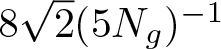 $8\sqrt{2}(5N_g)^{-1}$ and their projection on $\mathbb{R}^2\times\{0\}$ are the segments $\alpha_{n,i,j}$.
Recall the definitions of cubes  $C(p,r)$ from §3.4. Define for each $n\in\{1,\dots,g\}$,
 \begin{equation*}T^n = \bigcup_{p \in \Sigma^n}C(p,(48\sqrt{3})^{-1})\end{equation*}
and for each  $i\in\{1,\dots,n\}$ and each $j\in\{1,\dots,(2c_{n,i}+2)N_g\}$,
 \begin{equation*}T^g_{n,i,j} = \bigcup_{p \in \Sigma^g_{n,i,j}}C(p,\sqrt{2}(30\sqrt{3}N_g)^{-1}).\end{equation*}
The goal of this section is to construct the following map.
Proposition 5.1. There exists a degree  $2^{\lceil \log_2{g} \rceil + 2} N_g$ BLD branched covering
 \begin{equation*} F: T^g \setminus \bigcup_{i,j} \operatorname{int}(T^g_{g,i,j}) \to \overline{B}(0,{4}C_{g,g}) \setminus \operatorname{int}(T^g) \end{equation*}
such that for each  $i,j$, $F|\partial T^g_{g,i,j}$ is a similarity and $F(\partial T^g_{g,i,j}) = \partial T^g$
The first step is given in the following lemma.
Lemma 5.2. For each  $n\in\{2,\dots,g\}$ there exists a degree 2 BLD branched covering
 \begin{equation*} F_n : T^n \setminus \bigcup_{i,j}\operatorname{int}( T^g_{n,i,j} ) \to T^{\lceil \frac{n}2 \rceil} \setminus\bigcup_{i,j} \operatorname{int}( T^{g}_{\lceil \frac{n}2 \rceil,i,j} ) \end{equation*}
such that for each  $i,j$ there exist $i',j'$ with $F_n(\partial T^g_{n,i,j}) = \partial T^{g}_{\lceil \frac{n}2 \rceil,i',j'}$.
Proof of Lemma 5.2
The construction of Fn is different for the cases that n is even or odd.
Assume first that  $n=2k$ for some $k\in\mathbb{N}$. Let
 \begin{equation*} \iota_1:\mathbb{R}^3 \to \mathbb{R}^3 \qquad\text{with}\quad \iota_1(x,y,z) = (2C_{2k,k}-x,y,-z),\end{equation*}
be the π-radians rotation with respect to the line  $\ell_1 = \{z=0\}\cap\{x=C_{2k,k}\}$. Given such a rotation, we may realize the quotient $\mathbb{R}^3 / \langle \iota_1 \rangle$ concretely by a degree 2 winding map $q_{\iota_1}:\mathbb{R}^3 \to \mathbb{R}^3$ that fixes pointwise the axis fixed by ι 1. In cylindrical coordinates aligned with the fixed axis, $q_{\iota_1}$ is given by
 \begin{equation*} q_{\iota_1}(r,\theta,x_3) = (r,2\theta,x_3),\end{equation*}
and it is well-known that  $q_{\iota_1}$ is quasiregular, see for example [Reference Rickman20, p.13]. We have $q_{\iota_1}(\iota_1(x)) = q_{\iota_1}(x)$ for all $x\in \mathbb{R}^3$.
By the construction of the sequence  $(a_{n,i})_{i=1}^n$ and the construction of sets $(T^g_{2k,i,j})_{i,j}$ we have that sets $T^{2k}$ and $\bigcup_{i,j}T^g_{2k,i,j}$ are both invariant under ι 1 since both sets are symmetric with respect to the line $\ell_1$. The winding map $q_{\iota_1}$ then satisfies:
(i) for each
$i,j$ there exists jʹ such that $q_{\iota_1}(T^g_{2k,i,j}) = q_{\iota_1}(T^g_{2k,2k-i+1,j'})$;(ii) for each
$i,j$, the image $q_{\iota_1}(T^g_{2k,i,j})$ is the image of $T^g_{2k,i,j}$ under a bi-Lipschitz homeomorphism of $\mathbb{R}^3$.


To obtain a BLD branched covering, we consider a BLD version of  $q_{\iota_1}$ that we call q. Give $T^{2k}$ a C 1-triangulation $\zeta: |U| \to T^{2k}$ in the sense of [Reference Munkres17, p. 81] by a simplicial complex U in $\mathbb{R}^3$ that respects the involution $\iota_1|T^{2k}$ and of which $\zeta^{-1}(\bigcup_{i,j}(T^g_{2k,i,j}))$ is a subcomplex. Identify $q_{\iota_1}(T^{2k})$ with a simplicial complex V via $\xi:|V| \to q(T^{2k})$ in $\mathbb{R}^3$ of which $q_{\iota_1}(\bigcup_{i,j}(T^g_{2k,i,j}))$ is a subcomplex. This induces a simplicial map $\widetilde{q} :|U|\to |V|$ which is thus PL. We replace $q_{\iota_1}$ by $q:= \xi \circ \widetilde{q}\circ \zeta^{-1}$. As ζ and ξ are both C 1 on the faces of the compact simplicial complexes U and V respectively, as and $\widetilde{q}$ is PL, it follows that q is BLD.
Suppose now that  $n=2k+1$. Recall that $c_{2k+1,k+1}=3$, $c_{k+1,k+1}=1$. We decompose $T^{2k+1} \setminus \bigcup_{i,j} \operatorname{int}(T^{g}_{2k+1,i,j})$ into six pieces and we decompose $T^{k+1} \setminus\bigcup_{i,j}\operatorname{int}( T^{g}_{k+1,i,j}) $ into three pieces as follows; see Figure 5. Let
 \begin{align*}
U_1 &= (T^{2k+1} \setminus \bigcup_{i,j} \operatorname{int}(T^{g}_{2k+1,i,j}) ) \cap\{x \leq C_{2k+1,k} + \tfrac12\},\\
U_2 &= (T^{2k+1} \setminus \bigcup_{i,j} \operatorname{int}(T^{g}_{2k+1,i,j}) ) \cap\{C_{2k+1,k} + {\tfrac12} \leq x \leq C_{2k+1,k} + \tfrac32\}\cap \{y\geq \tfrac12\},\\
U_3 &= (T^{2k+1} \setminus \bigcup_{i,j} \operatorname{int}(T^{g}_{2k+1,i,j}) ) \cap\{C_{2k+1,k} + \tfrac32 \leq x \leq C_{2k+1,k} + {\tfrac52}\}\cap \{y\geq \tfrac12\},\\
U_4 &= (T^{2k+1} \setminus \bigcup_{i,j} \operatorname{int}(T^{g}_{2k+1,i,j}) ) \cap\{C_{2k+1,k} + {\tfrac12} \leq x \leq C_{2k+1,k} + \tfrac32\}\cap \{y\leq \tfrac12\},\\
U_5 &= (T^{2k+1} \setminus \bigcup_{i,j} \operatorname{int}(T^{g}_{2k+1,i,j}) ) \cap\{C_{2k+1,k} + \tfrac32 \leq x \leq C_{2k+1,k} + {\tfrac52}\}\cap \{y\leq \tfrac12\},\\
U_6 &= (T^{2k+1} \setminus \bigcup_{i,j} \operatorname{int}(T^{g}_{2k+1,i,j}) ) \cap\{x \geq C_{2k+1,k} + {\tfrac52}\}.
\end{align*}
\begin{align*}
U_1 &= (T^{2k+1} \setminus \bigcup_{i,j} \operatorname{int}(T^{g}_{2k+1,i,j}) ) \cap\{x \leq C_{2k+1,k} + \tfrac12\},\\
U_2 &= (T^{2k+1} \setminus \bigcup_{i,j} \operatorname{int}(T^{g}_{2k+1,i,j}) ) \cap\{C_{2k+1,k} + {\tfrac12} \leq x \leq C_{2k+1,k} + \tfrac32\}\cap \{y\geq \tfrac12\},\\
U_3 &= (T^{2k+1} \setminus \bigcup_{i,j} \operatorname{int}(T^{g}_{2k+1,i,j}) ) \cap\{C_{2k+1,k} + \tfrac32 \leq x \leq C_{2k+1,k} + {\tfrac52}\}\cap \{y\geq \tfrac12\},\\
U_4 &= (T^{2k+1} \setminus \bigcup_{i,j} \operatorname{int}(T^{g}_{2k+1,i,j}) ) \cap\{C_{2k+1,k} + {\tfrac12} \leq x \leq C_{2k+1,k} + \tfrac32\}\cap \{y\leq \tfrac12\},\\
U_5 &= (T^{2k+1} \setminus \bigcup_{i,j} \operatorname{int}(T^{g}_{2k+1,i,j}) ) \cap\{C_{2k+1,k} + \tfrac32 \leq x \leq C_{2k+1,k} + {\tfrac52}\}\cap \{y\leq \tfrac12\},\\
U_6 &= (T^{2k+1} \setminus \bigcup_{i,j} \operatorname{int}(T^{g}_{2k+1,i,j}) ) \cap\{x \geq C_{2k+1,k} + {\tfrac52}\}.
\end{align*}

Figure 5. The decompositions of  $T^{2k+1}$ (left) and of $T^{k+1}$ (right). For simplicity we have omitted the sets $T^{g}_{2k+1,i,j}$ and $T^{g}_{k+1,i,j}$.
Let also
 \begin{align*}
V_1 &= ( T^{k+1} \setminus \bigcup_{i,j} T^{g}_{k+1,i,j} ) \cap\{x \leq C_{k+1,k} + \tfrac12\},\\
V_2 &= ( T^{k+1} \setminus \bigcup_{i,j} T^{g}_{k+1,i,j} ) \cap\{x \geq C_{k+1,k} + \tfrac12\}\cap\{y\geq \tfrac12\},\\
V_3 &= ( T^{k+1} \setminus \bigcup_{i,j} T^{g}_{k+1,i,j} ) \cap\{x \geq C_{k+1,k} + \tfrac12\}\cap\{y\leq \tfrac12\}.
\end{align*}
\begin{align*}
V_1 &= ( T^{k+1} \setminus \bigcup_{i,j} T^{g}_{k+1,i,j} ) \cap\{x \leq C_{k+1,k} + \tfrac12\},\\
V_2 &= ( T^{k+1} \setminus \bigcup_{i,j} T^{g}_{k+1,i,j} ) \cap\{x \geq C_{k+1,k} + \tfrac12\}\cap\{y\geq \tfrac12\},\\
V_3 &= ( T^{k+1} \setminus \bigcup_{i,j} T^{g}_{k+1,i,j} ) \cap\{x \geq C_{k+1,k} + \tfrac12\}\cap\{y\leq \tfrac12\}.
\end{align*}
Let
 \begin{equation*} \iota_2 : \mathbb{R}^3 \to \mathbb{R}^3 \qquad\text{with}\quad \iota_2(x,y,z) = (2C_{2k+1,k}+{3}-x,1-y,z),\end{equation*}
be the π-radians rotation with respect to the line  $\{y=1/2\}\cap\{x=C_{2k+1,k}+\tfrac32\}$ and let
 \begin{equation*} \iota_3 : \mathbb{R}^3 \to \mathbb{R}^3 \qquad\text{with}\quad \iota_3(x,y,z) = (y+C_{k+1,k},C_{k+1,k+1}-x,z),\end{equation*}
be the  $\pi/2$-radians rotation with respect to the line $\{y=1/2\}\cap\{x=C_{k+1,k}+\tfrac12\}$.
Define  $F_{2k+1}|U_1 = \text{Id}$ (which maps U 1 onto V 1) and $F_{2k+1}|U_6 = \iota_2$ (which maps U 6 onto V 1). We claim that there exists a bi-Lipschitz homeomorphism $h: U_2 \to V_2$ such that
(i) for each j, there exists unique jʹ such that
$h|\partial T^g_{2k+1,k+1,j}\cap U_2$ is an isometry mapping $\partial T^g_{2k+1,k+1,j}{\cap U_2}$ onto $\partial T^g_{k+1,k+1,j'}{\cap V_2}$;(ii)
$h|\partial U_1\cap\partial U_2 = \text{Id}$ and $h|\partial U_3\cap\partial U_2$ is a clockwise $\pi/2$-radians rotation with respect to the line $\{(x,y,z) : x=C_{2k+1,k}+1, y=\frac12\}$ that maps $\partial U_3\cap\partial U_2$ onto $\partial V_3\cap\partial V_2$.


The construction of h is elementary but tedious and we postpone its proof until Appendix A. Assuming the existence of h, we define
(i)
$F_{2k+1}|U_2 = h$ (which maps U 2 onto V 3),(ii)
$F_{2k+1}|U_3 = \iota_3 \circ h(x-\tfrac34,y,z)$ (which maps U 3 onto V 3),(iii)
$F_{2k+1}|U_4 = (F_{2k+1}|U_3)\circ\iota_2$ (which maps U 4 onto V 3), and(iv)
$F_{2k+1}|U_5 = (F_{2k+1}|U_2)\circ\iota_2$ (which maps U 5 onto V 2).


It is easy to see that  $F_{2k+1}$ is a degree 2 BLD branched covering.
We are now ready to prove Proposition 5.1. The proof follows the arguments in [Reference Fletcher and Stoertz10, § 4.1] almost verbatim.
Proof of Proposition 5.1
Applying Lemma 5.2 a total of  $\lceil \log_2{g} \rceil$ many times, we obtain a degree $2^{\lceil \log_2{g} \rceil}$ BLD map
 \begin{equation*} G : T^g \setminus \bigcup_{i,j} \operatorname{int}(T^g_{{g},i,j}) \to T^{1} \setminus\bigcup_{j=1}^{4N_g} \operatorname{int}(T^{g}_{1,1,j})\end{equation*}
such that for each  $i,j$ there exist jʹ with $G(\partial T^g_{g,i,j}) = \partial T^{g}_{1,{1},j'}$.
It remains to construct a degree  $4N_g$ BLD map
 \begin{equation*} T^{1} \setminus\bigcup_{j=1}^{4N_g} \operatorname{int}(T^{g}_{1,1,j}) \to \overline{B}(0,4C_{g,g}) \setminus \operatorname{int}(T^g).\end{equation*}
We apply a bi-Lipschitz map  $\Phi:T^1 \to {\mathbb{R}^3}$ that modifies T 1 in two ways. Firstly, we translate T 1 so that its core curve γ 1 is the 2-dimensional unit square
 \begin{equation*} \{(x,y,z) : z=0, \quad \max\{|x|,|y|\}=1\}.\end{equation*}
Then, we apply a bi-Lipschitz map that is radial with respect to the z-axis so that
(i)
$\Phi(T_1)$ is the closed $\frac12$-neighbourhood of the circle $\mathbb{S}^1\times\{0\}$ in $\mathbb{R}^3$,(ii) all the sets
$\Phi(T^g_{1,1,1}),\dots, \Phi(T^g_{1,1,4N_g})$ satisfy
(with the convention\begin{equation*} \rho(\Phi(T^g_{1,1,j})) = \Phi(T^g_{1,1,j+2}) \quad \text{for}\ j\in\{1,\dots,4N_g\}\end{equation*}
$T^g_{1,1,4N_g+1}=T^g_{1,1,1}$ and $T^g_{1,1,4N_g+2} = T^g_{1,1,2}$) where ρ is the rotation about the z-axis by an angle $\pi/N_g$,
\begin{equation*} \rho(r,\theta,z) = (r,\theta+ \pi/N_g,z).\end{equation*}


This deformation is made to preserve the fact that all  $\Phi(T^g_{1,1,j})$ are similar to each other. Finally, if necessary, rotate $\Phi(T^1)$ around the z-axis to ensure that the set $\bigcup_{j=1}^{4N_g} \operatorname{int}(\Phi(T^{g}_{1,1,j}))$ is symmetric with respect to a rotation about the x-axis by an angle π; see Figure 6.

Figure 6. The projections of  ${\Phi({\gamma}_1)}$ (the core curve of ${\Phi(T^1)}$) and of $({\Phi(T^{g}_{1,1,j})})_{j=1}^{4N}$ on the xy-plane. For simplicity we have chosen $N_g=9$.
Let  $\omega : \mathbb{R}^3 \to \mathbb{R}^3$ be the degree $2N_g$ winding map
 \begin{equation*} \omega(r,\theta,z) = (r,2N_g\theta,z).\end{equation*}
Then  $\omega|{\Phi(T^1)} : {\Phi(T^1)} \to {\Phi(T^1)}$ is an unbranched covering that maps all $\Phi(T^g_{1,1,j})$ with odd indices j to $\omega({\Phi(T^g_{1,1,1})})$ and all ${\Phi(T^g_{1,1,j})}$ with even indices j to $\omega({\Phi(T^g_{1,1,2})})$. By construction, $\omega({\Phi(T_{1,1,1}^g)})$ and $\omega({\Phi(T_{1,1,2}^g)})$ are linked inside ${\Phi(T^1)}$ (see Figure 7) and are symmetric to each other via a rotation about the x-axis by an angle π. Let ι be the involution for the latter rotation, that is
 \begin{equation*} \iota(x,y,z) = (x,-y,-z).\end{equation*}

Figure 7.  $\omega(\Phi(T^g_{1,1,1}))$ and $\omega(\Phi(T^g_{1,1,2}))$ linked inside $\omega(\Phi(T^1)) = \Phi(T^1)$.
The associated winding map qι is a degree 2 sense preserving map under which  $q_{\iota}(\omega({\Phi(T^g_{1,1,1})})) = q_{\iota}(\omega({\Phi(T^g_{1,1,2})}))$ is the image of ${\Phi(T^g)}$ under a bi-Lipschitz map of $\mathbb{R}^3$.
Post-composing with more bi-Lipschitz deformations, the map  $q_{\iota}\circ\omega\circ G$ is a degree $4N_g 2^{\lceil \log_2{g} \rceil}$ branched covering from $T^g\setminus \bigcup_{i,j} \text{int}(T_{g,i,j}^g)$ onto $\overline{B}(0,4)\setminus \text{int}(T^g)$ mapping each $T^g_{g,i,j}$ onto Tg. Following the arguments in the proof of Lemma 5.2 we can obtain a BLD version of the map $q_{\iota}\circ\omega\circ G$. This completes the proof of the proposition.
Note that since the branched covering in the previous Lemma is BLD, it is also quasiregular.
5.2. Construction of a UQR map
The construction of the UQR map of Theorem 1.1 follows closely the ideas in [Reference Fletcher and Wu6, Section 5] and [Reference Fletcher and Stoertz10, § 4.2] so we only sketch the arguments. We require the following two results.
Theorem 5.3. For every  $d\in\mathbb{N}$ with d > 1 and for every $n\in\mathbb{N}$, there is a UQR map $h: \overline{\mathbb{R}^3} \to \overline{\mathbb{R}^3}$ of degree $2^nd^2$ with Julia set $J(h) = \mathbb{S}^2$. In addition, for any r > 0, $h(B(0,r)) = B(0,r^{2^{n/2}d})$.
We defer the proof of this result to Appendix B. We finally require a PL version of a result due to Berstein and Edmonds [Reference Berstein and Edmonds3] on extending branched coverings over PL cobordisms. For the case with maximum generality in the PL setting, we refer to [Reference Pankka, Rajala and Wu19]. See also [Reference Heinonen and Rickman12, Theorem 0.3].
Theorem 5.4 (See [Reference Berstein and Edmonds3, Theorem 6.2] and [Reference Pankka, Rajala and Wu19, Theorem 3.1])
Let W be a connected, compact, oriented PL 3-manifold in some  $\mathbb{R}^n$ whose boundary $\partial W$ consists of two components M0 and M1 with the induced orientation. Let $W' = N\setminus (\operatorname{int}(B_0) \cup \operatorname{int}(B_1))$ be an oriented PL 3-sphere N in $\mathbb{R}^n$ with two disjoint polyhedral 3-balls removed, and have the induced orientation on its boundary. Suppose that $\phi_i : M_i \to \partial B_i$ is a sense-preserving oriented PL branched covering of degree $d\geq 3$ for each $i=0,1$. Then there exists a sense-preserving PL branched covering $\phi: W \to W'$ of degree d that extends ϕ 0 and ϕ 1.
Recall the constant  $C_{g,g}$ from §3.1 and set
 \begin{equation*} R = (4C_{g,g})^{2\sqrt{N_g}2^{\frac12 \lceil \log_2{g}\rceil}}.\end{equation*}
Let  $B_0 = B(0,4C_{g,g})$, $B_{-1} = B(0,R)$. We decompose $\mathbb{R}^3$ in two different ways:
 \begin{align*}
\mathbb{R}^3 &= \left(\bigcup_{i,j}T^g_{g,i,j}\right) \cup \left( T^g \setminus \bigcup_{i,j}T^g_{g,i,j} \right) \cup (B_0 \setminus T^g) \cup (\mathbb{R}^3 \setminus B_0)
\end{align*}
\begin{align*}
\mathbb{R}^3 &= \left(\bigcup_{i,j}T^g_{g,i,j}\right) \cup \left( T^g \setminus \bigcup_{i,j}T^g_{g,i,j} \right) \cup (B_0 \setminus T^g) \cup (\mathbb{R}^3 \setminus B_0)
\end{align*}
and
 \begin{align*}
\mathbb{R}^3 &= T^g \cup (B_0 \setminus T^g) \cup (B_{-1} \setminus B_0) \cup (\mathbb{R}^3\setminus B_{-1}).
\end{align*}
\begin{align*}
\mathbb{R}^3 &= T^g \cup (B_0 \setminus T^g) \cup (B_{-1} \setminus B_0) \cup (\mathbb{R}^3\setminus B_{-1}).
\end{align*}
Define now a map  $f:\mathbb{R}^3 \to \mathbb{R}^3$ in the following way.
(i) Set
\begin{equation*} f : T^g \setminus \bigcup_{i,j}\text{int}(T^g_{g,i,j}) \to B_0 \setminus \operatorname{int}(T^g)\end{equation*}
to be the map of Proposition 5.1.
(ii) Extend f to
$\bigcup_{i,j}T^g_{g,i,j}$ by setting
\begin{equation*} f|T^g_{g,i,j} = \psi_{i,j}^{-1} : T^g_{g,i,j} \to T^g.\end{equation*}
Recall the definitions of
$\psi_{i,j}$ from §3.4.(iii) Define
$f:\mathbb{R}^3\setminus \text{int}(B_0) \to \mathbb{R}^3 \setminus \text{int}(B_{-1})$ to be the restriction of the UQR map of degree $2^{\lceil \log_2{g}\rceil}4N_g$ from Theorem 5.3. Note that $f|\mathbb{R}^3\setminus \text{int}(B_0)$ is orientation preserving and maps $S(0,4C_{g,g})$ onto $S(0,R)$.(iv) Since
$f|\partial B_0$ is a BLD degree $2^{\lceil \log_2{g}\rceil}4N_g$ map onto $\partial B_{-1}$, and since $f|\partial T^g$ is also a degree $2^{\lceil \log_2{g}\rceil}4N_g$ BLD map onto $\partial B_0$, by Theorem 5.4 there exists a degree $2^{\lceil \log_2{g}\rceil}4N_g$ BLD extension $f: B_0 \setminus \text{int}(T^g) \to B_{-1}\setminus \text{int}(B_0)$. It is understood here that C 1-triangulation has been carried out on $B_0 \setminus \text{int}(T^g)$ and $B_{-1}\setminus \text{int}(B_0)$ before applying Theorem 5.4.


The map  $f:\mathbb{R}^3 \to \mathbb{R}^3$ defined above is UQR and of polynomial type [Reference Fletcher and Stoertz10, Lemma 4.1] (see also [Reference Fletcher and Wu6, Lemma 5.1]) and its Julia set is equal to Xg [Reference Fletcher and Stoertz10, Lemma 4.2] (see also [Reference Fletcher and Wu6, Lemma 5.2]).
6. Genus and Julia sets
First in this section, we prove Theorem 1.2. In fact we will show something stronger. Namely that if X is a Cantor set and the Julia set of a hyperbolic UQR map, then there exists a defining sequence that, up to similarities, contains only finitely many different elements.
Let us first recall two notions from metric geometry. A metric space (X, d) is c-uniformly perfect if there exists  $c\geq 1$ such that for all $x\in X$ and all $r\in (0,\operatorname{diam}{X})$, $\overline{B}(x,r)\setminus B(x,r/c) \neq \emptyset$. A metric space (X, d) is c-uniformly disconnected [Reference David and Semmes4] if there exists $c \geq 1$ such that for any $r \in (0,\operatorname{diam}{X})$ and any $x \in X$ there exists a set $E \subset X$ containing x such that $\operatorname{diam}{E} \leq r$ and $\operatorname{dist}(E, X \setminus E) \geq r/c$.
Before stating our key lemma, we introduce some terminology. Fix  $N\in\mathbb{N}$. We denote by ɛ the empty word. Given an integer $n\geq 0$ we denote by $\{1,\dots,N\}^n$ all words formed from the alphabet $\{1,\dots,N\}$ that have exactly n letters with the convention $\{1,\dots,N\}^0 = \{\varepsilon\}$. Define also the set of all finite words
 \begin{equation*} \{1,\dots,N\}^* = \bigcup_{n\geq 0} \{1,\dots,N\}^n.\end{equation*}
The length of a finite word w is denoted by  $|w|$. Two finite words $w,u$ can be concatenated to wu in the obvious way.
The next lemma states that sets that are uniformly perfect and uniformly disconnected admit a defining sequence which, up to similarities, contains finitely many elements in a quantitative way. We prove in fact a stronger version which yields a uniformization of such Cantor sets which may be of independent interest; see Appendix C.
Lemma 6.1. Given c > 1 there exist constants  $p,N,C_0\in \mathbb{N}$, a finite collection $\{\mathcal{M}_1,\dots,\mathcal{M}_l\}$ of PL handlebodies in $\mathbb{R}^3$, and a finite collection $\{\mathcal{N}_1,\dots,\mathcal{N}_q\}$ of PL 3-manifolds with boundary, each $\mathcal{N}_j$ having at least three boundary components, that satisfy the following. If $X\subset \mathbb{R}^3$ is compact, c-uniformly perfect and c-uniformly disconnected, then there exist a “dictionary” $\mathcal{W} \subset \{1,\dots,N\}^*$, a map $\textbf{i}:\mathcal{W} \to \{1,\dots,l\}$, a map $\textbf{j}:\mathcal{W} \to \{1,\dots,q\}$, and similarities $\{\phi_w:\mathbb{R}^3 \to\mathbb{R}^3\}_{w\in \mathcal{W}}$ such that
- (P1)
(a) the empty word
$\varepsilon \in \mathcal{W}$,(b) for every
$w\in \mathcal{W}$ there exists $N_w \in \{2,\dots,N\}$ such that $wi\in \mathcal{W}$ if and only if $i\in\{1,\dots,N_w\}$,(c) if
$iw \in \mathcal{W}$ for some $w\in \{1,\dots,N\}^*$ and $i\in \{1,\dots,N\}$, then $w\in \mathcal{W}$,
(P2) for all
$w\in\mathcal{W}$, ϕw has scaling factor $p^{-|w|}$,(P3) for all
$w\in\mathcal{W}$ and all $i\in\{1,\dots,N_w\}$, $\phi_{wi}(\mathcal{M}_{\textbf{i}(wi)}) \subset \phi_w(\mathcal{M}_{\textbf{i}(w)})$ and
\begin{equation*} \operatorname{dist}(\phi_{wi}(\mathcal{M}_{\textbf{i}(wi)}),\partial \phi_{w}(\mathcal{M}_{\textbf{i}(w)})) \geq C_0^{-1}p^{-|w|-1},\end{equation*}
(P4) for all distinct
$w,w' \in \mathcal{W}$ with $|w|=|w'|$
\begin{equation*} \operatorname{dist}(\phi_{w}(\mathcal{M}_{\textbf{i}(w)}), \phi_{w'}(\mathcal{M}_{\textbf{i}(w')})) \geq p^{-|w|},\end{equation*}
(P5) for all
$w\in\mathcal{W}$, $\phi_{w}(\mathcal{M}_{\textbf{i}(w)})\cap X \neq \emptyset$ and
\begin{equation*} \operatorname{dist}(\partial \phi_{w}(\mathcal{M}_{\textbf{i}(w)}), X) \geq p^{-|w|}, \qquad p^{-|w|}\leq \operatorname{diam}{\phi_{w}(\mathcal{M}_{\textbf{i}(w)})} \leq C_0 p^{-|w|},\end{equation*}
(P6) for each
$w\in \mathcal{W}$,
\begin{equation*} \mathcal{M}_{\textbf{i}(w)} \setminus \bigcup_{i=1}^{N_w}\phi_w^{-1}\circ\phi_{wi}(\mathcal{M}_{\textbf{i}(wi)}) = \mathcal{N}_{\textbf{j}(w)},\end{equation*}
(P7) the set X is the limit of the k-th level approximations:
\begin{equation*} X = \bigcap_{k\geq 0} \bigcup_{\substack{w \in \mathcal{W} \\ |w|=k}}\phi_{w}(\mathcal{M}_{\textbf{i}(w)}).\end{equation*}


Proof. The proof uses MacManus’ cubical approximation of uniformly disconnected sets [Reference MacManus14]. Given δ > 0, define  $\mathcal{D}_{{\delta}}$ to be the collection of connected 3-manifolds with boundary that are the union of finitely many cubes in the collection
 \begin{equation*} \left\{[m_1{\delta},(m_1+1){\delta}]\times[m_2{\delta},(m_2+1){\delta}]\times [m_3{\delta},(m_3+1){\delta}] : m_1,m_2,m_3\in \mathbb{Z} \right\}.\end{equation*}
Let X be c-uniformly perfect and c-uniformly disconnected. By [Reference Badger and Vellis2, Corollary 5.2], there exist constants  $C_0,p,N \in\mathbb{N}$ depending only on c, there exists a dictionary $\mathcal{W}\subset \{1,\dots,N\}^*$, and there exists a family $\{M_w:w\in\mathcal{W}\}$ of 3-manifolds with boundary in $\mathbb{R}^3$ such that
(i)
$\mathcal{W}$ satisfies (P1),(ii) for all
$w\in \mathcal{W}$, $M_w \in \mathcal{D}_{p^{-|w|}}(X)$ and $\operatorname{diam}{M_w} \leq C_0p^{-|w|}$,(iii) for all distinct
$w,w' \in \mathcal{W}$ with $|w|=|w'|$, $\operatorname{dist}(M_w,M_{w'}) \geq p^{-|w|}$,(iv) for all
$w\in\mathcal{W}$ and for all $i\in \{1,\dots,N_w\}$, $M_{wi} \subseteq M_w$ and
\begin{equation*} \operatorname{dist}(M_{wi},\partial M_w) \geq C_0^{-1}p^{-|w|},\end{equation*}
(v) for all
$w\in \mathcal{W}$, the intersection $X \cap M_w \neq \emptyset$ and $\operatorname{dist}(\partial M_w, X) \geq p^{-|w|}$,(vi) the set X is the limit of the kth level approximations:
\begin{equation*} X = \bigcap_{k\geq 0} \bigcup_{\substack{w \in \mathcal{W} \\ |w|=k}}M_{w}.\end{equation*}


Note that the manifolds Mw are not assumed to have connected boundaries and that Nw may equal 1 for some words  $w\in \mathcal{W}$.
The first issue can be resolved as follows. For each  $k\in\mathbb{N}$ and each $w\in \mathcal{W}$ with $|w|=k$ replace Mw by $\overline{\mathbb{R}^3\setminus U_w}$ where Uw is the unbounded connected component of $\mathbb{R}^3 \setminus M_w$. If for some $w,u \in \mathcal{W}$ with $|w|=|u|=k$ we have $M_u \subset M_w$, then we remove u from $\mathcal{W}$. After re-indexing, we obtain a new dictionary $\mathcal{W}$ and a new collection $\{M_w: w\in \mathcal{W}\}$ of 3-manifolds with boundary that have connected boundaries and satisfy all properties above (with the same constants $p,C_0,N$).
To fix the second issue, we remark that by c-uniform perfectness and by (4) above, we have that for all  $w\in\mathcal{W}$,
 \begin{equation*} \operatorname{diam}(X \cap M_w) \geq c^{-1}p^{-|w|}.\end{equation*}
Therefore, assuming that  $p \gt C_0 c$, we have by (4) above that for all $w\in\mathcal{W}$ and for all $i\in\{1,\dots,N\}$ such that $wi\in \mathcal{W}$,
 \begin{equation*} \operatorname{diam}{M_{wi}} \lt \operatorname{diam}(X \cap M_w),\end{equation*}
which yields that  $N_w \geq 2$.
Denote by  $\mathscr{M}$ the collection of all PL handlebodies $M\in \mathcal{D}_1$ such that $M\subset [0,C_0+1]^3$. Furthermore, denote by $\mathscr{N}$ the collection of all $M \in \mathcal{D}_1$ such that $M \subset[0,C_0+1]^3$ and M has at least three boundary components. Since collections $\mathscr{M}$ and $\mathscr{N}$ are finite, we can enumerate them $\mathscr{M} = \{\mathcal{M}_1,\dots,\mathcal{M}_l\}$ and $\mathscr{N} = \{\mathcal{N}_1,\dots,\mathcal{N}_q\}$.
For each  $w\in \mathcal{W}$, let ϕw be a similarity map of $\mathbb{R}^3$ with scaling factor $p^{-|w|}$ such that $\phi_w^{-1}(M_w)\in \mathcal{D}_1$. Note that $\phi_w^{-1}(M_w)$ has diameter at most C 0 so modifying ϕw we may further assume that $\phi_w^{-1}(M_w) \subset [0,\lceil C_0\rceil +1]^3$. Therefore, for each $w\in\mathcal{W}$, we have $\phi_w^{-1}(M_w) \in \mathscr{M}$. Similarly, for each $w\in\mathcal{W}$, we have $\phi_w^{-1}(M_w \setminus \bigcup_{i=1}^{N_w}M_{wi}) \in \mathscr{N}$. This completes the proof of the lemma.
We can now show Theorem 1.2.
Proof of Theorem 1.2
Let X be the Julia set of a hyperbolic UQR map  $f:\overline{\mathbb{R}^3} \to \overline{\mathbb{R}^3}$. Without loss of generality, we may assume that $\infty \not\in X$. By [Reference Fletcher and Vellis11, Theorem 1.1], X is compact and uniformly disconnected, and by [Reference Fletcher and Nicks8, Theorem 1.1], X is uniformly perfect.
Let  $\mathcal{W}$, $\{\mathcal{M}_1,\dots,\mathcal{M}_l\}$, $\textbf{i}:\mathcal{W} \to\{1,\dots,l\}$, and $\{\phi_w:\mathbb{R}^3 \to \mathbb{R}^3\}_{w\in \mathcal{W}}$ be the dictionary, finite collection of handlebodies, function, and similarities as in Lemma 6.1. Then,
 \begin{equation*} \left(\bigcup_{w\in \mathcal{W}, |w|=i}\phi_w(\mathcal{M}_{\textbf{i}(w)}) \right)_i \end{equation*}
is a defining sequence for X and
 \begin{equation*} g(X) \leq \sup_{w\in \mathcal{W}}g(\phi_w(\mathcal{M}_{\textbf{i}(w)})) \leq \max_{i=1,\dots,l}g(\mathcal{M}_i) \lt \infty.
\end{equation*}
\begin{equation*} g(X) \leq \sup_{w\in \mathcal{W}}g(\phi_w(\mathcal{M}_{\textbf{i}(w)})) \leq \max_{i=1,\dots,l}g(\mathcal{M}_i) \lt \infty.
\end{equation*}
Next, we prove Theorem 1.3. The key is the following lemma on the local genus.
Lemma 6.2. Let X and Y be Cantor sets in  $\mathbb{R}^3$ and let $x\in X$. Suppose there exists a neighborhood U of x and a homeomorphism h from U onto a neighborhood V of $y=h(x)$ such that $h(X\cap U) = Y\cap V$. Then $g_x(X) = g_y(Y)$.
Proof. Let us first fix a defining sequence  $(M_n)$ for X and recall that $M_n^x$ is the component of Mn containing x. Now consider any defining sequence $\widetilde{M}_n$ of Y. As $\operatorname{diam} \widetilde{M}_n^y \to 0$ as $n\to \infty$, there exists $N\in \mathbb{N}$ such that $\widetilde{M}_n^y \subset V$ for $n\geq N$.
We will build a new defining sequence  $\widehat{M}_n$ for Y as follows. If $n\geq N$, we leave all the components of $\widetilde{M}_n$ alone, except for $\widetilde{M}_n^y$. As $\widetilde{M}_n^y$ is a handlebody with $\partial \widetilde{M}_n^y \subset V \setminus Y$, it follows that $h^{-1} ( \widetilde{M}_n^y )$ is a handlebody in U with boundary contained in $U\setminus X$.
In particular, there exists a minimal integer  $k=k(n)$ such that the union of the boundaries of components of Mk does not intersect $h^{-1} ( \widetilde{M}_n^y )$. Let $\Omega_k$ denote the union of the components of Mk contained in $h^{-1} ( \widetilde{M}_n^y )$. Then for our new defining sequence of Y, we may replace $\widetilde{M}_n^y$ with $h(\Omega_k)$.
In  $\widehat{M}_n$ we have $\widehat{M}_n^y = h ( M_k^x)$. As h is a homeomorphism, the genus of $\widehat{M}_n^y$ is the same as $M_k^x$. Performing the same procedure for all defining sequences Mn of X and taking an infimum, we see that
 \begin{equation*} g_y(Y) \geq g_x(X) .\end{equation*}
Switching the roles of  $x\in X$ and $y\in Y$ and using the fact that h −1 is also a homeomorphism, the above argument shows that
 \begin{equation*} g_x(X) \geq g_y(Y),\end{equation*}
which completes the proof.
Proof of Theorem 1.3
By Theorem 1.2, the genus of J(f) is finite. Since  $g_x(J(f)) \leq g(J(f))$ for any $x\in J(f)$, the local genus is also finite at every point. So suppose $g_x(J(f)) = g$ and let y be in the grand orbit of x. Then there exist $n,m\in \mathbb{N}\cup\{0\}$ such that $f^n(x) = f^m(y)$.
As f is hyperbolic, each  $f^n$ is a local homeomorphism at every point of J(f). By complete invariance, $y\in J(f)$. Lemma 6.2 now yields the result.
7. Non-constant local genus
In this section, we modify the construction from Section 5 to give an example of a UQR map f with J(f) a genus g Cantor set, for  $g\geq 1$, and so that local genus of both 0 and g is achieved.
Proof of Theorem 1.5
Recall the BLD map
 \begin{equation*} F: T^g \setminus \bigcup_{i,j} \operatorname{int}(T^g_{g,i,j}) \to \overline{B}(0,{4}C_{g,g}) \setminus \operatorname{int}(T^g)\end{equation*}
from Proposition 5.1. For brevity, denote by U the domain of F and by V the range. As  $F(\mathcal{B}(F))$ has topological dimension at most 1, we can find $x\in V$ and $\epsilon_1 \gt 0$ so that $B(x,\epsilon_1) \subset V \setminus F(\mathcal{B}(F))$.
By shrinking ϵ 1 if neccesary, we may assume that  $F^{-1}(B(x,\epsilon_1))$ consists of $k=\operatorname{deg} F$ disjoint topological balls $E_1,\ldots, E_k$ and the restriction of F to each Ej, for $j=1,\ldots, k$, is a homeomorphism. Let $u_j = F^{-1}(x) \cap E_j$ for $j=1,\ldots, k$. Choose
 \begin{equation*} \epsilon_2 \lt \frac{1}{2} \min \{\epsilon_1 , \operatorname{dist}(u_1,\partial E_1),\ldots, \operatorname{dist}(u_k,\partial E_k) \} .\end{equation*}
For  $j=0,\ldots, k$, find affine maps Aj such that A 0 maps Tg into $B(x,\epsilon_2)$, and for $j=1,\ldots, k$, Aj maps Tg into $B(u_k,\epsilon_2)$. We view the collection $A_1(T^g),\ldots, A_k(T^g)$ as satellites to the first level M 1 of the defining sequence for Xg.
Recall the maps  $\phi_1,\ldots, \phi_{\mathfrak{m}}$ from (3.3). To these we add the maps $A_1,\ldots, A_k$ and relabel via $\xi_1,\ldots, \xi_{\mathfrak{m}+k}$ where $\xi_i = \phi_i$ if $i\in\{1,\dots,\mathfrak{m}\}$ and $\xi_i = A_{i-{\mathfrak{m}}}$ if $i\in\{\mathfrak{m}+1,\dots,\mathfrak{m}+k\}$. As the images $\xi_i (T^g)$ and $\xi_j(T^g)$ are pairwise disjoint for i ≠ j, we may define the Cantor set
 \begin{equation*} Y_g = \bigcap_{n=1}^{\infty} \bigcup_{j_1,\ldots, j_n \in \{1,\ldots,\mathfrak{m}+k\} } \xi_{j_1} \circ \cdots \circ \xi_{j_n} (T^g).\end{equation*}
As Yg contains Xg, its genus is at least g, and as the description above includes a defining sequence consisting of genus g tori, the genus of Yg is also g.
Clearly the elements of Yg that are also contained in Xg have local genus equal to g. To see that some elements of Yg have local genus zero, we observe that we can construct a different defining sequence for Yg. The first level  $\widetilde{M}_1$ of this new defining sequence for Yg is the first level of the defining sequence M 1 for Xg together with the balls $B(u_1,\epsilon_2),\ldots, B(u_k,\epsilon_2)$. This yields the alternate description
 \begin{equation*} Y_g = \bigcap_{n=1}^{\infty} \bigcup_{j_1,\ldots, j_n \in \{1,\ldots,\mathfrak{m}+k\} } \xi_{j_1} \circ \cdots \circ \xi_{j_n} (\widetilde{M}_1).\end{equation*}
If we let y be the unique point in
 \begin{equation*}\bigcap_{n=1}^{\infty} \xi_{\mathfrak{m}+k}^n(B(u_k,\epsilon_2)),\end{equation*}
then  $y\in Y_g$ and $\widetilde{M}_i^y$ is a ball for each level $i\geq 1$. We conclude that the local genus of y is equal to 0 and, assuming for the moment that Yg can be realized as a Julia set, Theorem 1.3 shows that there is a dense subset of Yg with local genus 0.
Finally, we have to show that Yg can be realized as a Cantor Julia set. We modify the map F above to  $\widetilde{F}$ as follows.
• On
$U \setminus \bigcup_{j=1}^k E_j$ we set $\widetilde{F} = F$.• For each
$j=1,\ldots, k$, we redefine F on $\overline{B}(u_j,\epsilon_2)\setminus A_j(T^g)$ to be an isometry onto $\overline{B}(x,\epsilon_2) \setminus A_0(T^g)$.• For
$j=1,\ldots, k$, we use the bi-Lipschitz version of the Annulus Theorem [Reference Tukia and Väisälä21, Theorem 3.17] to extend $\widetilde{F}$ to a bi-Lipschitz map from $E_j \setminus \overline{B}(u_j,\epsilon_2)$ to $B(x,\epsilon_1) \setminus \overline{B}(x,\epsilon_2)$.


This yields a BLD map
 \begin{equation*} \widetilde{F} : U \setminus \bigcup_{j=1}^k A_j(T^g) \to V \setminus A_0(T^g).\end{equation*}
The image is the ball  $\overline{B}(0,4C_{g,g})$ with two similar unlinked genus g solid tori removed. By applying an auxiliary bi-Lipschitz map to $\overline{B}(0,4C_{g,g})$, we may obtain the images of the two removed tori are symmetric under the involution $\iota(x,y,z) =( x,-y,-z)$. The corresponding winding map qι is a degree 2 sense preserving map which identifies the two tori removed from $\overline{B}(0,4C_{g,g})$. Proceeding as in the proof of Proposition 5.1, and by applying further bi-Lipschitz deformations if necessary, we obtain the BLD map
 \begin{equation*} q_{\iota}\circ \widetilde{F} : U \setminus \bigcup_{j=1}^k A_j(T^g) \to \overline{B}(0,4C_{g,g}) \setminus \operatorname{int}(T^g).\end{equation*}
The construction of the UQR map nows proceeds almost identically to the construction from Section 5.2. The only difference is that the UQR power map in a neighborhood of infinity has degree  $2^{\lceil \log_2{g}\rceil + 1}4N_g$.
Acknowledgements
We thank the referee for their valuable comments which have greatly improved the exposition of the paper.
Funding
V. Vellis was partially supported by NSF DMS grants 1952510 and 2154918.
Appendix A. A bi-Lipschitz deformation
Here we prove the existence of the map  $h: U_2 \to V_2$ in Lemma 5.2. For the rest of this appendix, we write $N=N_g$ where Ng is the constant in (3.1). Recall that $T^g_{k+1,k+1,i} \cap V_2$ if and only if $i\in\{\tfrac12(N+1),\dots, \tfrac32(N+1)\}$.
The construction of h is based on two results. The first is an extension theorem of Väisälä.
Theorem A.1 ([Reference Väisälä22, Corollary 5.20])
Let  $n\geq 2$ and $\Sigma \subset \mathbb{R}^n$ be a compact PL manifold of dimension n or n − 1 with or without boundary. Then there exist $L,L' \gt 1$ depending on Σ, such that every L-bi-Lipschitz embedding $F: \Sigma \to \mathbb{R}^n$ extends to an Lʹ-bi-Lipschitz map $F:\mathbb{R}^n \to \mathbb{R}^n$.
Given sets  $X,Y \subset \mathbb{R}^n$ we say that $H = \{H_t : X \to \mathbb{R}^3\}_{t\in[0,1]}$ is a bi-Lipschitz deformation of X onto Y if
(i) for each
$t\in [0,1]$, Ht is a bi-Lipschitz map,(ii)
$H_0 = \text{Id}|X$ and H 1 is a bi-Lipschitz homeomorphism of X onto Y,(iii) for any ϵ > 0 and any
$t\in [0,1]$ there exists δ > 0 such that for all $s \in [0,1]$ with $|s-t| \lt \delta$ we have $H_s \circ H^{-1}_t$ is $(1+{\epsilon})$-bi-Lipschitz.


The second ingredient in the construction of h is the following lemma.
Lemma A.2. There exists a bi-Lipschitz deformation H of  $\partial V_2$ onto $\partial U_2$ such that
(i) for each
$t\in [0,1]$, $H_t | \partial V_2 \cap \partial V_1$ is the identity,(ii) for each
$j \in \{\tfrac12(N+1),\dots, \tfrac32(N+1)\}$, $H_1|\partial T^g_{2k+1,k+1,j}\cap \partial V_2$ is an isometry mapping $\partial T^g_{2k+1,k+1,j}\cap \partial V_2$ onto $\partial T^g_{k+1,k+1,j}\cap \partial U_2$,(iii)
$H_1|\partial V_2\cap \partial V_3$ is a counterclockwise $\pi/2$-radians rotation with respect to the line $\{(x,y,z) : x=C_{2k+1,k}+1, y=\frac12\}$ that maps $\partial V_2\cap \partial V_3$ onto $\partial U_3\cap\partial U_2$.


Assuming we have constructed H, we proceed as follows. By Theorem A.1, for each  $t \in [0,1]$, there exist constants $L_t, L_t' \gt 1$ such that any Lt-bi-Lipschitz map $f: H_t(\partial V_2) \to \mathbb{R}^{3}$ has an $L_t'$-bi-Lipschitz extension $F: \mathbb{R}^{3} \to \mathbb{R}^{3}$. For all $t \in [0,1]$, there is an open interval $\Delta_t$ such that for all $s \in \Delta_t$, $H_s \circ H^{-1}_t$ is Lt-bi-Lipschitz. By compactness, we can cover $[0,1]$ with finitely many intervals $\{\Delta_{t_j}\}_{j=1}^l$, where $0 = t_0 \lt t_1 \lt \cdots \lt t_l = 1$ and $\Delta_{t_{j-1}}\cap \Delta_{t_j} \neq \emptyset$. For each $j=1,\dots,l$ set $a_{2j} = t_j$ and $a_{2j-1} \in \Delta_{t_{j-1}}\cap\Delta_{t_j}$. Then, each $H_{a_{j-1}}\circ H^{-1}_{a_{j}}$ extends to a bi-Lipschitz map $G_{a_{j-1}a_{j}}: \mathbb{R}^{3} \to \mathbb{R}^{3}$. Hence, the map
 \begin{equation*} G_{a_{2l-1}a_{2l}}\circ \cdots \circ G_{a_0a_1}\end{equation*}
is a bi-Lipschitz self-map of  $\mathbb{R}^3$ that maps V 2 onto U 2 and its inverse is the desired map h.
Proof of Lemma A.2
The construction of H is done in 3 steps.
Let  $D_1=(\partial V_2 \cap \{x = C_{k+1,k}+\frac12\})$, let w 1 be the center of D 1, and let C 1 be the outermost boundary square of D 1 (which is in the common boundary of V 2 and V 1). Similarly, let $D_3=\partial V_2 \cap \{y = \frac12\}$, let w 3 be the center of D 3, and let C 3 be the outermost boundary square (which is in the common boundary of V 2 and V 3). Finally, let w 2 be the upper right corner point of the core curve $\Sigma^{k+1}$ and let C 2 be the boundary rectangle on $\partial V_2$ centered at w 2. See the left figure in Figure A.2 for the projections on the xy-plane.
For the first step, we decompose  $\partial V_2 = S_1\cup S_2\cup S_3\cup S_4$ where
(i)
$S_1 = D_1 \cup \bigcup_{i=\frac12(N+1)}^{N}\partial T^g_{k+1,k+1,i}\cap \partial V_2$,(ii)
$S_2 = \partial T^g_{k+1,k+1,N+1}$ is the boundary of the upper right solid g-torus,(iii)
$S_3 = D_3 \cup \bigcup_{i=N+2}^{\frac32(N+1)}\partial T^g_{k+1,k+1,i}$(iv)
$S_4 = \partial V_2 \setminus (S_1\cup S_2\cup S_3)$ is a “crooked square cylinder”.


Set  $l=(13\sqrt{2}-10)(20N)^{-1}$. Define the bi-Lipschitz deformation
 \begin{equation*} H^{(1)} = \{H^{(1)}_t: \partial V_2 \to \mathbb{R}^3\}_{t\in [0,1]}\end{equation*}
such that
•
$H^{(1)}_t | S_1$ is the identity,•
$H^{(1)}_t |S_2$ is a translation by lt in the y direction towards the negatives,•
$H^{(1)}_t | S_3$ is a translation by 2lt in the y direction towards the negatives,•
$H^{(1)}_t | C_2$ is the identity,•
$H^{(1)}_t | S_4$ is a linear interpolation of the maps $H^{(1)}_t | C_1$, $H^{(1)}_t | C_2$, and $H^{(1)}_t | C_3$.


For the second step, set  $S_i' = H^{(1)}_1(S_i)$ for $i=1,2,3,4$, set $w_i' = H^{(1)}_1(w_i)$ for $i=1,2,3$, and set $C_i' = H^{(1)}_1(C_i)$ for $i=1,2,3$. We define one more auxiliary point. Let $\pi:\mathbb{R}^3 \to \{z=0\}$ be the projection on the xy-plane and let w 0 be the unique point in the intersection $\pi({\tau_1})\cap \pi({\tau_2})$ where $\tau_1,\tau_2$ are the core curves of the solid g-tori bounded by $S_1',S_2'$, respectively. See Figure A.1.

Figure A.1. The projections on the xy-plane of the core curves of the g-tori bounded by  $\partial T^g_{k+1,N_i}$, $i\in\{0,1,2\}$ (in the first figure), $H^{(1)}_1(\partial T^{g}_{k+1,N+i})$, $i\in\{0,1,2\}$ (in the second figure), $H^{(2)}_1\circ H^{(1)}_1( \partial T^{g}_{k+1,N+1})$, $i\in\{0,1,2\}$ (in the third figure), and $H^{(3)}_1\circ H^{(2)}_1\circ H^{(1)}_1(\partial T^{g}_{k+1,N+2})$ $i\in\{0,1,2\}$ (in the fourth figure).

Figure A.2. The projections on the xy-plane of S 4 (first figure),  $S_4'$ (second figure), $S_4^{\prime\prime}$ (third figure), $H^{(3)}(S_4^{\prime\prime})$ (fourth figure).
Let Rt be the counterclockwise rotation map by  $t\pi/4$ with respect to the line $\pi^{-1}(\{w_0\})$. We also use a bi-Lipschitz deformation that takes a rectangle to a square of the same center as the rectangle and side-length equal to the length of the shorter side of the rectangle. In particular if $a,r \gt 0$, then the map
 \begin{equation}
\begin{cases}
(\pm (r+a),y) \mapsto (\pm (r+a) + \mp at, x), & y \in [-r,r]\\
(x,\pm r) \mapsto (\frac{r+a-t}{r+a}x, \pm r), &x \in [-r-a,r+a]
\end{cases}
\end{equation}
\begin{equation}
\begin{cases}
(\pm (r+a),y) \mapsto (\pm (r+a) + \mp at, x), & y \in [-r,r]\\
(x,\pm r) \mapsto (\frac{r+a-t}{r+a}x, \pm r), &x \in [-r-a,r+a]
\end{cases}
\end{equation}
deforms the rectangle  $\partial ([-a-r,a+r]\times [-r,r])$ to the square $\partial [-r,r]^2$.
Define now a bi-Lipschitz deformation  $H^{(2)}= \{H^{(2)}_t: H^{(1)}_1(\partial V_2) \to \mathbb{R}^3\}_{t\in [0,1]}$ such that
•
$H^{(2)}_t | S_1'$ is the identity,•
$H^{(2)}_t|S_2'\cup S_3' =R_t$,•
$H^{(2)}_t| C_2'$ is the composition of Rt and a “rectangle-to-square” deformation as in (A.1),•
$H^{(2)}_t | S_4'$ is a linear interpolation of the maps $H^{(2)}_t | C_1'$, $H^{(2)}_t | C_2'$, and $H^{(2)}_t | C_3'$.


For the third and final step, set  $S_i^{\prime\prime} = H^{(2)}_1(S_i')$ for $i=1,2,3,4$, set $w_i^{\prime\prime} = H^{(2)}_1(w_i')$ for $i=1,2,3$, and set $C_i^{\prime\prime} = H^{(2)}_1(C_i')$ for $i=1,2,3$. We define one more auxiliary point. Let v 0 be the unique point in the intersection $\pi({\sigma_1})\cap \pi({\sigma_2})$, where $\sigma_1,\sigma_2$ are the core curves of the solid g-tori bounded by $S_1^{\prime\prime},S_2^{\prime\prime}$, respectively. See Figure A.1.
Let  $R_t'$ be the counterclockwise rotation by $t\pi/4$ with respect to the line $\pi^{-1}\{v_0\}$. Define now a bi-Lipschitz deformation $H^{(3)} = \{H^{(2)}_t: H^{(2)}_1(H^{(1)}_1(\partial V_2)) \to \mathbb{R}^3\}_{t\in [0,1]}$ such that
•
$H^{(3)}_t | S_1^{\prime\prime} \cup S_2^{\prime\prime}$ is the identity,•
$H^{(3)}_t|S_3^{\prime\prime} = R_t'$,•
$H^{(3)}_t| C_2^{\prime\prime}$ is a translation with $H^{(3)}_t( C_2^{\prime\prime})$ being centered at $R_t'(w_2^{\prime\prime})$,•
$H^{(3)}_t | S_4^{\prime\prime}$ is a linear interpolation of the maps $H^{(3)}_t | C_1^{\prime\prime}$, $H^{(3)}_t | C_2^{\prime\prime}$, and $H^{(3)}_t | C_3^{\prime\prime}$.


We finish by concatenating the deformations  $H^{(1)}, H^{(2)}, H^{(3)}$ and obtain H by defining $H_t = H^{(1)}_{3t}$ if $t \in [0,1/3]$, $H_t = H^{(2)}_{3t-1}$ if $t \in [1/3,2/3]$, and $H_t = H^{(3)}_{3t-2}$ if $t \in [2/3,1]$.
Appendix B. UQR power maps
It is well-known that there exist UQR analogues of power mappings in  $\overline{\mathbb{R}^3}$ of degree d 2, where $d \geq 2$. These were first constructed by Mayer [Reference Mayer15]. It is perhaps less well-known that other degrees may be achieved.
Proposition B.1. There exists a UQR map  $f:\overline{\mathbb{R}^3} \to \overline{\mathbb{R}^3}$ of degree 2 with Julia set equal to the unit sphere $\mathbb{S}^2$.
Proof. If  $x = (x_1,x_2,x_3) \in \mathbb{R}^3$, let G be the discrete group of isometries in $\mathbb{R}^3$ generated by $g_1(x) = x + (1,0,0)$, $g_2(x) = x + (0,1,0)$ and g 3 the rotation about the x 3-axis by angle π. Then there is a Zorich map $\mathcal{Z}$ which is strongly automorphic with respect to G and which maps the plane $\{x_3 = 0\}$ onto $\mathbb{S}^2$ (see, for example, [Reference Fletcher and Macclure7] for more details on this).
Let A be the linear map which is a composition of a dilation with scaling factor  $\sqrt{2}$ and a rotation by $\pi/4$ about the x 3-axis, that is,
 \begin{equation*} A(x_1,x_2,x_3) = (x_1-x_2,x_1+x_2,\sqrt{2}x_3).\end{equation*}
We need  $AGA^{-1} \subset G$ and it is sufficient to check that this is so on the generators. Clearly $Ag_3A^{-1} = g_3$. Next, by the linearity of A, we have
 \begin{equation*}
Ag_1A^{-1}(x) = A\left ( A^{-1}(x) + (1,0,0) \right ) = x + A(1,0,0) = x+(1,1,0) = g_2(g_1(x)),
\end{equation*}
\begin{equation*}
Ag_1A^{-1}(x) = A\left ( A^{-1}(x) + (1,0,0) \right ) = x + A(1,0,0) = x+(1,1,0) = g_2(g_1(x)),
\end{equation*}
and hence  $Ag_1A^{-1} \in G$. Finally,
 \begin{equation*}
Ag_2A^{-1}(x) = A \left ( A^{-1}(x) + (0,1,0) \right ) = x + A(0,1,0) = x+ (-1,1,0) = g_2(g_1^{-1}(x)),
\end{equation*}
\begin{equation*}
Ag_2A^{-1}(x) = A \left ( A^{-1}(x) + (0,1,0) \right ) = x + A(0,1,0) = x+ (-1,1,0) = g_2(g_1^{-1}(x)),
\end{equation*}
and hence  $Ag_2A^{-1} \in G$. Thus by, for example, [Reference Fletcher and Macclure7, Theorem 3.4] we conclude that there is a UQR map $f:\mathbb{R}^3 \to \mathbb{R}^3$ which solves the Schröder equation $f\circ \mathcal{Z} = \mathcal{Z} \circ A$. Proceeding as Mayer [Reference Mayer15], we see that f extends over the point at infinity, the Julia set of f is $\mathbb{S}^2$, and f has degree 2.
We may use the map from Proposition B.1 to prove Theorem 5.3.
Proof of Theorem 5.3
Let f be the UQR map of degree 2 from Proposition B.1, and denote by Pd, for  $d\geq 2$, the UQR power maps constructed by Mayer [Reference Mayer15] using the Zorich map $\mathcal{Z}$ above. Then following the argument in [Reference Fletcher5, § 5.1], $\mathcal{F}$ is a quasiregular semigroup, where $\mathcal{F}$ is generated by f and the collection of Pd’s with Julia set $J(\mathcal{F}) = \mathbb{S}^2$. In particular, the map $f^n \circ P_d$ is UQR with the required properties.
Appendix C. Quasiregular uniformization of Cantor sets in $\mathbb{R}^3$ with controlled geometry

In [Reference David and Semmes4], David and Semmes showed that a metric space X is quasisymmetrically homeomorphic to the standard Cantor set  $\mathcal{C}$ if and only if it is compact, uniformly disconnected, and uniformly perfect. Later, MacManus [Reference MacManus14] proved a stronger uniformization result for Cantor sets contained in $\mathbb{R}^2$ by showing that for a compact set $X\subset \mathbb{R}^2$ there exists a quasisymmetric mapping $F:\mathbb{R}^2 \to \mathbb{R}^2$ with $F(\mathcal{C}) = X$ if and only if X is uniformly perfect and uniformly disconnected. The improvement here is that the quasisymmetric homeomorphism can be in fact assumed to be defined on the ambient space $\mathbb{R}^2$ and not just $\mathcal{C}$.
MacManus’ theorem is false in higher dimensions due to the existence of a wild (quasi-)self-similar Cantor sets in  $\mathbb{R}^3$ and in $\mathbb{R}^4$ [Reference Pankka and Wu18]. To avoid such topological obstructions, usually an increase in dimension is required. In [Reference Vellis23], the third named author showed that for a compact set $X\subset \mathbb{R}^n$ there exists a quasisymmetric mapping $F:\mathbb{R}^{n+1} \to \mathbb{R}^{n+1}$ with $F(\mathcal{C}) = X$ if and only if X is uniformly perfect and uniformly disconnected.
In this appendix we prove a uniformization result for sets in  $\mathbb{R}^3$. The first difference here is that the dimension of the space is not increased, and the second that quasisymmetry is replaced by the weaker quasiregularity.
Theorem C.1. For each  $c\geq 1$, there exists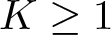 $K\geq 1$ with the following property. If X is a compact c-uniformly perfect and c-uniformly disconnected set in $\mathbb{R}^3$, then there exists a K-quasiregular map $f:\mathbb{R}^3 \to \mathbb{R}^3$ such that $f(X)=\mathcal{C}$.
The next lemma is well known but we give a short proof for the sake of completeness.
Lemma C.2. Let M be a compact connected PL 2-manifold in  $\mathbb{R}^3$. There exists a PL branched covering $g : M \to \partial [0,1]^3$ of degree at least 3.
Proof. Let  $\mathcal{S}_0$ be the boundary of $[0,1]^3$. For each $n\in\mathbb{N}$ let $\mathcal{S}_n$ be the boundary of
 \begin{equation*} \left( [0,2n+1]\times[-2,2] \setminus \bigcup_{i=1}^n [2i-1,2i]\times [-1,1]\right) \times[-1,1] \subset \mathbb{R}^3.\end{equation*}
Let M be a compact connected PL 2-manifold in  $\mathbb{R}^3$. By the Classification Theorem for surfaces in $\mathbb{R}^3$ [Reference Moise16, Section 22] there exists $n\in\mathbb{N}\cup\{0\}$ and a homeomorphism $M \to \mathcal{S}_n$. Since both M and $\mathcal{S}_n$ are PL, there exists a PL homeomorphism $M \to \mathcal{S}_n$.
Fix  $k\in\mathbb{N}$. We construct a degree 2 PL branched covering from $\mathcal{S}_k$ onto $\mathcal{S}_0$. Consider the two planes $P_1 = \{z=0\}$ and $P_2 = \{y=0\}$ which cut $\mathcal{S}_k$ into 4 PL disks $D_1,D_2,D_3, D_4$. Note that $P_1\cap P_2\cap \mathcal{S}_k$ contains exactly $2(k+1)$ many points $\{p_1,\dots,p_{2(k+1)}\}$ and these points are contained on the boundary curve of each Di. We may assume that the pairs $(D_1,D_3)$ and $(D_2,D_4)$ intersect only on the points $\{p_1,\dots,p_{2(k+1)}\}$ while all other pairs intersect on boundary curves. Place now points $\{p_1',\dots,p_{2(k+1)}'\}$ on $(\partial [0,1]^2)\times \{\frac12\}$ oriented in the same way that points $\{p_1,\dots,p_{2(k+1)}\}$ are oriented on the boundary curve of D 1. There exists a 2-to-1 PL branched covering $\mathcal{S}_k \to \mathcal{S}_0$ that maps pi to $p_i'$ for each i, maps $D_1,D_3$ onto $\mathcal{S}_0 \cap \{z\geq \frac12\}$, and maps $D_2,D_4$ onto $\mathcal{S}_0 \cap \{z\leq \frac12\}$.
Thus, we have constructed a PL branched covering from M onto  $\mathcal{S}_0$ which has degree either 1 (if n = 0) or 2 (if $n\geq 1$). To complete the proof, we compose this map with a degree 4 PL branched covering of $\mathcal{S}_0$ onto itself as in Figure C.1.

Figure C.1. A degree 4 PL branched covering of  $\mathcal{S}_0$ onto itself.
We are now ready to prove Theorem C.1.
Proof of Theorem C.1
Let X be a compact c-uniformly perfect and c-uniformly disconnected set in  $\mathbb{R}^3$. Let $\mathcal{W}$, $\{\mathcal{M}_1,\dots,\mathcal{M}_l\}$, $\{\mathcal{N}_1,\dots,\mathcal{N}_q\}$, $\textbf{i}:\mathcal{W} \to \{1,\dots,l\}$, $\textbf{j}:\mathcal{W} \to \{1,\dots,q\}$, and $\{\phi_w\}_{w\in\mathcal{W}}$ be the dictionary, two finite collections of PL manifolds, functions, and similarities as in Lemma 6.1. Following the arguments in the proof of [Reference Badger and Vellis2, Corollary 5.2], we may further assume that $\mathcal{M}_{\textbf{i}(\varepsilon)}$ is a cube.
Let  $\zeta_1,\zeta_2 : \mathbb{R}^3 \to \mathbb{R}^3$ be the similarities $\zeta_1(p) = \frac13 p$ and $\zeta_2(p) = \frac13 p + (\frac23,0,0)$. Note that $\{\zeta_1,\zeta_2\}$ is an iterated function system with attractor the standard Cantor set $\mathcal{C}$. Given a word $u=i_1\cdots i_k \in \{1,2\}^*$ we define $\zeta_{u} = \zeta_{i_1}\circ\cdots\circ \zeta_{i_k}$. Conventionally, we set ζɛ be the identity map.
Set  $Q = [-1/3,4/3]\times[-1,1]^2$. For all $u\in\{1,2\}^*$ and $i\in\{1,2\}$, $\zeta_{ui}(Q) \subset \zeta_{u}(Q)$, $\operatorname{diam}{\zeta_{wi}(Q)} = \frac13\operatorname{diam}{\zeta_w(Q)}$, and
 \begin{align*}
\operatorname{dist}(\zeta_{ui}(Q),\partial \zeta_{u}(Q)) &\geq \tfrac1{15}\operatorname{diam}{\zeta_u(Q)}\\
\operatorname{dist}(\zeta_{u1}(Q),\zeta_{u2}(Q)) &\geq \tfrac1{30}\operatorname{diam}{\zeta_u(Q)}.
\end{align*}
\begin{align*}
\operatorname{dist}(\zeta_{ui}(Q),\partial \zeta_{u}(Q)) &\geq \tfrac1{15}\operatorname{diam}{\zeta_u(Q)}\\
\operatorname{dist}(\zeta_{u1}(Q),\zeta_{u2}(Q)) &\geq \tfrac1{30}\operatorname{diam}{\zeta_u(Q)}.
\end{align*}
For each  $j\in\{1,\dots,q\}$ we define a PL 3-manifold with boundary $\mathcal{Q}_j$ as follows. Fix $j\in \{1,\dots,q\}$ and denote by mj the number of boundary components of $\mathcal{N}_j$. Recall that $m_j \geq 3$. Let kj be the largest integer such that $2^{k_j}+1 \leq m_j$ and consider the following two possible cases.
(i) If
$m_j = 2^{k_j}+1$, then set $\mathcal{Q}_j = Q \setminus \bigcup_{w\in \{1,2\}^{k_j}}\zeta_{w}(Q)$.(ii) If
$2^{k_j} + 1 \lt m_j$, by maximality of kj we also have $2^{k_j +1}+1 \gt m_j$. Fix $v_{j,1},\dots,v_{j,n_j} \in \{1,2\}^{k_j}$ with $n_j=m_j - 2^{k_j}-1$. Define now
\begin{equation*} \mathcal{Q}_j = Q \setminus \left( \bigcup_{u \in \{1,2\}^*\setminus \{v_{j,1},\dots,v_{j,n_j}\}} \zeta_u(Q)\right) \setminus \left(\bigcup_{i=1}^{n_j} \zeta_{v_{j,i}1}(Q) \cup \zeta_{v_{j,i}2}(Q) \right).\end{equation*}


Note that for all  $j\in\{1,\dots,q\}$, $\partial\mathcal{Q}_j$ has exactly as many components as $\partial \mathcal{N}_j$ does.
We define a function  $\textbf{u}:\mathcal{W} \to \{1,2\}^*$ as follows. Define $\textbf{u}(\varepsilon) = \varepsilon$. Suppose now that for some $w\in \mathcal{W}$ we have defined $\textbf{u}(w)$. Recall from Lemma 6.1(P6) that $\mathcal{N}_{\textbf{j}(w)}$ has $N_w+1$ many components. We consider two possible cases.
(i) If
$2^{k_{\textbf{j}(w)}}=N_w$, then set $\{\textbf{u}(wi) : 1\leq i \leq N_w\} = \{\textbf{u}(w)v:v\in \{1,2\}^{k_{\textbf{j}(w)}} \}$.(ii) If
$2^{k_{\textbf{j}(w)}} \lt N_w$, then set
\begin{align*}
\{\textbf{u}(wi) : 1\leq i \leq N_w\} &= \left\{\textbf{u}(w)v : v\in \{1,2\}^{k_{\textbf{j}(w)}}\setminus\{v_{\textbf{j}(w),1},\dots,v_{\textbf{j}(w),n_{\textbf{j}(w)}}\}\right\}\\
&\qquad \cup \bigcup_{i=1}^{n_{\textbf{j}(w)}}\{\textbf{u}(w)v_{\textbf{j}(w),i}1,\textbf{u}(w)v_{\textbf{j}(w),i}2\}.
\end{align*}


It is clear that for any  $w\in \mathcal{W}$ there exists $u\in \{1,2\}^*$ (for example take $u= \textbf{u}(w)$) such that $\zeta_u(Q) \subset \zeta_{\textbf{u}(w)}(Q)$. We claim now that for any $u\in \{1,2\}^*$ there exists $w\in \mathcal{W}$ such that $\zeta_{\textbf{u}(w)}(Q) \subset \zeta_u(Q)$. Assuming the claim, it follows that
 \begin{equation}
\mathcal{C} = \bigcap_{n=1}^{\infty}\bigcup_{u\in \{1,2\}^n}\zeta_{u}(Q) = \bigcap_{n=1}^{\infty}\bigcup_{\substack{w\in \mathcal{W}\\|w|=n}}\zeta_{\textbf{u}(w)}(Q).
\end{equation}
\begin{equation}
\mathcal{C} = \bigcap_{n=1}^{\infty}\bigcup_{u\in \{1,2\}^n}\zeta_{u}(Q) = \bigcap_{n=1}^{\infty}\bigcup_{\substack{w\in \mathcal{W}\\|w|=n}}\zeta_{\textbf{u}(w)}(Q).
\end{equation}
To prove the claim, fix  $u\in \{1,2\}^*$ and let $\mathcal{U}_u = \{w\in \mathcal{W} : \zeta_u(Q) \subset \zeta_{\textbf{u}(w)}(Q)\}$. Clearly, $\varepsilon \in \mathcal{U}_u$. Let $w\in \mathcal{U}_u$ be an element of maximal length. Assume first that $N_w = 2^{k_{\textbf{j}(w)}}$. By maximality of $|w|$, we have that $|u| \gt |\textbf{u}(w)|+ k_{\textbf{j}(w)}$ and it follows that there exists $i\in \{1,\dots,N_w\}$ such that $\zeta_{\textbf{u}(wi)}(Q) \subset \zeta_u(Q)$. Assume now that $N_w \gt 2^{k_{\textbf{j}(w)}}$. If $|u| \leq |\textbf{u}(w)| + k_{\textbf{j}(w)}$, then from design of u, there exists $i\in \{1,\dots,N_w\}$ such that $\zeta_{\textbf{u}(wi)}(Q) \subset \zeta_u(Q)$. If $|u| \gt |\textbf{u}(w)| + k_{\textbf{j}(w)}$, either $\zeta_{u}(Q) \subset \zeta_{\textbf{u}(w)v}(Q)$ for some $v \in \{1,2\}^{k_{\textbf{j}(w)}}\setminus\{v_{\textbf{j}(w),1},\dots,v_{\textbf{j}(w),n_{\textbf{j}(w)}}\}$ which is impossible by maximality of $|w|$, or $\zeta_{u}(Q) \subset \zeta_{\textbf{u}(w)v_{i,n_{\textbf{j}(w)}}}(Q)$ for some $i\in\{1,\dots,n_{\textbf{j}(w)}\}$ which is impossible for the same reason.
By Lemma C.2, for each  $i\in\{1,\dots,l\}$, there exists a PL branched covering $g_i : \partial\mathcal{M}_{i} \to \partial Q$ of degree at least 3. By Theorem 5.4, for each $j\in\{1,\dots,q\}$ there exists a sense-preserving PL branched covering $G_j : \mathcal{N}_j \to \mathcal{Q}_j$.
Finally, we define a quasiregular map  $f:\mathbb{R}^3 \to \mathbb{R}^3$ with $f(X)=\mathcal{C}$. Note that
 \begin{equation*}\mathbb{R}^3 = (\mathbb{R}^3 \setminus \phi_{\varepsilon}(\mathcal{M}_{\textbf{i}(\varepsilon)})) \cup \left( \bigcup_{w\in \mathcal{W}}\phi_{w}(\mathcal{N}_{\textbf{j}(w)}) \right) \cup X.\end{equation*}
Define f so that
(i)
$f| \mathbb{R}^3 \setminus \phi_{\varepsilon}(\mathcal{M}_{\textbf{i}(\varepsilon)}) :\mathbb{R}^3 \setminus \phi_{\varepsilon}(\mathcal{M}_{\textbf{i}(\varepsilon)}) \to \mathbb{R}^3 \setminus Q$ is a PL branched covering with
\begin{equation*} f\circ \phi_{\varepsilon} | \partial \mathcal{M}_{\textbf{i}(\varepsilon)} = g_{\textbf{i}(\varepsilon)},\end{equation*}
(ii) for all
$w \in \mathcal{W}$
\begin{equation*} f| \phi_w(\mathcal{N}_{\textbf{j}(w)}) : \phi_w(\mathcal{N}_{\textbf{j}(w)}) \to \zeta_{\textbf{u}(w)}(\mathcal{Q}_{\textbf{j}(w)})\end{equation*}
with
\begin{equation*}f\circ \phi_{w} | \mathcal{N}_{\textbf{j}(w)} = \zeta_{\textbf{u}(w)} \circ G_{\textbf{j}(w)},\end{equation*}
(iii) if
$x \in X$ and x is the unique point in $\bigcap_{k=1}^{\infty}\phi_{i_1\cdots i_k}(\mathcal{M}_{\textbf{i}(i_1\cdots i_k)})$, then f(x) is the unique point in $\bigcap_{k=1}^{\infty}\zeta_{\textbf{u}(i_1\cdots i_k)}(Q)$.


It is easy to see that f is a quasiregular map since, up to a set of σ-finite  $\mathcal{H}^2$-measure, the map is a PL branched covering made up of a finite collection $\{G_{\textbf{j}(w)}\}_{w\in \mathcal{W}}$ of PL branched coverings. Moreover, by (C.1), $f(X) = \mathcal{C}$.


 Open access

