


Return to Ituura
In February 2022, I returned to Kenya, and made the journey to Ituura from northern Nairobi, similar to the one I had taken alongside Benni and Gikari five years earlier.
Jumping aboard the 106 route, the one that had ferried me between Chungwa and Nairobi so many times before, I climbed into the front passenger seat, and began speaking with the driver in Kiswahili. I told him about my research on land sale in the area. In his early fifties, he told me how he had worked thirteen years as a matatu driver, and in that time, the coffee plantations of Ruaka and Muchatha, just on this side of Nairobi, had disappeared, replaced with concrete high rises. He recited the history of central Kenya, remarking that it was Kikuyu people of Mount Kenya who had first grown coffee, how it had made them wealthy. Now it was all changing, he remarked. With the parents of the current generation passing, younger people were selling land. He told me how that generation had told their sons not to sell, adopting their voices (‘Wakasema, “Usiuze!”’), but how their sons, youth who did not want to struggle (hawataki kuchomeka) were doing so anyway. He told me how he himself could never bring himself to sell his land, how it was meant to be passed onward, through one’s family.
When he dropped me off at Ituura, I gave him 200 KSh, and he told me to go with the blessing of God. I climbed out of the vehicle and began making my way up the small path that led towards the homestead of Paul Kimani. My last visit had been in 2019, when things had hardly changed from the year before when I ended my doctoral research proper. Now, I was returning after a pandemic and the death of Catherine, whose voice would no longer be heard around the homestead.
I made the mistake of visiting the old house, the wooden house in which the family had dwelt throughout my original fieldwork. Njoki, now twenty-one, came to find me, informing me on the spot that they had finally moved into Kimani’s stone house, the move spurred by Murigi (Chapter 6). I had walked past it, barely realising it was inhabited. To me, it still appeared as half-built as it had in 2017. Though now it had a metal roof.
When Njoki took me inside, I was met by Mwaura’s wife, Foi, and their two-year-old daughter, Mary, who immediately hid from me. Mwaura was out, and Njoki began explaining to me that even though they had moved, they still lacked electricity and were travelling uphill to the old house to charge their phones. Without lighting, the house’s exposed concrete interior was dark, its newly fitted windows covered by tarpaulin rather than curtains.
Mwaura soon arrived, no longer the student I had known before but a father who had been out earning a living, though he remained vague about precisely how. He greeted his daughter happily. In the absence of his own father, the house felt as though it could have been his. After I gave his small daughter the gifts I had brought from the UK, Mwaura became somewhat direct. He asked me about Paul Kimani, and what I thought of him. I asked him to elaborate.
He explained that neither he nor Njoki had seen him since October 2021. ‘He never stops by anymore’, Mwaura began, launching into a tirade against his father. ‘The thing is, he’s useless.’ Mwaura meant that he barely offered any economic support. He explained that it was Njoki’s wages as a hairdresser that had supported the family during the pandemic, paying for the windows on the house that was not hers, enabling them to finally move. Kimani himself had spent much of late 2020 and early 2021 at home, completely broke.
It was only from their neighbours that Mwaura and Njoki had found out about his father’s second marriage. They had heard that the second wife was ‘from around’, though they had no notion of where she lived. In the knowledge that his father had a second wife, one that he continued to hide from them, Mwaura scorned his father’s neglect. As he saw it, Kimani’s claim to be broke was a lame excuse for the fact that his money was going to his second family. His hidden son was now four and a half, meaning that the affair had begun in 2018, when I was in the middle of my doctoral research. This was also at the same time Kimani was claiming to me in our discussions that he had been forbidden by his father from taking a second wife, because it was not good to support two families. His claims, at the time, to have been desperately hustling for money to support his family, seemed as hollow now to me as they did to Mwaura. That Catherine’s economic networks had allowed the family to finish the roof of the house threw into relief the fact that it was she who had supported the family throughout my doctoral fieldwork, and her work acquiring loans that had put Mwaura through university.
With Catherine gone, Mwaura was increasingly alone. Catherine’s sisters who lived nearby barely offered any help. Their frequent visits to the homestead in 2017 and 2018 had stopped. Mwaura felt angry. ‘Even then we could see how useless they were. But we didn’t want to see it. They were taking advantage of Catherine’s generosity. Ann didn’t even come to the burial!’ ‘Useless’ had become a term he now frequently used to describe others who had let him down, the friends and family he felt unable to rely on in the wake of his family’s breakdown. He felt the pressure of his education, the prestige it had once earned him turned into shame as he struggled to find even the most basic of jobs. His hopes of working for an non-governmental organisation or for the government gone, Mwaura spent time idling at his homestead while his peers from similar backgrounds had begun to achieve the economic ‘stability’ to which he aspired.
Struggling for ‘Stability’
Elaborating Mwaura’s fate in the aftermath of his graduation – his struggles to become economically ‘stable’ – this final chapter concludes the book’s central arguments about the pauperiation of young men at the edge of the city. Mwaura had depended upon Catherine. But her death left his future at the mercy of his father, whose new relationship began to take precedence. Kimani rarely appeared at the homestead, and never provided Mwaura with money. Instead, Kimani began to sell off parts of his ancestral land – precisely what he claimed he would never do back in 2018.
With no Catherine to leverage her economic networks and an absentee father, Mwaura was forced to contend with a future that was radically at odds with what he had hoped for back when my fieldwork began and when he had started university. He clung on to aspirations of becoming a landlord on the outskirts of the city. But on my return to Ituura in 2022, it became clear that he had turned to drink, consuming spirits in the evenings he spent outside of the house before returning to the homestead penniless, relying upon his wife Foi, whose work as a cleaner supported the household. Mwaura took few steps to hide his drinking from me, and frequently asked me if ‘we go take one cup’, a reference to the keg beer we had drunk so often in the past.
In our conversations, Mwaura lamented his failure to ‘progress himself’ economically, and considered leaving the neighbourhood, a place he associated with the destitution of his peers. In particular, he was beset by a nagging feeling that he could not ‘progress’ if he remained in Ituura, a feeling sharpened by witnessing the land disputes of other families, the deaths of his friends, and his own entry into circles of local men who spent large amounts of their income on alcohol. As he struggled to accept the reality of his downward social mobility, Mwaura began to feel like a failure.
In light of the changes my interlocutors had been through since 2019, this chapter explores the way they attached meaning to their lives amidst turbulent economic conditions and downward social mobility. By 2022, in the wake of the Covid-19 shutdowns, young men in Ituura struggled to hold onto jobs or to find piecemeal work. In the wake of these hardships, they were forced to learn how to ‘live within limits’ (Jackson Reference Jackson2011: 61). Their challenge was not only to practically impose ‘some measure of order and stability on their lives’ (Adebanwi Reference Adebanwi2017: 6), despite these changing economic conditions, but to find a way to give meaning to their predicament and the realisation that they would struggle to live the kinds of middle-class lives they hoped for.
The question I ask concerns how these men contend with their full entry into the informal economy as full-time proletarians, rather than part-time ones like their fathers. Can one existentially accept downward mobility? This chapter shows how such a movement was provoked not only by job losses and post-pandemic economic malaise but also by land conflict within the family. It captures the dissolution of relations between fathers and sons in Ituura over the sale of land.
Lee, who we met in Chapter 2, celebrated his own capacities to make his life successful through perseverance and struggle, advocating his peers to leave their homesteads and ‘push themselves’ towards the future by embracing risk and possible economic insecurity. Yet, when we discover that Lee himself had been a victim of his own father’s sale of ancestral land, his story of perseverance begins to look rather less positive, and far more necessary – a way of making one’s life and work meaningful in the absence of landed security. For others, however, faith in the idea that labour could make one successful had already been lost. With limited options, Mwaura ultimately decided to remain on his father’s land, even though he resented his father’s sale of his own future inheritance. An alternative discourse is offered by Gathu, again who we met in Chapter 2 celebrating his work ethic. By 2022, Gathu had discovered the difficulties of an independent economic life, having lost his job during the Covid-19 pandemic. In his view, the only way to move forward in life was to accept ‘there is only starting at the bottom’ – in other words, that a long journey of economising lay ahead, that there were no ‘short cuts’. The ‘connection’ Mwaura waited for, would never arrive.
In making these final arguments, the chapter speaks to discussions of downward social mobility in Africa and the struggle to ‘belong to the future’ (Smith Reference Smith2019) of a more prosperous Africa, glimpsed on the horizon in the form of Nairobi. It illustrates material and mental struggles to make economic life liveable, feel like a success rather than a failure, and contend with the immense constraints upon one’s capacity to ‘make it’ to middle-class status.
Broken Lines
My return to Ituura in February 2022 had been with the idea of interviewing people for this book. I wanted to deepen what had been a rough history of central Kenya’s proletarianisation with the voices of an older generation. As Chapter 1 might already have suggested, I wanted to map longer-term intergenerational shifts in wealth, showing precisely how a respected mzee like Njeru and his stone house could coexist in Ituura with the likes of Ikinya and Stevoh, representatives of a younger generation in a state of impoverishment. I wanted to understand in subjective terms – drawing on the memories of elders – how livelihoods had changed, how the options available to the older generation in terms of land and employment had since dried up, leaving a destitute and landless youth.
Conducting these interviews in the company of Mwaura, who acted as a social broker as he had so many times during my doctoral research, raised questions and observations for him as much as me. When we sat with Njeru, the seventy-two-year-old elder, under the avocado tree in his beautiful compound, Mwaura took the interview into his own hands, asking Njeru directly what made him ‘so disciplined’ compared to his own generation. Njeru, whose evident success had appeared to come from careful saving, his employment as a teacher, and his wife’s presence and assistance back on his farm while he had been away working, pointed towards the corporal discipline that had been common amongst his and his father’s generation. ‘I cannot discipline your child, can I?’, Njeru asked Mwaura. ‘No’, Mwaura responded.
However, neither of us were satisfied with Njeru’s explanation. Bereft of answers, we left the interview wondering. ‘Their dads cooked alcohol in the house, and they never went and took it’, Mwaura claimed, as we walked down the path towards the Motel to watch Premier League football. He romanticised another era in which alcohol had been the preserve of self-disciplined elders. ‘Where did the levels go?’, he asked, in a pained tone that expressed his inability to explain the generational shift he saw before him. According to Mwaura, at some unspecified point, these ‘levels’, standards of masculine discipline, had buckled.
As we walked, Mwaura began to wonder where his neighbourhood would be in five years’ time. He told me how crime had since risen in Ruaka due to the pandemic, that it was no longer safe. He told me how Ikinya was trading in scrap metal, a sign of desperation in an economy defined by a rising cost of living, itself produced by a mixture of the Covid-19 pandemic and a rise in global commodity prices. He told me how bananas from his land had been stolen, and avocados from the plots of others. ‘The crime rate is increasing. If you look at Chungwa, the number of youth you find there idling …’ Sheer desperation was shaping an economy of crime and hopelessness.
It was not just these interviews that provoked Mwaura to describe this landscape of destitution, however. Events that had unfolded since we had last met, specifically the death of Stevoh, were also to blame.
In September 2019, Stevoh had taken his life at the age of twenty-seven. Residing in the UK at the time, Mwaura’s sister Njoki had told me with a simple message on WhatsApp. ‘Peter, it’s so sad. Stevoh has hung himself.’ In messages exchanged with Mwaura, I learnt how the death had shocked the neighbourhood. Known for his drinking, Stevoh had nonetheless been a popular character, because of his gregarious spirit and his catchphrases (‘Very risky!’) repeated by other youth from the neighbourhood, not least Mwaura. He had always frequented bars across Chungwa and Ruaka and was often bought drinks by members of his network of acquaintances and friends, sometimes soliciting them, as we saw in Chapter 2. After his death, his mother was barely seen in public. His father, John Thairu, drank endlessly. It was difficult for anyone to imagine why he would have done what he did. His sister Jata and his older brother Sancho posted photographs of him on Facebook almost every day, wishing him a less troubled afterlife now that he had reached God’s side.
Suicide amongst young men is now slowly becoming recognised as a major issue in central Kenya, the product of a mental health crisis, its own roots in the economic pressure men feel to live up to normative notions of success in a context of relative poverty (BBC Africa 2019; Muiriri Reference Muiruri2021). We have seen so me examples of this pressure to succeed already, especially amongst young men in Chapter 2 and in Mwaura’s case in Chapter 4.
However, within Stevoh’s family, his death was understood in relation to a struggle for their land. On 19 October 2019, Sancho made a post on his Facebook account. This time it was not a photograph of Stevoh, but a piece of text. Lying on my bed in Cambridge, idly scrolling through my Facebook timeline, I happened upon it. The text read:
May all those women who call themselves grandmothers and later bewitch their stepchildren because of wealth and property lot [rot] in hell and the children follow in return. My Good lord please give them a beating as well so that they can repent and the whole world can understand they are just hyenas hiding in your house with a bunch of fake prayers and testimonies. In God we trust. Amen
With Stevoh’s face appearing as Sancho’s profile picture, the words had the effect of appearing as his own from beyond the grave. As I understood it, Sancho’s message was an accusation that his step-grandmother had killed Stevoh through occult means. In 2019, I already knew about the dispute. It began in 2018, during my fieldwork, when two of Stevoh’s uncles had died barely two months apart.
Watene had died of a sudden heart attack in February at the relatively young age of forty-seven. I had attended the funeral then, and it was a sombre occasion. As was typical for a burial (mathiko), it was a neighbourhood affair. People struggled to find shade under Chungwa plants in the fierce sunlight, crowding into the garden (shamba) that belonged to Watene’s wider family. After the service had ended, the Anglican priests having preached in elevated tones about Watene’s transcendence, food was served and Mwaura, Stevoh, his cousin Daniel, and I all retreated into Stevoh’s small house (thingĩra) to eat the food that had been served together – potatoes, peas, and fried cabbage stewed with goat’s meat and served with rice and chapati. Mwaura and I had run into Stevoh on the streets of Chungwa a few days before, and Stevoh had appeared sober, melancholic. Now we were drinking Kenya Cane spirit together in the seclusion of his thingĩra. Shortly afterwards, Daniel drove us to Chungwa and I bought us a large bottle of Kenya Cane to share. Daniel drove with his friend Kamau riding shotgun. Squeezed into the back of the car, Stevoh, Mwaura, and I poured the Kenya Cane into the bottle’s cap. I winced at its harshness. Stevoh barely batted an eyelid.
Barely two months later in April, Watene’s younger brother Donald was hit by a car and killed. Once again, the neighbourhood gathered in the grounds of Stevoh’s father John Thairu’s stone house, amongst the maize plants and Chungwa trees, to bury another of his brothers. I stood amongst other local men at the ‘digging’ (kwenja irima) the day before the funeral as they spoke, sometimes in harsh tones, about this less-known younger brother of Watene, an alcoholic who had apparently tried his luck one too many times – or so they said – crossing the road carelessly at night.
It was only later that I began to hear speculation about how residents of Ituura understood the misfortune had befallen the family. I first heard it by pure happenstance, walking home from football training with teammates who also lived in Ituura. In vague terms, they elaborated the story in so far as they had heard it: John, Donald, and Watene’s father had taken a house girl into his home after the death of his own wife in order to help raise his young sons. Such practices were not uncommon, and mothers I knew in Ituura also took house girls into their homes to help with childcare while they went out to work. In this case, however, the father began a romantic relationship with the house girl in question, and his sons came to treat her as his mother. But the two never married and, eventually, the (anonymous and unknown to me and long deceased) father decided to end their relationship, evicting her from his home. The house girl, having invested so much labour into the homestead and her former partner’s children, claimed that she ought to have earned a portion of land. But since she, in her view, had been ‘denied’ (as my friends who told me the story put it) what was rightfully hers, she had resorted to witchcraft (ũrogi) to take revenge upon those who had once practically been her kin. She had vowed to kill the family’s men one by one, my friends told me.
‘Let’s call a spade a spade’, Sancho said replying to well-wishers on Facebook telling him to exercise restraint as he added further lines to his aforementioned post. ‘Let the devil be ashamed’, he added. ‘I can understand why my dad always warned us not to be next. But her days are numbered.’
Stevoh’s death hit Mwaura hard. His presence in Ituura throughout 2017 and 2018 had been of great comfort to Mwaura during his months spent idle on the homestead, waiting for university to restart. The two had spent hours watching movies together, talking about local gossip, and finding common experience in their joblessness. It was Stevoh’s character that had lifted Mwaura’s spirits, his joking demeanour, his capacity to tell stories of his adventures in the area. His death was the result of a depression that his drinking had concealed, Mwaura having so often seen it as a mode of having fun rather than a sign of something else.
Worse was to come for Stevoh’s family in 2022, when his father John Thairu was discovered dead at the Motel on a morning in February. Visiting Ituura at the time, I was with Mwaura when the news broke. After remaining locked in the Motel overnight, having been unable to return home due to his drunken state, John Thairu had been found dead the next day from a suspected heart attack.
For some Ituura dwellers, it confirmed the rumours that had spread since the death of Watene in 2018 about the vengeful step-mother. Speaking with Roy in the following days, the story emerged that Thairu had been having an affair with another woman in the area. When his wife had found out, she stopped cooking for him, and Thairu could regularly be found taking food at kibandas (roadside food stalls) in the area. Roy speculated his health had been affected by his wife not feeding him. ‘How can you not cook for him?’, he asked, appalled.
For men like Mwaura, Thairu’s death had a more mundane origin. We had bumped into him only days earlier, and Thairu had spoken proudly about Jata’s move to the United States. Reflecting back on encounter, Mwaura realised that ‘He didn’t look good.’ For Mwaura, the cause was his drinking.
Thairu’s loss was the loss of a father figure in Mwaura’s life, and he missed John Thairu in a similar way to Stevoh. ‘Let us remember some great men’, Mwaura wrote on WhatsApp two days later, posting an image of Stevoh and his father standing side by side at the Motel when they had worked together for a while selling soup. Through his presence at the Motel and in other drinking establishments, John regularly spoke to his son’s young friends like Mwaura. Mwaura explained how Thairu had been far less emotionally distant than Kimani, more relatable through his sheer presence in the neighbourhood. ‘He was someone I could tell my problems to’, Mwaura insisted. When Mwaura and I broke the news to his estranged father, Kimani, over the phone, he also insisted that Thairu had been a ‘good man’ (mtu mzuri) who had had no ill with anyone (‘hana mbaya na mtu’). The phone call ended with Kimani asking me for money, by then a common experience. I avoided making any promises. What money I had, I intended for Mwaura.
Shaken by Thairu’s death, and watching other families riven by tensions over land, Mwaura himself wondered about what would happen to him if his father were to die while living with his new wife in Namanga. Mwaura believed that if his new step-mother filed the death certificate, she would be able to take control of Kimani’s assets. ‘If Kimani drops dead in Namanga, it will be she who takes him to the mortuary’, he insisted. The fact of Kimani’s new family had created a genuine concern for Mwaura, who knew that his young step-brother would at least be entitled to some of his father’s land, eating into his own inheritance.
Mwaura had reasons to be anxious about the threats posed by unknown relatives. As we saw in Chapter 6, the dispute with his uncle Murigi had transformed relations in his extended patrilineal family. In August 2022, he practically ignored Murigi when the latter greeted me, a sign of how much things had changed for Mwaura in Ituura since my arrival in 2017. Even to the extent such intra-family rivalries had once been contained, now it was a relationship of outright mistrust.
While Mwaura insisted that no one could challenge his rights to inheritance as Kimani’s son, he also anticipated the conflict it might cause if his father did eventually reveal his second wife and second son, and if he came to settle them in Ituura. ‘I don’t like this land dispute stuff so much’, Mwaura told me the same day I arrived in February 2022. Knowing that Ituura no longer guaranteed him a secure home in the same way, he had begun to imagine a future away from his patrilineal neighbourhood.
He continued, ‘Actually, I’m thinking of going somewhere else.’ Mwaura’s plans to go to Saudi Arabia for work in 2020 had only fallen through because of Catherine’s untimely illness and then death.
‘No otherwise’
While he anticipated future land disputes, Mwaura’s growing desire to leave Ituura was also a response to a feeling that his presence in the neighbourhood’s circles of masculine sociability was having an increasingly destructive effect upon his life and future.
Back in 2019, when I had returned to Ituura for the first time after my initial fieldwork between January 2017 and July 2018, Mwaura had recently graduated from university and complained of his inability to find a job. He and Jata remarked that finding a job in Nairobi required a ‘connection’, a relationship with someone well-placed enough to influence hiring. Mwaura hoped to find one such ‘connection’ through others in the neighbourhood, but he became angry that the parents of his friends could not offer him any ‘opportunity’ for work, just as he had when Nyambura failed to provide him with work at her car wash. He applied to hundreds of jobs and received no replies. Since graduating from university, Mwaura had experienced a palpable failure, having worked in Kitui for a short time at a chicken factory before returning to the homestead in 2020 with his new young wife, Foi, then pregnant.
While Mwaura struggled, his peers from the neighbourhood had jumped ahead of him. In 2021, Roy’s fortunes were changing. He had built a new house for himself through careful saving. Knowing that his work was sporadic, and that he might be tempted to spend it, he decided to purchase building materials as soon as he was paid. ‘It takes sacrifice’, he remarked. ‘Having to succeed when you’re in mjengos [construction work] is really hard ‘cause the job isn’t guaranteed. You can go for two days then boom, the work is over. It comes with the seasons, so it becomes hard to fulfil that.’ Meanwhile, he had put his short-term spending on hold, and he told me how he had ‘quit ladies’ ‘for a while’ at least.
With his university education a palpable reminder of what was meant to be a life of prosperity, Mwaura could not help comparing his destitute situation to those of his friends who had remained in the neighbourhood. In 2021, he told me by WhatsApp message how,
On my side, pressure is even double trouble. Because at the moment I have people who are friends around here, but right now they are very happy to see me going for construction jobs and then, when you are working, they are talking about saying he’s a graduate and still he’s doing these petty jobs. You know, your level of life. Like, my level of life is fucking low. Like, you can see the room I’m living in and I have a family. To me success means everything. Like, not really success but stability. You know when you’re not even stable it’s even worse. So to the people of Ituura success means everything. I mean, Kamiti has a new house. He built some very nice house the other day. So you see people can start comparing you. He’s gone to university, this one has never been, he went to college. The pressure is there. The pressure is everything. Success if everything. Success is your identity over here. Success is not measured in knowledge or philosophy. Success is measured in terms of physical stuff. What can you show us you have? So, it’s like that.
For Mwaura, fatherhood and graduation had brought success into closer view, cranking-up the pressure he felt to succeed. Despite having a wife and child, he was then living in his small corrugated-iron cube, a dwelling he knew was unfit for a family. What’s more, he felt shame in the eyes of his father.
Sometimes PK [Paul Kimani], when we’re having deep conversations I feel like he’s like grieving that I don’t have a job. That he’s gotten me to the point he’s gotten me and I’m still jobless. Like, I can’t help anything. You feel like he’s stressing a lot. Like he can’t say it but I can always tell he expects more from me. After sacrificing all that [work and money] for me to acquire a degree then I’m expected to reciprocate by building a good house for him and myself too.
As we walked that day in February, remarking upon the struggles of others like Ikinya, our conversation took a stark turn towards his present situation.
‘Even us youth’, he went on, ‘I mean, ach, man! I mean, seriously, what do you think of my situation?’ I walked beside him, stunned by the question. Trying to relate to his predicament through my own post-graduation unemployment in the UK, I encouraged him to hold fast, that he was still proverbially ‘alive’, still trying.
‘I mean, I’ve not wasted myself’, he agreed. ‘But I’m not able to go forward. I’m not going backwards. I’m just here. I mean, since you were last here I’ve done nothing. I’ve not progressed. I only have a new phone and you’re the one who got me the new phone.’
‘I mean, I’ve fucked up’, he continued, ‘putting more pressure on myself by getting married this young’. He compared his situation to Roy, just a couple of years older than himself, unmarried, and now building his first home. ‘He looks so cool. He looks relaxed. If I wasn’t married, I’d be cool.’
That day happened his wife Foi’s graduation from a college course in IT. Unable to provide for a graduation ceremony, she had returned to her parents’ homestead, taking the young Mary with her. Mwaura felt this palpably, and was left home alone, ‘contemplating my life’, as he put it, until we had met up to watch football.
‘Yesterday, Foi went home, Njoki went to her friends yesterday. I was at home thinking about my life and I was like, “Have I made any progress?”’
His stresses were real and material, he dreamed of a move that would help him solve his problems, relieving the economic pressure he felt and allow him to provide a better life for his family. He told me of his plans to move away from Ituura, that his uncle Gakuru (his father’s older brother) was telling him to ‘dream big’, to leave the neighbourhood and ‘start over’,
He was telling me, ‘Stop staying in one closet! Think bigger!’ Because, even when you move from here to another place, God has to bless you because when you around people who know you, they don’t help you. When you are among strangers they want to help you.
‘People who you’ve grown up with just hold you back’, he explained. There was a need to get out, to escape – especially from the circles of young men in which he found himself. Family disputes were hardly the only danger of staying in the neighbourhood. The true danger was far more mundane, and he felt himself to be falling into a trap of short-term spending within groups of his local male peers.
While Mwaura kept hold of his dreams, he continued hanging around hopelessly in the neighbourhood spending small bits of cash on games of pool and bottles of hard spirit. Drawing towards social circles of local men who spent time gambling, Mwaura’s main focus when I arrived in February 2022 was on eating pork, and spending what little money he possessed on cups of ‘keg’ (Figure 7.1). As I came to understand only later, he was descending into alcoholism himself, and his marriage was suffering as he spent money outside of the house.
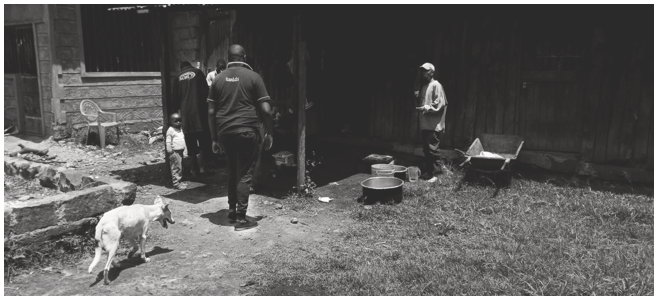
Figure 7.1 Searching for keg with Mwaura 2022
Figure 7.1Long description
A tall, heavy-set man in a black polo shirt approaches a homestead. To his left a dog walks behind him. A little girl stands in the yard. Ahead of him, in the shadows, two men are preparing cooked pork from a slaughtered pig. Another man stands to the right of the image in front of a wooden outbuilding, his visage concealed in shadow under the brightness of the sun.
Labour Theory and Downward Social Mobility
In the wake of Catherine’s death and Kimani’s change of priorities, Mwaura clung on to the status that his position as a landed son of a patrilineal family afforded him. He spent time hanging out at the car wash that had been constructed on the land his father leased to the business owner. At the car wash, Mwaura could feign the status of a landlord, but he had no income to spend on the grilled goat’s meat that was sold there.
It was hanging out there in March 2022 sharing a portion of goat that I asked him whether he would ever consider work on one of the nearby tea plantations. He scoffed. ‘Man, those are like some shit jobs our parents used to do!’ His university education had been promised something more – better paying work in an office. But his family’s status had also shaped his perspective on his future. As we saw in Chapter 3, he already felt his family ought to be stable. He felt he ought to be middle-class, and that it was his father’s responsibility to create ‘generational wealth’ at the site of the homestead, building rental plots that he himself could manage in years to come. He believed that his family ought to have been wealthy, and that passing on wealth was the proper order of things.
Mwaura’s struggle raises the question of how young Kenyans make their lives in the informal economy liveable – especially for those who had aspired to middle-class lives, and now had to accept their dim horizons. In Chapter 2 we saw the moral ideas through which the future was invested with hope – the economising logics through which men like Roy held on to the future. Discourses of labour, of effort and ingenuity, elevated economic necessity to the status of virtue. But some more actively adopted these discourses than others.
If the years since 2019 had been a disaster for Mwaura, the relative few from his peer group who had ‘gone ahead’ to experience a modicum of success loudly and proudly valorised their own efforts. Another member of the Star Boyz team, Lee, was one such figure. Originally from Ituura, he had left his father’s home in 2015 to rent in nearby Chungwa town in an act of independence that he saw as a sign of maturity. Throughout my fieldwork we had bonded through our regular walks to and from football training, speaking about Kenya’s politics and the ‘jealousy’ of his peers, one of Lee’s frequent topics of discussion (Lockwood Reference Lockwood2023b). When we met again in 2022, however he emphasised the significance of breaking free from the confines of the neighbourhood, and the family jealousies that had forced him to move away.
He emphasised the need to put ‘pressure’ on oneself in order to strive for a better life. ‘I would rather you wake up in the morning and go look for job than I see you sitting on the couch the whole day’, he told me. He contrasted his success with the ‘laziness’ of those like Mwaura, who failed to leave the neighbourhood. That he was renting in Chungwa was a sign of his capacity to stand on his own two feet. He attacked men like Mwaura who were not ‘serious’ about their lives. ‘Women like to see their men with hope, men who have dreams, hardworking men. Have you ever seen a very ugly man with a very beautiful wife?’, he asked. ‘Most of the time, that man has made it in life. Women like people who push.’
Lee advocated effort as a solution for his peers’ issues, and he put the latter down to the ‘comfort’ of living on the patrilineal homestead. ‘There is no pressure’, he explained,
Also you see, you have land, ancestral land. So you are comfortable. At least you have something. So if you get something today you don’t care about tomorrow. I think that’s why they are lazy.
Lee said that he had tried to instil a labour ethic in his friends, but had failed, purchasing them medical masks to sell at bus stations during the pandemic. ‘I have tried to tell them it doesn’t matter what job you do’, he told me.
I’ve done waitress, I’ve sold headbands at Ruaka. I would rather make a few shillings every day than stay home. I like being productive. As a man you are not supposed to be like that.
He felt that the only thing that mattered to his peers was generating cash for short-term spending, to go on ‘those road trips’, popular amongst young people in Kenya – renting a matatu minibus and travelling from bar to bar throughout the central highlands while taking photos for social media. By contrast, his willingness to do any sort of job was a sign of his masculinity. ‘If you don’t look for a solution it means you are comfortable. As for me, I am not comfortable staying without money.’
Yet in the context of the post-pandemic cost-of-living crisis, new cracks were opening within the hegemony of this labour theory of virtue, and new criticisms launched at its clearly absurd pretence to success through low-paid work. If Lee celebrated himself, others explicitly recognised the difficulties of ‘making it’ in an economy of land and cash scarcity, where visceral encounters with one’s own hopelessness were always threatening. Gathu, who we met in Chapter 2 when he was condemning his peers in Star Boyz for their laziness, was looking at things differently, sympathetically, in 2022. For him, the apparent failure of men like Mwaura was not a product of their laziness, but of their unmet expectations for the middle-class futures that the terms of the economy had denied them. ‘They say that being a graduate is like a curse’, he told me, since graduates ‘don’t want to start from the bottom’. ‘They are waiting for those working-class jobs’, he said, speaking of the white-collar office jobs in Nairobi that were likely to receive thousands of applications. ‘Those working-class jobs aren’t there.’
‘Then the hopelessness gets them’, he continued. ‘You want to fit [with friends who have money].’ The problem of youth alcoholism, he could now see, might begin as one of competitive spending without the means (as we saw in Chapter 5), but ended up as addiction.
Everyone has those big dreams. There comes a time when we have to start at the bottom. Most of us we don’t want to accept. There’s only starting from the bottom.
Gathu’s labour ethic had no imaginary of future wealth, but simply acknowledged the necessity of slow labour as a means to hanging on to dreams of a better future. After losing his job spraying pesticides at a flower farm during the Covid-19 pandemic, Gathu’s plan was to start a barbershop (kinyozi) business, a source of income that he could control and which he hoped would allow him to begin a family. He pointed to other men from Ituura’s surroundings who had lost their way, emphasising to me the deleterious effects of the Covid-19 pandemic on livelihoods.
One man who never got to see his dreams lived out was Kanja who we met in Chapter 2. A member of the Star Boyz team, he became one of my closest friends throughout 2018 when we spent hours together watching the World Cup in the Motel along with Roy, Gathu and Mwaura. When I returned to train with Star Boyz in 2022, I found that the team had changed. Its fans remarked that the players were no longer ‘serious’, that they were more interested in drinking alcohol and chewing mũgũũka than working on their fitness. Star Boyz were no longer registered with the local league because the players could not raise the fees required. Instead, they had been reduced to playing one-off ‘friendly’ matches with local rivals. I could see that the players were less committed, and their one-time captain and chief organiser Wanjonyi was no longer there, having migrated to another, more organised team in the area. One player whose former focus had remarkably drifted was Kanja. In 2018, he rarely missed training and worked hard to establish himself as a first-choice name for the team during its most successful season. Returning to the training ground in February 2022, I could not help but notice his bloodshot eyes, his slurred voice, the odour of hard spirits. The extended stretches of unemployment Kanja experienced throughout the pandemic, the months of going without work and money, had taken their toll. I sat with him and the team, waiting for their opponents who never turned up.
I continued to spend time with Kanja and his younger brother Gĩthire throughout my visit that year, often watching football at the motel, sometimes training together at the football ground. After arriving home in the UK, I was told by friends that Kanja had died of suspected alcohol poisoning, caused by spirits distilled by his friend using equipment from a local high school. Kanja had apparently woken up in the night complaining of stomachache. He died in his parents’ small rental unit, close to Ituura.
Breaking the Patrilineal Contract
For Mwaura, the pursuit of a better future was catastrophically undermined by his father’s establishment of a separate marriage and household from 2018 onwards. His father rarely returned to the homestead, and regularly rang him asking to borrow money. Their economic relationship had inverted. To Mwaura, it was Kimani who had become ‘useless’.
Worse was to come in late 2022 when Kimani sold a piece of his land – much of Mwaura’s inheritance – for 3.5 million KSh. At first glance, Kimani had made the sale out of sheer economic desperation: to service a loan he had failed to repay. Ostensibly the loan had been taken out for the repair of his lorry that he used to transport goods from Tanzania to Nairobi – his main source of income. Kimani claimed that the bank had threatened him with repossession of his entire plot of land since he had used his freehold title deed as collateral. In order to sell the land, Kimani required the consent of Mwaura and his sister Njoki, and he convinced them by stressing the urgent need to service his debts yet promising them a share of the sale. As Mwaura told me in 2022:
My issue was if he didn’t sell that part of the land then the whole land would have been auctioned by the bank because the collateral he used was the title deed. So it was a case of losing little or losing all. PK was like, ‘If you don’t sign, now the bank will come and take the land.’ So he put us in a very tricky situation so I had no otherwise.
To Mwaura, Kimani had promised 400,000 KSh so that he could purchase a Nissan minivan he could turn into a source of income, employing a driver and a tout to work it for him in the local transport economy. Mwaura consented to the sale. But shortly afterwards, Mwaura found – through glimpsing Kimani’s text messages on his phone – that part of the loan was siphoned off to Kimani’s new wife. Mwaura’s wife Foi saw men taking photos of the house, fuelling suspicions he had taken another mortgage.
Soon, Mwaura had discovered through a local land broker that Kimani had held conversations to explore selling more of his ancestral land, specifically part of it that he was already leasing to the proprietor of a car wash ‘if he could get 10 million shillings’. Kimani’s land was at the roadside, an attractive prospect for buyers. The buyer of the plot sold for 3.5 million KSh planned to turn the plot into rental housing aimed at the expanding demographic of city commuters, moving to the periphery of Nairobi from further afield to access economic opportunities and live independently.
In 2022, Kimani continued to claim that he had not been paid by the land buyer. The delays gave rise to Mwaura’s jaded, disappointed perspective we saw at the book’s opening and a growing recognition that he would likely never see the money transferred to him. Mwaura questioned Kimani’s morality. ‘What would you make of him as a man?’, he asked me. Mwaura explained that Kimani had essentially sold the very part of the land he had been allocated for his future inheritance.
From the word go, before selling land, the way Kimani sold land he should have already shown me my part of the land which is like my inheritance: ‘This is your part, this is Njoki’s part, and this is the other part and that’s the part I’m selling.’ That’s what should happen but now Kimani hasn’t done anything about that. He just sold land. He’s not talking about the money. I’m not sure, he’s saying they’ve not paid him the whole amount. Like, he had told me where my piece of land is but having sold part of the part which he had showed. What does that mean? It means he wasn’t serious about whatever he was saying.
Now Kimani hid his money and his marriage from Mwaura, who had only found out about his father’s affair through neighbours. From Mwaura’s perspective, it seemed that his father’s wealth was being enjoyed by his new wife. ‘Man, she’ll bleed him dry!’ Mwaura felt his father had ‘sold cheap’, desperately so, and wondered about what would happen – whether the kĩrumi would come for him. Mwaura experienced the collapse of the bonds with his father bitterly. He argued that ‘PK has nothing to show for the whole time he has worked’, that he had failed to become successful through work and, therefore, like Njeru, he was sacrificing his inheritance to access the good life in the present. His father’s second marriage amplified his feeling that the old were eating the young – that despite their narratives of economic responsibility and their labour ethic, they were the ones pauperising his generation.
It was only later that I realised Mwaura’s comments about the soup-seller at the beginning of this book encapsulated his anxiety that senior men could make landless paupers of their children through land sale geared towards their own ‘selfishness’. Older men vilified his generation for their short-term vision, but his critique turned the tables on them by pointing out a visible dereliction of duty, a deviation from patrilineal discourse. From this perspective, it was not by choice that his own generation were consumerist and lacked durable values. They were being put in the very position by older men reneging on their obligations:
Like even if selling land is the only solution, what will we sell when we come of age ‘cause they’ll have sold all the land?
PL: So what will you do?
Nothing! These guys are selling land [then they] hang around for a few years, spend all the cash then just die without leaving nothing like generational wealth.
If Mwaura’s life had been rapidly upended, heightening the precarity he had experienced since graduating, he was hardly the only youth in this situation. For all his moralising, Lee had been rendered landless by his father, who had sold his own ancestral home in Ituura before moving away to Kinangop, further into rural central Kenya.
Lee rarely spoke about this. It took me years to realise this had happened to him, and even then, he often emphasised the positive impact that it had had on his life – that it forced him to confront the necessity of work, to ‘grow’ as a man, and ‘progress’ economically. It was only later that Lee explained to me the dramatic impact it had had on him, the loss of home and future. ‘Letting go of a place I grew up in, and going to a total new place that we were unfamiliar with, was my hardest part’, he told me. When his father sold, he had done so unilaterally. ‘I didn’t sign anything’, Lee explained. ‘Neither did we agree as a family. He just decided alone.’
‘Personally, I was so mad’, he continued. I had asked him how it had happened that his father had sold without his consent. ‘You know, Kikuyu parents are dictators’, he told me. ‘Their word is usually final. I didn’t get any share [of the proceeds] despite asking for money to start a business.’ In the wake of his father’s betrayal, Lee insisted upon his resolve to find success without his father’s help. ‘My goal is to make it on my own.’
The loss of land could be catastrophic for young men. ‘It’s a big disaster’, Roy explained to me in 2022:
because now youth are renting and if he [a youth] has a family he has to work extra hard to buy his own land. It helps a lot when you have land. Even if you don’t have a job, you can use that land for cash crops or even for food.
Roy opened my eyes to precisely how many children lived in fear of their parents selling land. In his case, his father had died years before my fieldwork started and he stuck doggedly to the determination to hang on to his land as his father had told him. ‘Selling have never crossed my mind. I can never sell, no matter what.’
The labour theory of virtue espoused by men like Lee did not only provide meaning for a life lived working amidst economic uncertainty. In the case of some senior men, it also obscured the very fact that they had sold land to project middle-class status by enabling them to build stone houses. As I noted in Chapter 1, Njeru, for all his moralising about the predicament of young men, had done precisely this. In early 2022, I found that Mwaura was extremely critical, calling the mzee and others like him ‘selfish’ for putting their own desire to ‘be comfortable’ over the creation of what he called ‘generational wealth’. He gestured to a nearby home, that of his new friend Ronaldo, a construction worker to whom he had become a close friend in those years I was away.
Man, these elderly people are selfish. Someone like Ronaldo’s grandfather – he sold land and never did anything. They just sell land, spend money til it’s over, then sell some other land. Like Kimani. These days he does nothing, goes for one trip then the truck breaks down, then the truck is in the garage for a month, all that time he’s spending. They’re very selfish people. You know, you can sell land to build some plots your children will benefit from when you’re gone. They’re just selling land and spending money, that’s their problem.
He described a ‘misfortune’ that such senior men were ‘bringing on themselves’, a reference to the irumi that he believed were blighting them, including Kimani.
However, Mwaura had hardly escaped unscathed. In October 2022, Mwaura told me of the mental health struggles he had suffered that year, hanging on to hope in the wake of his family’s breakdown.
Man, I was fucked up. Every employment opportunity was breaking down in the middle. I could have easily become an alcoholic then. But I was just hanging in there. So when you came, it helped with my mental health.
In those months when I returned, we spent time together watching football, visiting friends, and drinking late into the night with other members of the Star Boyz team like Roy – all the things we had done years earlier in 2017, both of us younger, our outlooks optimistic. In 2022, again with my help, Mwaura obtained a motorcycle, once more beginning a new line of work as a boda-boda taxi driver. ‘I can sort of see the light at the end of the tunnel’, he remarked then.
However, in the aftermath of my visit, his marriage would break down. Unable to support his wife Foi and his young daughter, Mwaura took to drinking. Foi described the loss of Mwaura’s land as a turning point in their relationship, the point at which his depression intensified and so too his drinking. But rather than Mwaura and his drinking alone, she found fault with his father Kimani who had ruined his life. ‘They are reckless’, she said of Ituura’s older generation of men selling land at the expense of their children, reprising her former husband’s criticism. ‘Na tamaa ya pesa sana [and the strong desire for money], plus the influence from women. It’s so sad for real’, she continued, speaking of Mwaura’s destitution. ‘You get to see him [Kimani] enjoying life while you guys suffer, he doesn’t even bother to maybe kuwaekea job ata [to help you get a job or anything].’ The last time she had been at the homestead, he had taken out new loans using the land as collateral, and Mwaura had seen money transfers from Kimani to his new wife on his mobile phone. ‘I mean, he’s having a good time with her. I don’t think he ever thinks about Catherine at all.’
Rather than leaving Ituura, Mwaura remained on his dwindling plot of land, carrying out small-scale chicken farming like so many of the peri-urban ‘hustlers’ of his neighbourhood. He clung onto his aspirations for building his own rental plots one day, but he suspected Kimani would sell more of his land.
Conclusion
The necessity of embracing life in the informal economy, ‘starting from the bottom’, recaptures the profound economic shift operating in the background of this book’s ethnographic focus on particular travails – the transformation of a landed proletariat into virtual paupers struggling to acquire work and materially support a family, nothing less than the pursuit of upstanding masculinity yet under pressing conditions.
In his contribution to the Kenya Debate, Apollo L. Njonjo (1981: 37) argued that the former dwellers of the African reserves were becoming a ‘working class with patches of land’. Their plots too small to farm, they were forced to rely on wages from Nairobi or further afield. The long-term effects of colonial-era alienation had been a landscape of proletarianisation. In the wake of further subdivision and limited options to make a good living from the informal economy, Kiambu’s younger generation become not so much workers with plots, but ‘paupers without plots’ (Denning Reference Denning2010), struggling for work and respectability within a landscape where so many others have ‘given up’. This is not simply a dynamic of proletarianisation, but pauperisation.
This chapter illustrates the way this process is unfolding within the patrilineal family – that, for those living at the sharp end of such change, their precarity is intensified by the dissolution of the patrilineal contract, the failure of kinship’s moral economy; that fathers sell land at the expense of their sons. Young men like Mwaura lost their dreams of middle-class lives, of becoming landed rentiers. Ituura’s residents remained close to Nairobi, yet fundamentally outside its expanding rungs of urban prosperity. Their aspirations of becoming wealth rentiers were shot, and instead they were forced to derive their incomes from labour in the informal economy. Against this backdrop, this chapter has observed the various ways in which young men did or did not make their peace with this predicament. Lee stuck to his beliefs, and his success afforded him pride. Roy embraced humility, a slow economising towards house and adulthood. Gathu acknowledged there was only ‘starting at the bottom’.
For his part, Mwaura struggled not to ‘give up’ or ‘waste himself’, despite the disappointment of his hopes for a better life and the hopes he possessed at the beginning of this book’s narrative in early 2017. This was not simply a disappointment in himself and his failure to find work, but a disappointment in the relations of kinship and even the neighbourhood – that so few of his late mother’s friends and relatives had stepped in to support him, that his father had betrayed him. Mwaura felt he had few options. Unable to publicly oppose Kimani, subject to the latter’s power to dispose of the land as he wished, Mwaura’s criticism of him was muted. His growing depression throughout 2022 was a response to this contradiction, to the realisation that not only was his education unable to pave the way to a better future, but that the bonds of kinship had also failed to live up to their promise.

 Open access