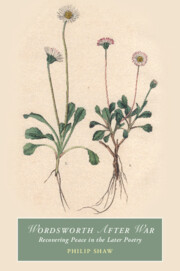

William Wordsworth's later poetry complicates possibilities of life and art in war's aftermath. This illuminating study provides new perspectives and reveals how his work following the end of the revolutionary and Napoleonic wars reflects a passionate, lifelong engagement with the poetics and politics of peace. Focusing on works from between 1814 and 1822, Philip Shaw constructs a unique and compelling account of how Wordsworth, in both his ongoing poetic output and in his revisions to earlier works, sought to modify, refute, and sometimes sustain his early engagement with these issues as both an artist and a political thinker. In an engaging style, Shaw reorients our understanding of the later writings of a major British poet and the post-war literary culture in which his reputation was forged. This title is part of the Flip it Open Programme and may also be available Open Access. Check our website Cambridge Core for details.
‘… this is a book of richly detailed readings of lesser-known poems that consistently illuminates their inner tensions by reconstructing the personal and public contexts in which they were written and read. ’
Tim Fulford Source: The Charles and Mary Lamb Journal
Loading metrics...
* Views captured on Cambridge Core between #date#. This data will be updated every 24 hours.
Usage data cannot currently be displayed.
This section outlines the accessibility features of this content - including support for screen readers, full keyboard navigation and high-contrast display options. This may not be relevant for you.
Accessibility compliance for the PDF of this book is currently unknown and may be updated in the future.
