
Skip to main content Accessibility help
×
  • Cited by 2
    • Show more authors
    • You may already have access via personal or institutional login
    • Select format
    • Publisher:
      Cambridge University Press
      Publication date:
      08 February 2010
      13 December 1997
      ISBN:
      9780511570087
      9780521563413
      9780521060202
      Dimensions:
      (228 x 152 mm)
      Weight & Pages:
      0.645kg, 348 Pages
      Dimensions:
      (228 x 152 mm)
      Weight & Pages:
      0.551kg, 348 Pages
    You may already have access via personal or institutional login
  • Selected: Digital
    Add to cart View cart Buy from Cambridge.org

    Book description

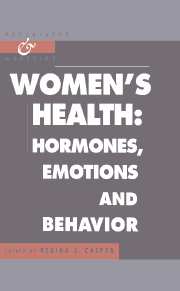
    This book offers an overview of the complex interplay between hormonal activation and individual and environmental influences in health and disease in women. The book provides useful information and background material important for treating problems related to the reproductive cycle, eating disorders, drug treatment of women, and clinical and treatment issues in coronary artery disease and breast cancer. This is a medically oriented book written firstly for the practising physician in primary care, psychiatry, internal medicine and gynaecology and obstetrics.

    Reviews

    "...a 'must read' for all mental health professionals, both women and men. Women's Health: Hormones, Emotions and Behavior is well written and informative, but not overly detailed. It covers the important areas and keeps the reader's attention throughout...a high level of readability, comprehensiveness and up-to-date thinking on a common theme...the readership will emerge not only with knowledge but also with wisdom." Mary V. Seeman, Journal of Psychiatry & Neuroscience

    "The editor (who is also a contributor) has assembled an ambitious book...Physicias dealing with women's health will no doubt find useful information in every chapter..." Doody's Health Sciences Book Review Journal

    "...an ambitious book....usable and staightforward....those who regularly treat women in practice should find the book a useful update of current knowledge." Shirley Hartlage, PhD, Doody's Health Sciences Book Review Journal

    "This carefully researched and well written book provides an up-to-date review of the complex interplay between hormones and environment, and the effects of hormones on women's emotions and behavior." Psychosomatic Medicine

    Refine List

    Actions for selected content:

    Select all | Deselect all
    • View selected items
    • Export citations
    • Download PDF (zip)
    • Save to Kindle
    • Save to Dropbox
    • Save to Google Drive

    Save Search

    You can save your searches here and later view and run them again in "My saved searches".

    Please provide a title, maximum of 40 characters.
    ×

    Contents

    • 1 - Growing up female
      pp 1-13
    • View abstract

      Summary

      Population statistics consistently record more male than female human births, the outcome of significantly higher conception rate for males. This chapter presents a necessarily abbreviated account of normal female somatic and psychological development. Sex determination for some time has been known to be under the control of an X-specific gene. It appears that a region of chromosome Xp2i affects sexual differentiation. Speed of growth is fastest from the beginning of conception to birth and thereafter declines gradually, except during the adolescent growth spurt. In any society, a child lives with individuals of all types and ages, classified into female and male, who are conspicuous by their primary sex characteristics. Puberty reflects maturation of the hypothalamic-pituitary-gonadal axis, a process that begins early in fetal life. Hypothalamic luteinizing hormone-releasing hormone (LHRH) neurons originated in the olfactory epithelial placode and from there migrated via the forebrain to the hypothalamus.
    • 2 - Reproduction and its psychopathology
      pp 14-35
    • View abstract

      Summary

      Early writers, such as Hippocrates, saw the womb as the seat of emotions and invoked the image of the wandering womb as stirring up emotions in women. Estrogen and progesterone are lipophilic steroid hormones that directly and indirectly affect central nervous system neurons involved in the regulation of mood and cognition. In light of the findings from animal studies, investigators set out with much optimism to identify hormonal changes in blood, and rarely in cerebrospinal fluid (CSF), to establish relationships to the symptoms reported in premenstrual dysphoric disorder (PDD). Several studies have reported that prevalence rates for depressive disorders during pregnancy are similar to those in non-pregnant women. The postpartum blues are experienced by 39-85 percent of women. Classically, the blues begin between 3 to 5 days after delivery with mood lability, sleep disturbances, fatigue, and problems with memory and concentration.
    • 3 - Women's sexual function and dysfunction
      pp 36-52
    • View abstract

      Summary

      Female sexuality was hidden in mystique even from women, who were educated by husbands who usually knew less than they did. Infertility was blamed on the wife. Due to sexual abuse concerns and AIDS prevention, public school programs and textbooks of the 1990s usually provide an accurate sex education. Many sexual inaccuracies and modern myths, however, are learned from peers, soap operas, X-rated magazines, cable TV, or videocassettes. Sexual dysfunctions may exist in about 50 percent of marriages. Sexual changes range from great relief to be free of menses to shock at late-age pregnancy due to persistent ovulation. A woman may feel desperate about satisfying her partner. She may attempt or complete suicide. Therefore, the question about suicidal feelings must always be asked and not be trivialized. A suicidal woman needs psychiatric consultation and care.
    • 4 - Gender differences in brain morphology and in psychiatric disorders
      pp 53-82
    • View abstract

      Summary

      Epidemiologic and clinical studies in psychiatry consistently reveal gender-based differences in the prevalence and manifestations of certain psychiatric disorders. In the context of normal variability and overlap among individuals of either sex, the brains of men and women demonstrate relatively consistent structural and functional differences. The study of gender differences in psychiatric illnesses is in its nascent stages. Better understanding of the epidemiologic and clinical characteristics distinguishing men and women with similar psychiatric conditions will help to identify predisposing factors and appropriate treatment methods for both sex. The anxiety disorders include generalized anxiety disorder (GAD), panic disorder, agoraphobia, social phobia, specific phobia, posttraumatic stress disorder (PTSD), and obsessive-compulsive disorder (OCD). As a group, the anxiety disorders constitute the most prevalent psychiatric conditions among both men and women, with estimated lifetime prevalence rate of 25-44 percent. Somatization disorder, once referred to as hysteria, is regarded as typically affecting women.
    • 5 - Thyroid hormones in major depressive disorder and bipolar disorder
      pp 83-108
    • View abstract

      Summary

      The principal hormones of the hypothalamic-pituitary-thyroid (HPT) axis are thyroxine (T) and triiodothyronine (T), the latter being the more potent biologically. Thyroid structure and function undergo subtle changes during the human life cycle. Thyroid hormone deficiency during fetal life does not appear to affect growth and maturation, suggesting that brain development in utero is not significantly thyroid dependent. The earliest sign that patients may develop hypothyroidism is a rise in serum thyroid-stimulating hormone (TSH), associated initially with normal thyroid hormone values. Asymptomatic auto-immune thyroiditis, based on the evidence of circulating thyroid antibodies with normal thyroid function, is common, particularly in older women. In adult women, hypothyroidism results in menorrhagia, anovulation, and an increase in fetal wastage. Peripheral thyroid hormone concentrations were assessed in acutely depressed patients and compared to normal controls, euthymic patients, or both; the results are equivocal. Depression is associated with disturbances in circadian behavioral and biologic rhythms.
    • 6 - The hypothalamic-pituitary-adrenocortical system
      pp 109-121
    • View abstract

      Summary

      The hypothalamic-pituitary-adrenal (HPA) axis has undoubtedly received more psychobiologic scrutiny than any other endocrine axis. Historically, one rationale for the intensive study of adrenocortical function in patients with primary psychiatric disorders was the observation that patients with primary endocrine disorders such as Addison's disease or Cushing's syndrome exhibited a higher than expected psychiatric morbidity. The most intensive scrutiny of the HPA axis has been conducted in patients with major depression. Cushing's syndrome, due to prolonged exposure to excessive Cortisol or other related glucocorticoids, is accompanied by psychiatric symptoms of anxiety and/or depression that generally remit with diminution of abnormal glucocorticoid concentrations. Despite the higher incidence of depression in women than men and the purportedly increased occurrence of depression during and after menopause, the hypothalamic-pituitary-gonadal (HPG) axis has received relatively little scrutiny in patients with mood disorders.
    • 7 - The cost of starvation: Eating disorders
      pp 122-149
    • View abstract

      Summary

      Overconsumption of food has led to an increase in the incidence of obesity, non-insulin-dependent diabetes mellitus, hypertension, cardiovascular diseases, and eating disorders. This chapter familiarizes professionals with the clinical picture and the medical and endocrine consequences of the two eating disorders. Historical records have shown that prolonged food abstinence severe enough to induce significant weight loss, such as religious fasting in the middle Ages or chronic infectious and gastrointestinal diseases, the latter common among women in the late 19th century, can precede the psychological and behavioral symptomatology of anorexia nervosa (AN). Pathologic weight loss leading to a starved and eventually skeleton-like appearance is the hallmark of AN. Bulimia nervosa (BN) is an eating disorder characterized by episodic binge eating most often followed by vomiting. BN develops in adolescents or young women who aspire to a lower than normal ideal weight but has difficulty dieting.
    • 8 - Coronary artery disease and women: Estrogens and psychosocial and lifestyle risk factors
      pp 150-165
    • View abstract

      Summary

      Cardiovascular disease is the leading cause of death in women as it is in men. The lower incidence of coronary artery disease (CAD) in young and middle-aged women compared to men has led to the exclusion of women from nearly all randomized controlled studies on risk factors, treatment, and outcome from coronary heart disease (CHD). Among women aged 55-65, mortality rates from CHD triple compared to those aged 45-55, and after the seventh decade, the rate of CHD for women equals that of men. Since women have been included in trials, coronary risk factors similar to those for men have emerged, even though the onset of clinical CHD is delayed by 10-20 years in women compared to men. The lower CHD risk in premenopausal women has been attributed to the beneficial effects of estrogen on lipoprotein profiles. Furthermore, levels of reproductive hormones affect the magnitude of stress responses.
    • 9 - The psychophysiology of breast cancer: Disease, hormones, immunity, and stress
      pp 166-191
    • View abstract

      Summary

      Breast cancer is a public health problem in the United States, with an estimated 182,000 new cases occurring in women in 1994. For most women, a diagnosis of breast cancer marks the beginning of a lifelong struggle. The disease and treatments become physical-psychological stressors whose effects linger long after the individual is tumor-free. This chapter examines the inherent psychosocial stressors that accompany a cancer diagnosis and the psychophysiologic effects that may occur as a result of these stressors. The physiologic and psychological stressors have been shown to profoundly influence neuroimmunoendocrine functioning. Some recent evidence indicates that psychosocial interventions designed to alleviate the cancer patients distress may affect disease progression and survival time, as well as improve quality of life. Three domains that may play a role in moderating health outcome are personality and coping characteristics, level of emotional expression, and social support.
    • 10 - The psychopharmacology of women
      pp 192-218
    • View abstract

      Summary

      Women are the principal recipients and have been shown to be the major consumers of drugs. This chapter presents an overview of psychopharmacologic issues relevant to women. It first considers the evidence for sex-related influences on drug disposition, absorption, distribution, and metabolism from studies in humans. It then provides an overview of drug safety during pregnancy and breast-feeding. The chapter lists the most commonly reported malformations attributed to psychotropic drugs taken during the first trimester. It also discusses the information from studies that have examined gender differences in treatment response to antidepressant and antipsychotic drugs. Basic science research has shown that estrogens modulate several of the neurotransmitter systems implicated in psychiatric disorders: they down-regulate beta-adrenergic and serotonin receptors, they have cholinergic trophic effects and they show dopamine antagonist activity. The chapter concludes with a brief summary of some of the studies describing age effects on pharmacokinetics.
    • 11 - Intervention trials concerned with disease prevention in women
      pp 219-242
    • View abstract

      Summary

      This chapter describes some prophylactic trials concerned with hormone replacement therapy. It first discusses the postmenopausal estrogen/progestin interventions trial (PEPI), which provides much useful information for women trying to decide whether to use hormone replacement therapy and which regimen to use. The chapter then describes the Women's Health Initiative of long-term effects of a low-fat dietary pattern, hormone replacement therapy, and calcium/vitamin D supplements on the incidence of several diseases, and the Heart Estrogen/progestin Replacement Study (HERS) to prevent recurrence of coronary heart disease. Overall goals of the Women's Health Initiative are to test means of reducing the risk for cardiovascular disease, breast cancer, colorectal cancer, and osteoporotic fractures in women. Finally, the chapter briefly mentions the Nurses' Health Study, which although not a randomized trial, has provided an enormous amount of information on risk factors for diseases in women.

    Metrics

    Altmetric attention score

    Full text views

    Total number of HTML views: 0
    Total number of PDF views: 0 *
    Loading metrics...

    Book summary page views

    Total views: 0 *
    Loading metrics...

    * Views captured on Cambridge Core between #date#. This data will be updated every 24 hours.

    Usage data cannot currently be displayed.

    Accessibility standard: Unknown

    Why this information is here

    This section outlines the accessibility features of this content - including support for screen readers, full keyboard navigation and high-contrast display options. This may not be relevant for you.

    Accessibility Information

    Accessibility compliance for the PDF of this book is currently unknown and may be updated in the future.
