
Skip to main content Accessibility help
×
  • Cited by 4
    • Show more authors
    • You may already have access via personal or institutional login
    • Select format
    • Publisher:
      Cambridge University Press
      Publication date:
      24 March 2023
      23 March 2023
      ISBN:
      9781009180450
      9781009180467
      Dimensions:
      (229 x 152 mm)
      Weight & Pages:
      0.9kg, 482 Pages
      Dimensions:
      Weight & Pages:
    You may already have access via personal or institutional login
  • Selected: Digital
    Add to cart View cart Buy from Cambridge.org

    Book description

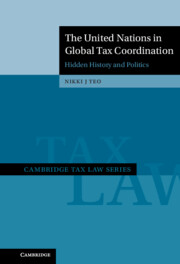
    The United Nations in Global Tax Coordination fills the decade-long knowledge gap in international tax history concerning the UN Fiscal Commission, which functioned as the overarching fiscal authority during the early post-World War II economic order. With insights from political economy and international relations scholarship, this critical archival examination chronicles the tenacious activism by post-colonial developing countries to preserve source taxation rights, and by the UN Secretariat in championing the development of equitable tax rules. Such activism would ultimately lead developed countries to oust the UN as a forum for international tax norm setting. The book includes a revealing prehistory of the wartime work of the League of Nations that questions the legitimacy of the Mexico Model, the first model tax convention between developed and developing countries. This expertly researched work is essential reading for understanding the roles of politics, states, secretariats and private actors in directing global tax coordination.

    Awards

    Short-listed, 2024 Frans Vanistendael Award for International Tax Law, International Bureau of Fiscal Documentation

    Reviews

    ‘Recent developments at the United Nations will no doubt spark intense interest and research into the work of the UN Group of Experts. Teo’s book provides an exemplar of how this research can be done and the importance of going beyond the minutes of meetings and official reports and publications. The strength of Teo’s book lies in her painstaking coverage of the relevant political circumstances and related developments which enable a complete understanding of the Fiscal Commission’s work during the relevant period. While the movement to shift the development of global tax standards from the OECD to the UN presents an obvious relevance to Teo’s book, the book will be of interest also to scholars of international tax history, international governance, and international organisations.’

    Sunita Jogarajan Source: British Tax Review

    Refine List

    Actions for selected content:

    Select all | Deselect all
    • View selected items
    • Export citations
    • Download PDF (zip)
    • Save to Kindle
    • Save to Dropbox
    • Save to Google Drive

    Save Search

    You can save your searches here and later view and run them again in "My saved searches".

    Please provide a title, maximum of 40 characters.
    ×

    Contents


    Page 1 of 2


    Page 1 of 2


    Metrics

    Altmetric attention score

    Full text views

    Total number of HTML views: 0
    Total number of PDF views: 0 *
    Loading metrics...

    Book summary page views

    Total views: 0 *
    Loading metrics...

    * Views captured on Cambridge Core between #date#. This data will be updated every 24 hours.

    Usage data cannot currently be displayed.

    Accessibility standard: Unknown

    Why this information is here

    This section outlines the accessibility features of this content - including support for screen readers, full keyboard navigation and high-contrast display options. This may not be relevant for you.

    Accessibility Information

    Accessibility compliance for the PDF of this book is currently unknown and may be updated in the future.
