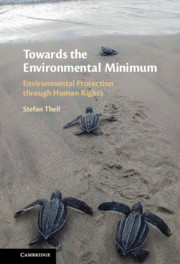

Pervasive environmental harm that disproportionately impacts vulnerable members of society is left largely unregulated across the globe despite existing legal commitments to human rights and environmental protection in many states. To address this shortcoming, Stefan Theil proposes a new normative framework for environmental protection through human rights law. In clear and accessible prose, he demonstrates how such a human rights-based approach can strengthen environmental protection without requiring radical departures from established protection regimes and legal principles. The environmental minimum developed in the book translates the general and abstract commitments of states into specific and practical measures that protect the environment. The framework develops the doctrine of international, regional, and domestic courts, analysed through an innovative approach that improves contextual awareness. This book is thus a valuable resource for lawyers, social scientists, political theorists, environmental and human rights advocates.
Loading metrics...
* Views captured on Cambridge Core between #date#. This data will be updated every 24 hours.
Usage data cannot currently be displayed.
This section outlines the accessibility features of this content - including support for screen readers, full keyboard navigation and high-contrast display options. This may not be relevant for you.
Accessibility compliance for the PDF of this book is currently unknown and may be updated in the future.
