
Skip to main content Accessibility help
×
  • Cited by 2
    • Show more authors
    • You may already have access via personal or institutional login
    • Select format
    • Publisher:
      Cambridge University Press
      Publication date:
      June 2021
      July 2021
      ISBN:
      9781108989718
      9781108839273
      9781108970563
      Dimensions:
      (229 x 152 mm)
      Weight & Pages:
      0.55kg, 264 Pages
      Dimensions:
      (229 x 152 mm)
      Weight & Pages:
      0.41kg, 264 Pages
    You may already have access via personal or institutional login
  • Selected: Digital
    Add to cart View cart Buy from Cambridge.org

    Book description

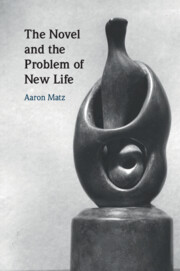
    The novel since the nineteenth century has displayed a thorny ambivalence toward the question of having children. In its representation of human vitality it can seem to promote the giving of life, but again and again it betrays a nagging doubt about the moral implications of procreation. The Novel and the Problem of New Life identifies this tension as a defining quality of the modern British and European novel. Beginning with the procreative-skeptical writings of Flaubert, Butler, and Hardy, then turning to the high modernist work of Lawrence, Woolf, and Huxley, and culminating in the postwar fiction of Lessing and others, this book chronicles the history of the novel as it came to accommodate greater misgivings about the morality of reproduction. This is the first study to examine in literature a problem that has long troubled philosophers, environmental thinkers, and so many people in everyday life.

    Reviews

    ‘… Matz’s fresh take on familiar classics, makes The Novel and the Problem of New Life potentially appealing to a general, nonacademic audience … As a piece of original research, the book also makes compelling contributions to a range of fields, including Victorian and genre studies … Matz reveals here a rich countertradition of procreative skepticism, running in parallel to the marriage plot and even supplanting it as the characteristic fiction of its era.’

    Lindsay Wilhelm Source: Los Angeles Review of Books

    ‘… learned and engaging … Matz offers a valuable genealogy for a contemporary conception of fiction as embodying our responsibility to an uncertain future.’

    Matthew Rowlinson Source: MLQ: A Journal of Literary History

    Refine List

    Actions for selected content:

    Select all | Deselect all
    • View selected items
    • Export citations
    • Download PDF (zip)
    • Save to Kindle
    • Save to Dropbox
    • Save to Google Drive

    Save Search

    You can save your searches here and later view and run them again in "My saved searches".

    Please provide a title, maximum of 40 characters.
    ×

    Contents

    Metrics

    Altmetric attention score

    Full text views

    Total number of HTML views: 0
    Total number of PDF views: 0 *
    Loading metrics...

    Book summary page views

    Total views: 0 *
    Loading metrics...

    * Views captured on Cambridge Core between #date#. This data will be updated every 24 hours.

    Usage data cannot currently be displayed.

    Accessibility standard: Unknown

    Why this information is here

    This section outlines the accessibility features of this content - including support for screen readers, full keyboard navigation and high-contrast display options. This may not be relevant for you.

    Accessibility Information

    Accessibility compliance for the PDF of this book is currently unknown and may be updated in the future.
