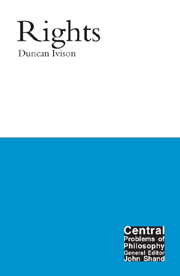

The language of rights pervades modern social and political discourse, yet there is deep disagreement amongst citizens, politicians and philosophers about just what rights are. In this comprehensive and engaging introduction to rights, Duncan Ivison pays particular attention to their political character: the way arguments about rights are characterized by disagreement and conflict and by movement between the moral and the legal and the abstract and the practical. Ivison presents three basic ways of thinking about rights as statuses, instruments and conduits and, drawing on the history of political thought and contemporary political theory, explores the different ways these frameworks shape particular theories of rights. He uses some of the current debates over the threat of global terrorism to explore the nature of rights, especially those civil and political rights at the heart of liberal democracy. Various critiques of rights Marxist, postmodernist and feminist are examined and the book concludes by exploring what, exactly, we should want from a theory of human rights today and what role this theory should play in global politics. The book offers a distinctive integration of history and theory as applied to questions about the nature of rights today and is ideally suited for students taking courses on moral and political philosophy, political theory and the history of political thought.
"An excellent introduction for students and an original and compelling account of rights."
David Owen
Loading metrics...
* Views captured on Cambridge Core between #date#. This data will be updated every 24 hours.
Usage data cannot currently be displayed.
This section outlines the accessibility features of this content - including support for screen readers, full keyboard navigation and high-contrast display options. This may not be relevant for you.
Accessibility compliance for the PDF of this book is currently unknown and may be updated in the future.
