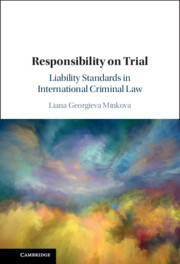

Establishing individual criminal responsibility for mass atrocities is the foundational principle of international criminal justice, but this process is highly complex, and is accompanied by political and legal dilemmas about its operation. The book examines the drafting, interpretation, and application of the rules for assessing individual criminal responsibility as those rules emerge from the intense contestations among judges, lawyers, and academics within the legal field. Focusing on the International Criminal Court (ICC), the book provides a rich analysis of the international debates around questions of criminal responsibility by interrogating formal legal documents and legal scholarship alongside more candid accounts (interviews, memoirs, minutes). These debates are of key importance for international criminal law and global justice because how criminal responsibility laws are construed in practice determines which conduct merits punishment and, ultimately, demarcates the boundaries of what are considered the 'gravest' acts that 'shock' humanity.
Loading metrics...
* Views captured on Cambridge Core between #date#. This data will be updated every 24 hours.
Usage data cannot currently be displayed.
This section outlines the accessibility features of this content - including support for screen readers, full keyboard navigation and high-contrast display options. This may not be relevant for you.
Accessibility compliance for the PDF of this book is currently unknown and may be updated in the future.
