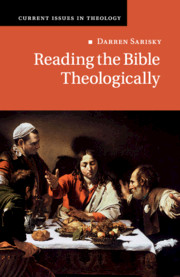

Theological interpretation of the Bible is one of the most significant debates within theology today. Yet what exactly is theological reading? Darren Sarisky proposes that it requires identification of the reader via a theological anthropology; an understanding of the text as a collection of signs; and reading the text with a view toward engaging with what it says of transcendence. Accounts of theological reading do not often give explicit focus to the place of the reader, but this work seeks to redress this neglect. Sarisky examines Augustine's approach to the Bible and how his theological insights into the reader and the text generate an aim for interpretation, which is fulfilled by fitting reading strategies. He also engages with Spinoza, showing that theological exegesis contrasts not with approaches that take history seriously, but with naturalistic approaches to reading.
‘Sarisky’s account of reading the Bible theologically is rich and textured, and it reflects some important points that are becoming common across a range of contemporary thinkers. Attention not only to texts but to readers and contexts as well is clearly articulated in this constructive account.’
Myk Habets Source: Modern Theology
‘… this book will go a long way toward helping scholars and students reframe the debate, moving away from theology versus history and thinking instead of how a historical reading of Scripture is transformed when it is approached theologically instead of naturalistically.’
Austin Stevenson Source: International Journal of Systematic Theology
Loading metrics...
* Views captured on Cambridge Core between #date#. This data will be updated every 24 hours.
Usage data cannot currently be displayed.
This section outlines the accessibility features of this content - including support for screen readers, full keyboard navigation and high-contrast display options. This may not be relevant for you.
Accessibility compliance for the PDF of this book is currently unknown and may be updated in the future.
