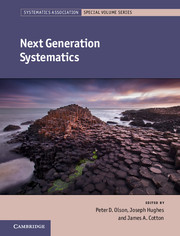

We live in an age of ubiquitous genomics. Next generation sequencing (NGS) technology, both widely adopted and advancing at pace, has transformed the data landscape, opening up an enormous source of heritable characters to the comparative biologist. Its impact on systematics, like many other fields of biology, has been felt throughout its breadth: from defining species boundaries to estimating their evolutionary histories. This volume examines the broad range of ways in which NGS data are being used in systematics and in the fields that it underpins, from biodiversity prospecting to evo-devo. Experts in their fields draw on contemporary case studies to demonstrate state-of-the-art applications of NGS data. These, along with novel analyses, comprehensive reviews and lively perspectives, are combined to produce an authoritative account of contemporary issues in systematics that have been impacted by the adoption of NGS.
'… the book provides a very good overview of how the field of systematics is being shaped by the impact of a promising technology. In focusing on the major achievements and the challenges ahead it conveys a realistic vision for the future. One that has the potential to motivate many readers to embrace these approaches or to focus on solving the mentioned challenges.'
Toni Gabaldón Source: The Quarterly Review of Biology
Loading metrics...
* Views captured on Cambridge Core between #date#. This data will be updated every 24 hours.
Usage data cannot currently be displayed.
This section outlines the accessibility features of this content - including support for screen readers, full keyboard navigation and high-contrast display options. This may not be relevant for you.
Accessibility compliance for the PDF of this book is currently unknown and may be updated in the future.
