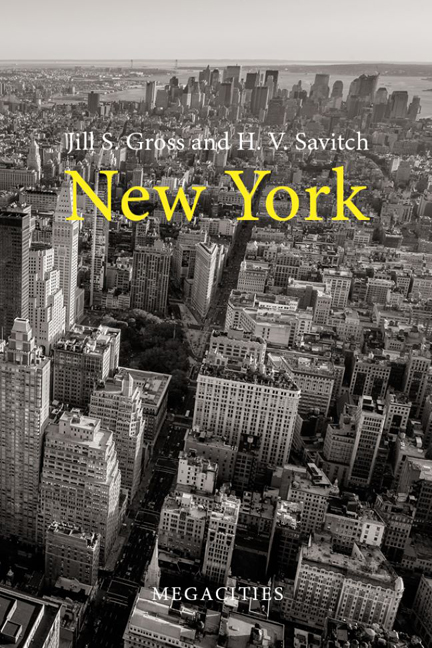

New York became the world's first megacity in the 1930s. Since then it has remained the largest city in North America but, globally, it has been surpassed in size by the younger cities of Asia. Nevertheless its metropolitan area is home to 20 million people and it continues to be America's premier city.
The authors examine the New York metropolis through the lens of a series of twenty-first century pressures related to demography, economic growth, urban development, governance, immigration, leadership and globalization. How New York's institutions and policies have either risen to meet these challenges, stagnated in the face of them, or simply failed to resolve them is the focus of the book. In particular, the authors examine the municipality of New York City and how it navigates the increasingly complex battles with higher levels of government over rights to the city and resource needs.
The book examines the shifting tides of corporate centered development, particularly the vibrant financial sector, and how it has leveraged its powerful geopolitical position in the global economy to continue to grow. The question of governance is explored along with the growing reliance on public-private partnerships to manage megacity problems. Mayoral control and leadership are fundamental to meeting the needs of the residential population along with the demands of business. With over three million immigrants, New York is the most diverse city in North America, but it is also among the most segregated. The authors investigate the positive and negative outcomes that such diversity brings.
Loading metrics...
* Views captured on Cambridge Core between #date#. This data will be updated every 24 hours.
Usage data cannot currently be displayed.
This section outlines the accessibility features of this content - including support for screen readers, full keyboard navigation and high-contrast display options. This may not be relevant for you.
Accessibility compliance for the PDF of this book is currently unknown and may be updated in the future.
