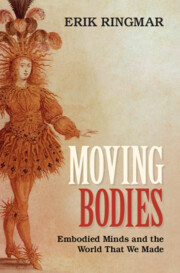

Increasingly we have come to live in our heads, leaving our bodies behind. The consequences have been far-reaching, of which cognitive theory has warned us, advocating a 'return to the body.' This book employs several case studies-kings performing in ballets, sea captains dancing with natives, nationalists engaged in gymnastics exercises-to demonstrate what has been lost and what could be gained by a more embodied approach to living, to history. These curious movements were ways to be, to think, to know, to imagine, and to will. They highlight the limits of historical explanations focusing on cultural factors and question currently fashionable 'cultural' and 'post-modern' perspectives. Bodies, cognitive theory tells us, are the same regardless of historical context, and they engage in the same intentional activities. Returning to our bodies and their movements enables us not only to explain historical actions anew, but also to understand ourselves better.
Loading metrics...
* Views captured on Cambridge Core between #date#. This data will be updated every 24 hours.
Usage data cannot currently be displayed.
This section outlines the accessibility features of this content - including support for screen readers, full keyboard navigation and high-contrast display options. This may not be relevant for you.
Accessibility compliance for the PDF of this book is currently unknown and may be updated in the future.
