
- Publisher:
- Amsterdam University Press
- Online publication date:
- November 2023
- Print publication year:
- 2023
- Online ISBN:
- 9789048544998
- Series:
- Hagiography beyond Tradition
- Subjects:
- History, British History Before 1066
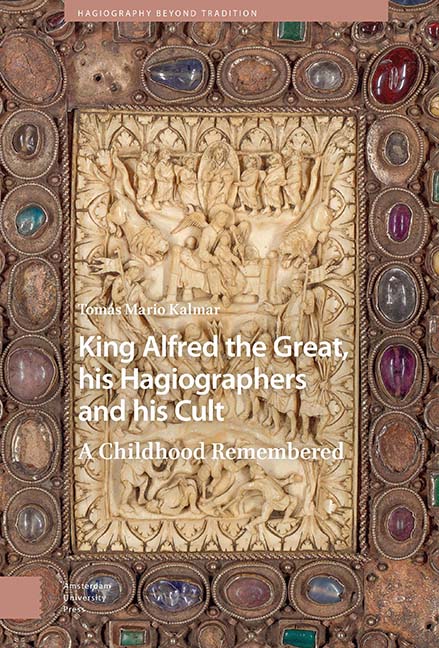
This book situates Alfred the Great in his hagiographic context. For 150 years, the fables told in the ninth century about Alfred's childhood have posed interlocking disciplinary challenges to historians committed to evicting romance from history. Blending current Hagiography Studies with historical, literary, and biblical hermeneutics can help us forgo the anti-hagiographic commitments which motivated the scholars who purified the Victorian cult of Alfred by expunging his legends and salvaging his historicity. The book focusses on the typological functions of three Alfredian fables from the 'Old English Chronicle', the 'Old English Boethius', and Asser's 'Vita Ælfredii', analyses the plot common to all three, critiques the psychological conjecture that Alfred's childhood memory was their common source, and shows that synoptically they can help us see how Alfred shaped the curve of his own life's destiny and how he engaged in the formation of his own cult to last a thousand years.
 Loading metrics...
* Views captured on Cambridge Core between #date#. This data will be updated every 24 hours.
Usage data cannot currently be displayed.