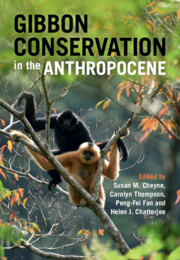

Hylobatids (gibbons and siamangs) are the smallest of the apes distinguished by their coordinated duets, territorial songs, arm-swinging locomotion, and small family group sizes. Although they are the most speciose of the apes boasting twenty species living in eleven countries, ninety-five percent are critically endangered or endangered according to the IUCN's Red List of Threatened Species. Despite this, gibbons are often referred to as being 'forgotten' in the shadow of their great ape cousins because comparably they receive less research, funding and conservation attention. This is only the third book since the 1980s devoted to gibbons, and presents cutting-edge research covering a wide variety of topics including hylobatid ecology, conservation, phylogenetics and taxonomy. Written by gibbon researchers and practitioners from across the world, the book discusses conservation challenges in the Anthropocene and presents practice-based approaches and strategies to save these singing, swinging apes from extinction.
‘An essential contribution to primate conservation literature. It reframes the role of gibbons within global conservation priorities and provides both conceptual frameworks and practical strategies for addressing urgent challenges. For researchers, conservation practitioners, and graduate students, this volume stands as a powerful call for more inclusive, data-driven, and socially responsive approaches to primate conservation.’
Mary Katherine Gonder Source: The Quarterly Review of Biology
Loading metrics...
* Views captured on Cambridge Core between #date#. This data will be updated every 24 hours.
Usage data cannot currently be displayed.
This section outlines the accessibility features of this content - including support for screen readers, full keyboard navigation and high-contrast display options. This may not be relevant for you.
Accessibility compliance for the PDF of this book is currently unknown and may be updated in the future.
