Empire Girls

-
Select format
-
- Publisher:
- The University of Adelaide Press
- Publication date:
- 05 September 2014
- 01 June 2014
- ISBN:
- 9781922064554
- 9781922064547
- Dimensions:
- Weight & Pages:
- 00kg,
- Dimensions:
- Weight & Pages:
You may already have access via personal or institutional login
Show more authors 
You may already have access via personal or institutional login
Book description
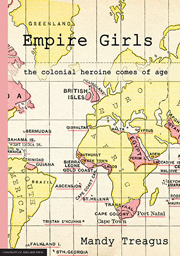
Empire Girls: the colonial heroine comes of age is a critical examination of three novels by writers from different regions of the British Empire: Olive Schreiner's The Story of An African Farm (South Africa), Sara Jeannette Duncan's A Daughter of Today (Canada) and Henry Handel Richardson's The Getting of Wisdom (Australia). All three novels commence as conventional Bildungsromane, yet the plots of all diverge from the usual narrative structure, as a result of both their colonial origins and the clash between their aspirational heroines and the plots available to them. In an analysis including gender, empire, nation and race, Empire Girls provides new critical perspectives on the ways in which this dominant narrative form performs very differently when taken out of its metropolitan setting.
Reviews
Treagus's incisive interrogation of the limitations of the "Bildungsroman" will be valuable for all scholars of empire and culture, and particularly for those with an interest in the complex, multilayered relationship between gender and empire. In keeping with trends in recent scholarship on empire, one of the broad strengths of Treagus's approach is her widening of the focus from the established metropolitan-peripheral axis to compare colony with colony - to examine the "common experience of being in empire", as Ross G. Forman advocates in his recent groundbreaking work on the relationship between the British and Chinese Empires (China and the Victorian Imagination, 2014). More specifically, Treagus brings much needed scrutiny to bear on white colonial authors, whose literary negotiation of the imperial experience has been overlooked until relatively recently in postcolonial studies; and further, Treagus has turned the spotlight upon the works of female white colonial authors, a still more neglected subgroup.'
Ailise Bulfin Source: English Literature in Transition 1880-1920, 59 (1)
By bringing together these three colonial writers [Olive Schreiner, Sara Jeannette Duncan and Henry Handel Richardson] and discussing their work in well-written jargon-free prose, Treagus places their work in a larger context, beyond nationalities. Treagus's uncovering of what they have in common makes for interesting reading, should one be a fan of fiction of this period.'
Debra Martens Source: Canadian Writers Abroad (online)
Contents
Contents
Metrics
Full text views
Full text views helpTotal number of HTML views: 0
Total number of PDF views: 0 *
 Loading metrics...
* Views captured on Cambridge Core between #date#. This data will be updated every 24 hours.
Usage data cannot currently be displayed.
Accessibility standard: Unknown
Why this information is here
This section outlines the accessibility features of this content - including support for screen readers, full keyboard navigation and high-contrast display options. This may not be relevant for you.
Accessibility Information
Accessibility compliance for the PDF of this book is currently unknown and may be updated in the future.