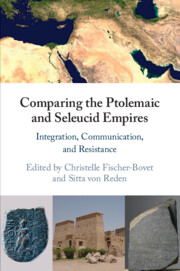

The Ptolemaic and Seleucid empires are usually studied separately, or else included in broader examinations of the Hellenistic world. This book provides a systematic comparison of the roles of local elites and local populations in the construction, negotiation, and adaptation of political, economic, military and ideological power within these states in formation. The two states, conceived as multi-ethnic empires, are sufficiently similar to make comparisons valid, while the process of comparison highlights and better explains differences. Regions that were successively incorporated into the Ptolemaic and then Seleucid state receive particular attention, and are understood within the broader picture of the ruling strategies of both empires. The book focusses on forms of communication through coins, inscriptions and visual culture; settlement policies and the relationship between local and immigrant populations; and the forms of collaboration with and resistance of local elites against immigrant populations and government institutions.
'The book offers numerous vantage points for further study, and it also contains some important lessons on co-authorship in comparative projects.'
Benedikt Eckhardt Source: Bryn Mawr Classical Review
‘… a rich and rewarding collection of excellent papers … Highly recommended.’
S. M. Burstein Source: Choice Connect
Loading metrics...
* Views captured on Cambridge Core between #date#. This data will be updated every 24 hours.
Usage data cannot currently be displayed.
This section outlines the accessibility features of this content - including support for screen readers, full keyboard navigation and high-contrast display options. This may not be relevant for you.
Accessibility compliance for the PDF of this book is currently unknown and may be updated in the future.
