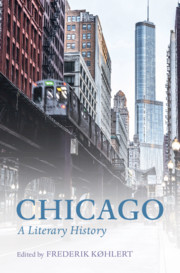

Chicago occupies a central position in both the geography and literary history of the United States. From its founding in 1833 through to its modern incarnation, the city has served as both a thoroughfare for the nation's goods and a crossroads for its cultural energies. The idea of Chicago as a crossroads of modern America is what guides this literary history, which traces how writers have responded to a rapidly changing urban environment and labored to make sense of its place in - and implications for - the larger whole. In writing that engages with the world's first skyscrapers and elevated railroads, extreme economic and racial inequality, a growing middle class, ethnic and multiethnic neighborhoods, the Great Migration of African Americans, and the city's contemporary incarnation as a cosmopolitan urban center, Chicago has been home to a diverse literature that has both captured and guided the themes of modern America.
Loading metrics...
* Views captured on Cambridge Core between #date#. This data will be updated every 24 hours.
Usage data cannot currently be displayed.
This section outlines the accessibility features of this content - including support for screen readers, full keyboard navigation and high-contrast display options. This may not be relevant for you.
Accessibility compliance for the PDF of this book is currently unknown and may be updated in the future.
