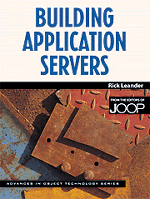

To address new demands in business computing, software vendors are introducing application server toolkits. The concept is to create clusters of low-cost computers that support one specific business area, then connect these clusters to the network. By using the network as the computer, one piece of software can support desktop computing, electronic commerce, and communication with mainframe software. Building Application Servers is a practical guide to application server technology, explaining the theory of network computing and providing practical techniques that use these tools to produce effective business solutions. It contains practical examples and program code that use UML, Java, RMI, and JDBC to illustrate design problems and programming techniques. The development framework offered in this book spans a variety of platforms, vendors, and architectures. Developers who are familiar with traditional client/server technology but want to learn how to move to distributed client/server computing will find this book useful.
‘ … the examples are excellent … if you want a single practical book on the subject … Building Application Servers is highly recommended.’
Alan Zeichick Source: Software Development Times
‘… clear and well laid out with good explanations … a useful overview of the many related subjects.’
Roger N. lever Source: Overload 40
Loading metrics...
* Views captured on Cambridge Core between #date#. This data will be updated every 24 hours.
Usage data cannot currently be displayed.
This section outlines the accessibility features of this content - including support for screen readers, full keyboard navigation and high-contrast display options. This may not be relevant for you.
Accessibility compliance for the PDF of this book is currently unknown and may be updated in the future.
