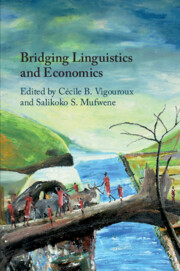

Linguistics has had a significant and evident impact on economics, and vice versa. However, this mutually beneficial relationship has so far remained under-exploited. This rich volume brings together an international range of scholars, to bridge the gap between these two distinct but increasingly interrelated disciplines. It covers areas such as the role of economic factors in the maintenance or loss of languages, the relationship between speakers' language choices and economic practices, the relevance of economic development to the spread of modern communication technology, and the role of language in economic development. It represents a critical call to arms for researchers and students in both fields to engage in better informed ways with the work of the other. By sharing both linguistic and economic ideas, the editors and the other contributors foster a clear dialogue between the two disciplines, which will inform the rapidly emerging field of 'language economics'.
'Bridging Linguistics and Economics integrates the complex, highly interlinked fields of linguistics and economics in many admirable, creative and thought-provoking ways. Linguists and economists will benefit - and likely probe their previously-held conceptions.'
W. Travis Selmier II - Indiana University
‘… this volume will be of interest to scholars of both linguistics and economics who seek to delve further into their complementary fields of research.’
Farah Ali Source: LINGUIST List
Loading metrics...
* Views captured on Cambridge Core between #date#. This data will be updated every 24 hours.
Usage data cannot currently be displayed.
This section outlines the accessibility features of this content - including support for screen readers, full keyboard navigation and high-contrast display options. This may not be relevant for you.
Accessibility compliance for the PDF of this book is currently unknown and may be updated in the future.
