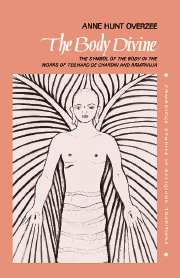

The Body Divine explores the ways in which two spiritual teachers, one Christian (Teilhard de Chardin) and one Hindu (Ramanuja) have seen the world as inherently divine, and have presented this insight theologically through the use of a symbol, that of the 'body of the divine' (the body of Christ/Brahman). In a careful study of their beliefs, Dr Hunt Overzee shows how both thinkers came to understand reality in terms of consciousness, believing that salvation/release is realized through attaining the Lord. This goal is approximated through a changed view of things, in which everything is seen to belong to the Lord and to manifest his presence. The author compares those spiritual practices taught by each thinker in order to help people attain the Lord, and places these practices in a broader context of practices for transforming consciousness.
"This is a comprehensive and scholarly study of the comparisons to be drawn between two religious traditions on the subject of the world as the body of the divine as exemplified in the writings of two significant thinkers....It is a most competent exposition of the positions of the writers concerned...." Glyn Richards, Asian Thought and Society
Loading metrics...
* Views captured on Cambridge Core between #date#. This data will be updated every 24 hours.
Usage data cannot currently be displayed.
This section outlines the accessibility features of this content - including support for screen readers, full keyboard navigation and high-contrast display options. This may not be relevant for you.
Accessibility compliance for the PDF of this book is currently unknown and may be updated in the future.
