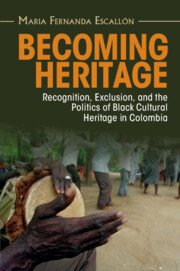

Since the late twentieth century, multicultural reforms to benefit minorities have swept through Latin America, however, in Colombia ethno-racial inequality remains rife. Becoming Heritage evaluates how heritage policies affected the Afro-Colombian community of San Basilio de Palenque after it was proclaimed by UNESCO as Intangible Cultural Heritage of Humanity in 2005. Although the designation partially delivered on its promise of multicultural inclusion, it also created ethno-racial exclusion and conflict among groups within the Palenquero community. The new forms of power, knowledge, skills and values created to safeguard heritage exacerbated political, social, symbolic and economic inequalities among Palenqueros, and did little to ameliorate the harsh realities of living and dying in Palenque. Bringing together broader discussions on race, nation and inclusion in Colombia, Becoming Heritage reveals that inequality in Palenque is not only a result of Black Colombians' uneven access to resources; it is enforced through heritage politics, expertise and governance.
Honorable Mention, 2024 Best History Book, International Latino Book Awards
Finalist, 2025 International Book Awards, American Book Fest
‘Becoming Heritage is a carefully designed and brilliantly executed multi-site ethnography. A power blind celebration of cultural difference diverts attention away from the harsh realities of racial and class domination, and transforms collective cultural solidarity into competition to manage and control cultural assets, a competition that positions the most privileged, educated, assimilated, and normative members of the community to speak for the group and derive the greatest benefits from its recognition.’
George Lipsitz - author of The Possessive Investment in Whiteness
‘A rich ethnographic contribution to the emerging scholarship on heritage governance and bureaucracy. Becoming Heritage reveals how a fraught assembly of international agencies, state institutions, NGOs, tourist economies, and descendant communities combine to promote intangible heritage and defray charges of exclusion and dispossession in an Afro-Colombian setting. Maria Escallón reminds us of the lived realities of those in pursuit of recognition and who pays the ultimate price.’
Lynn Meskell - author of A Future in Ruins: UNESCO, World Heritage, and the Dream of Peace
Loading metrics...
* Views captured on Cambridge Core between #date#. This data will be updated every 24 hours.
Usage data cannot currently be displayed.
This section outlines the accessibility features of this content - including support for screen readers, full keyboard navigation and high-contrast display options. This may not be relevant for you.
Accessibility compliance for the PDF of this book is currently unknown and may be updated in the future.
