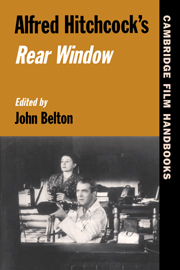

Alfred Hitchcock's Rear Window is one of the icons of American filmmaking. A perfect example of Hollywood cinema at its best, it is an engaging piece of entertainment as well as a fascinating meditation on the nature of the film itself. A suspense thriller about a chair-bound observer who suspects his neighbour of murdering his wife, the narrative becomes the vehicle for Hitchcock's exploration of the basic ingredients of cinema, from voyeurism and dreamlike fantasy to the process of narration itself. This volume provides a fresh analysis of Rear Window, which is examined from a variety of perspectives in a series of essays published here for the first time. Providing an account of the actual production of the film, as well as feminist and cultural readings of it, it also demonstrates the influence of Rear Window on a wide range of filmmakers, including Antonioni, De Palma, and Coppola.
Loading metrics...
* Views captured on Cambridge Core between #date#. This data will be updated every 24 hours.
Usage data cannot currently be displayed.
This section outlines the accessibility features of this content - including support for screen readers, full keyboard navigation and high-contrast display options. This may not be relevant for you.
Accessibility compliance for the PDF of this book is currently unknown and may be updated in the future.
