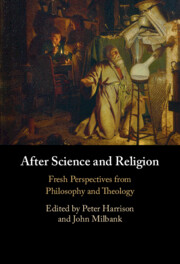

The popular field of 'science and religion' is a lively and well-established area. It is however a domain which has long been characterised by certain traits. In the first place, it tends towards an adversarial dialectic in which the separate disciplines, now conjoined, are forever locked in a kind of mortal combat. Secondly, 'science and religion' has a tendency towards disentanglement, where 'science' does one sort of thing and 'religion' another. And thirdly, the duo are frequently pushed towards some sort of attempted synthesis, wherein their aims either coincide or else are brought more closely together. In attempting something fresh, and different, this volume tries to move beyond tried and tested tropes. Bringing philosophy and theology to the fore in a way rarely attempted before, the book shows how fruitful new conversations between science and religion can at last move beyond the increasingly tired options of either conflict or dialogue.
‘This volume offers a set of historical studies that challenge naïve disciplinary distinctions between science and religion, combined with Anglo-Saxon theological and philosophical speculation. It's a book that can be expected to engage fans and critics alike of those who – as many in this book do – look back to pre-modern ways of wrestling with some vital issues.'
William B. Drees - Professor of the Philosophy of the Humanities, Tilburg University
'The starting point of this excellent volume could sound familiar: all sciences have built in theologies. If that is right, what then should come next in the study of science and religion? Harrison and Milbank have assembled a broad array of answers to that question, united as these are by an approach that might be characterised as theology-engaged science. It's a perspective that interrogates and deconstructs the basic categories of science and religion, telling the stories behind those terms by recounting moments at which the boundaries of each were in flux. This book offers a fresh and promising way of using history to challenge modernity's disciplinary boundaries by showing that scientific theories are already engaged in metaphysical and theological debates.'
John Perry - University of St Andrews
‘… this volume is rich in scholarship and worthy of serious consideration.’
Ilia Delio Source: The Heythrop Journal
‘This volume will provide something of a touchstone for future work in science and religion, and I commend it to PhD students and researchers.‘
Joanna Leidenhag Source: Studies in Christian Ethics
‘… this remarkably unisonant and profound collection contains much that is worth considering.’
G. van den Brink Source: Theologia Reformata
Loading metrics...
* Views captured on Cambridge Core between #date#. This data will be updated every 24 hours.
Usage data cannot currently be displayed.
This section outlines the accessibility features of this content - including support for screen readers, full keyboard navigation and high-contrast display options. This may not be relevant for you.
Accessibility compliance for the PDF of this book is currently unknown and may be updated in the future.
