To save content items to your account,
please confirm that you agree to abide by our usage policies.
If this is the first time you use this feature, you will be asked to authorise Cambridge Core to connect with your account.
Find out more about saving content to .
To save content items to your Kindle, first ensure no-reply@cambridge.org
is added to your Approved Personal Document E-mail List under your Personal Document Settings
on the Manage Your Content and Devices page of your Amazon account. Then enter the ‘name’ part
of your Kindle email address below.
Find out more about saving to your Kindle.
Note you can select to save to either the @free.kindle.com or @kindle.com variations.
‘@free.kindle.com’ emails are free but can only be saved to your device when it is connected to wi-fi.
‘@kindle.com’ emails can be delivered even when you are not connected to wi-fi, but note that service fees apply.
This article examines the experiential and perceptual environment in which social encounters between soldiers and civilians occurred in Allied-occupied Italy (1943–45) and its enduring impact on the lives of those who experienced it. It does so by applying Mary Louise Pratt’s theoretical framework of the ‘contact zone’ to the case of occupied Italy and by exploring it through the lens of oral history sources. The critical analysis of interviews with Antonio Taurelli, an Italian teenager in 1944 who fought with American soldiers, and Harry Shindler, a British veteran who married an Italian woman during the war, sheds light on how ordinary individuals shaped their own experience of occupation within the contact zone as well as on the life-changing impact of their encounters with ‘otherness’. This article aims to contribute to our understanding of the social experience of the Allied occupation of Italy and the impact of military-civilian encounters in occupation environments more broadly.
During the Second World War, Allied-occupied Italy became the setting for a wide range of intimate encounters between local women and the occupiers, especially American soldiers. These relationships – ranging from romantic and consensual to transactional and coercive – reflected complex interactions with perceived ‘otherness’ and exposed tensions around race, gender, and power. US authorities, concerned about its social, cultural, and political implications, monitored ‘fraternisation’ closely. This article explores these dynamics by examining US Army marriage regulations and oral history interviews with Italian women who married American soldiers. Women’s experiences – shaped by region, class, and individual circumstance – represent a spectrum ranging from disillusionment to long-term partnership. These narratives offer a complex portrait of gender relations under occupation, revealing how military policy also intersected with and shaped the everyday lives of women during occupation.
Digital history represents an exciting avenue for scholars to both publish their findings and apply new research methodologies that include the public as a producer of historical knowledge. However, in the context of studies on the Second World War in Italy, and especially the antifascist Resistance, these types of productions remain rare. This situation is in stark contrast to the vast production of revisionist, pro-fascist or outright fascist materials produced by a plethora of non-scholar actors across the web. This contribution aims to present three different digital history projects tied by the theme of antifascism: the Atlante delle stragi naziste e fasciste, IF – Intellettuali in fuga dall’Italia fascista and Memorie in Cammino. Each of them covers a different timeframe or a different facet of the issue, but all are representatives of a new way forward in Italy concerning historical research and dissemination. This first part of the article focuses on the aforementioned issues and the first project, the Atlante delle stragi naziste e fasciste, while a second (to be published in the next issue of Modern Italy) will cover the remaining two.
While the academic study of International Relations immediately following the World Wars was focused on the causes of war and the conditions of peace, the diversification of IR in the mid twentieth century led to the creation of a discrete subfield of security studies. For the remainder of the twentieth century, this subfield focused exclusively on the problem of war – conventional and nuclear – between nation-states. But the end of the Cold War and the proliferation of multiple, opaque, and transnational security risks opened an intellectual space within security studies for a re-envisioning of the analytical approaches to security, as well as to a widening of the agenda. Security was no longer linked exclusively to war but also to a wider range of issues, and security was no longer exclusively conceptualized as the continued existence of the state but applied also to a multitude of actors.
During the 1930s, the Bank devised a plan to help prepare the nation for war. In contrast to the Treasury, the Cabinet, and the League of Nations, the Bank was the sole defender of exchange control, a policy that involved restrictions on conversions in and out of sterling. Its experts argued that the necessity of wartime finance, diplomatic tensions with France and the United States, and a potential flight from sterling at the outbreak of war all justified the reform of exchange-rate management. Although exchange control was primarily seen as an overly restrictive arrangement, often associated with authoritarian regimes in Germany or Argentina, the Bank’s advisers claimed to understand the technical requirements and the particular needs of a financial sector preparing for war. With its enactment in early 1939, the Bank had effectively abandoned its commitment to restoring the prewar liberal economic order and instead oversaw a new system of governance that continued well into the postwar years.
Chapter 1 offers a historical introduction as well as an overview of existing research in the field. It argues that by mapping out the trajectories of former volunteer soldiers, it is possible to see the many ways in which the Spanish Civil War and the broader anti-fascist engagement of the inter-war period could constitute a transformative experience and event; an event that expanded volunteers’ political horizons and gradually opened up possibilities for border-crossing political engagement in the post-war era. Thus, it sets the stage for the case studies constituting the main part of the book, showing that the political and military influence of the volunteers in Spain did not necessarily come to an end in 1938/1939 or even in 1945. In a few yet significant cases, it stretched across the globe far into the Cold War period.
Chapter 3 highlights the centrality of Spain in the development of a particular kind of ‘professional revolutionary’ deployed by the Comintern in the late 1930s and 1940s. It focuses on the life of the Italian communist Ilio Barontini and follows his long militancy within the anti-fascist front. Barontini, unlike most Europeans of his generation, had been confronted with violent fascism since the early 1920s. Nevertheless, the Spanish Civil War marks a watershed in his life, as it was in Spain that he refined his skills as a fighter. But Spain influenced Barontini’s trajectory in a political sense, too, as it was during the period of intense fighting at Guadalajara in early 1937 that fellow volunteers in the Italian brigade began to discuss the need to bring the anti-fascist fight to the colonial front as well. In the following years, Barontini went both to fight and to train new recruits in Ethiopia, France, and Italy. In this way, the chapter offers a glimpse of one way in which anti-fascism and anti-imperialism connected in this period.
Chapter 4 follows the trajectory of Ernst Frey and other European anti-fascists, who enlisted in the Vietnamese Army after defecting from the French Foreign Legion. It focuses on the complicated relationship between the soldiers who survived the anti-fascist struggles in Europe and the new generation of soldiers of the anti-colonial wars in the Global South. After 1945, many Spanish Civil War veterans followed events in Algeria and Indochina with great interest and sided with those fighting for national self-determination. Notwithstanding the visibility of both causes, notable armed support materialised only in Indochina, where foreign volunteers were initially well-received and saw their military influence grow much beyond what their modest careers in the French Foreign Legion might indicate. With time, however, they were also seen as a challenge to the nationalistic Vietnamese leadership, who, thanks largely to Chinese support from the early 1950s onwards, were radically altering their military structure, leaving little or no space for French Foreign Legion defectors.
The chapter provides an overview of Hemingway’s life from his birth in Oak Park, Illinois, to his death in Idaho. Key episodes include his experience, including his wounding, during the First World War, his emergence as a writer in Paris in the 1920s, his travels in Europe and Africa, including as a war correspondent during the Spanish Civil War and the Second World War, and his receipt of the Nobel Prize for literature.
This chapter sketches the contexts, both broadly historical and more narrowly cultural, for Hemingway’s life and work from the 1910s through the 1950s, including the wars he experienced and the literary scenes that his work both shaped and was shaped by.
The civil war in Spain provoked deeper political thinking and involvement for Hemingway, and his political engagement shaped his writing about that war. Hemingway returned to his journalistic roots in the war reportage he wrote on the conflict, and experimented with dramatic form in his only play, The Fifth Column. In For Whom the Bell Tolls he absorbs, adapts, and rejects a romanticized view of the Spanish Civil War that had been developed and promulgated by European and American writers sympathetic (as Hemingway was) to the Spanish Republican cause, stripping from the realities of internecine conflict any potentially consoling significance of political commitment. The Second World War also drew Hemingway as a war correspondent (initially reluctant, he became an enthusiastic witness to, and even participant in, combat in France and Germany). On the basis of his wartime experience, he explored themes of forgiveness and grace in Across the River and into the Trees, a flawed novel whose purgatorial narrative is nevertheless an interesting experiment in fictional form.
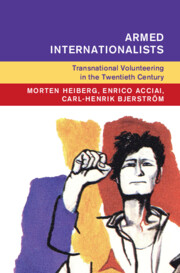
This unique transnational history explores the extraordinary lives of left-wing volunteers who fought in not just one, but multiple conflicts across the globe during the mid-twentieth century. Utilising previously unpublished archival material, Heiberg, Acciai and Bjerström follow these individual soldiers through military conflicts that were, in most cases, geographically centred on individual countries but nonetheless evinced a crucial transnational dimension. From the Spanish Civil war of 1936 to the Nicaraguan Revolution of 1979, the authors marshall these diverse case studies to create a conceptual framework through which to better understand the networks and recruitment patterns of transnational volunteering. They argue that the Spanish Civil War created a model for this transnational left-wing military volunteering and that this experience shaped the global left responses to a range of conflicts throughout the twentieth century.
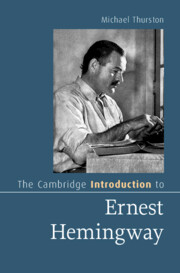
One hundred years after the publication of his first major work, Ernest Hemingway remains an important author. His work addressed the search for meaning in the wake of a 'Great War' and amid the challenges of rapidly changing social conventions, and his prose style has influenced generations of journalists and writers. Hemingway was wounded on the battlefield and caught up throughout his life in conflicting desires. He was also a deeply committed artist, a restless experimenter with the elements of narrative form and prose style. This book's detailed discussions, informed both by close formal analysis and by contemporary critical frameworks, tease out the complexity with which Hemingway depicted disabled characters and romantic relationships in changing historical and cultural contexts. This introduction is especially useful for students and teachers in literary studies and modernism.
This article argues that the image of the ‘bad German’ and the animus that accompanied it was tempered by that of the defeated German and the pity Italians in liberal and Catholic circles expressed for German misery. Such sympathetic expressions were not confined to the ruling elite but circulated broadly in media representations and in accounts given by Italians who travelled north in the early postwar years. To view Germans as objects of pity was an empowering act and a humanising one. As an emotion and a practice, pity provided a blueprint for how to think and feel about the former enemy – and oneself – that, in Italy, reinforced Catholic and liberal frameworks for political and social reconstruction. Important to constructions of East–West difference and to the Christian democratic groundings of Western Europe, pity continues to shape debates on European identity, immigration and humanitarian aid.
Starting from the Russo-Japanese War until the height of the Cold War era, Schoenberg’s adult life coincided with various wars during the turbulent first half of the twentieth century. This chapter explores how Schoenberg navigated these events by surveying his correspondences with friends and pupils, his own writings and brief analyses of two overtly political compositions, Ode to Napoleon Buonaparte, op. 41 (1942) and A Survivor from Warsaw, op. 46 (1947). This chapter ends by considering the two war compositions as the composer’s statement and restatement against fascistic tendencies in Germany during World War II and, again, in the United States during the Cold War era.
Humor functions as a form of civic engagement and social protest in Zora Neale Hurston’s Moses, Man of the Mountain (1939) and Gertrude Stein’s Mrs. Reynolds (1947), novels that respond to the rise of fascism with complex satire. Despite a common view of Hurston and Stein as either apolitical or conservative, both authors reveal a keen understanding of conversion’s historical legacy in the justification of imperialism. The point both Hurston and Stein make is that humorous incongruity keeps the mind turning and, in the process, forestalls the “settling” of thought into place and “the fixation of belief” associated with totalitarianism. As outsiders for whom conversion—religious or secular—could mean a form of psychic death, they developed distinctive modes of ironic humor involving self-lacerating and self-satirizing critique.
Between 2014 and 2019, millions of people witnessed and participated in a mass of commemorative activities for the First World War. Millions of pounds were spent for projects that brought together academic historians, community groups, artists, schools and the general public. These projects have been reviewed in government evaluations, by arts organisations and universities. However, commemoration is highly context-specific, affected by the contemporary actors as much as the events commemorated. Since 2019, the pandemic and the ongoing financial crisis in Higher Education have undermined the strength of the research community and the arts and heritage sectors. The world is becoming increasingly polarised and new technologies such as Artificial Intelligence pose new challenges for our discipline. By 2039, we can expect that there will be increased public interest in commemorating the Second World War. This contribution reviews the learning from the commemoration activities between 2014 and 2019 to identify what we can apply to 2039 and how we can begin to prepare in our current environment.
The relationship between the International Brigades and Spain did not end with the volunteersߣ withdrawal from frontline service in late 1938. By way of conclusion, Making Antifascist War considers the post-war trajectories of the antifascist veterans with a particular emphasis on Spainߣs continuing impact on their military activities, political activism and antifascist identities. It then considers the process by which some veterans substituted making antifascist war with writing, speaking and recording it, showing how this process related to the shifting politics of their respective home countries. In the 1990s, the International Brigades came to occupy a particularly contentious place in Spaniardsߣ own memories of their twentieth-century past, with the governmentߣs offer of citizenship to those veterans still alive in 1996 unleashing fresh debates about their relationship to the country. By considering the ongoing role of Spain in the lives of the volunteers, this concluding chapter reaffirms the bookߣs underlying premise that the domestic context of the country is essentially in reaching a full understanding of their transnational military service.
Chapter 3 uses the most iconic figure in LFC’s pre-Shankly history, the Scottish winger Billy Liddell, as the jumping off point for a study of a club, and a city, in apparent post-war decline. Topics range from Liverpool’s early de-industrialisation to LFC’s local rivalry with the ‘Mersey Millionaires’, Everton.
Chapter 1 looks at the key factors behind post-war changes in political status, the motivations of local politicians involved in these negotiations and the impact of these changes on future steps to decolonise. In 1946, Martinique and Guadeloupe gained overseas department status to integrate them fully into the French Republic. Meanwhile, the West Indies Federation negotiations gave the Cayman Islands and the British Virgin Islands the opportunity to reconsider their position within the British Empire. Both chose to become crown colonies with a more direct link to Britain. This chapter argues that these changes to political status were crucial to later attempts to negotiate greater autonomy. These changes were particularly significant for the French Antilles, as they would halt debates about independence for the following ten to fifteen years. In the British territories, crown colony status stabilised British rule and shifted the focus towards economic development.