To save content items to your account,
please confirm that you agree to abide by our usage policies.
If this is the first time you use this feature, you will be asked to authorise Cambridge Core to connect with your account.
Find out more about saving content to .
To save content items to your Kindle, first ensure no-reply@cambridge.org
is added to your Approved Personal Document E-mail List under your Personal Document Settings
on the Manage Your Content and Devices page of your Amazon account. Then enter the ‘name’ part
of your Kindle email address below.
Find out more about saving to your Kindle.
Note you can select to save to either the @free.kindle.com or @kindle.com variations.
‘@free.kindle.com’ emails are free but can only be saved to your device when it is connected to wi-fi.
‘@kindle.com’ emails can be delivered even when you are not connected to wi-fi, but note that service fees apply.
En mars 2020, la Slovénie a introduit des mesures visant à réduire la propagation du COVID-19. La pandémie de COVID-19 a eu des répercussions immédiates et profondes sur tous les domaines de notre vie (par exemple l’économie, la mobilité humaine, l’éducation et la santé). Il ne fait aucun doute que le COVID-19 a également eu une incidence sur les relations familiales. Cet article analyse les mesures législatives et les décisions judiciaires adoptées pendant la pandémie de COVID-19 en Slovénie. Une attention toute particulière est accordée aux relations parents-enfants, à l’adoption et au mariage.
INTRODUCTION
Infectious diseases and related epidemics or pandemics have left an indelible mark on history. They have caused widespread fear, suffering and death. All of these have impacted individuals, countries and, of course, family life. The current COVID-19 pandemic, which appeared in Europe in early 2020, has also had an immediate and profound impact on our established lives. The consequences immediately spread to almost all areas of our lives (for example, the economy, human mobility, education and health care). There is no doubt that COVID-19 has also impacted family relationships in all respects. As a particularly social and vulnerable group, children were or are still exposed to the impact and consequences of COVID-19. They faced the extinction of public life, the loss of friends and the death of relatives, schooling moved online, sports and cultural clubs did not function, etc. Restrictions on movement and curfews limited the dynamics of their lives mainly to the family environment, which did have its advantages. On the other hand, children became even more exposed to domestic violence and increased distress and fear, as many did not understand the new situation, which thus affected family relationships. Despite the multifaceted nature of the issues raised by the COVID-19 pandemic, this chapter focuses only on the impact and consequences in the area of family relations.
Cet article est un extrait de la recherche menée pour le Comité des droits de l’enfant de Hong Kong (HKCCR) qui examine la mise en œuvre à Hong Kong du droit des enfants d’être entendus dans les procédures les concernant, garanti par l’article 12 de la CIDE. Alors que les recherches commandées par le HKCCR s’é tendent à de multiples domaines, de l’éducation et la santé à l’élaboration de politiques constitutionnelles, ainsi qu’aux loisirs et à la culture notamment, cet article propose une analyse critique de la manière dont la voix des enfants est entendue dans le cadre juridique existant à Hong Kong. Les résultats de la recherche laissent penser que, bien que la législation relative au droit de l’enfant d’être entendu en vigueur à Hong Kong soit à bien des égards meilleure que dans d’autres États dont la législation a été examinée dans l’étude de la HKCCR, l’avis de des enfants est au mieux consultatif et, au pire, n’existe que dans les textes et non dans la pratique. Après avoir identifié les éléments qui font obstacle à une meilleure participation des enfants, cet article propose des recommandations afin d’améliorer la situation.
INTRODUCTION
This chapter will present the findings of research into how Article 12 of the United Nations Convention on the Rights of the Child (UNCRC) has been implemented in Hong Kong’s legal sector. This research is part of a wider project commissioned by the Hong Kong Committee on Children’s Rights (HKCCR), a non-governmental organisation originally formed in 1992 to promote, advance and ensure the rights of the child in Hong Kong. The aim of the wider project was to establish an independent baseline study of the implementation of Article 12 across all relevant sectors in Hong Kong, from constitutional and high-level policy-making to health and education to matters of leisure, culture and built environment, amongst others.
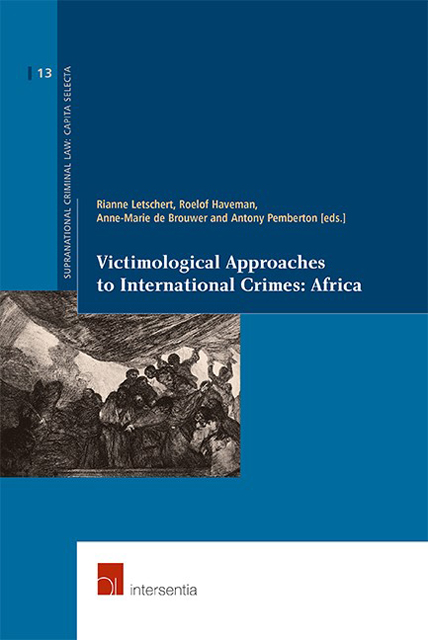
Legal initiatives to prevent genocide, war crimes and crimes against humanity have considerable shortcomings in dealing with victims of international crimes. Transcending the disciplinary divisions in the study of victims of international crimes is the main focus of this first volume of essays contributing to developing victimological approaches to international crimes. Focusing on the African continent, scholars from different disciplines review the similarities and differences between victims of ordinary crimes and those of genocide, war crimes and crimes against humanity.
This book studies the pivotal obligation to prevent genocide under international law and more particularly the extent of that obligation under the Genocide Convention and customary international law. The author puts forward a distinction between primary, secondary and tertiary levels of prevention.
Bruce Harris has left an indelible mark on public law across the common law world. In this Festschrift, commentators explore key themes including the nature of executive power, issues concerning the judiciary, and the future of unwritten constitutions. This collection of essays conveys a distinctively pragmatic approach to public law, relevant to scholars and practitioners alike.
Children's access to justice has emerged as an important topic in the children's rights domain. While there has been increasing attention paid to child-friendly justice internationally, there has been relatively little research in this area. This book, with contributions from researchers and practitioners, explores the meaning, practice and challenges of children's access to justice and contributes to a deeper understanding of what access to justice means to children, how they experience it and what it should look like in practice. It seeks to define access to justice in a global way, by addressing current challenges, asking new questions and providing answers to existing problems. One of the main areas of focus is children's participation in legal proceedings, which critically explores how children are heard in family law, criminal law and child protection procedures. Special challenges faced by groups of children, such as indigenous children, are brought to light. The roles of different actors in justice, including judges and lawyers, but also institutions such as independent child commissioners and schools, and how they can improve children's access to justice are explored. The book also highlights structural obstacles to children's participation that can be explained by country-specific situations and the attitudes of adults towards children.
Many of the contributions are based on empirical research, bringing forth the voices of actors of justice and children themselves. While many of these contributions are county-specific, the book clearly demonstrates how challenges to children's access to justice are universal in nature.
The book deals with the impact of EU law on private relations. While EU law has principally developed through vertical relations of the Union and its Member States with private persons, its foundations, principles and enforcement mechanisms are increasingly affecting the growing body of EU law governing horizontal relations between individuals and undertakings. The results are sometimes unexpected and sometimes inappropriate.
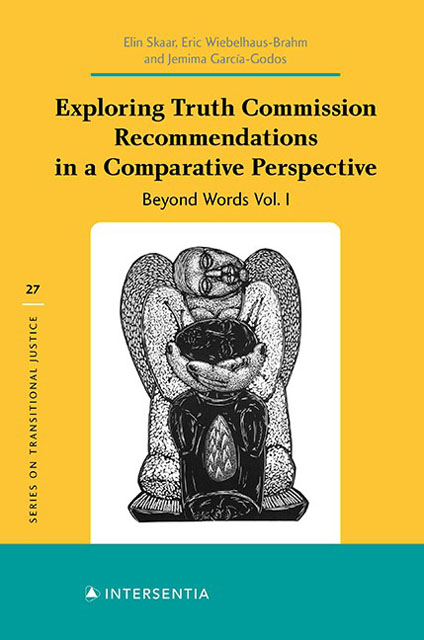
Based on fieldwork that is unprecedented in scope, this two-volume project provides the first systematic study of the formulation and implementation of the recommendations of 13 Latin American truth commissions.
Beyond Words Vol. II is a unique collection of 11 Latin American country studies covering all 13 formal truth commissions established in this region that submitted their final reports between 1984 and 2014. Based on qualitative original data and a common analytical framework, the main focus of each of the country chapters is threefold: (1) to provide a brief background to the truth commission(s); (2) to provide a detailed account of the formulation of the truth commission's recommendations; and (3) to analyze the implementation record of the recommendations, taking into account the actors and factors that have aided - or obstructed - the implementation process.
Based on fieldwork that is unprecedented in scope, this two-volume project provides the first systematic study of the formulation and implementation of the recommendations of 13 Latin American truth commissions.
Beyond Words Vol. I examines the variations in truth commission recommendations across 13 Latin American cases. Insights are provided regarding how the internal dynamics of truth commissions, as well as the political, social and economic context in which they operate, influence how recommendations are formulated. The authors then explore how the nature of these recommendations themselves, along with the aforementioned factors, influence which recommendations are actually implemented. The conclusion considers the findings' relevance for the crafting of future truth commission recommendations and reflects upon how the formulation and implementation of these recommendations shape the impact of truth commissions on societies emerging from periods of violence and repression.
States cooperate to stem irregular migration flows, yet migration control agreements often result in widespread violations of the socio-economic rights of people on the move contained in the Global South. This book examines the States that are responsible for these violations.
In EU consumer law, the rise of Article 47 of the EU Charter of Fundamental Rights - which guarantees the right to an effective remedy and a fair trial - over the past decade has coincided with a wave of crisis-induced litigation. Courts were confronted with large numbers of cases against overindebted consumers. This has prompted many questions on the need for effective judicial protection, for instance in mortgage enforcement and order for payment procedures.
This book provides a unique perspective on the role of civil courts at the crossroads of EU fundamental rights, consumer law and access to justice. It examines how the Court of Justice of the European Union, as well as civil courts in Spain and the Netherlands, refer to Article 47 in unfair terms cases, where procedural obstacles and inequalities have become particularly visible - especially in Spanish case law. The analysis reveals a divergence between European and national practices and also shows the potential of Article 47, which is often wrongly equated with the principle of effectiveness, in consumer litigation.
Effective Judicial Protection in Consumer Litigation makes a vital contribution to the debate on the functions of Article 47 and fundamental rights reasoning in European private law adjudication and is a must read for anyone interested in the application of Article 47 in judicial decision-making.
The legal analysis in cases of protection of home under Article 8 of the Convention takes place in the same manner as under the other aspects of Article 8. First, one must decide whether the matter falls within the scope of home protected by Article 8. If this question is answered in the affirmative, the analysis under negative obligation continues with the question whether there has been an interference with the right to respect for home. Thereafter, the analysis continues with the following questions:
– was the interference “in accordance with the law” ?;
– did the interference pursue a legitimate aim?; and
– was the interference “necessary in a democratic society ” ?
SCOPE OF PROTECTION OF HOME
According to the Court’s interpretation, a home is usually a place, a physically defined area, where private and family life develops. The definition of a home is not dependent on how a home has been defined in the domestic law but the Court’s interpretation of the concept of a home is autonomous. The existence of a home is dependent on the concrete circumstances of the case, requiring both sufficient and continuous links to a certain place. Furthermore, the word “home” appearing in the English version of Article 8 is a term that is not to be strictly construed as the equivalent French term, “domicile”, has a broader connotation.
NOTION OF HOME
All places where people reside are not necessarily considered to be their homes. For example, holiday residences or hotel rooms are not generally considered to be homes. However, it is not always possible to make a clear distinction between one’s permanent home and a leisure home since a person may divide his or her time between two different residences or he or she may otherwise have strong emotional ties to the secondary residence that he or she may consider to be a home. Similarly, if a homeless person lives in a hotel, he or she may claim a right to respect for home at least to the extent that the legality of his or her removal from the hotel premises can be examined under Article 8.
The concept of private life is very widely understood in the Court’s case-law and it can be said that it covers all aspects of life. Private life is thus a broad concept that has no exhaustive definition, and it may “embrace multiple aspects of the person’s physical and social identity”. The Court’s case-law, however, provides guidance as to the meaning and scope of private life for the purposes of Article 8.
Often private life is connected to and overlapping other rights protected by Article 8, namely with the protection of family life, home and correspondence. In many cases the Court has not considered it necessary to make a distinction between the scope of each of these concepts. The concept of private life has not been limited to cover only protection of private life at home, but it also covers the right to create and develop relationships with people outside of one’s home sphere, for example in working life. On the other hand, the private life limb of Article 8 does not guarantee a right to be in contact with a particular person in respect of whom the person seeking contact is not leading a family life and where the person to be contacted does not wish to have contact with that person.
In order to be examined as a possible violation under Article 8, the matter needs to reach certain de minimis level of seriousness. Article 8 does not protect every conceivable personal choice. The level of seriousness was not reached, for example, in Gough v. the United Kingdom where a person had been convicted for walking naked in public and he appeared naked in the court room. The Court found that, although the applicant had voluntarily chosen such a way of living, his choice was not supported in any known democratic society in the world.
The level of severity was not reached in Vučina v. Croatia either, where a picture of the applicant among a concert audience had been published in a magazine and the caption had mistakenly identifi ed her as the mayor’s wife.
Article 8: Right to respect for private and family life
1. Everyone has the right to respect for his private and family life, his home and his correspondence.
2. There shall be no interference by a public authority with the exercise of this right except such as is in accordance with the law and is necessary in a democratic society in the interests of national security, public safety or the economic well-being of the country, for the prevention of disorder or crime, for the protection of health or morals, or for the protection of the rights and freedoms of others.
FOUR PROTECTED RIGHTS
Article 8 of the Convention protects the right to respect for four different rights: private life, family life, home and correspondence. Several of these rights are closely connected to each other and are partially overlapping. It is not always possible to distinguish them from each other, nor is it even necessary.
The dynamic and evolutive character of the Court’s case-law is especially apparent in the context of Article 8. According to the Court, the Convention is a living instrument that needs to adapt to changing circumstances and new issues. Article 8 has been applied in a flexible manner to new areas and therefore its scope of application has become considerably wider over the years. The evolutive nature of the Convention has been most visible in cases that have reflected changes in the European moral standards and that the Court has examined in the light of the present-day concepts.
Currently Article 8 extensively covers most aspects of life, such as the legality of the police investigation measures, custody of children, rights of sexual minorities, immigration, paternity, artificial insemination, abortion and protection of environment, to mention just a few. It does not guarantee any special rights for children, but children are largely protected in the same way as adults.
NEGATIVE AND POSITIVE OBLIGATION
The primary aim of Article 8 is to protect individuals’ private and family life from arbitrary interference by the authorities.
The right to respect for correspondence guarantees a right to communicate with others without an interference by third parties or any censorship . The right to respect for correspondence guaranteed in Article 8 protects the manner of communication rather than its content. The protection of correspondence covers both traditional correspondence by letters and communication by telephone or via other electronic means of communication. International prevention of terrorist crimes and mass electronic surveillance of communication both within a State and between the States have put domestic legislations in front of new challenges.
The right to respect for correspondence often coincides with the right to respect for private life, family life and/or home and in such cases the matters are examined under all of these provisions.
TRADITIONAL CORRESPONDENCE AND EMAIL
The ultimate goal of Article 8 of the Convention is to protect individuals against the authorities ‘arbitrary interference with their right to respect for correspondence. The protection of correspondence covers first of all traditional correspondence by letters, whether of a private or professional nature, sent via ordinary mail, including where the sender or recipient is a prisoner. It also includes packages seized by customs officers. The concept of correspondence also includes communication via electronic means, such as telephone, electronic messages (emails) the use of the Internet as well as data stored on computer servers, including hard drives and floppy disks. Older forms of electronic communication are also covered, such as telex es, pager messages and private radio broadcasting, but not broadcasts on a public wavelength that are accessible to others.
The concept of correspondence also covers traditional telephone conversations between people. It thus covers telephone conversations between family members, telephone calls from private or business premises and from a prison. The concept also covers the “interception ” of information relating to such conversations, such as date, duration and numbers dialled.