


Introduction
In this article, I will briefly trace some of the contours of the current discussion around decolonisation (in archaeology and more broadly) and recall some of the earlier moments that I consider precursors to the current movement, before I propose three concepts that I feel are important for the future. Some of my own ongoing projects will, hopefully, help make the case or at least ground this discussion in specific contexts. I will be doing so as a male, middle-aged academic who currently works in a privileged, well-endowed university in the USA, a university which was founded, as many others, on unceded Indigenous land, in this case belonging to the Narragansett people, and built, at least partly, with the proceeds from the enslavement of African people. This is a legacy which only very recently the university has started confronting (Bogues et al. Reference Bogues, Cliat and Levy2021), mostly due to pressure from student and other movements, rendering it both a site of privilege and a field of struggle. I acknowledge all these benefits and entanglements, and yet I write not just as a first-generation academic, but also one whose parents did not go beyond primary school. At the same time, I am construed as a white European person, and this brings further privileges. My whiteness was, however, contingent upon the specific geopolitical and ideological status that my country of origin, Greece, has occupied since its foundation in the nineteenth century. I have claimed in a recent coauthored book (Greenberg & Hamilakis Reference Greenberg and Hamilakis2022) that Greece was constituted as a crypto-colonised buffer country, a liminal zone in the western imagination, since its inception. As such, the acceptance of its inhabitants by the western elites as white and European is fraught with ambivalence. This is an ambivalence that has resurfaced from time to time, in the 2010–2015 financial crisis, for example. This positionality statement is my first point: class, gender, race, nationality and ethnicity, and their intersectional cohering, should be part of both our starting reflection, and our analytical and interpretative processes on decoloniality.
Decolonisation beyond posturing
The discussion on decolonisation is now everywhere. It has long escaped the pages of certain books and the walls of seminar rooms; it is a quest and rallying cry on the streets, and has even found its way, at least as a linguistic topos, into official university pronouncements. Nevertheless, we should not lose sight of the fact that this quest comes out of decades-long debates and clashes, which were not without cost for the people involved. The broader umbrella term may be fairly new, as are some of the conceptual logics and frameworks, but similar quests and related struggles have been raging for decades, inside and outside archaeology, for example: the global Indigenous movement that has been challenging archaeology for decades; the Civil Rights movement in the USA that has contributed to the development of African American archaeology and the flourishing of topics such as plantation archaeology and the archaeology of slavery; and the foundation of the World Archaeological Congress, in 1986, a key moment in the struggle against Eurocentrism, a moment that emerged as part of the struggle against the South African apartheid. It is important to inscribe these struggles within the decolonisation movement, not only for reasons of epistemic justice, but also because they remind us that decolonisation was never just an academic exercise; it was inspired by popular struggles, and it gained momentum and scored victories through them. While learning the lessons of these earlier moments, we should perhaps recall that the current decolonisation debate and movement owes much to struggles such as Black Lives Matter and the ongoing battles around commemorative monuments, especially confederate monuments and monuments to enslavers. It is because of these social movements that this conversation has now become mainstream.
While this provides grounds for hope and calls for celebration, there is a danger that this shift can be seen as a trendy fad, a window dressing while carrying on with business as usual. Co-option by the establishment is one possible danger; the other is trivialisation, fatigue and swift abandonment in favour of the next, more recent and appealing concept. How can we avoid such dangers? The principle that “decolonization is not a metaphor”, that it should involve substantive material and structural changes and transformations, must be our starting point. The phrase comes from the celebrated article with the same title by the Indigenous, Unangax̂ scholar, Eve Tuck, and the academic and community activist K. Wayne Yang (Tuck & Wayne Yang Reference Tuck and Wayne Yang2012). The two authors, writing mostly from within education studies and from the settler colonial context of the USA, react to the gratuitous use of decolonising terminology, the metaphorisation of decolonisation and its transformation into a banal practice. They claim that much of the shift denoted with the term decolonisation is about what they call “settler moves to innocence” (Reference Tuck and Wayne Yang2012: 9) on the part of the white settler, an attempt to appease their sense of guilt through various performative gestures. They suggest instead, citing the philosopher and anti-colonial fighter Franz Fanon from The wretched of the earth, that decolonisation is not a walkabout: “Decolonization, which sets out to change the order of the world, is, obviously, a program of complete disorder” (Fanon Reference Fanon and Farrington1963: 36). This evocative phrase is, of course, embedded in the moment of the Algerian anti-colonial struggle, and Fanon himself, a few pages later, warns against the Manichean thinking imposed by colonisation, yet the passage resonates powerfully in the present. In Tuck and Wayne Yang’s framework (Reference Tuck and Wayne Yang2012: 16), land, and land reclamation—one could add, material conditions in general—are central to decolonisation. Furthermore, the authors are contemptuous of the non-Indigenous academic who attempts to act as the great synthesiser of Indigenous and non-Indigenous ideas.
This echoes the criticism by another Indigenous scholar, the Metis anthropologist, Zoe Todd, and especially her 2016 celebrated article with the subtitle, ‘Ontology is just another name for colonization’ (Todd Reference Todd2016). This intervention is an Indigenous take on the ontological turn in anthropology, and by extension in archaeology, stating that the recent philosophical takes on being and life that many anthropologists and archaeologists now advocate have been at the core of much of the Indigenous thinking in settler colonial contexts such as the Americas and Australia; and yet they are only now taken seriously by academics because they are packaged as a hybrid synthesis, and mostly because they appear to emanate from the established academic centres of the Global North.
There is a further danger we should be aware of: the hijacking of the language of decolonisation by nationalist elites and intellectuals to reinforce colonisation and persecute subjugated groups. The social anthropologist, Alpa Shah (Reference Shah2024), warns us of this in a recent article discussing today’s Hindu nationalists who welcomed the terminology of decolonisation, and even pioneered the slogan ‘Hindu Lives Matter’, to strengthen further Hindu supremacist rule, especially against Muslim communities. The same scholar has stressed that subaltern castes preferred some British colonial rules in their efforts to resist Hindu elites, alerting us to the dangers of adopting a simplistic coloniser-colonised divide. As she points out, we should always ask: who is championing the decolonising call, and for what purpose?
While the current calls for decolonisation cannot be disentangled from earlier episodes and struggles, it is perhaps worth mentioning the key differences with the recent past. What makes the current discussion distinctive is the desire to go beyond specific concerns regarding social justice, beyond even a critique of Eurocentrism, and certainly beyond the platitudes and delusions around multiculturalism and the officially sanctioned equity, diversity and inclusion initiatives, championed by the liberal elites and now under attack by a new global wave of white supremacy. Many of the current debates are not about postcolonialism as a given social fact or as a scholarly trend. They are not even just about decolonisation as a desired end point (cf. Lemos et al. Reference Lemos, Mbeki, Owoseni, Rai and Moffett2025). They are rather about coloniality as a broader and on-going condition, a condition constitutional of racialised western, capitalist modernity. It is a coloniality of knowledge and power at the same time, a coloniality grounded on race, anthropocentrism, as well as extractivism and commodification, including the treatment of human beings as commodities. It is a coloniality that requires a different genealogical analysis and a different chronology. It is often suggested that the year 1492 can perhaps serve as symbolic timemark for this new, globalised colonial regime, denoting not only the colonisation of the Americas but also the expulsion of Muslims and Jews from Al-Andalus, what we now know as the Iberian Peninsula.
These conditions of racialisation and extractivism are also the ones that shaped our contemporary liberal world of ideas, our liberal condition. In the words of Lisa Lowe (Reference Lowe2015: 3), they established “an economy of affirmation and forgetting that structures and formalizes the archives of liberalism, and liberal ways of understanding”. Lowe is one of the many scholars and activists who ploughed a furrow similar to that of the Indigenous scholars I mentioned earlier, and who showed how western liberalism, economy, culture and forms of government, from John Locke onwards, are, in her words “commensurate and deeply implicated in colonialism, slavery, capitalism, and empire” (Lowe Reference Lowe2015: 2). She mentions names such as Sylvia Wynter, the Black theorist of coloniality; Cedrick Robinson, the pioneer of Black Marxism; Sadiyah Hartman, the African American historian and cultural critic who explored the intimacies of slavery and its palpable impact in the present (e.g. Hartman Reference Hartman2008); Paul Gilroy and his many studies on the racialised constitution of the modern world; and Walter Mignolo, the South Americanist scholar and critic. There are more, for example many of the Indigenous scholars of decoloniality of the American South and the Caribbean. Striving for the decolonial as an ongoing process would thus mean rejecting this racialised, anthropocentric and extractivist order, this nexus of knowledge and power, and imagining a different one. Diversifying our syllabi and our demographics and issuing land acknowledgements may be steps in the right direction, but they do not constitute decolonisation, as they focus on the laudable but limited effort to address exclusion rather than confront extraction, and may even become, in the words of Tuck and Wayne Yang (Reference Tuck and Wayne Yang2012: 9), “settler moves to innocence”.
For the rest of this article, I will propose three concepts that may prove useful in our efforts to build a decolonial archaeology: refusal, care and repair. All three have been in circulation for some time now in various disciplines, from anthropology to design, but the engagement of archaeologists with them has been rather limited. I will sketch out briefly the contours of these concepts and their relevance to a decolonial archaeology, and I will discuss a few ongoing projects of mine that will illustrate some of my points. Many other, perhaps more appropriate examples could be discussed here, but space does not allow; however, in the meeting at which an early version of this text was delivered, a new generation of scholars with connections to the Global South presented excellent studies (cf. Lemos et al. Reference Lemos, Mbeki, Owoseni, Rai and Moffett2025).
Refusal
Why refusal and what does it offer to our debates on decolonisation? And why not resistance to coloniality? The two strategies are entangled, of course, and as Rizvi (Reference Rizvi, Nativ and Lucas2025: 11) claims, “it is only through refusal that resistance can be articulated”. Resistance is, at times, what is needed but refusal holds perhaps more potential because it is a strategy of withdrawing, of delinking, to use the term that Walter Mignolo and others in the South American tradition prefer (Mignolo Reference Mignolo2007). While resistance often amounts to a de facto recognition of the frames of power, of the colonial order, refusal states that it does not recognise that status quo to start with, it prefers not to engage with the colonial order in the terms defined by that order; in other words, it seeks to delegitimise it.
Refusal has become a key concept of the feminist movement today. Bonnie Honig, an important interlocutor in this trend, has been inspired by Giorgio Agamben’s idea of inoperativity (e.g. Honig Reference Honig2021: 14 and throughout), to render a system of operation un-functionable by refusing to be part of it, by slowing things down. Or she discusses Euripides’ Bacchae where the women who make up the chorus refuse to nurse human babies, something that was expected of them according to social norms, choosing instead to nurse wolf cubs (Honig Reference Honig2021: 1–13).
Refusal, first and foremost, is a statement that things cannot continue as normal, that enough is enough, says the anthropologist Carole McGranahan (Reference McGranahan2006). Refusal thus, and despite appearances, is not necessarily negative; it can be affirmative, social rather than individualistic, and hopeful rather than an act of desperation. It may be an affective disinvestment from certain frames of knowledge and power and may provoke a refusal in return on the part of the established order, for which we need to be prepared. But this disinvestment allows for other possibilities, other affective communities to emerge. To give one brief example, in 2024, students in many universities in the USA and across the world staged various affirmative acts of refusal, protesting what many scholars and organisations are describing as an ongoing genocide in Palestine, perpetrated by Israel. Knowing that their institutions invest part of their endowments in military companies that supply the weaponry for such a genocide, they declared that they refuse to be the beneficiaries. They collectively disinvested affectively from the narrative that this investment will benefit them and opted for the creation of an alternative affective community. Significantly, this affective community was grounded in a symbolic but highly significant gesture of land reclamation: they created encampments on the very same lands that were once the ancestral homes of Native American people (cf. Hamilakis Reference Hamilakis2024; Figure 1). While such acts included certain resistance gestures, withdrawal and refusal were the primary and the dominant driving notions; it was a refusal to accept the ‘rules of the game’, the tacit order of operation that sees financial investment as neutral, as normalised practice, irrelevant to the core educational mission of the university.
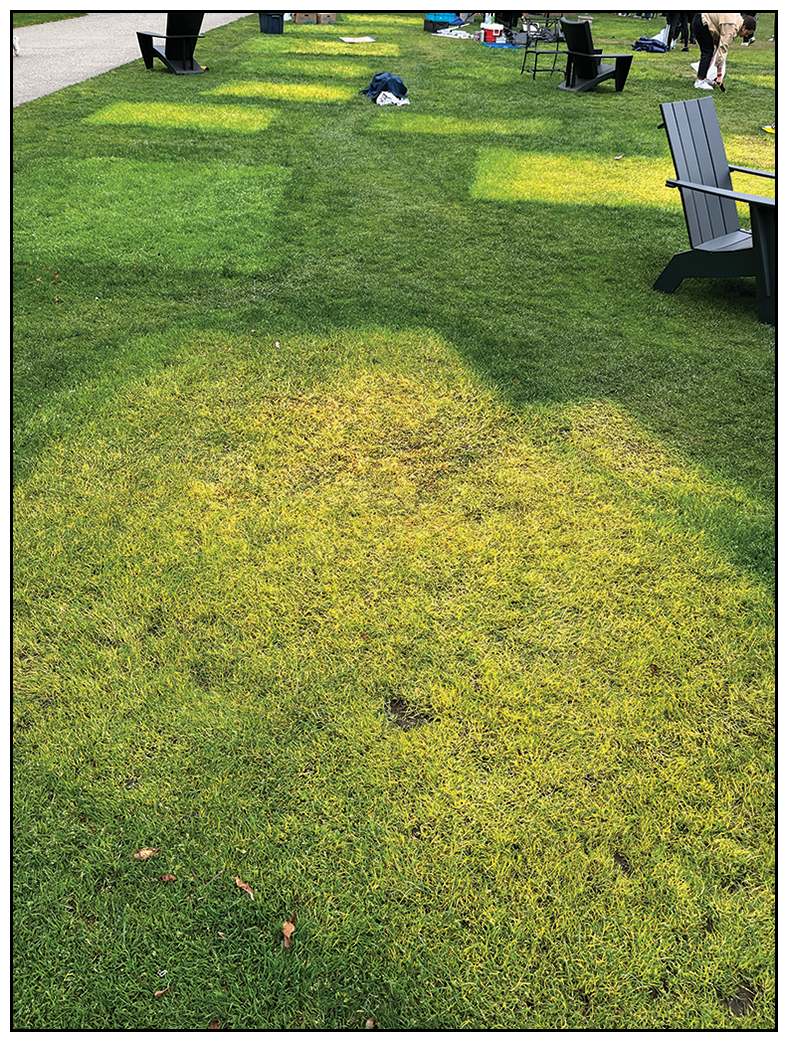
Figure 1. The Main Green at the Brown University Campus, after the dismantling of the Gaza solidarity student encampment (photograph by the author, 30 April 2024).
I see refusal taking many different forms in archaeology, epistemic as well as institutional. Epistemic refusal entails the abandonment of our own colonising efforts, the declaration of our practice as the only legitimate archaeology around (opening thus the space for many archaeologies), as well as our focus on anthropocentrism and on teleological and often racialised discourses. And while you may think that such earlier narratives, often presented as clashes between civilisation and barbarism, have long died out, you only need listen to the news and hear the present-day war criminals and genociders parrot them ad nauseum. To refuse narrating such stories would allow for other stories to be aired, for alternative modes of being and social life, for which we have plenty of material evidence, to be narrated, taught and communicated to various publics.
Institutional refusal may entail at least partial withdrawal from the network of institutions that sustain normative, colonial and neocolonial archaeology: the metropolitan, universal (or ‘encyclopaedic’) museum, or the national and nationalist museum; the foreign archaeological school that still refuses to confront its legacy and heritage; the network of rich donors and benefactors who are also often the collectors of plundered antiquities; the exclusive clubs of the archaeological elite. It is this network that may allow some of us to be highly theorised, proposing new interpretative models for the past, while at the same time standing in tacit acceptance and agreement with the often-unspoken premises of the colonial and neocolonial order. This will require affective disengagement, which is not an easy task. Encouraging critical historiographic research as well as research on the archaeological ethnography of those institutions is crucial, of course, but this can, in many cases, proceed alongside this tactic of partial refusal, a strategy of being an insider and an outsider at the same time. Legal imperatives or bureaucratic practicalities at times require from us some engagement with such institutions, but going along with these processes to make certain things possible does not necessarily imply an acceptance and a perpetuation of their logic.
Refusal will also mean refusing to pursue commercial sponsorship from companies that plunder the earth, ruthlessly exploit people or contribute to genocides, delegitimising a mode of doing archaeology that, sadly, is becoming the norm. The dire financial situation of most institutions forces many archaeologists to secure such sponsorship deals. I am aware that my relatively privileged position affords me to carry out (small-scale) fieldwork without resorting to such moves. I am, nevertheless, inviting us all to an honest debate on the epistemic and ethical-political implications of such practices. This plea for refusal is compatible with slower fieldwork and smaller projects (cf. Rizvi Reference Rizvi2023: 64), but it may also mean an affirmative, alternative model of fieldwork and of archaeology: doing less but engaging in more substantive work, a slow archaeology perhaps, an archaeology-as-process (Rizvi Reference Rizvi2023), and one perhaps aligned with the degrowth movement (cf. Zorzin Reference Zorzin2021).
As always, this process is highly complicated. To give an example from my own fieldwork, a refusal to accept and perpetuate the archaeological colonisation of the landscape and its communities when working on a primarily Neolithic tell site—Koutroulou Magoula in Thessaly, central Greece—would mean to resist normative practices that are often routine in the state archaeological sector and in the authorised heritage discourse: fence off the site, keep it separate from the social life of the community and treat its members purely as consumers of the archaeological knowledge we produce. At the Koutroulou Magoula Archaeology and Archaeological Ethnography Project we engage in a long-term archaeological ethnography where local communities teach us about their relationship to the land, to Neolithic tells, to the objects they encounter while farming; we leave the site unfenced and thus protected by them; and we organise an annual theatre/archaeology project, often with community participation, and stage it on the site, next to the open trenches (Hamilakis & Theou Reference Hamilakis, Theou and González-Ruibal2013; see https://sites.brown.edu/koutrouloumagoula/). In other words, we opt for what Alejandro Haber (Reference Haber2012) has called an undisciplined archaeology. Not all our efforts were successful, and compromises had to be made, but a strategy of partial refusal did achieve much, even under significant constraints.
Care
Of the three concepts discussed here, care has received the most attention in archaeology (cf. Caraher Reference Caraher2019; Rizvi Reference Rizvi2023). It has been developed within bioarchaeology, for example, linked directly to the human body, to suffering, pain and trauma, but also to the scholarly ethics in working with human remnants. Care has also been central in Indigenous and feminist perspectives in archaeology, right from the start (cf. Supernant et al. Reference Supernant, Baxter, Lyons and Atalay2020). Another strand emerged from the slow archaeology movement and focused on the refusal of the techno-science archaeology model and of the uncritical glorification of ‘big data’. The archaeology of homelessness (cf. Kiddey Reference Kiddey2017) can be seen as part of the movement for an archaeology of care. Care, of course, as a concept is everywhere in our contemporary world. It became another affect and impulse that has been appropriated by corporate interests; but it is also a rallying call for a different politics, advocated by groups and communities that are often anti-corporate and anti-capitalist, and stress the character of care as communal rather than individual (cf. The Care Collective 2020), while their main principle is that of inter-dependence, or what Marshall Sahlins (Reference Sahlins2013) called the ‘mutuality of being’.
Building on this earlier work within archaeology and beyond, care as a communal, embodied and sensorial endeavour, as a collaborative enactment of interdependence, can become an essential concept within decolonial archaeology. In this way, the concept can also be rescued from a corporate takeover and from anodyne, de-politicised and individualistic renderings. An example here could be work that has been carried out (since 2016) as part of a project on the archaeology of contemporary migration on the border island of Lesvos, in Greece. This work focused on two contexts, the first being Moria, the largest migrant camp and processing centre in Europe, which was completely burnt down in 2020 (Hamilakis Reference Hamilakis2022): photographic recording and archaeological ethnography on this site, before and after the fire, offered plenty of insights into migrant ‘management’ by state and supra-state actors, and into the resilience and ingenuity of the people-on-the-move (Figure 2). The second was the so-called Lifevest Cemetery, a secondary accumulation of lifevests, boats and other artefacts gathered from beaches. Through its size and evocative, palpable materiality, this deposit came to symbolise the scale and urgency of the ‘migrant crisis’ of Europe in recent years—in fact a crisis of reception on the part of European societies. This material trace has recently been erased by local authorities, as it was considered an eyesore and a ‘polluting’ site. A survey of this locality and a small-scale excavation of some part of it taught us much on the phenomenon of border crossing (Hamilakis et al. Reference Hamilakis, Hackley, Rothenberg, Bekele and Tyrikos-ergasin press).

Figure 2. Glass marbles collected by the author in 2022 from the Moria migrant camp, deformed by the September 2020 fire that destroyed it (photograph by Sam Driver).
In what way is this an archaeology of care? Much of the materiality produced or activated by border crossers themselves and by their allies, whether it is to do with shelter, safety or food making and sharing, speaks of the need to care for the moving and often vulnerable body. And yet this archaeology of care is a broader and a more expansive endeavour and even includes the materiality of detention and biometric data capturing, enacted by the border regime. Transience is the defining principle in the archaeology of contemporary migration, and while we could at times be overwhelmed by the amount of material culture generated by the assemblage of the border, we are aware that accelerated ruination and rapid erasure of migrant materialities is the order of the day (cf. Hamilakis Reference Hamilakis and Hamilakis2018). Border crossing material traces are often seen as ‘matter out of place’, as polluting, as invading entities that stand metonymically for the invading migrant herself. A valorisation of such remnants as worthy of slow and care-full study and sustained attention and preservation, being objects possessing epistemic, affective-mnemonic and archival value, is not only a battle against erasure and oblivion, not only an expansion of the idea of what constitutes an archaeological or heritage entity, it is also a profound act of care. If contemporary undocumented migration, especially from the Global South to the Global North, is the latest episode in the long and unfinished histories of colonisation, then an archaeology of the border that cares for and valorises, epistemically, affectively and mnemonically, the remnants that are considered pollution, and are not recognised as archaeological and thus as worthy of attention and preservation by the official archaeological apparatuses, is a profoundly decolonial act.
Repair
Repair, the third concept essential for a decolonial archaeology, has been widely discussed elsewhere already, mostly in its metaphorical sense, in various fields from design to cultural heritage (cf. Berger & Irvin Reference Berger and Irvin2022), although less so in archaeology. Related concepts, such as healing or restorative justice have been proposed, however, especially within Indigenous archaeology (e.g. Supernant Reference Supernant2024) or African American archaeology (e.g. Agbe-Davies Reference Agbe-Davies2022). Repair holds enormous potential for archaeology, especially coupled with the concepts of refusal and care: in some ways, it is a logical follow-up to them. Repair, of course, is linked to reparations (starting with the reparations for transatlantic slavery) but it is broader than that. Reparations emerge as a key demand in decolonial struggles today and in archaeology they can linked to repatriations, but the repatriation of objects and artefacts that were plundered during colonial rule and crypto-colonial domination is not the end but the start of the repair process, which should also include material compensation to repair some of the damage done.
Here, I briefly present an example where repair takes on a different form and meaning. The Acropolis of Athens is arguably the best-known monument in the western world, an icon and a material edifice at the same time, a symbol and a concrete heritage space, a national and a global property and claim, and thus a highly contested one. It is also a literary and iconographic topos of the western imagination, a pilgrimage destination at least since Pausanias’s times (second century AD), and one of the most photographed locales in the world. A UNESCO World Heritage Site, and one of the world’s top tourist attractions, it receives more than three million visitors a year (2023), an unsustainable number.
Most people, including scholars, know the site as a classical monument, and yet it is worth reminding ourselves that the locality or the hill that came to be known, especially in the Greek national consciousness, as the Holy Rock, had a long and eventful life well before classical times proper (starting with the Neolithic), and continued long after it. An important ‘Mycenaean’ citadel, a sacred site and a burial ground before the fifth century BC, a medieval political and military centre for the Frankish rulers of Athens, an important pilgrimage site for Christians. The Ottomans who took over the site in 1456 admired its architectural and sculptural wealth in this ‘city of sages’, and the traveller Evliyâ Çelebi who saw the Acropolis in 1667 was enchanted by its wonders; by the smiling faces in the sculptures looking at him; by the scent of sulphur emanating from the caves on its slopes, in which sages from Athens would speak without words with sages in Baghdad (cf. Fowden Reference Fowden, Georgopoulou and Thanasakis2019). The Acropolis was Ottoman for nearly 400 years, twice as long as it has been Modern Greek, and all that time it functioned as a fortress, as a place of residence, as a locality of worship, as a monument to visit and admire, and as an important and extensive funerary landscape. The western slope of the Acropolis, and the land that more than three million visitors walk upon every year to climb to the summit, held, and continues to hold, the bones of possibly thousands of Muslims; it was an extensive and architecturally rich Islamic burial ground. This is an important monumental assemblage, part of the Acropolis that has been nearly erased. There is no signage today to alert visitors to this heritage; only informed and very perceptive visitors could spot a few traces of this cemetery, fragments from head stones, numbered and archived but unmarked and caged among other rubble at the Propylaia (Figure 3).

Figure 3. Fragments of Muslim gravestones (among other scattered pieces) from the Ottoman graveyard of the Acropolis (photograph by the author, 26 January 2025).
To retrieve these lives of the monument through words and objects, through innovative and collaborative archaeological-ethnographic projects involving ethnically and religiously diverse communities, to narrate the history of the making of this site in modernity as a white, European heritage, is to repair some of the violence done. To acknowledge, for example, the Muslim dead that are still buried, unmarked and forgotten, on the foothill of the Acropolis is a matter of not only epistemic but also restorative social justice; it is an act of care and repair that also speaks to the present, to the violence committed upon brown and black bodies at the border, and through bordering practices all over the country, Europe and in fact in most parts of the Global North.
Conclusion
To summarise, very briefly, let us recall Fanon again: decolonisation will be a disorder; it will not win us friends in high places; it will make many people uncomfortable, to say the least. And yet, if we are serious about achieving it, I propose that a potential way forward is refusing some of our privileges, affectively disengaging from the structures and networks of power that sustain colonisation and thus finding new affective communities—communities of struggle as well as communities of care and repair.
Acknowledgements
This is a revised and shortened version of the text delivered as an opening keynote address to the conference ‘Envisioning Decolonial Futures through Archaeology’ (McDonald Institute for Archaeological Research, Cambridge, 23–25 October 2024). I am deeply grateful to the organisers (Renan Lemos, Linda Mbeki, Abigail Moffett, Bolaji Owoseni and Natasha Rai) for the kind invitation and the warm hospitality, and to all participants for the stimulating debate. Maria Choleva and Eva Mol offered valuable feedback and advice on earlier drafts. Two anonymous referees offered valuable encouragement and criticism.
Funding statement
This research received no specific grant from any funding agency or from commercial and not-for-profit sectors.


 Open access

