To save content items to your account,
please confirm that you agree to abide by our usage policies.
If this is the first time you use this feature, you will be asked to authorise Cambridge Core to connect with your account.
Find out more about saving content to .
To save content items to your Kindle, first ensure no-reply@cambridge.org
is added to your Approved Personal Document E-mail List under your Personal Document Settings
on the Manage Your Content and Devices page of your Amazon account. Then enter the ‘name’ part
of your Kindle email address below.
Find out more about saving to your Kindle.
Note you can select to save to either the @free.kindle.com or @kindle.com variations.
‘@free.kindle.com’ emails are free but can only be saved to your device when it is connected to wi-fi.
‘@kindle.com’ emails can be delivered even when you are not connected to wi-fi, but note that service fees apply.
European studies have traditionally relied on the power of broad concepts to account for the experience of the European Union: be it integration, governance, market, or legal order. Many of these concepts originated in social sciences. Yet, one concept is conspicuously absent from this list: ‘society’ was seen as ill-suited for picturing European integration. This background makes the recent and pervasive return of the term ‘society’ in the EU institutional discourse even more apparent. The paper attempts to propose a framework within which to think of the EU and its law in terms of European society makes sense. First, it argues that this turn to society is a response to challenges posed to the core assumptions upon which EU law has been predicated. Secondly, it inquiries about the sort of society produced by the law of European society. Thirdly, it suggests a new development for EU law and EU legal studies, integrating in their technical and conceptual appartuses additional resources and critical knowledge drawon from social sciences and social theory.
Few social scientists expected another major inter-state war in Europe. The dominant positions either confine warfare to the dustbin of European history or downplay its significance in late modernity. Sociologists of war have been less surprised by recent developments, however. In a wider socio-historical context warfare remains a crucial catalyst of social change. No other social phenomenon has continuously influenced the social world to such an extent and this has been particularly the case in European history. In this article, I critically review recent developments in the sociology of war. I also look at the ways in which existing analytical tools can be deployed to explain the return of inter-state warfare in Europe. I argue that the integration of longue durée comparative historical sociology with micro-sociological scholarship on everyday behaviour in war is the best way forward to understanding the long-term dynamics of war and society.
The Introduction explains the ‘theses and documents’ mode of proceeding, provides a quick overview of the period covered historiography, including recent work by political scientists, explains the economic underpinnings of the religious systems analysed, and introduces the concept of ‘deep structure’.
The emergence of ‘compassionate cities’ and ‘compassionate communities’ (CCC) as social movements has become a pronounced development in public health approaches to the end-of-life. Drawing on the World Health Organisations’ Ottawa Charter, it contends that end-of-life care has become individualised and medicalised and promotes the ‘rediscovery’ of community approaches. Drawing on a range of sociological theory insights, it deploys a ‘critical interpretative’ analytic approach to literature identified in a narrative review. The paper aims to question the affirmative consensus that exists around CCC by building on the emergence of critical themes have recently emerged in various meta-reviews. This analysis identifies tensions and inconsistencies between the ideals of The Ottawa Charter, CCC practice and a relatively superficial and uncritical deployment of theory, particularly in relation to its status as a conservative or radical movement. The paper concludes by suggesting constructive ways forward.
This paper is interested in the spread of an autocratic ideology and the emergence of a societal belief. It is often assumed that the greater the capacities of an autocratic regime to inculcate an ideological belief into the minds and hearts of subordinate citizens, the more an autocratic ideology is shared in a given society. The extent of an ideological belief is explained by a direct and immediate function of its indoctrination capacities. The paper does not question this top–down, macro–micro approach, but argues that the spread of an ideology also depends on stabilizing micro–micro interactions and micro–macro linkages. In this light, the paper makes use of James Coleman’s famous explanatory model and theorizes the different partial mechanisms. It pays particular emphasis on the micro–macro mechanism. Borrowing insights from epidemiology, it argues that three classes of parameters should be taken into closer consideration: timing, contact structure, and the contagiousness of an ideology. In empirical terms, the paper illustrates its theoretical reasoning with the dissemination of the North Korean Juche ideology from the 1950s to the early 1970s, which represents an extreme case of a rapidly ideologizing autocracy. The paper relies on secondary sources as well as archival material retrieved from the former embassy of the German Democratic Republic in Pyongyang.
This chapter will introduce you to some of the key formal social work theories that underpin practice. We begin with the individualistic and systems-based theories that originated in psychology and conservative sociology respectively. As was evident in Chapter 5 on the history of social work, these establishment theories generally dominated social work before the emergence of critical social work theories. We then shift our attention to the development of critical theories, such as Marxist, radical, structural, feminist and anti-oppressive perspectives that aim for social justice and autonomy, and discuss the more recent contribution of poststructural and queer theories to the evolution of critical theories and to critical social work. The newer critical theories developed out of critiques of the older establishment theories, so it is necessary to have some familiarity with the principles of both. Finally, we draw on research with our first-year students to demonstrate the application of theory in relation to a case study.
In this book, Jonathan Valk asks a deceptively simple question: What did it mean to be Assyrian in the second millennium bce? Extraordinary evidence from Assyrian society across this millennium enables an answer to this question. The evidence includes tens of thousands of letters and legal texts from an Assyrian merchant diaspora in what is now modern Turkey, as well as thousands of administrative documents and bombastic royal inscriptions associated with the Assyrian state. Valk develops a new theory of social categories that facilitates an understanding of how collective identities work. Applying this theoretical framework to the so-called Old and Middle Assyrian periods, he pieces together the contours of Assyrian society in each period, as revealed in the abundance of primary evidence, and explores the evolving construction of Assyrian identity as well. Valk's study demonstrates how changing historical circumstances condition identity and society, and that the meaning we assign to identities is ever in flux.
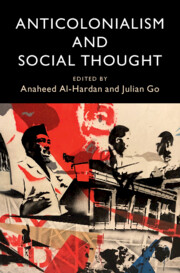
This chapter introduces the main themes of the volume, Anticolonialism and Social Thought. It provides a brief overview of the history of anticolonialism and argues that anticolonialism in history generates social thought and social theory.
Not only did the anticolonial movements of the past two centuries help bring down the global order of colonial empires, they also produced novel, innovative and vital social thought. Anticolonialism has been largely ignored in conventional Europe-centered social thought and theory, but this book shows how our sociological imagination can be expanded by taking challenges to colonialism and imperialism seriously. Amidst their struggles to change the world, anticolonial actors offer devastating critiques of it, challenging the racism, economic exploitation, political exclusions and social inequalities central to imperialism and colonialism. Anticolonial thinkers and activists thereby seek to understand the world they are struggling against and, in the process, develop new concepts and theorize the world in new ways. Chapters by leading scholars help uncover this dissident tradition of social thought as the authors discuss an array of anticolonial thinkers, activists and movements from Palestine, India, South Africa, Brazil, Algeria and beyond.
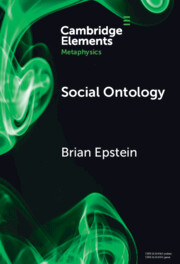
Social ontology is the study of the nature of the social world. This Element aims to provide an overview of this burgeoning field, and also to map the questions that theories in social ontology address. When we encounter a theory of some social thing – groups, law, gender, and so on –how are we to read it? What classes of theories have been explored and abandoned, and what classes are new and promising? The Element distinguishes theories of social construction from theories that characterize the products of social construction. For each, the Element works through a 'toy' theory and then discusses features that more realistic theories ought to include. Three running examples are discussed throughout the Element: (1) property, or ownership; (2) race, or racialized kinds; (3) collective attitudes (i.e., beliefs, desires, knowledge, intentions, etc., of groups and organizations). This title is also available as Open Access on Cambridge Core.
The Inflation Reduction Act introduces new social actors and new decarbonization opportunities to the decarbonization project. This chapter introduces ways of analyzing these new opportunities, leading to a presentation of what social theory is and how it can be useful for analyzing decarbonization policy.
The chapter defines theory and establishes how it informs discourse analysis. Theory is defined as an idea that explains what discourse is, how discourse should be understood, or both. Conversely, a theory is not an opinion, thought, or belief, which are simply intuitions without an explanatory framework. Topics discussed in this chapter include theories of knowledge and applied theories. After reading this chapter, readers will know how to define theory; understand how theory relates to the analytic process; know the difference between a theory of knowledge and an applied theory; and be able to identify the different types of applied theory that exist.
This paper aims at exploring the dynamic interplay between advanced technological developments in AI and Big Data and the sustained relevance of theoretical frameworks in scientific inquiry. It questions whether the abundance of data in the AI era reduces the necessity for theory or, conversely, enhances its importance. Arguing for a synergistic approach, the paper emphasizes the need for integrating computational capabilities with theoretical insight to uncover deeper truths within extensive datasets. The discussion extends into computational social science, where elements from sociology, psychology, and economics converge. The application of these interdisciplinary theories in the context of AI is critically examined, highlighting the need for methodological diversity and addressing the ethical implications of AI-driven research. The paper concludes by identifying future trends and challenges in AI and computational social science, offering a call to action for the scientific community, policymakers, and society. Being positioned at the intersection of AI, data science, and social theory, this paper illuminates the complexities of our digital era and inspires a re-evaluation of the methodologies and ethics guiding our pursuit of knowledge.
This chapter discusses the conceptual foundations of the notion of social justice during the Enlightenment before surveying the volume’s achievement in historicizing twentieth-century European proposals. Social justice presupposed the invention of the “social,” in and through the insight into informal cultural and institutional ordering. And while social justice was coined earlier in the nineteenth century, the concept became unavoidable later in the century as both left liberals and Roman Catholics responded to individuals and laissez-faire, in part by innovating a new ‘social science’. This chapter concludes by speculating about the future trajectory of claims on the notion of social justice.
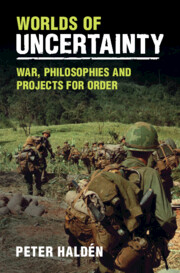
In recent years we have faced huge uncertainty and unpredictability across the world: Covid-19, political turbulence, climate change and war in Europe, among many other events. Through a historical analysis of worldviews, Peter Haldén provides nuance to the common belief in an uncertain world by showing the predictable nature of modern society and arguing that human beings create predictability through norms, laws, trust and collaboration. Haldén shows that, since the Renaissance, two worldviews define Western civilization: first, that the world is knowable and governed by laws, regularities, mechanisms or plan, hence it is possible to control and the future is possible to foresee; second, that the world is governed by chance, impossible to predict and control and therefore shocks and surprises are inevitable. Worlds of Uncertainty argues that between these two extremes lie positions that recognize the principal unpredictability of the world but seek pragmatic ways of navigating through it.
Chapter one introduces the topics of the book, describes how I analyse them and outlines how the work is structured. It shows that there are many books on uncertainty as a philosophical issue but they do not deal with the problems and solutions of warfare. Conversely, there are many books on surprise and strategy in war but none that connect these problems to philosophical discussions on uncertainty, ontology and predictability. Many sociologists see our time as characterized by uncertainty but they overlook the dominance of ideologies of certainty and systems of predictability. I also argue that modernity is a civilization, not just a historical period; a theory that emphasizes that societies have always created predictability through law, norms and science but in different ways. Predictability and unpredictability should be seen as properties, existing in degrees, in different social systems. On the basis of this theory and drawing upon Machiavelli, Hume, Dewey and Luhmann, I argue that searching for certainty is not only dangerous but also unnecessary. We will always face shocks and surprises but through knowledge, collaboration and trust these will fade away with time.
Chapter seven has two tasks. First, it summarizes the argument and the broad themes of the book. Second, it discusses the character of modernity. My argument is that we should view modernity as a distinct civilization, rather than as a period. This civilization is caught in a complex interplay and tension between the confrontation with uncertainty and the strivings for certainty, unfortunately often conceptualized as ontological absolutes. Although ontologies of uncertainty and certainty are co-constitutive, our culture tends to see the world in either–or terms, which explains the tendency to oscillation between hubris and despair and the difficulty of pragmatic and balanced accounts to enter into mainstream world views. Third, I propose a modest remedy for these modernist tendencies: namely, drawing inspiration from non-dualist traditions and classical virtue ethics.
A particularity about the literature on the meaning of work is that the concept of meaning is discussed extensively and deeply, while the concept of work is hardly debated at all. Tackling this shortcoming, we start out by taking up contradictions in the social science debate on definitions of the concept of work. Four such contradictions stand out: (1) Subjective vs. objective definitions; (2) a single vs. several work concepts; (3) certain activities in themselves vs. any activity within specific social relations are to be regarded as work; and (4) empirical vs. ontological basis of the concept. In investigating them, we take help from what are often said to be the three most important classics of social science: How have Émile Durkheim, Max Weber and Karl Marx handled the concept of work? Specifically, can we get inspiration from them to take stands concerning the contradictions? The answers to these questions lead us to suggest this definition: Work is any activity performed in internal social relations that structure the sphere of necessity. Finally, we discuss the three suggested explicit conceptualisations of ‘work’ that we have found in the meaningful work literature.
This paper adds to a vital international tradition of discussing the history of sociological theory by empirically investigating its structure, dynamics, and relationships. Our primary contribution to this tradition is to bring to the conversation a greater level of comparative and historical scope, a more systematic quantitative methodology, and a degree of reflexivity and synthesis. To do so, we examine some 670 editions of sociological-theory books geared toward students, published in English, German, and French between 1950 and 2020. Our empirical analysis highlights patterns, trends, and relationships among the theorists featured in these books, the narratives and approaches that define their visions of sociological theory, and the characteristics of the authors who wrote them. Our findings reveal some key intellectual as well as sociological factors associated with the changing composition of the canon.