To save content items to your account,
please confirm that you agree to abide by our usage policies.
If this is the first time you use this feature, you will be asked to authorise Cambridge Core to connect with your account.
Find out more about saving content to .
To save content items to your Kindle, first ensure no-reply@cambridge.org
is added to your Approved Personal Document E-mail List under your Personal Document Settings
on the Manage Your Content and Devices page of your Amazon account. Then enter the ‘name’ part
of your Kindle email address below.
Find out more about saving to your Kindle.
Note you can select to save to either the @free.kindle.com or @kindle.com variations.
‘@free.kindle.com’ emails are free but can only be saved to your device when it is connected to wi-fi.
‘@kindle.com’ emails can be delivered even when you are not connected to wi-fi, but note that service fees apply.
This article traces the history of how two generations of US archaeologists navigated their relationship with the Guatemalan government, from the Jorge Ubico dictatorship in the 1930s through the democratic opening of the 1940s and 1950s and the subsequent CIA-sponsored coup. Critiques of modern archaeology have focused on the discipline’s history of ideological and material collusion with different projects of US and European imperialism in the Global South. While the archaeologists discussed here benefited from US hegemony in the region, their own correspondence reflects an ambivalent relationship to formal frameworks of international law and a desire to function as autonomous nonstate actors. Rather than reflecting the political context of a given moment, the archaeologists’ behavior was often determined by a generations-old professional culture based on pragmatism and collective entitlement to the control of antiquities.
This article examines women’s storytelling and nanga (harp) performances in nineteenth- and twentiethcentury western Uganda to investigate how these songs shaped community identity and norms. Drawing on musical recordings, archival sources, and interviews, this article demonstrates that these performances functioned as important public histories, teaching audiences about past famines, droughts, climate change, and cattle events. These narratives both chronicled regional histories and provided the shared intellectual material from which community norms and a shared identity could be articulated. Extant scholarship has focused overwhelmingly on how male intellectuals contributed to ideas of race, nation, or ethnicity. This article thus provides an important alternative by showing how women produced histories that contributed to group identity—yet this historical production occurred through musical performances rather than in books, tracts, or petitions. In doing so, this article reintegrates western Ugandan women into narratives of imperial encounters and intellectual history.
This chapter analyzes discourses on universal economic and social human rights and social democracy in connection with intellectuals discussing the American and British war aims of World War II. It was an age of major societal transformations: the socialization of work due to industrial capitalism; experiences of authoritarian ideologies emerging out of, inter alia, extreme inequality; and nascent uproars against racism and imperialism. Human rights were part of moral discourses on equality and social justice in the aftermath of the Great Depression and critiques of laissez-faire capitalism. The chapter details how Ralph Bunche and George Herbert Wells championed a vision of social democracy and human rights. Bunche and Wells intervened in wartime when many intellectuals across the political and religious spectrum would write of human rights. Key intellectual actors increasingly referred to a new political “space” of “the world,” and some were redefining “democracy” as a “world” and a “social” democracy. Revisiting their thinking allows for a more detailed reconstruction of their argumentation, including on how, specifically, they defended economic and social human rights.
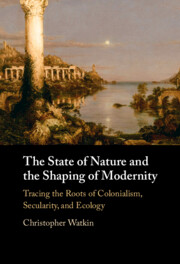
The state of nature is a powerful idea at the heart of the fragmented and sometimes conflicting stories the modern West tells about itself. It also makes sense of foundational Western commitments to equality and accumulation, freedom and property, universality and the individual. By exploring the social and cultural imaginaries that emerge from the distinct and often contradictory accounts of the state of nature in the writing of Hobbes, Locke and Rousseau, The State of Nature and the Shaping of Modernity offers a fresh perspective on some of the most pressing debates of our time, showing how the state of nature idea provides a powerful lens through which to focus the complex forces shaping today's political and cultural landscape. It also explores how ideas about human nature and origins drive today's debates about colonialism, secularism, and the environment, and how they can shed new light on some of society's most heated debates.
Breaking new ground in the intellectual history of economic and social human rights, Christian Olaf Christiansen traces their justification from the outset of World War II until the present day. Featuring a series of fascinating thinkers, from political scientists to Popes, this is the first book to comprehensively map the key arguments made in defense of human rights and how they connect to ideas of social and redistributive justice. Christiansen traces this intellectual history from a first phase devoted to internationalizing these rights, a second phase of their unprecedented legitimacy deployed to criticize global inequality, to a third phase of a continued quest to secure their legitimacy once and for all. Engaging with the newest scholarship and building a bridge to political philosophy as well as global inequality studies, it facilitates a much-needed novel and nuanced history of rights-rights we should still consider defending today.
This article examines multi-vector pro-life exchanges between Poland and two American countries: the United States and Chile. We make the case that the 1970s through 1990s represent a significant historical moment that yielded both transplantable templates and direct longitudinal consequences for transnational social activism in the twenty-first century. We argue that during this time Poland acted as an incubation site for pro-life transnationalism, where “right to life” became the rallying cry of new generations of Catholic Far Right thinkers and activists like the politician Marek Jurek and journalists and social activists Ewa Kowalewska and Lech Kowalewski. The transnational entanglements that empowered Jurek, Kowalewska, and Kowalewski assumed intellectual and political forms, while also producing direct contact and active exchange of tactics, ideas, and know-how with the leaders of the U.S. pro-life movement such as John Willke or Father Paul Marx. Our study, situated at the intersection of intellectual history and social movement studies, highlights the importance of examining transnationalism with full attention to its local rootedness, and makes a case for incorporating non-progressive social activism into the post-1989 story of civic and social mobilization.
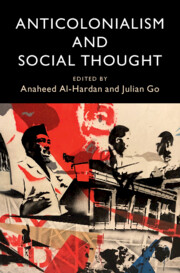
Not only did the anticolonial movements of the past two centuries help bring down the global order of colonial empires, they also produced novel, innovative and vital social thought. Anticolonialism has been largely ignored in conventional Europe-centered social thought and theory, but this book shows how our sociological imagination can be expanded by taking challenges to colonialism and imperialism seriously. Amidst their struggles to change the world, anticolonial actors offer devastating critiques of it, challenging the racism, economic exploitation, political exclusions and social inequalities central to imperialism and colonialism. Anticolonial thinkers and activists thereby seek to understand the world they are struggling against and, in the process, develop new concepts and theorize the world in new ways. Chapters by leading scholars help uncover this dissident tradition of social thought as the authors discuss an array of anticolonial thinkers, activists and movements from Palestine, India, South Africa, Brazil, Algeria and beyond.
The introduction engages scholarly debates around the topics of Tanzanian nationalism, African identity, pan-Africanism, and global intellectual history to indicate its contributions to those fields. It introduces the main question: How did an African identity come to have any personal or political purchase in East Africa in the twentieth century? The main case study focuses on the African Association (AA), a politically minded pan-African group with ideational connections to several streams of black thought. The members who chose this group, which promoted an African identity, usually did so for two reasons. They were either inspired by the redemptive pan-Africanism of some of its visionary leaders who engaged with the ideas of Ethiopianism surrounding Africa’s future and past and/or they were drawn to the strand of practical pan-Africanism cultivated by the leadership of the AA who sought to build African unity and open chapters all throughout the continent and even the globe.
An intellectual history approach to the exploration of African identity in mid twentieth-century East Africa provides several insights into unresolved tensions in African political history. Building the African Nation argues that the failure of the Pan-African Movement to politically unify the continent in the heady days of the end of empire in the late 1950s and early 1960s should be partly attributed to the fact that competing nationalisms were at play. African and territorial nationalisms were vying for the loyalty of the people of the continent. Even though the relationship between the two proved to be beneficial to the aims of some territorial nationalists in solving specific problems – coordination of anti-colonial tactics, sharing of information valuable to decolonization projects, etc. – in the end, there were two separate identities aiming for ultimate allegiance. In hindsight, we can see that trying to build two nations simultaneously was bound to create tension or conflict and is one reason African political unity has proven so elusive. When we recognize that much pan-African thinking in the continent was born out of the idea that all Africans were one and should therefore prioritize a continental fealty, it becomes easier to understand how this made pan-Africanism at odds with territorial nationalists’ projects.
In the last few years, the issue of mobilisation for war has, in Australia at any rate, shifted from the arcane to the highly pertinent. Concerns publicly manifested in the government’s 2020 Defence Strategic Update, which asserted that the long-held notion of up to 10 years’ warning for a possible conventional attack on Australia had – as 10-year rules tend to eventually do – evaporated. Moreover, it alluded to what was thought to be a remote, but nevertheless alarming, possibility of a ‘high-intensity conflict’ in Australia’s region. Suddenly, generating combat power, perhaps more than what was readily to hand, has taken on some urgency.
This chapter is an introduction to the Enlightenment mock arts, set out in three historical hypotheses. First, early-modern writers became increasingly interested in the cognitive (rather than simply material) value in the work of skilled technicians. The mock-arts were models for the intuitions involved in skilled manufacture, related to certain ineffable components of literary production. Second, the literary framing for those investigations was invariably satirical (or oblique and critical in other ways). As specialists in literary wit, authors of mock arts put themselves forward as experts in curiosity, invention and communication. Third, writers became more subtle in their assumptions about the print trade and the suitability of books as tools that might contribute to the communication of personal knowledge. Since convention defined that sort of knowledge by the impossibility of pinning it down in books, this opened another field for irony and indirection.
‘Swaraj’ is perhaps the most widely known of the keywords that are associated with Indian nationalism. Although it was initially used to translate the Western concept of ‘self-government’, by the second decade of the twentieth century, swaraj had become a complex term that could not be readily translated by using English expressions. Intellectual historians have extensively analysed the use of swaraj in the Gandhian oeuvre. Gandhi's Hind Swaraj has often been taken as a guide to explain the meaning of the term. However, the prior history of swaraj and the uses of swaraj by politicians who disagreed with Gandhi's definition of that term have not been adequately explored. To fill this lacuna, in this article, a selection of instances are examined that marked the transformation of swaraj from a traditional term that was associated with the precolonial Maratha history to an untranslatable term that was used by Indian nationalists to conceptualise their anti-colonial activism. I demonstrate here that swaraj was left untranslated in a range of English-language Indian political texts and documents to shape an agenda that was opposed to the collaborationist policies of imperial liberalism. The article thus illustrates the crucial role that the question of untranslatability played in sustaining the anti-colonial agenda of mainstream Indian nationalism.
This chapter asks whether there is an Ottoman intellectual history and, if so, what makes it distinct from other forms of intellectual and cultural history. We argue that the answer resides in the methods and questions that Ottoman intellectual historians have asked their sources based on a long intellectual, philological, and philosophical tradition generated by the Ottomans. To do so, we discuss major methods, sources, and challenges of Ottoman intellectual history and how historians have engaged with them. Embracing a flexible and encompassing definition of intellectual history, we aim to highlight the undeniable and necessary place of intellectual history within Ottoman studies in the context of new developments in the field. Last, we discuss current methodological developments in intellectual history and their possible implications for the discipline’s future. With this short contribution, we hope to start a conversation about what is next in Ottoman intellectual history.
The globalization of modern European intellectual history is long overdue. It is also still in its early stages. This chapter distinguishes four paths historians have followed so far. First, there has been the attempt to recover the global contexts and sources of the canon of “European thought.” A second approach has been to recapture the global imaginations of modern European thinkers. A third and more difficult possibility has been to track how European concepts and traditions were received and remade as they traveled the globe and to examine the complex feedback mechanisms that have blurred the line between the European and the extra-European. Finally, a fourth and most controversial mode is to insist that the modern European canon is of prime significance in understanding historical and contemporary global relations – and that part of its value lies in helping undo the exclusions that its own historians have visited on that canon by misrepresenting European thought as a merely European affair.
This essay is a study in bureaucratic knowledge production using the example of the postal system in German East Africa. There is a great deal of historical literature that focuses on bureaucratic-knowledge-as-power: bureaucracies produced information that was used to quantify and, ultimately, to control populations both in the metropole and the colony. In this piece I want to emphasize another kind of bureaucratic knowledge production: namely, information about the bureaucratic system that was created through bureaucratic practice — what I call “studied bureaucratic knowledge.” Beyond understanding German attempts to translate (linguistically, administratively, and culturally) one understanding of bureaucracy, the historian who pays attention to the users of colonial bureaucratic structures can uncover bureaucratic knowledge created by those who encountered those structures in their daily lives — and how that information in turned shaped their use of the bureaucratic system.
The conclusion surveys the core interventions of the book: its conceptual and methodological work to open new pathways in African intellectual history beyond decolonisation through postcolonial civil wars to the present, among working-class migrants and war-displaced people, within the multiple discursive worlds (at home, in Sudan, and globally) accessible to them. This chapter challenges atheoretical interpretations of southern and South Sudanese politics, reasserting the place of political imagination in this history and demanding close engagement with everyday conversations over political ethnicity, wealth, class, and power. The chapter ends with a reflection based on conversations over 2015–23 with many of the same activists, teachers, and writers in South Sudan, on opportunities lost, and on continuing projects of political creativity today. As a history in the aftermath, the project was built during a time of a loss of optimism and political freedom, and is currently a history of possibilities lost.
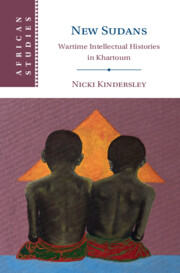
Over a million southern Sudanese people fled to Sudan's capital Khartoum during the wars and famines of the 1980s, 1990s and 2000s. This book is an intellectual history of these war-displaced working people's political organising and critical theory during a long conflict. It explores how these men and women thought through their circumstances, tried to build potential political communities, and imagined possible futures. Based on ten years of research in South Sudan, using personal stories, private archives, songs, poetry, photograph albums, self-written histories, jokes and new handmade textbooks, New Sudans follows its idealists' and pragmatists' variously radical, conservative, and creative projects across two decades on the peripheries of a hostile city. Through everyday theories of Blackness, freedom and education in a long civil war, Nicki Kindersley opens up new possibilities in postcolonial intellectual histories of the working class in Africa.
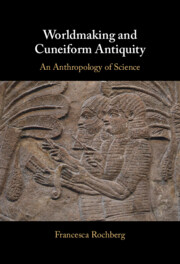
Objects of knowledge exist within material, immaterial, and conceptual worlds. Once the world is conceived from the perspective of others, the physical ontology of modern science no longer functions as a standard by which to understand other orderings of reality, whether from ethnographical or historical sources. Because premodern and non-western sources attest to a plurality of sciences practiced in accordance with different ways of worldmaking from that of the modern West, their study belongs to the history of science, the philosophy of science, and the sociology of science, as well as the anthropology of science. In Worldmaking and Cuneiform Antiquity, Francesca Rochberg extends an anthropology of science to the historical world of cuneiform texts of ancient Babylonia. Exploring how Babylonian science has been understood, she proposes a new direction for scholarship by recognizing the world of ancient science, not as a less developed form of modern science, but as legitimate and real in its own right.
This chapter explores the reception of David Hume’s Essays in eighteenth-century Britain by linking computational methods of text reuse detection with more traditional approaches to the history of ideas. We find that many of Hume’s essays were frequently reprinted individually, in whole and in part, including in anthologies, grammars, style guides, and collections such as The Philosophical Dictionary, where editors often moulded for their readers what they took Hume’s message to be. As the century drew to a close, Hume’s essays were firmly integrated into the diverse landscape of eighteenth-century British literary culture. We reveal which essays underwent the most extensive reuse, carefully analysing them based on their respective collections and as individual titles. We find that, just because Hume ‘withdrew’ an essay from his collection, it did not necessarily mean it was withdrawn from the public eye. Several essays by Hume experienced evolving life cycles, and numerous authors incorporated his texts discreetly, some without explicitly acknowledging their use. Taking Hume’s essays as a whole, the range of topics and venues involved in the history of their eighteenth-century reuses is striking. Our story includes not only prominent political and economic thinkers, historians, philosophers, lawyers and clergy but also scores of hack writers, anonymous authors and a range of publishers, editors and compilers. The chapter demonstrates how a more comprehensive grasp of the reception of Hume’s Essays in eighteenth-century Britain accommodates all these facets.
This chapter traces Ottoman responses to the challenge of Europe’s rise and global hegemony – responses that engendered two emergent properties: religious disenchantment and growing resentment at the loss of Muslim primacy. These properties informed new political programs in the buildup to and during critical junctures. Milestones included the Tanzimat (1839) and subsequent, Young Ottoman reforms led by bureaucrats and intellectuals. The result was a framework for multicultural citizenship – an Islamo-liberal project. It bore fruit in the first Ottoman constitution (1878), but was soon suspended by Sultan Abdülhamid II (r.1876–1908/9) who instead developed (pan-)Islamism as a political program. His authoritarian rule, in turn, spurred a coalition of liberal and proto-nationalist Young Turks to revolt (1908), launching the “second constitutional period.” The revolution was then captured by an illiberal Triumvirate espousing a more unitary, proto-nationalist project. No linear or teleological process, the chapter reveals that contests were driven by the complex interplay of ideas, actors, and contextual pressures. These forces informed a new menu of programs for managing religion and diversity that would outlive the empire itself: Islamo-liberalism, liberalism, Islamism, and Turkism.