To save content items to your account,
please confirm that you agree to abide by our usage policies.
If this is the first time you use this feature, you will be asked to authorise Cambridge Core to connect with your account.
Find out more about saving content to .
To save content items to your Kindle, first ensure no-reply@cambridge.org
is added to your Approved Personal Document E-mail List under your Personal Document Settings
on the Manage Your Content and Devices page of your Amazon account. Then enter the ‘name’ part
of your Kindle email address below.
Find out more about saving to your Kindle.
Note you can select to save to either the @free.kindle.com or @kindle.com variations.
‘@free.kindle.com’ emails are free but can only be saved to your device when it is connected to wi-fi.
‘@kindle.com’ emails can be delivered even when you are not connected to wi-fi, but note that service fees apply.
Societal concerns on the environmental impact of manufacturing activities in developing economies have intensified over the past decade. Open innovation (OI) has emerged as a promising approach to mitigate these adverse effects without compromising sustainable performance (SP). This primary aim of this study is to examine and evaluate the current state of research on OI and SP practices for further empirical studies in developing economies. Using the Preferred Reporting Items for Systematic Reviews and Meta-Analyses framework, we systematically reviewed and analysed 108 articles from Scopus, Web of Science, Google Scholar, and ScienceDirect databases related to OI and SP practices. Our study highlights significant knowledge gaps in the relationship between OI and SP in manufacturing, noting a predominant focus on developed countries. This research contributes to the existing literature by identifying critical contextual and theoretical gaps, providing valuable insights and theoretical implications for future OI and SP research agendas in developing countries.
Iraq is among the countries most vulnerable to climate change, and it is faced with extreme heat, drought and environmental degradation.
Aims
To examine the prevalence of climate anxiety and its association with depression and generalised anxiety disorder in the Iraqi population.
Method
A cross-sectional survey recruited 1019 adult participants (47.8% males, 52.2% females). Most participants were aged 18–41 years (n = 854, 83.8%); 16.2% (n = 165) were aged 42–72 years. Regionally, 75.6% (n = 770) were from the Kurdistan Region and 24.4% (n = 249) from provinces in central and southern Iraq. The study used the Climate Change Anxiety Scale (CCAS), Patient Health Questionnaire-9 (PHQ-9) and Generalised Anxiety Disorder-7 (GAD-7). Statistical analyses, included descriptive analysis, analysis of variance (ANOVA), t-tests, Pearson’s correlations and regression models, examined variations in climate anxiety by demographics and associations with depression and anxiety.
Results
Overall, 71.4% of participants reported severe climate anxiety, with a higher prevalence in the Kurdistan Region (73.2%) compared with central and southern Iraq (65.9%). Five provinces were found to have significantly higher levels of climate anxiety: Ninawa, Basrah, Najaf, Duhok and Erbil. Age was a significant predictor, and older participants (42–72 years) reported higher levels than younger participants (P = 0.008). A positive correlation was observed between climate anxiety and both depression (r = 0.382, P < 0.001) and generalised anxiety (r = 0.361, P < 0.001). Simple linear regression revealed that climate anxiety was significantly associated with both depression (β = 0.25, P < 0.001) and generalised anxiety (β = 0.214, P < 0.01), accounting for the 14.6 and 13% variance, respectively.
Conclusions
Climate anxiety is prevalent in Iraq and significantly associated with mental health problems. The findings endorse the need for integration of mental health into Iraq’s national climate adaptation and public health policies.
Understanding the causes of intrastate armed conflict and civil wars – whether as individual cases or in a more general sense – is the most compelling but perhaps also the most elusive challenge in the study of such conflicts. In this field, causal relationships are complex and difficult to establish beyond doubt, and discrete direct causes rarely exist. This chapter explores the methodological challenges that arise when seeking to identify direct or indirect causes of civil wars, in particular across multiple cases. It presents key theories of civil war onset in relation to political, economic, social, institutional, ecological, identity, and governance conditions. It gives particular attention to “greed” and “grievance” as key concepts for understanding why intrastate armed conflicts occur, the association between democratization and increased risk of violent conflict, and the concept of “ethnic conflict” as a cause of civil war. The question of whether it is more helpful to focus on enabling factors – the conditions that allow violent uprisings to occur – or motivations for participating in armed conflict to understand the causes of civil war is also discussed. The chapter concludes by considering the implications these debates raise for policies designed to prevent violent conflict and build sustainable peace.
This chapter argues that such judicialisation before the ICJ has not developed international environmental law in a way favourable to victims of environmental degradation. It first observes that certain promising human rights-focused environmental disputes were discontinued, indicating that other forms of peaceful dispute settlement remain significant in the environmental context. It then argues that raising arguments in certain incidental proceedings in environmental disputes, such as counterclaims, have limited the potential for certain decisions to develop peoples’ rights in environmental disputes. Finally, it argues that the Court’s perceived judicial caution has limited its ability to clarify the role of local populations in environmental impact assessments (EIAs) and develop certain environmental principles in light of populations, such as the precautionary principle or the principle of intergenerational equity.
Hopkins developed an ecological poetics informed by evolutionary theory, energy physics, and Catholic theology, bearing witness to local devastations of an unsustainable Victorian global economy. His sensitivity to such degradation was heightened by exposure to a range of polluted regions and by the effort to convey poetically his embodied perception of environmental features and patterns. His poems present everything from flashing bird wings, to waves, to wheat fields as dynamically interrelated through the flow of energy, and therefore vulnerable to its squandering by human industry. Such waste is both ecologically and spiritually self-destructive for Hopkins, given that Christ is incarnate in every fibre and force of the material world. His later sonnet ‘Ribblesdale’ manifests these concerns by lamenting a river valley poisoned and denuded by globally destructive industry and industrialized agriculture, even as it affirms vulnerable, accountable membership in a wounded terrestrial body that is divinely indwelt.
The current study aimed to test the association between environmental degradation, eco-anxiety and post-traumatic symptoms, and whether coping strategies mediate the association between these variables among a sample of Palestinian adults. The sample of our study consisted of 554 Palestinian adults, of whom 392 identified as female and 162 as male. Participants’ age ranged from 19 to 54 years old (M = 35.8, SD = 12.31). They were all recruited from online advertisements, e-mail campaigns and social media. The findings of our study revealed that post-traumatic stress symptoms positively correlated with environmental degradation, eco-anxiety and avoidant coping and negatively correlated with problem-focused coping and emotion-focused coping. Results of structural equation modeling revealed that coping strategies mediated the association between environmental degradation, echo-anxiety and post-traumatic stress symptoms. The findings of our study emphasize the need for tailored psychological support and coping strategies for individuals experiencing eco-anxiety and post-traumatic stress symptoms in the face of environmental challenges.
Since its launch in 2021, the Climate and Environment Charter for Humanitarian Organizations (the Charter) has been signed by hundreds of humanitarian actors across the world, including local and national organizations, United Nations agencies, National Red Cross and Red Crescent Societies, and large international NGOs. The Charter's development grew out of a sector-wide recognition that humanitarians have a role to play in addressing the crises of climate change and environmental degradation, and that fulfilling this role would entail changing how they work. Two years into its existence, the Charter has helped build momentum towards this change and has provided a useful measurement tool for how much remains to be done.
This paper traces the origins, inspiration and process of the Charter from the perspective of the present authors, who co-led the Charter's development. The article highlights some of the challenges that we faced and how these were addressed. In taking stock of progress towards the Charter's goals, the article flags areas where further effort is needed to adequately strengthen the humanitarian response to the climate and environmental crises.
Human civilisation faces a series of existential threats from the combination of five global and human-engineered challenges, namely climate change, resource depletion, environmental degradation, overpopulation and rising social inequality. These challenges are arguably being manifested in both an increased likelihood and magnified impact of catastrophes like forest fires, prolonged droughts, pandemics and social dislocation/upheaval. This article argues that in understanding and addressing these challenges, important lessons can be drawn from what has repeatedly caused organisational failures. It applies the ‘Ten Pathways to Disaster’ model to a series of disasters/catastrophic events and then argues this model is salient to understanding inadequate responses to the five threats to civilisation. The article argues that because these challenges interact in mutually reinforcing ways, it is critical to address them simultaneously not in isolation.
This chapter traces the defects of the Chinese corporate-political ecosystem to a combination of lingering Maoist/Communist political practices and a short-term capitalist profit-maximizing mindset that was introduced during the Reform period. The chapter shows the devastating impact of this contradictory ideology on the environment, which has only worsened over the past three decades of reform due to self-interested alliances among local government officials, state-owned enterprises, and private corporations placing economic development and profit-making over the health of their surrounding citizens and natural environment. The result has been a massive ecological and public health crisis and increasing social tensions that threaten the Chinese Communist Party's hold on power.
In this chapter we focus on the intended and unintended side effects of Chinese development finance, which we address from two different angles, both at the country level and at subnational scales. In the first part of this chapter, we investigate whether and to what extent Chinese-financed aid and debt affect recipient countries’ propensity for civil conflict and environmental degradation. We then turn to the question of how Chinese-funded projects might affect the quality of governance in recipient countries and regions. China claims to follow a policy of non-interference in the domestic affairs of sovereign governments, which implies that its allocation decisions are made without considering the quality of governance, so that Chinese funds might prop up rogue regimes and delay much-needed governance reforms. The second part of this chapter turns to the popular claim that significant financial support from China impairs the effectiveness of aid from Western donors and lenders. Specifically, we investigate whether the effects of World Bank aid differ in countries or subnational regions that receive large volumes of Chinese support compared to other recipients.
Currently 7.8 billion people live on Earth, and by 2100 there will be 11.2 billion. As developing countries urbanize, their populations eat more meat and dairy. But if everyone on Earth eats the amount of animal products that we do in the US and Europe, we will need two Earths to feed us all. We are rapidly cutting down rainforests for agriculture, cattle farming, and palm oil production, which is not sustainable. Chronic diseases (heart disease, diabetes, stroke) are closely related to the foods we eat and are also the most common causes of premature death around the world. To reduce chronic diseases and feed a growing world population, many of us should transition to a healthier and more sustainable, plant-based diet. Additionally, new infectious diseases will be an even greater risk in the coming decades with so many people eating a meat-heavy diet due to increased interactions with wildlife – as we destroy their homes in the forests to grow the many animal products humans want to eat. To prevent both chronic and infectious diseases and agriculturally induced climate change, it is absolutely necessary that we transition to a more environmentally sustainable and healthy diet.
Agriculture was a major transition in human social evolution. After its adoption, the size of human communities increased from a few dozen to hundreds of thousands. Societies became organized around surplus food production with an extremely complex division of labor. Human society became ultrasocial. It began to resemble a superorganism – an autonomous, highly integrated network of technologies, institutions, and belief systems dedicated to the production of economic surplus. Agriculture and the institutions that supported it gave us two problems that now threaten our very existence as a species: destabilizing inequality and potentially catastrophic environmental degradation. With agriculture, world views arose to justify and reinforce the subjugation of most individuals to the new hierarchical socioeconomic system. In early state societies, divine right, caste systems, patriarchy, and state religions supported the exploitation of human labor and the domination of nature. Today’s beliefs include the inevitability of progress, selfish individualism, and the sanctity of the market economy.
The afterword focuses on the surprising connections of a century of Chinese Communist Party (CCP) history to larger global developments outside of China, considering the potential future development of the Party, either towards more democratisation and power sharing, increasing focus on domestic challenges, or a new Marxist-Leninist world order with Beijing at it’s ideological center. The fate of international socialism is contrasted with the purges of both Stalin and Mao, which are shown to have led directly to the Sino-Soviet conflict from the late 1950s on. The lasting significance of the collapse of the Soviet Union for the CCP provides context for the increasingly close relationship between Xi and Putin, who share a mutual concern over Muslim separatism and demographic shifts within their countries. Connections are drawn between the more positive impacts of the Non-Aligned Movement of the 1950s and 1960s and the Belt and Road initiative, and darker history of global Maoism in Peru and Cambodia, with the latter spurring modernization following a successful Vietnamese intervention. The CCP’s long-standing difficulty of separating Party from ethnicity, particularly in its Southeast Asian allies, is contrasted with inspiration drawn from Japan and Korea in the post-Mao era and the legacy of falling regulation in global trade over the subsequent three decades. The afterword concludes with an exploration of the gradual end of China’s “peaceful rise” during the Xi era, touching on the daunting problems of a declining workforce, environmental degradation, and continuing wide income gaps which face the country’s leaders today, while also praising its pragmatic macroeconomic policies, impressive technological development, and openness to trade relative to the increasingly divided, insular, and unstable US under Trump.
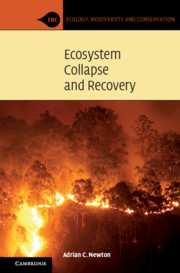
There is a growing concern that many important ecosystems, such as coral reefs and tropical rain forests, might be at risk of sudden collapse as a result of human disturbance. At the same time, efforts to support the recovery of degraded ecosystems are increasing, through approaches such as ecological restoration and rewilding. Given the dependence of human livelihoods on the multiple benefits provided by ecosystems, there is an urgent need to understand the situations under which ecosystem collapse can occur, and how ecosystem recovery can best be supported. To help develop this understanding, this volume provides the first scientific account of the ecological mechanisms associated with the collapse of ecosystems and their subsequent recovery. After providing an overview of relevant theory, the text evaluates these ideas in the light of available empirical evidence, by profiling case studies drawn from both contemporary and prehistoric ecosystems. Implications for conservation policy and practice are then examined.
The increasing distribution and prevalence of fasciolosis in both human and livestock are concerning. Here, we examine the various types of factors influencing fasciolosis transmission and burden and the interrelations that may exist between them. We present the arsenal of molecules, ‘adjusting’ capabilities and parasitic strategies of Fasciola to infect. Such features define the high adaptability of Fasciola species for parasitism that facilitate their transmission. We discuss current environmental perturbations (increase of livestock and land use, climate change, introduction of alien species and biodiversity loss) in relation to fasciolosis dynamics. As Fasciola infection is directly and ultimately linked to livestock management, living conditions and cultural habits, which are also changing under the pressure of globalization and climate change, the social component of transmission is also discussed. Lastly, we examine the implication of increasing scientific and political awareness in highlighting the current circulation of fasciolosis and boosting epidemiological surveys and novel diagnostic techniques. From a joint perspective, it becomes clear that factors weight differently at each place and moment, depending on the biological, environmental, social and political interrelating contexts. Therefore, the analyses of a disease as complex as fasciolosis should be as integrative as possible to dissect the realities featuring each epidemiological scenario. Such a comprehensive appraisal is presented in this review and constitutes its main asset to serve as a fresh integrative understanding of fasciolosis.
Chapter 5 frames the book’s narrative in the style of a lengthy coda. It is concerned with how the bark’s prevalence, wide fame and general ‘usefulness’ in therapeutic practice among geographically disperse and socially diverse societies affected its natural habitat in the central and northern Andes. The bark’s very ‘mobility’ and the popular demand that arose for it, the chapter argues, altered the harvest areas’ landscape of possession, commerce and demographics, the distribution and abundance of vegetation, and the livelihood, health and fate of the men and women implicated in harvesting, processing and conveying the bark. The chapter reminds readers, at parting, how plant trade, therapeutic exchange and epistemic brokerage are not extricable from time and space. Consumption and the imaginaries, therapeutic practice and medical understandings attendant to it invariably begins with changes to the material world, to physical nature and society.
Ancient cities are excellent spatiotemporal indicators for the study of historical human activities and environmental change. The ancient city of Sanchahe is located at the southern margin of the Mu Us Desert, China. It is an ideal location for studying the complex relationships between historical desertification and human activities. Field observations of the ancient city walls, a well, and a spring, as well as 14C dating, grain size, spatial analysis of archaeological sites, and analyses of historical seismicity, indicated that neotectonics may have contributed to crustal uplift and accelerated fluvial incision of the Wuding River. This rapid incision caused a decline in groundwater levels, which is an important reason for the irreversible environmental degradation around Sanchahe city over the past 800 yr. This study provides new evidence for such environmental degradation and may contribute to a better understanding of historical desertification in the Mu Us Desert.
In its August 2019 decision in Portillo Cáceres v Paraguay, the Human Rights Committee recognised, for the first time, the existence of a connection between environmental protection and the right to life with dignity. This is not only a landmark decision for the Committee but also represents the consolidation of a body of case law and practice from the three regional human rights courts and other UN human rights bodies which has developed over the last quarter of a century. It also shows the potential of two important and widely debated paragraphs in the newly adopted General Comment No. 36 on the Right to Life, which describe environmental degradation as both an enabler of threats and a direct threat to the right to life. Such potential has been confirmed in another landmark decision of the HRC—Teitiota v New Zealand, relating to climate change as threat to life. This article draws on Portillo Cáceres v Paraguay and Teitiota v New Zealand to analyse this wider field of practice in order to clarify the connection between the right to life and environmental protection, as recognised by the Committee, and considers its potential impact on future litigation.
Technological change accelerated with the Industrial Revolution and extended to all processes on all continents from smelting and mining to power production, to transportation, agriculture, and housing, and to communications. This chapter focuses on the United States, Europe, and the former Soviet Union because these nations have been the major engines of technological change since the 1750s for economic reasons; political reasons; military concerns; and the competition between these states for resources and power. A crucial aspect of the Industrial Revolution, tied to the others, was the rise of steam power. Historians have had their differences over the social consequences of the Industrial Revolution, particularly its impacts upon living standards. Vietnam and other Southeast Asian nations have begun to tame the Mekong River delta with scores of hydroelectricity projects that raise questions of post-colonial oustees and environmental degradation. After 1750 a revolution in transportation changed the face of human interaction, commerce, military thinking, diet, leisure, and much else.
This lesson is a continuation of Disasters and Development: Part 2: Understanding and Exploiting Disaster-Development Linkages published in Prehospital and Disaster Medicine in Volume 17, Number 3. It identifies the goals of a specific damage mitigation project that can be incorporated into a regular development project and the mechanisms for obtaining the mitigation component of such a project. Mechanisms for assessing the success of such a project are discussed. It stresses the importance of the application of building codes, associated training programs, and more extensive use of zoning regulations in urban development that decrease the population at risk and the likelihood of damage to industrial facilities. Disasters can elevate the development potential of a society at risk for damage from a hazard. The political impact of damage and disruption can be a catalyst for change. Development opportunities often are compromised because of an excessive focus on relief assistance. Interventions designed to mitigate the damage from a given hazard are particularly effective when they focus on areas at particularly high risk for actualization of the hazard. Support from the private sector, including the non-formal sector, is a key element of successful reconstruction management. The period of recovery is an opportunity for general assistance to government with administrative procedures, including enhanced management training programs.