To save content items to your account,
please confirm that you agree to abide by our usage policies.
If this is the first time you use this feature, you will be asked to authorise Cambridge Core to connect with your account.
Find out more about saving content to .
To save content items to your Kindle, first ensure no-reply@cambridge.org
is added to your Approved Personal Document E-mail List under your Personal Document Settings
on the Manage Your Content and Devices page of your Amazon account. Then enter the ‘name’ part
of your Kindle email address below.
Find out more about saving to your Kindle.
Note you can select to save to either the @free.kindle.com or @kindle.com variations.
‘@free.kindle.com’ emails are free but can only be saved to your device when it is connected to wi-fi.
‘@kindle.com’ emails can be delivered even when you are not connected to wi-fi, but note that service fees apply.
At the end of the book, the conclusion revisits the current debate among world historians whether to favour comparative approaches or search for cultural connections. Based on the themes analyzed in the current volume, this chapter argues in conclusion that ancient world history will have to combine both. Macro- and micro-perspectives should be seen as complementary; the former makes it possible to identify broader patterns while the latter enables the study of cultural exchanges. The latter, however, has often been preoccupied with marginal phenomena while the former sometimes has been too teleological, subsuming everything to a developmental logic ending in Europe. The view of ancient world history developed here seeks to identify a set of global patterns that combine both the population majority and the most central social, political and cultural developments of the period into a unified whole while exploring how these phenomena interacted across ancient Afro-Eurasia. Roman historians can gain a lot from intensifying the dialogue with students of other premodern Afro-Eurasian societies.
In this book, Jonathan Valk asks a deceptively simple question: What did it mean to be Assyrian in the second millennium bce? Extraordinary evidence from Assyrian society across this millennium enables an answer to this question. The evidence includes tens of thousands of letters and legal texts from an Assyrian merchant diaspora in what is now modern Turkey, as well as thousands of administrative documents and bombastic royal inscriptions associated with the Assyrian state. Valk develops a new theory of social categories that facilitates an understanding of how collective identities work. Applying this theoretical framework to the so-called Old and Middle Assyrian periods, he pieces together the contours of Assyrian society in each period, as revealed in the abundance of primary evidence, and explores the evolving construction of Assyrian identity as well. Valk's study demonstrates how changing historical circumstances condition identity and society, and that the meaning we assign to identities is ever in flux.
This chapter deals with the history of money in ancient times. We start with ancient Mesopotamia, where fundamental value (silver and barley) was stored in temples. Clay tablets circulated openly, supporting fundamental value and contractual arrangements. Coinage in ancient Greece and Rome was a step forward in terms of ease of use but involved the risk of debasement – reduction of the content of precious metals. We describe debasement of coins from the late Roman empire to the Middle Ages, then move to China, where the first banknotes were printed in the early part of the second millennium. The use of paper in finance spread to Europe, where it became the key technology supporting the rise of banks in the late Middle Ages and the Renaissance. We describe the rise of central banks in Europe, starting from Sweden and ending with Germany and Italy. We draw several lessons from these experiences. The main one is that a successful money is a private–public partnership, where “public administration” and “private interest” combine and complement each other. The chapter ends with the birth of telecommunication in the nineteenth century and its early applications at the beginning of the twentieth century, which gave rise to radical changes in monetary technology in the subsequent period.
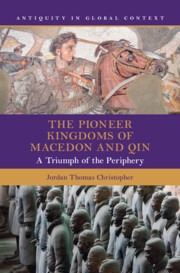
The Pioneer Kingdoms of Macedon and Qin critically compares the cultures of Ancient Greece and Early China in the first millennium BC through following the histories of two of its peripheral cases: Argead Macedon and Qin. Emerging from being fringe states to producing Alexander the Great and the First Emperor of China, then rapidly collapsing, these polities had a unique parallel historical experience, though vastly separated by the political developments brought on by the unique features of Greek and Zhou culture within which they operated. Jordan Thomas Christopher undertakes a holistic comparison of these states from their earliest origins through to the reigns of Alexander the Great and the First Emperor, which receive an extended and multi-layered analysis. He thereby highlights the particularities of Greek and Zhou cultures that often go underappreciated as causal factors in history.
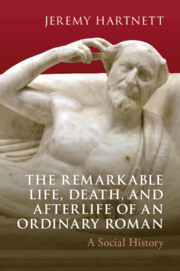
When we think of Romans, Julius Caesar or Constantine might spring to mind. But what was life like for everyday folk, those who gazed up at the palace rather than looking out from within its walls? In this book, Jeremy Hartnett offers a detailed view of an average Roman, an individual named Flavius Agricola. Though Flavius was only a generation or two removed from slavery, his successful life emerges from his careful commemoration in death: a poetic epitaph and life-sized marble portrait showing him reclining at table. This ensemble not only enables Hartnett to reconstruct Flavius' biography, as well as his wife's, but also permits a nuanced exploration of many aspects of Roman life, such as dining, sex, worship of foreign deities, gender, bodily display, cultural literacy, religious experience, blended families, and visiting the dead at their tombs. Teasing provocative questions from this ensemble, Hartnett also recounts the monument's scandalous discovery and extraordinary afterlife over the centuries.
The effectiveness of teaching strategies and resources that promote meaningful content learning is most pronounced when active methods such as project-based learning (PBL) are used to teach Ancient History (Molina, 2020, 53). Therefore, this study focuses on a comprehensive assessment of the methodological and historical competences acquired by students enrolled in the secondary education teacher training programme at the University of Cordoba (Spain). The research, which is non-experimental and quantitative, uses a Likert-type scale and involves the participation of 201 Masters students who have completed the course ‘Learning and Teaching Social Sciences’. The results of the statistical analysis show a positive evaluation of PBL in terms of historical understanding and its effectiveness in improving historical awareness. It is crucial to emphasise the advantages of active and collaborative learning inherent in PBL. However, it is also imperative to acknowledge the challenges that students face in applying their methodological knowledge to the secondary school setting. The transition from theoretical understanding to practical implementation is a significant hurdle for many students aspiring to a career in education. These findings underline the importance of promoting the seamless integration of innovative pedagogical approaches into teacher training programmes in order to effectively address the specific challenges of teaching antiquity in an educational context. Finally, this research was made possible by the Ministry of Science and Innovation's ‘Prueba de Concepto’ project, funded by the European Union under grant number PDC2022-133123-I00, and also by the CLIOGEN project (GINDO-UB/187) on Ancient History.
Disability and Healing in Greek and Roman Myth takes its readers to stories, in versions known and often unknown. Disabilities and diseases are dealt with from head to toe: from mental disorder, over impairment of vision, hearing and speaking, to mobility problems and wider issues that pertain to the whole body. This Element places the stories in context, with due attention to close reading, and pays careful attention to concepts and terminology regarding disability. It sets Graeco-Roman mythology in the wider context of the ancient world, including Christianity. One of the focuses is the people behind the stories and their 'lived' religion. It also encourages its readers to 'live' their ancient mythology.
In the opening lines of the twenty-third book of his universal history, Diodorus Siculus praises his native Sicily as “the fairest of all islands, since it can contribute greatly to the growth of an empire.”1 Sitting at the intersection of prevailing maritime routes, the island served as a natural landing for ships plying their way between the Mediterranean’s Eastern and Western Basins. Its broad coastal plains supported large urban centers and entrepôts that opened onto the Tyrrhenian Sea to the north, the Ionian Sea to the east, and the vast Libyan Sea to the south and west, inviting contacts from the Italian Peninsula, the Greek mainland, and North Africa. Indeed, located at the heart of the Mediterranean basin, Sicily has occupied an equally central place in the geopolitics of the region across much of the last three millennia.
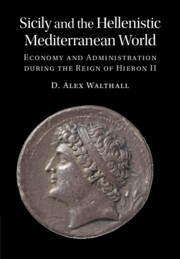
In Sicily and the Hellenistic Mediterranean World, D. Alex Walthall investigates the royal administration of Hieron II (r. 269-215 BCE), the Syracusan monarch who leveraged Sicily's agricultural resources to build a flourishing kingdom that, at one time, played an outsized role in the political and cultural affairs of the Western Mediterranean. Walthall's study combines an historical overview with the rich archaeological evidence that traditionally has not been considered in studies of Hellenistic kingdoms. Exploring the Hieronian system of agricultural taxation, he recasts the traditional narrative of the island's role as a Roman imperial 'grain basket' via analysis of monumental granaries, patterns of rural land-use, standardized grain measures, and the circulation of bronze coinage— the material elements of an agricultural administration that have emerged from recent excavations and intensive landscape survey on the island. Combining material and documentary evidence, Walthall's multi-disciplinary approach offers a new model for the writing of economic and social history of ancient societies.
This major new reference work with contributions from an international team of scholars provides a comprehensive account of ideas and practices of nationhood and nationalism from antiquity to the present. It considers both continuities and discontinuities, engaging critically and analytically with the scholarly literature in the field. Volume I starts with a series of case studies of classical civilizations. It then explores a wide range of pivotal moments and turning points in the history of identity politics during the age of globalization, from 1500 through to the twentieth century. This overview is truly global, covering countries in East and South Asia as well as Europe and the Americas.
This chapter focuses on ancient Sparta as a representative case for the general reception of classical antiquity in heavy metal music. The Spartans are the basis of songs and albums by dozens of bands across the globe: their last stand at Thermopylae is the most popular ancient battle in metal music, and their king Leonidas is one of the most popular ancient figures. Their appropriation by metal bands is a product of their rise in popularity in popular culture since the premiere of the 2006 film 300, and as in pop-culture, their appeal resonates with political and nationalistic agendas, especially of Greek bands. Sparta’s wide appeal harmonises with metal’s core ethos of hypermasculinity, the liberation of animal instincts and the disruption of systems of conformity and control. As with other topics from the classical world, heavy metal music takes the Spartans from both ancient sources and modern media and remakes them in the image of its own counterculture, that of the few standing defiant against the many.
In this book, Steven Fraade explores the practice and conception of multilingualism and translation in ancient Judaism. Interrogating the deep and dialectical relationship between them, he situates representative scriptural and other texts within their broader synchronic - Greco-Roman context, as well as diachronic context - the history of Judaism and beyond. Neither systematic nor comprehensive, his selection of Hebrew, Aramaic, and Greek primary sources, here fluently translated into clear English, best illustrate the fundamental issues and the performative aspects relating to translation and multilingualism. Fraade scrutinizes and analyzes the texts to reveal the inner dynamics and the pedagogical-social implications that are implicit when multilingualism and translation are paired. His book demonstrates the need for a more thorough and integrated treatment of these topics, and their relevance to the study of ancient Judaism, than has been heretofore recognized.
In their focus on queer sexuality, letters 77 and 78 in Augustine's letter collection are unusual. Same-sex acts and sexual violence are mostly tightly controlled and deliberately erased in antiquity. This article looks again at the case of sexual abuse preserved in letters 77 and 78 between the monk Spes and the presbyter Bonifatius, applying modern critical understandings of gendered violence, victimisation and harm to reach beyond previous critical approaches that have seen the exceptionalism of the case as a reason not to engage with it. This research takes a new critical approach, re-situating the incident within the wider context of gendered violence in Augustine's letters. It engages with the case of sexual abuse solely between men intrinsically, and as a uniquely available point of comparison with sexual violence perpetrated by men against women. It examines how sexual violence is gendered, in Augustine's response, in the adjudication of the case and in the behaviours and expectations of both victim and perpetrator. Whilst working outwards from absence and silence is a central historiographical approach to gender and violence in the past, this article reaches new understandings by turning towards evidence that is usually siloed and working it back into a framework of sexual violence in Augustine's letters.
Edited by
Ben Kiernan, Yale University, Connecticut,T. M. Lemos, Huron University College, University of Western Ontario,Tristan S. Taylor, University of New England, Australia
General editor
Ben Kiernan, Yale University, Connecticut
This Introduction to Volume I of The Cambridge World History of Genocide, which covers the ancient, medieval, and early modern worlds, raises questions about the nature of premodern genocide, about the meaning of genocide and genocidal intent in the premodern era, and about both perpetrators and victim groups, and about the scale, techniques, and ideologies of genocide in that long historical period in comparison to those of genocides committed in modern times. The chapter considers whether or not genocide can be considered a ‘transhistorical phenomenon’. It also asks whether mass violence in the pre-modern and early modern periods occurred in a different moral context than that of modern times, presenting some differing views on this question. Finally the chapter introduces the substantive chapters of the volume, and how they variously examine material, political, sociocultural, and ideological factors that contributed to premodern outbreaks of genocide, as well as noting some changes over time from prehistory to the early modern era.
In this chapter, we see how Cicero, as a rising Roman politician, uncovers hidden lines of influence, pinpoints shades of political support, and frames partisan divides in the Roman Republic. Here, Cicero uses voluntas both to analyze politics as he finds it and to argue for its rational improvement. Descriptively, Cicero uses voluntate and summa voluntate to identify subtler shades of opposition or support and to trace lines of unseen influence among Rome’s leading men like Pompey and Caesar. Through his gifted pen, will becomes a measurable force as it had seemingly not been before. To measure will is to rationalize it, and Cicero builds new philosophical arguments for the primacy of voluntas over violence and for a vision of politics that transacts power rationally by the intersecting wills of magistrates and people. I use powermapping, a tool of modern advocacy, as a lens to examine Cicero’s political strategy and use of language. This vision, at once old and new, is upended by the ascent of Caesar, whose sole voluntas undoes Cicero’s rational framework, exerting will by brute force and eliminating the old pluralist order.
Edited by
Myles Lavan, University of St Andrews, Scotland,Daniel Jew, National University of Singapore,Bart Danon, Rijksuniversiteit Groningen, The Netherlands
This short chapter recapitulates the substantive advances made by the individual chapters in this volume before closing remarks on the difference between using probability to represent epistemic uncertainty and modelling variability, two exercises that are easily confused, and on the use of models to answer historical questions.
Historians constantly wrestle with uncertainty, never more so than when attempting quantification, yet the field has given little attention to the nature of uncertainty and strategies for managing it. This volume proposes a powerful new approach to uncertainty in ancient history, drawing on techniques widely used in the social and natural sciences. It shows how probability-based techniques used to manage uncertainty about the future or the present can be applied to uncertainty about the past. A substantial introduction explains the use of probability to represent uncertainty. The chapters that follow showcase how the technique can offer leverage on a wide range of problems in ancient history, from the incidence of expropriation in the Classical Greek world to the money supply of the Roman empire.
This chapter explains what is – and isn’t – archaeology, its historical development, thematic and global spread, and the development of the discipline as a profession. The chapter also discusses archaeological ethics, professional standards, and codes of conduct.
The present contribution offers a neurosociological and socio-cognitive re-analysis of the two festivities dedicated to the ancient Roman goddess known as Bona Dea, both managed and attended by women only. Additionally, the main variants of Bona Dea’s mythography are assessed as a violent reminder of gendered behavioural norms and as a coercive mate-guarding strategy supported by religious storytelling. The two festivities are assessed as different expressions of class stratification and socio-political negotiation within the Roman agnatic patriarchy. The patrician December festival is identified as a special agent ritual with distinctly imagistic features. The poorly known May celebration is tentatively reconstructed as a predominantly doctrinal, non-patrician special patient ritual, mainly attended by freedwomen, and led by a priestess known as the damiatrix. The supposedly orgiastic Greek roots of the cult are questioned on linguistic, historiographical, and archaeological grounds. The conclusions highlight the need to establish a cross-disciplinary cognitive historiography of sex and gender in antiquity to overcome the limitations behind the study of ancient women’s religious experiences.
In October of 2018, a pedagogical experiment was conducted at York University, Toronto, Canada, in which students were given an assignment. For this assignment they were to conduct research on a variety of Roman public buildings in groups, build digital reconstructions of them using the Unity 3D game engine, and present them to the class in the form of a virtual reality (VR) simulation. In doing so, students were able to create a virtual built environment based on their research, navigate it, and discuss the space with a sense of immersion and scale. Using this experiment as a case study, the goal of this article is twofold: firstly, to assess the pedagogical efficacy of constructionist approaches to teaching students about Roman architecture, specifically using VR and video game design technology. The second goal is to address the technical and pedagogical challenges of using game design software in the classroom and to propose ways in which this assignment can be improved in the future.