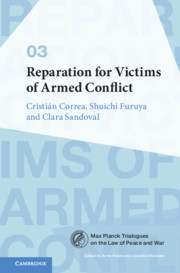

Are victims of armed conflict entitled to reparation, which legal rules govern the question, and how can reparation be implemented? These key questions of transitional justice are examined by three scholars whose professional, theoretical, and methodological backgrounds and outlooks differ greatly. They discuss how regional human rights case law, international criminal law, the practice of ad hoc international bodies, and domestic practice give rise to a right to reparation. This right emerges out of the interplay between international and domestic law. The problems of mass claims, fragile statehood, and the high risk of marginalisation of particular groups of victims are addressed. The analysis is alert to the current backlash against international legal institutions, and to the practical constraints in making post-conflict law work. The multiperspectivism of the trialogical setting exposes the divergence and complementarity of the authors' approaches and leads to a richer understanding of the law of reparation.
‘Students and faculty of international relations, international law, and human rights as well as international law practitioners will find this work useful ... Recommended.’
H. L. Katz Source: Choice Magazine
Loading metrics...
* Views captured on Cambridge Core between #date#. This data will be updated every 24 hours.
Usage data cannot currently be displayed.
This section outlines the accessibility features of this content - including support for screen readers, full keyboard navigation and high-contrast display options. This may not be relevant for you.
Accessibility compliance for the PDF of this book is currently unknown and may be updated in the future.
