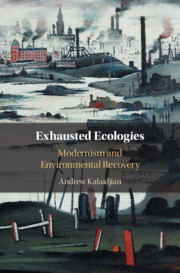

This book evaluates twentieth century British and Global Anglophone literature in relation to the growth of ecological thinking in the United Kingdom. Restless modernists such as D. H. Lawrence, James Joyce, Djuna Barnes, and Jean Rhys developed a literary aesthetic of slowness and immediacy to critique the exhausting and dehumanizing aspects of modern urban and industrial life. At the same time, environmental groups such as the Society for the Promotion of Nature Reserves and the Smoke Abatement League moved from economic registers of 'value' and 'trust' to more cultural terms of 'recovery' and 'regeneration' to position nature as a healing force in the postwar era. Through a variety of literary, scientific, and political texts, an environmental movement emerged alongside the fast, fragmented, and traumatic aspects of modernization in order to sustain place and community in terms of lateral influence and ecological dependence.
‘… a significant contribution to this nascent but rapidly growing body of modernist eco-criticism.’
William Kupinse Source: James Joyce Literary Supplement
‘In his introduction, Kalaidjian expresses the need for both modernism and ecocriticism to advance each other and not “simply reinterpret one through the other’s lens”. Exhausted Ecologies therefore has much to offer to those studying Europe and its empires, environmental historians, modernist literary critics, and ecocritical scholars alike. Kalaidjian’s work here overall is timely in light of the increasing threat of climate disaster, as well as a fascinating view into the connections between modernist literature and the beginnings of modern environmentalism.'
Leanna Lostoski-Ho Source: EuropeNow
Loading metrics...
* Views captured on Cambridge Core between #date#. This data will be updated every 24 hours.
Usage data cannot currently be displayed.
This section outlines the accessibility features of this content - including support for screen readers, full keyboard navigation and high-contrast display options. This may not be relevant for you.
Accessibility compliance for the PDF of this book is currently unknown and may be updated in the future.
